
History
Omiwa Jinja, also affectionately known as “Miwa Myojin,” is one of the oldest shrines in Japan. As the first shrine (ichinomiya) of the old Yamato Province, it enshrines Mt. Miwa itself — a beautifully conical mountain rising in the southeast of the Nara Basin — as its sacred object, making it a remarkable example of the ancient form of Shinto worship that predates the practice of building a main sanctuary. The enshrined deity, Omononushi no Okami, is regarded as the “sakimitama-kushimitama” — the mysterious, wonder-working aspect — of Okuninushi no Okami, the god who built the nation.
According to the Nihon Shoki, when a plague swept the land during the reign of Emperor Sujin, Omononushi no Okami appeared to the emperor in a dream and instructed that his own descendant, Otataneko, be made to worship him. When this was done as instructed, the plague is said to have subsided — an event regarded as the origin of worship at Omiwa Jinja. The shrine has also long been passed down as the setting for some of Japan’s most famous myths, including the tale of the divine marriage associated with Mt. Miwa.
Highlights
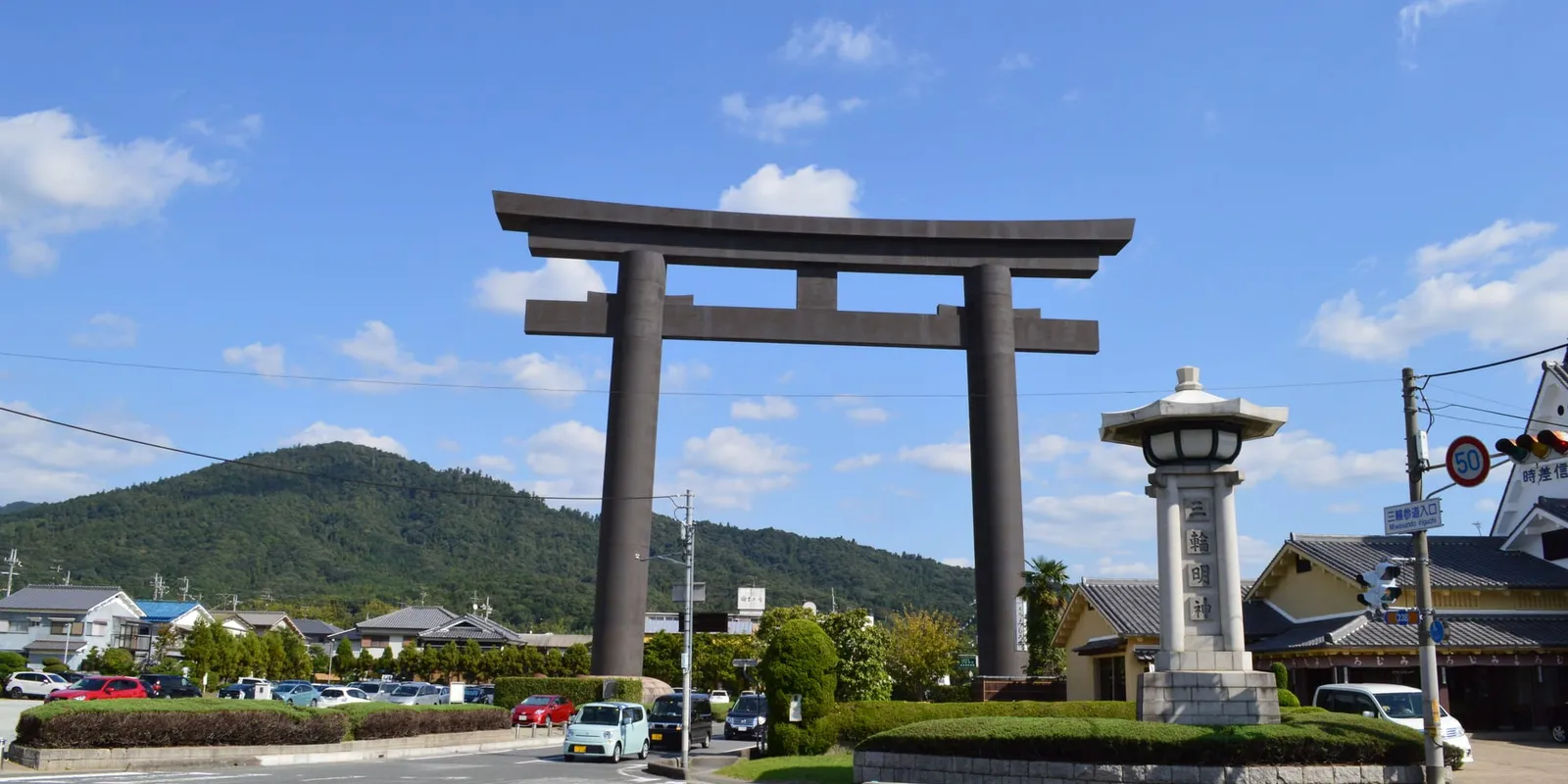
The massive great torii gate, about 32 meters tall, stands at the entrance to the approach with a view of Mt. Miwa, and has become a symbol of Omiwa Jinja. Having no main sanctuary, the shrine lets visitors experience a rare, ancient form of worship found almost nowhere else in Japan: praying directly to Mt. Miwa through the triple torii (mitsu-torii) set behind the worship hall.
Visiting Tips
Because Mt. Miwa itself is considered sacred ground, visitors wishing to climb it must first register and receive a purification rite at the shrine office. The shrine is also venerated as a guardian of sake brewing, and the sugidama (cedar-ball sake charms) donated by sake breweries are another highlight of a visit.
Annual Festivals
- Nyodosai (January 1): Also known as the “Sacred Fire Festival,” in which parishioners carrying great torches accompany Shinto priests on a pilgrimage to the 19 auxiliary shrines at the foot of Mt. Miwa, the first ritual of the new year.
- Onda Festival (February 6): Treating the area in front of the worship hall as a rice paddy, a performer humorously mimes farm work to pray for a bountiful harvest, in a traditional rite where the amount of laughter is said to foretell the year’s crop.
- Spring Grand Festival (April 9): Said to carry a tradition of more than 2,000 years, formerly observed as the “Rabbit Day Rite” on the day of the rabbit in the old calendar.
- Autumn Grand Festival (October 24): The counterpart to the Spring Grand Festival, offering thanks for a bountiful harvest.
Nearby Food & Sightseeing
In front of the shrine, long-established restaurants serving Miwa’s famous somen noodles line the street, drawing many visitors who combine a meal with their visit.
- Somen-dokoro Morisho: Beside Omiwa Jinja’s second torii gate, this restaurant is set in a renovated 100-year-old house and is known for its chilled somen and nyumen (hot somen).
- Ikeri Miwa Somen Chaya Senju-tei: A teahouse run by Ikeri, a long-established Miwa somen maker, just a short walk from the great torii, serving both chilled somen and nyumen.
Frequently Asked Questions
- Q. Why doesn't the shrine have a main hall?
- A. Mount Miwa itself is worshipped as the shrine's sacred body, so there's no main hall — visitors pray directly toward the mountain through the triple torii behind the worship hall, preserving an ancient form of Shinto worship.
- Q. What are the visiting hours?
- A. 6:30–19:00; the shrine office is open around 9:00–16:00.
- Q. When is the goshuin office open?
- A. Around 9:00–16:00, for ¥500.
- Q. Is there parking?
- A. Yes, free parking is available nearby.
- Q. How do I get there?
- A. About a 5-minute walk from Miwa Station on the JR Sakurai Line.
Related Shrines
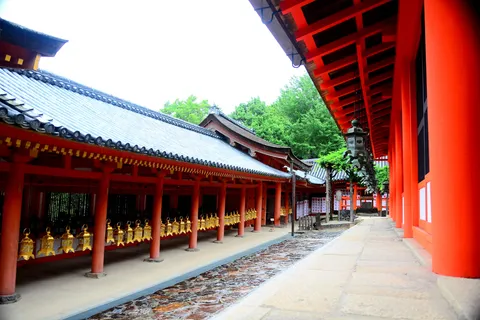
Nara Prefecture, Nara
Kasuga Taisha
Kasuga-taisha
- Protection from Misfortune
- Good Fortune
- Good Relationships
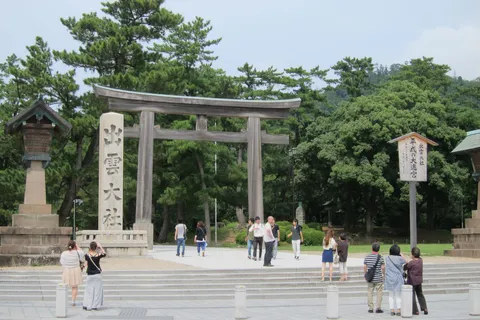
Shimane Prefecture, Izumo
Izumo Taisha
Izumo Ōyashiro
- Good Relationships
- Marital Harmony
- Business Prosperity
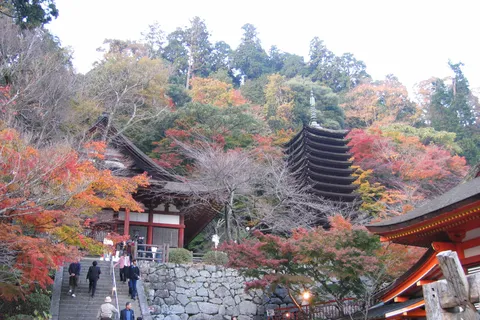
Nara Prefecture, Sakurai
Tanzan Jinja
Tanzan-jinja
- Academic Success
- Good Fortune
- Protection from Misfortune