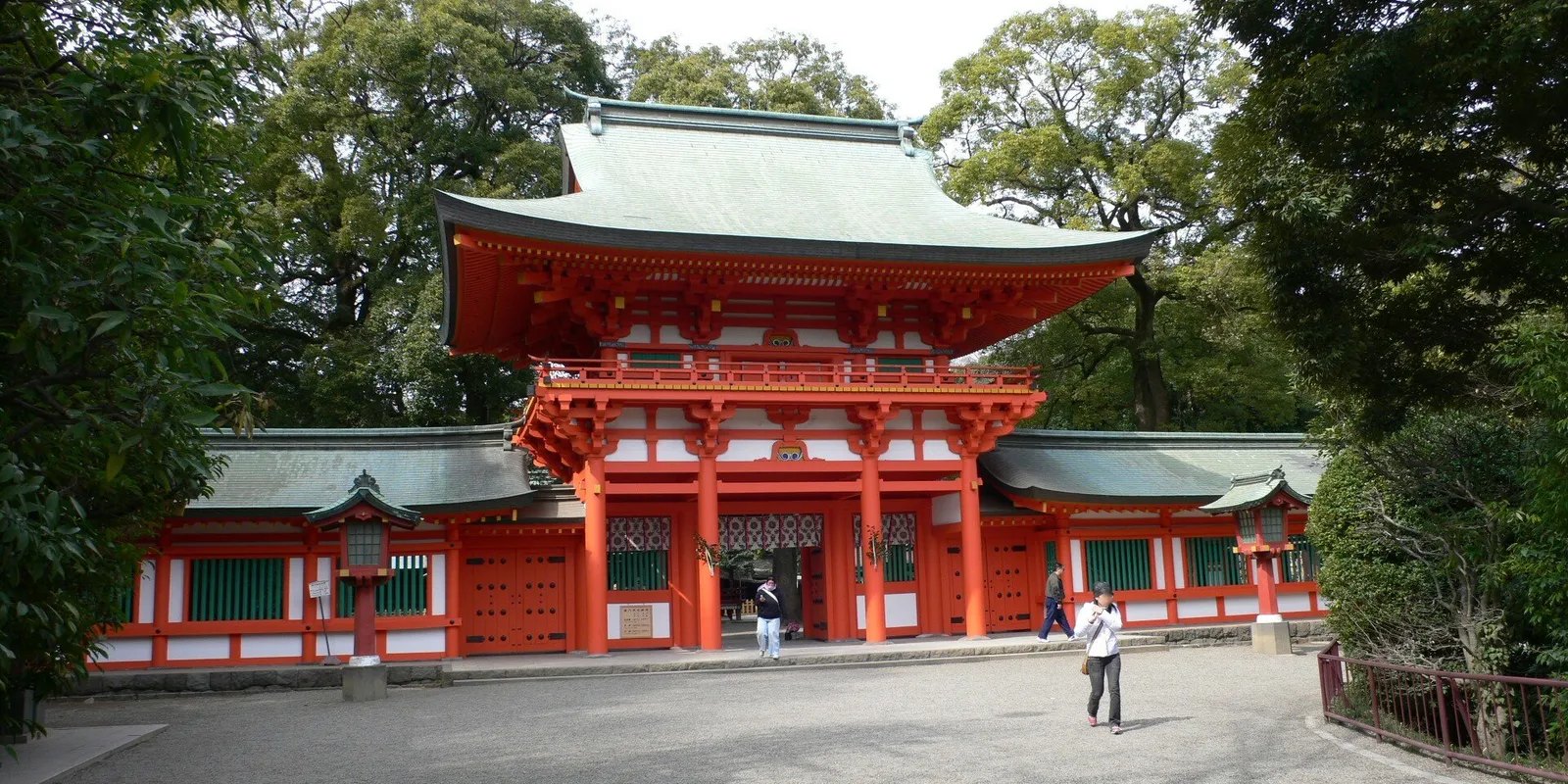
History
Musashi Ichinomiya Hikawa Jinja is the head shrine of roughly 280 Hikawa shrines scattered across the greater Tokyo region. Said to carry a history of about 2,500 years, it enshrines the married deities Susanoo no Mikoto and Inadahime no Mikoto, along with their child deity, Onamuchi no Mikoto. The place-name “Omiya” (“great shrine”) is itself said to derive from this shrine’s presence.
Historical records show that the Heian-period legal text Shinsho Kyakuchokufu-sho notes that in 766, during the mid-Nara period, the imperial court granted the shrine three households’ worth of tax revenue as an endowment, indicating that it had already received deep reverence from the court by that early date. In October 1868, just four days after entering Tokyo, Emperor Meiji issued a decree designating Hikawa Jinja as the guardian shrine of the entire former Musashi Province and a shrine of imperial rites, and on the 28th of that same month he personally visited to perform the ceremony himself — regarded as the first time an emperor personally officiated at a rite at a shrine in the Kanto region. The shrine was subsequently ranked as a Kanpei-taisha (imperial shrine of the first rank) in 1871, and to this day an imperial envoy continues to be dispatched from the court for its annual festival.
Highlights
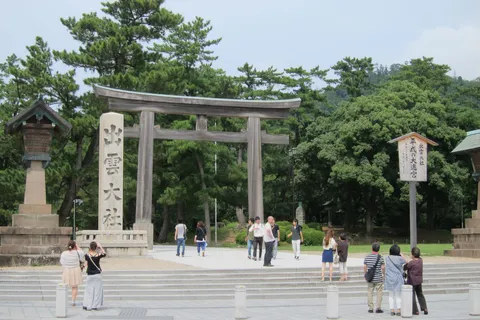
The approach leading from the third torii gate to the shrine grounds stretches about two kilometers, one of the longest in Japan. Known as the “Hikawa Sando,” it’s also cherished by local residents as a place for a leisurely walk. Because the shrine enshrines a married couple of deities, it’s known for blessings of good relationships and marital harmony.
Visiting Tips
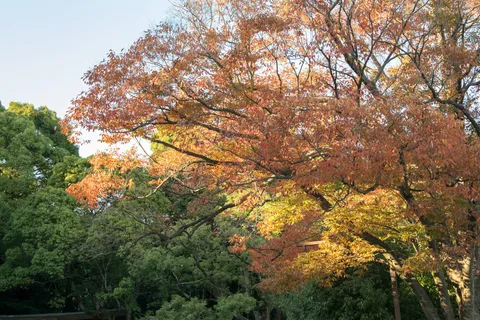
The spacious shrine grounds blend seamlessly into the neighboring Omiya Park, letting visitors enjoy rich natural scenery through the seasons as they pay their respects. One of Saitama Prefecture’s leading shrines, it draws one of the highest New Year visitor counts in the country.
Annual Festivals
- Reitaisai (August 1): The shrine’s single most important annual festival, held on a date connected to the enshrined deities; an imperial envoy is dispatched from the court, and the court music and dance “Azuma-asobi” is performed.
- Oyu Festival / Tooka-ichi (December 10): A festival originating in a purification rite in which hot water is offered before the deities; also known as “Tooka-ichi” (Tenth-Day Market), the day sees a great many stalls selling lucky rakes (kumade) and other charms, drawing large crowds.
- New Year’s Visit (from January 1): One of the most-visited shrines in Saitama Prefecture, with the roughly two-kilometer approach filled with New Year’s worshippers.
Nearby Food & Sightseeing
Omiya Park, next to the shrine, has a small zoo and the adjoining Omiya Daini Park, making the area a fun destination for families to enjoy alongside their visit.
- Hikawa Dango-ya: A long-established sweets shop along the Hikawa approach, known for its Hikawa soy-sauce dango and isobeyaki dango.
- Omiya Park: A prefectural park adjoining the shrine, well known as a cherry blossom spot, with a small zoo on the grounds.
Frequently Asked Questions
- Q. What are the visiting hours?
- A. Generally 5:00–18:00, varying by season.
- Q. When is the goshuin office open?
- A. Around 9:00–16:30, for ¥500.
- Q. Is there parking?
- A. Yes, paid parking is available nearby.
- Q. How long is the approach to the shrine?
- A. The path from the third torii to the shrine grounds runs about 2 kilometers — one of the longest shrine approaches in Japan.
- Q. How do I get there?
- A. About a 15-minute walk from Tobu Noda Line Omiya-koen Station, or about a 20-minute walk from the East Exit of JR Omiya Station.