History
Tsukubasan Jinja is an ancient shrine that venerates Mt. Tsukuba (877 m) itself as its sacred object of worship. The mountain, long known by the poetic name Shiho (“the purple peak”), rises from the Kanto Plain in two distinct summits and has been an object of mountain worship since prehistoric times.
The enshrined deities are Izanagi no Mikoto (the Tsukuba Male Deity) and Izanami no Mikoto (the Tsukuba Female Deity), the primordial couple of Japanese mythology who gave birth to the islands of Japan and many of its gods. Shrine tradition holds that the male and female shrines were first established in the first year of Emperor Jinmu’s reign, and that during Emperor Sujin’s reign Tsukuba Province was established and Tsukuba no Mikoto was appointed its governor (kuni no miyatsuko). The Hitachi no Kuni Fudoki records a tale in which a divine ancestor sought lodging at Mt. Fuji and was refused, but was welcomed at Mt. Tsukuba; the text says Tsukuba thereafter became a mountain where people gathered to sing, dance, and feast.
In 823 the Tsukuba deity was granted Junior Fifth Rank, Lower Grade, and in the Engishiki (927) the male deity was ranked as a Myojin Taisha and the female deity as a minor shrine. During the Edo period Tokugawa Ieyasu revered Mt. Tsukuba as a protector of Edo Castle and donated 500 koku of shrine lands in 1602, and in 1633 the third shogun Tokugawa Iemitsu had the buildings on the mountain rebuilt and donated. The shrine became a prefectural shrine in 1873 and today is a Betsuhyo shrine of the Association of Shinto Shrines.
The Grounds and the Summit Shrines
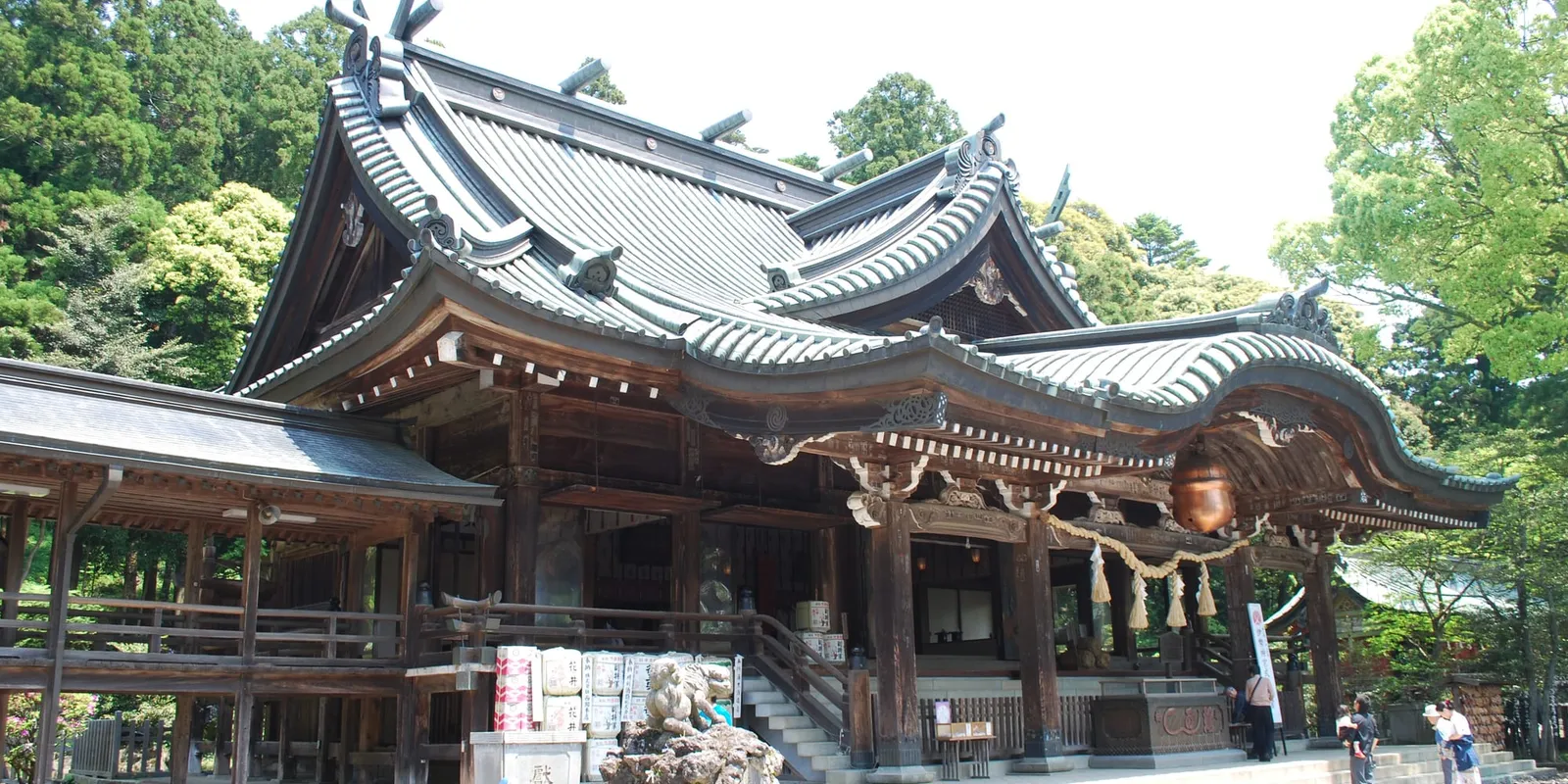
The whole of Mt. Tsukuba is sacred ground. The main worship hall stands partway up the south-facing slope at about 270 meters, and from here visitors worship the two peaks from a distance.
- Zuishinmon (the guardian gate): The eight-legged two-story gate leading to the worship hall, the largest of its kind in Ibaraki Prefecture. It was donated by Iemitsu in 1633, burned in 1757 and again in 1767, and the present gate dates from 1811. It is designated a Tsukuba City cultural property.
- Goshinbashi (the sacred bridge): A vermilion bridge under a gabled roof, donated by Iemitsu in 1633 and designated a prefectural cultural property. It is open to visitors only during the Ozagawari festival (April 1 and November 1) and the Toshikoshi festival (February 10–11).
- Haiden (the worship hall): A “split-style” (wari-haiden) hall, also donated by Iemitsu in 1633 and designated a prefectural cultural property.
- Mt. Nantai Honden (871 m) and Mt. Nyotai Honden (877 m): Izanagi is enshrined on Mt. Nantai and Izanami on Mt. Nyotai. The summit shrines are reached by hiking, the ropeway, or, when it is running, the cable car.
- Shiho-sugi cedar: A cedar estimated at about 800 years old, roughly 40 meters tall with a trunk about 7 meters around, revered as a sacred tree.
Cultural Properties
The shrine owns a tachi sword signed “Yoshimune,” with its silk-wrapped sword mounting, which is a nationally designated Important Cultural Property. It dates from the Kamakura period and was donated by Tokugawa Iemitsu in 1633 when the temple buildings of Tsukubasan Chuzenji were reconstructed; its mounting is studded with the Tokugawa hollyhock (aoi) crest.
In addition, the Goshinbashi bridge, the haiden, the Kasuga Shrine honden and Hie Shrine honden (with their shared worship hall), and the Itsukushima Shrine honden within the grounds are designated cultural properties of Ibaraki Prefecture, and the Zuishinmon gate is a Tsukuba City cultural property.
Annual Festivals
- Ozagawari festival (April 1 and November 1): The shrine’s most important seasonal festival, in which the divine seat (the deities’ sacred robes) on both Mt. Nantai and Mt. Nyotai is replaced with new ones. The Goshinbashi bridge can be crossed on these days.
- Toshikoshi festival (February 10–11): A setsubun-style rite in which about 600 men and women scatter fortune beans and other items. The bridge is open on these days too.
- Great Purification (June 30 and December 31): A ritual to purify the impurities of the past half-year.
Goshuin
A goshuin costs ¥500 each. Four designs are issued: Tsukubasan Jinja, the Mt. Nantai main shrine, the Mt. Nyotai main shrine, and Ebisu (one of the Hitachi Seven Lucky Gods). Reception hours are roughly 9:00 AM–4:30 PM. Hand-written entries in your own goshuin book are normally accepted, but the shrine has at times offered only pre-written paper goshuin (for example in early 2026), so please check with the shrine office (029-866-0502) before visiting.
Access & Visiting Information
By train, take the Tsukuba Express to Tsukuba Station (about 45 minutes from Akihabara), then the Tsukuba Mountain Shuttle Bus for about 40 minutes to the Tsukubasan Jinja Iriguchi stop. By car, it is about 40 minutes via Route 125 from the Tsuchiura-Kita Interchange on the Joban Expressway. The shrine’s paid parking lot costs ¥500 per day and is free for those having a prayer service; Tsukuba City and private paid lots are also available.
There is no admission fee to enter the grounds. The shrine office is open roughly 9:00 AM–4:30 PM; phone inquiries are taken at 029-866-0502 from 9:00 AM to 5:00 PM.
Reaching the Summit: Cable Car and Ropeway
Besides hiking, the summit shrines can be reached by the Tsukuba Scenic Railway’s cable car and ropeway. The cable car runs from Miyawaki Station to Tsukubasan-cho Station in about 8 minutes, and the ropeway from Tsutsujigaoka to Nyotai-san Station in about 6 minutes.
Note that since September 25, 2026, the cable car has been suspended indefinitely for safety checks (no resumption date has been announced), and new cable car vehicles are scheduled to be introduced in February 2027. The ropeway continues to operate normally (roughly 9:20 AM–5:00 PM, shorter hours in winter). Please check the operator’s official website for the latest status.
Nearby Food & Sightseeing
- Mt. Tsukuba Ropeway: About 6 minutes from Tsutsujigaoka to Nyotai-san Station, with views over the Kanto Plain and a convenient route to the Mt. Nyotai summit shrine.
- Mt. Tsukuba Cable Car (Miyawaki Station): A roughly 8-minute ride up to the summit station on the Mt. Nantai side. It is currently suspended, with new vehicles planned for February 2027.
- Tsukuba Mountain Hotel Aoki-ya: About 5 minutes by car from the shrine, an inn offering traditional Japanese meals in private rooms, handy for a meal after your visit.
Frequently Asked Questions
- Q. Which deities are enshrined at Tsukubasan Jinja?
- A. The shrine enshrines the primordial married couple Izanagi no Mikoto (the Tsukuba Male Deity) and Izanami no Mikoto (the Tsukuba Female Deity), the pair credited in myth with giving birth to the Japanese islands and many of the gods. Izanagi is enshrined on the summit of Mt. Nantai (871 m) and Izanami on Mt. Nyotai (877 m); visitors worship both peaks from the main worship hall on the mountainside. Because the deities are a married couple, the shrine is especially known for matchmaking and marital harmony.
- Q. Can I get a goshuin at Tsukubasan Jinja, and how much does it cost?
- A. Yes. A goshuin costs ¥500 each, and four designs are offered: Tsukubasan Jinja, the Mt. Nantai main shrine, the Mt. Nyotai main shrine, and Ebisu (one of the Hitachi Seven Lucky Gods). They are issued at the shrine office roughly 9:00 AM–4:30 PM. Hand-written entries in your own goshuin book are normally accepted, but the shrine has at times switched to pre-written paper goshuin only (as in early 2026), so it is wise to confirm with the shrine office (029-866-0502) before you go.
- Q. Is there parking at Tsukubasan Jinja?
- A. Yes. The shrine runs a paid parking lot at ¥500 per day, and visitors having a prayer service can have the fee waived by showing their ticket at reception. Tsukuba City and private paid lots are also available nearby. Expect crowds during New Year, the autumn foliage season, and Golden Week, so arrive early.
- Q. What is the Ozagawari festival?
- A. Ozagawari is the shrine's major seasonal festival, held every year on April 1 and November 1, when the divine seat (the deities' sacred robes) is replaced with new ones in spring and autumn. On those two days, and during the Toshikoshi festival on February 10–11, visitors are allowed to cross the Goshinbashi sacred bridge, a prefecturally designated cultural property that is otherwise closed to the public.
- Q. How do I get to Tsukubasan Jinja by train and bus?
- A. Take the Tsukuba Express from Akihabara to Tsukuba Station (about 45 minutes), then transfer to the Tsukuba Mountain Shuttle Bus from Tsukuba Center; the ride to the Tsukubasan Jinja Iriguchi stop takes about 40 minutes, and the shrine's Zuishinmon gate is within walking distance of the stop. By car, it is about 40 minutes via Route 125 from the Tsuchiura-Kita Interchange on the Joban Expressway.
Related Shrines
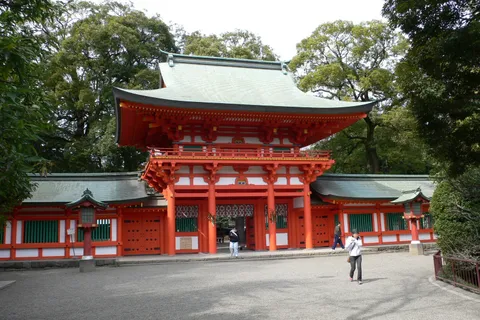
Saitama Prefecture, Omiya Ward, Saitama
Musashi Ichinomiya Hikawa Jinja
Musashi Ichinomiya Hikawa-jinja
- Good Relationships
- Marital Harmony
- Household Safety
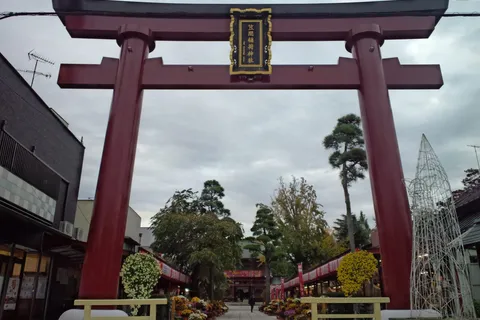
Ibaraki, Kasama
Kasama Inari Jinja
Kasama Inari-jinja
- Business Prosperity
- Bountiful Harvest
- Household Safety
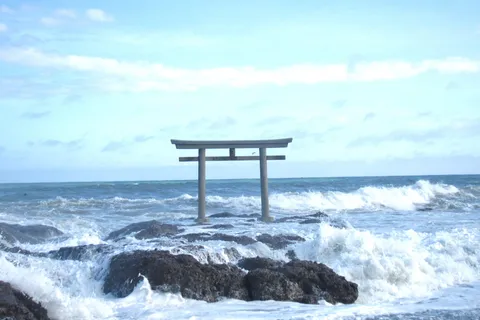
Ibaraki, Oarai
Oarai Isosaki Jinja
Ōarai Isosaki-jinja
- Maritime Safety
- Business Prosperity
- Good Relationships