History
The shrine stands in the Ono district, at the edge of the castle town of Gujo Hachiman. In the records of the Gifu Prefecture Association of Shinto Shrines its name is “Hachiman Jinja” (Hachiman Shrine), and it is also called “Ono Hachiman Shrine” after the district. Its address is 7 Ono, Hachiman-cho, Gujo, Gifu, as given on TV Tokyo’s “Shutsubotsu! Ad-machic Tengoku” page.
The Association’s records give the founding as 1220 (Jokyu 2). According to its history text, Fujiwara no 頼保 (the sources give no reading for the name), acting on a prophetic dream, made his way into the Gujo area from the upper Nagara River following an eagle feather marked with the characters for “Hachiman,” entrusted the feather to the villagers and set it into a rock at the foot of the mountain, and a shrine was later built on the summit with the feather as its sacred object, as the tradition goes. (The emperor named in the Association’s history text does not seem to match the Jokyu era, so this page does not go into that detail and keeps to “is said to.”)
The Association’s records say that in 1559 (Eiroku 2), when Endo Morikazu built a castle on the mountaintop (today’s Gujo Hachiman Castle), the shrine buildings were moved to the present site at the foot of the mountain. It was deeply revered as a prayer shrine by successive castle lords, and as the shrine’s name spread, the whole area came to be called “Hachiman.” TV Tokyo’s program page likewise says it is the origin of the place name Hachiman-cho.
The Association’s records list five deities: Emperor Ojin, Amaterasu Omikami, Emperor Nintoku, Mizuhanome no Kami and Sugawara no Michizane. Encyclopedias such as the Japanese Wikipedia, on the other hand, give Homudawake no Mikoto (identified with Emperor Ojin) and Sugawara no Michizane as the principal deities and say it is also called “Ono Tenmangu,” so the sources differ.
Highlights
Gifu Prefecture’s list of cultural properties includes the “Ono Hachiman Shrine Festival” as a prefectural Important Intangible Folk Cultural Property (designated January 7, 1997). According to the prefecture’s description, it is traditionally held that the castle lord Endo Tsunetomo brought the rite from Kyoto and the festival was first held in 1667 (Kanbun 7).
The festival is said to proceed from a rotating “uchidashi-yado” (the host house for the send-off), where daikagura and yakko dancing are performed, toward the shrine. Priests, parishioner representatives, yakko groups, jiuta groups and a kasaboko float form a procession to flute and drum. At the shrine entrance the yakko advance in the “yotsuwaku” formation, and in front of the sanctuary, after the purification rite, the daikagura and yakko dance are offered, the prefecture’s description says.
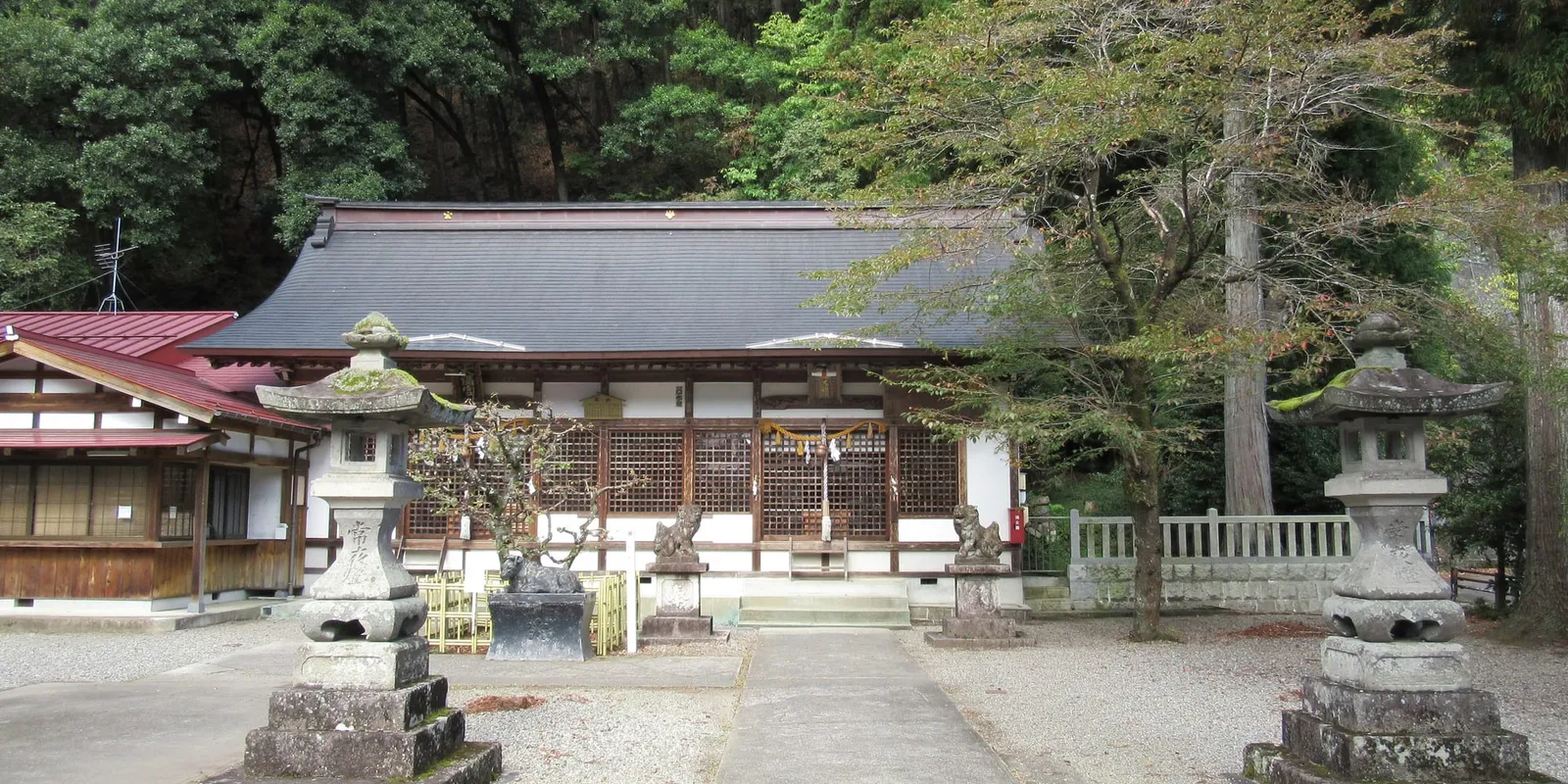
The grounds lie at the foot of the mountain where Gujo Hachiman Castle stands. A stone monument carved “Ono Tenmangu” at the entrance suggests that it is also a Tenmangu enshrining Sugawara no Michizane. Encyclopedias say the Tenjin deity enshrined with it was brought here in 1740 (Genbun 5) by the Gujo domain lord Kanamori Yorinori.
Visiting Tips
No official shrine website could be found, so visiting hours and the goshuin fee could not be confirmed officially. A tourist information site (Walkerplus) says in effect that the shrine is closed except on festival and prayer-service days, lists goshuin as available, and gives its blessings as bountiful harvest, school-entrance prayers and brush memorial rites (all from a single source).
For access, the same site says it is about a 25-minute walk from Gujo-Hachiman Station on the Nagaragawa Railway, or you can take the Mame Bus (city loop bus) to “Ono Hachiman Jinja-mae,” or drive about 5 minutes from Gujo-Hachiman IC on the Tokai-Hokuriku Expressway, with free parking listed. If you want to be sure of visiting, it is a good idea to ask beforehand, for example at the Gujo Hachiman Tourism Association (0575-67-0002, 9:00 AM–5:00 PM, the contact Walkerplus lists).
Festivals & Events
- Spring Festival (April): The event information on Gifu’s tourism site (kankou-gifu.jp) says the highlight of Gujo Hachiman’s Spring Festival is a showcase of the daikagura of Hiyoshi Shrine, Kishiken Shrine and Hachiman Shrine, all prefectural Important Intangible Folk Cultural Properties (April 18 and 19 in 2026). The “Hachiman Shrine” there appears to mean the Hachiman Shrine in Ono, but the page does not give a location.
- Annual festival: The Gifu Prefecture Association of Shinto Shrines lists the annual festival as “the third Sunday of April.” Encyclopedias, however, also give September 24–25, so the sources differ. Please check the actual dates beforehand.
Festival dates may change from year to year, so check the latest with the Gujo Hachiman Tourism Association or similar.
Nearby Food & Sightseeing
- Gujo Hachiman Castle: The castle introduced at No. 2 in TV Tokyo’s Gujo Hachiman episode. The program page says this shrine was held in deep reverence by its successive lords.
- Sogi-sui (Sogi Spring): A Gujo Hachiman sight ranked No. 19 in the same program.
- Gujo Odori: Introduced at No. 1 in the same program; Gifu Prefecture’s list of cultural properties includes it as a national Important Intangible Folk Cultural Property (Gujo Odori). Check the Gujo Hachiman Tourism Association for dates and venues.
Frequently Asked Questions
- Q. What are the visiting hours?
- A. No official shrine website could be found, and the Gifu Prefecture Association of Shinto Shrines page gives no visiting hours. A tourist information site (Walkerplus) says in effect that the shrine is closed except on festival and prayer-service days. It is safest to check beforehand, for example with the Gujo Hachiman Tourism Association (0575-67-0002, 9:00 AM–5:00 PM, the contact that site lists).
- Q. Can I get a goshuin at Ono Hachiman Shrine?
- A. A tourist information site (Walkerplus) lists goshuin as available. No official information on the fee or hours was found, so they are not given here. Because the shrine is said to be closed except on festival and prayer-service days, please check before you go.
- Q. How do I get there, and is there parking?
- A. According to Walkerplus, it is about a 25-minute walk from Gujo-Hachiman Station on the Nagaragawa Railway; you can also take the Mame Bus (city loop bus) to "Ono Hachiman Jinja-mae," or drive about 5 minutes from Gujo-Hachiman IC on the Tokai-Hokuriku Expressway, where free parking is listed. Public transport is also recommended. None of this is official guidance, so please confirm before your visit.
- Q. Has the shrine been featured on TV?
- A. Yes. TV Tokyo's "Shutsubotsu! Ad-machic Tengoku" (出没!アド街ック天国) featured Hachiman Shrine at No. 15 in its "Okumino Gujo Hachiman" episode broadcast on Saturday, July 23, 2022 (according to the program's official page). The page describes it as a shrine held in deep reverence by successive lords of Gujo Hachiman Castle and says it is the origin of the place name Hachiman-cho (address given as 7 Ono, Hachiman-cho, Gujo; the information is as of the broadcast).
- Q. What is special about the shrine's festival?
- A. In Gifu Prefecture's list of cultural properties, the "Ono Hachiman Shrine Festival" is a prefecturally designated Important Intangible Folk Cultural Property. Gifu Prefecture's description says it is traditionally held to have begun in 1667 (Kanbun 7), when the castle lord Endo Tsunetomo brought the rite from Kyoto, and that daikagura and yakko dancing are offered.
Plan Your Visit
Before you go, you can book a stay and get your shrine-visit items ready.
Amazon links open Amazon.co.jp (Japan) in English; whether an item ships overseas depends on the product.
※ Contains ads (PR). Links open external sites such as Amazon, Rakuten, Trip.com and Booking.com.