History
Sasaki Jinja already appears in the Engishiki shrine register, compiled in 927, making it a shrine with over a thousand years of documented history. According to shrine tradition, Sukunahikona-no-Mikoto, a deity of medicine and hot springs, arrived at this site by boat and was enshrined here — an event regarded as the shrine’s founding. Long before that, the Sasaki-yamakimi, a local clan of ancient Omi Province, are believed to have venerated the deity here as their tutelary spirit.
In the Heian period, Minamoto no Nariyori, a grandson of Emperor Uda, settled in this area — then known as Sasaki Estate in Omi Province — and adopted the surname “Sasaki,” marking the origin of the Uda-Genji Sasaki clan. As this clan’s worship merged with that of the pre-existing Sasaki-yamakimi lineage, Sasaki Jinja came to be revered as the tutelary shrine (ujigami) of the Uda-Genji Sasaki clan. Today the shrine enshrines five deities across four seats: Sukunahikona-no-Mikoto, Oobiko-no-Kami, Emperor Nintoku, and Emperor Uda together with his son Prince Atsumi, who are honored as the clan’s imperial ancestors.
From the Kamakura period onward, the Sasaki clan rose to become a powerful warrior house, serving for generations as military governors (shugo) of Omi Province. During the Nanboku-cho period the clan split into two great branches, the Rokkaku and the Kyogoku, who contested influence within the province for centuries. The shrine stands just south of the site where Oda Nobunaga would later build Azuchi Castle, his base of operations in the Sengoku period, and in the Edo period the Kyogoku family, by then daimyo of Marugame domain in Sanuki Province, helped fund the reconstruction of part of the shrine buildings — a testament to the continued devotion of the Sasaki clan’s descendants across the centuries. The “yotsume-yui” (four-eyed tie) crest seen throughout the shrine grounds is the emblem shared by the Sasaki clan and its many descendant families.
Highlights
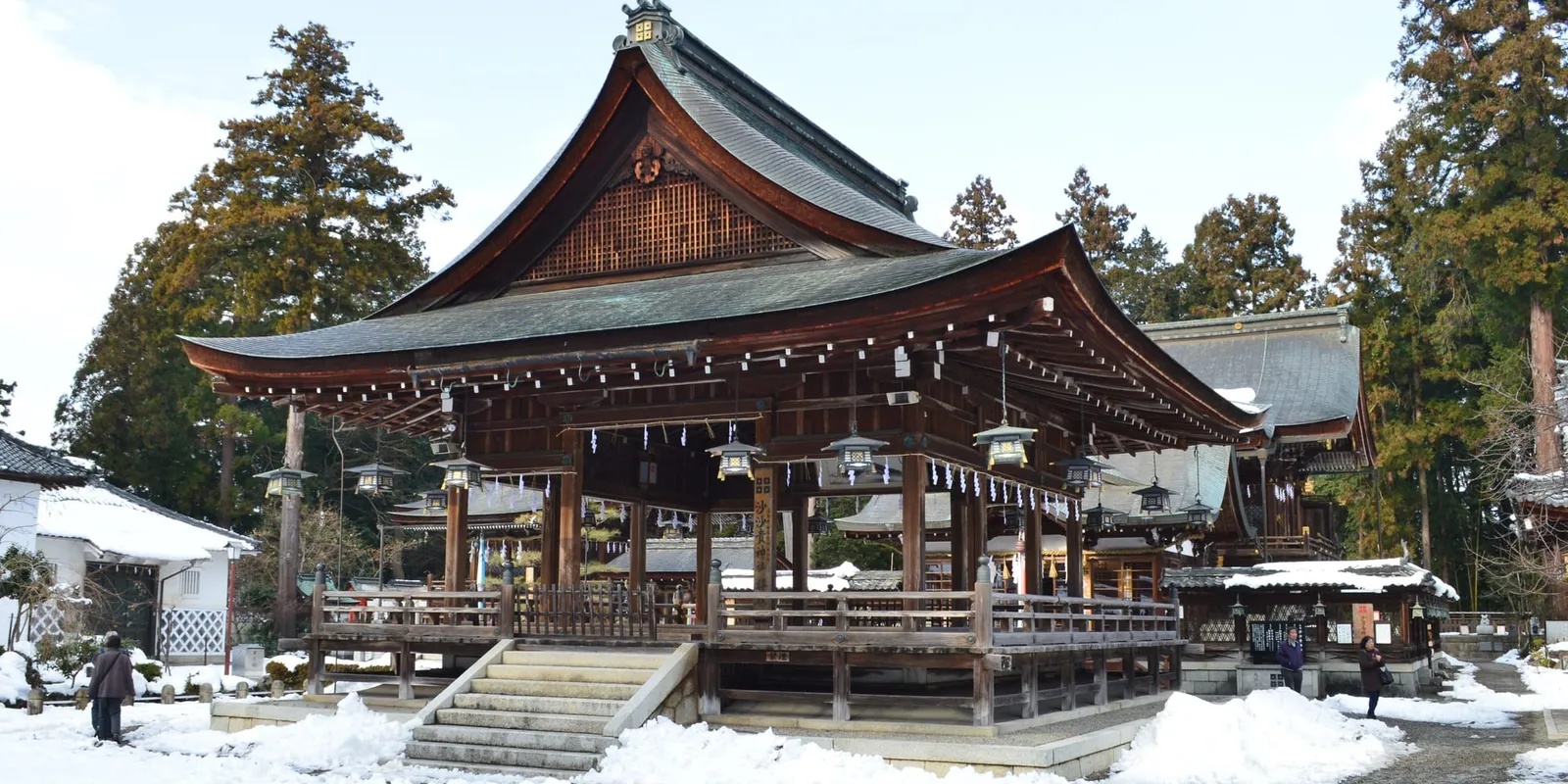
The shrine grounds are anchored by a striking group of large wooden buildings from the late Edo period, designated as Shiga Prefecture Tangible Cultural Properties: the thatched-roof Romon gate tower, said to have been rebuilt in 1747, together with the main hall, worship hall, middle gate, lattice fence, auxiliary hall, and east and west corridors. The two-story, thatched-roof Romon gate in particular is a rare architectural form nationwide, giving visitors a strong sense of the shrine’s age and formality.
The grounds are also known as the “Omi Hyakka-en” (“garden of a hundred Omi flowers”) for the wide variety of seasonal flowers and flowering trees planted throughout. In winter, fragrant wintersweet blossoms scent the air; in late April, Urashima-so (a native jack-in-the-pulpit relative) comes into bloom; and in early May, a large “nanjamonja” tree (Chinese fringe tree, Chionanthus retusus) bursts into a cloud of white flowers — each in turn drawing visitors to the grounds.
A Pilgrimage Site for the Sasaki Surname
Sasaki Jinja is known nationwide as the place of origin of the Uda-Genji Sasaki clan, and it draws devoted visitors specifically connected to the Sasaki surname and its many descendant family names. More than 220 surnames are said to trace their lineage to the Sasaki clan, including the medieval warrior houses of Rokkaku and Kyogoku, who served as military governors of Omi Province, as well as the Kuroda and Mitsui families. People bearing these surnames — and particularly those named Sasaki itself — travel here from across Japan to visit what many regard as their clan’s ancestral home.
Every year on the second Sunday of October, the shrine holds its “Omi Genji Festival,” a rite honoring Emperor Uda and Prince Atsumi, the clan’s imperial ancestors, and praying for the continued prosperity of their descendants. The festival, which includes the performance of court music and dance, draws participants connected to the Sasaki name from all over the country — a genuinely distinctive feature that sets Sasaki Jinja apart among Japan’s shrines.
Visiting Tips
The shrine grounds are open around the clock, but the office where goshuin and amulets are available closes at 16:30, and prayer service reception ends at 15:00, so it’s worth allowing enough time. The shrine is about a 15-minute walk from JR Azuchi Station, or a convenient 6 minutes by rental bicycle from the station. A free parking area for worshippers (35–40 spaces) is available on the grounds, though note that the entrance and exit are one-way.
The ruins of Azuchi Castle, Oda Nobunaga’s famous former stronghold, are a short distance away, and many visitors combine a trip to Sasaki Jinja with a visit to the castle site.
Annual Festivals
- Sasaki Twelve-Seat Rite (third Saturday–Sunday of April; third Sunday of October) — The shrine’s principal festival, featuring large ceremonial torches, a portable shrine procession, a bucket-swinging dance, and a twelve-part ritual sequence.
- Omi Genji Festival (second Sunday of October) — A festival honoring Emperor Uda and Prince Atsumi, the imperial ancestors of the Sasaki clan, that draws participants connected to the Sasaki surname from across Japan, accompanied by a court music and dance performance.
- Summer Purification Rite (June 30) — A ritual passage through a great ring of woven grass (chinowa) to purify the sins and impurities of the past six months.
Nearby Food & Sightseeing
- Ruins of Azuchi Castle: A short distance from Sasaki Jinja, this is the site of the castle built by Oda Nobunaga. Stone walls and building foundations remain, and the former keep site offers sweeping views over Lake Biwa and the Omi plain.
- Omi-Hachiman Canal Boat Tour (Hachiman-bori): A historic canal lined with white-walled merchant storehouses in the heart of Omi-Hachiman’s old town, associated with the Omi merchants of the Edo period. Boat tours along the canal are a popular way to see it.
- Vories Architecture: Western-style buildings designed by missionary and architect William Merrell Vories, who was active in education, religious, and architectural work in Omi-Hachiman, remain scattered throughout the city and can be explored on foot.
Frequently Asked Questions
- Q. Who are the deities enshrined at Sasaki Jinja?
- A. Sasaki Jinja enshrines five deities across four seats: Sukunahikona-no-Mikoto as the principal deity, along with Oobiko-no-Kami, Emperor Nintoku, and Emperor Uda and Prince Atsumi — the imperial ancestors of the Sasaki clan.
- Q. Can I get a goshuin here?
- A. Yes, at the shrine's amulet office, open 9:00–16:30. The standard goshuin is ¥300, a seasonal goshuin featuring flowers of the season is ¥700, and special items such as cut-paper goshuin start from ¥1,500.
- Q. How do I get to Sasaki Jinja?
- A. It's about a 15-minute walk from JR Azuchi Station on the JR Biwako Line (about 6 minutes by rental bicycle). From Omi-Hachiman Station, you can take the 'Akakon Bus' to the Sasaki Jinja stop. By car, it's about 20 minutes from the Ryuo IC on the Meishin Expressway.
- Q. Is parking available?
- A. Yes, there's a free parking area for worshippers on the shrine grounds, with space for about 35–40 standard vehicles. Note that entrance and exit are one-way.
- Q. I've heard this shrine has a special connection to people surnamed Sasaki. What's the story?
- A. Sasaki Jinja is the tutelary shrine of the Uda-Genji Sasaki clan, regarded as the clan's place of origin in Omi Province. More than 220 surnames are said to descend from the Sasaki line, including the Rokkaku, Kyogoku, Kuroda, and Mitsui families, and people surnamed Sasaki travel here from across Japan to visit their ancestral shrine. Every year on the second Sunday of October, the shrine holds the Omi Genji Festival, praying for the prosperity of the clan's descendants and drawing visitors connected to the Sasaki name from all over the country.
Related Shrines
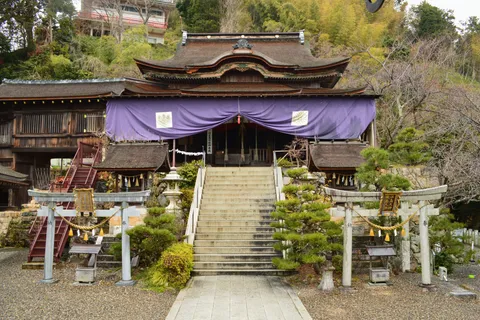
Shiga Prefecture, Chikubushima Island, Nagahama
Tsukubusuma Jinja
Tsukubusuma Jinja
- Financial Luck
- Matchmaking
- Good Fortune
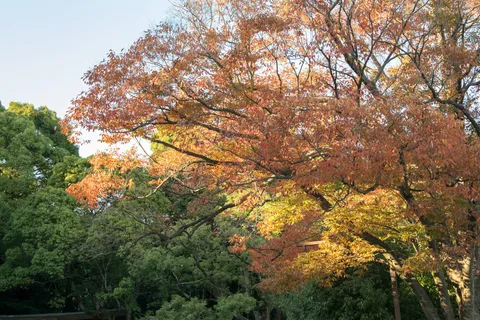
Tokyo, Shibuya
Meiji Jingu
Meiji-jingū
- Good Fortune
- Good Relationships
- Household Safety
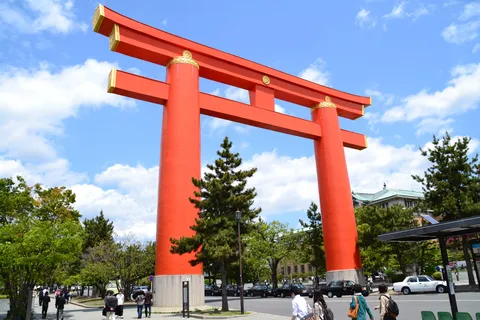
Kyoto Prefecture, Sakyo-ku, Kyoto
Heian Jingu
Heian-jingū
- Good Fortune
- Protection from Misfortune
- Household Safety