History
Okawakami Birafu Shrine (Okawakami-birafu-jinja) stands in Nirono, Kahoku-cho, Kami City, Kochi Prefecture. The official site names Otataneko no Mikoto as the enshrined deity and introduces it as a renowned shrine known as “Kawakami-sama of Birafu” and as an Engishiki-listed shrine. Locally it is affectionately called “Kawakami-sama.”
The official site does not give a founding year. According to the Japanese Wikipedia, there are records of it existing before 841 (Jowa 8), it was once also called “Kawakami Daimyojin” and “Okawakami-gu,” and it was the central shrine of the Niro district. The same page also lists seven more deities, including Omononushi no Mikoto, enshrined alongside Otataneko no Mikoto (the shrine’s official site does not mention them).
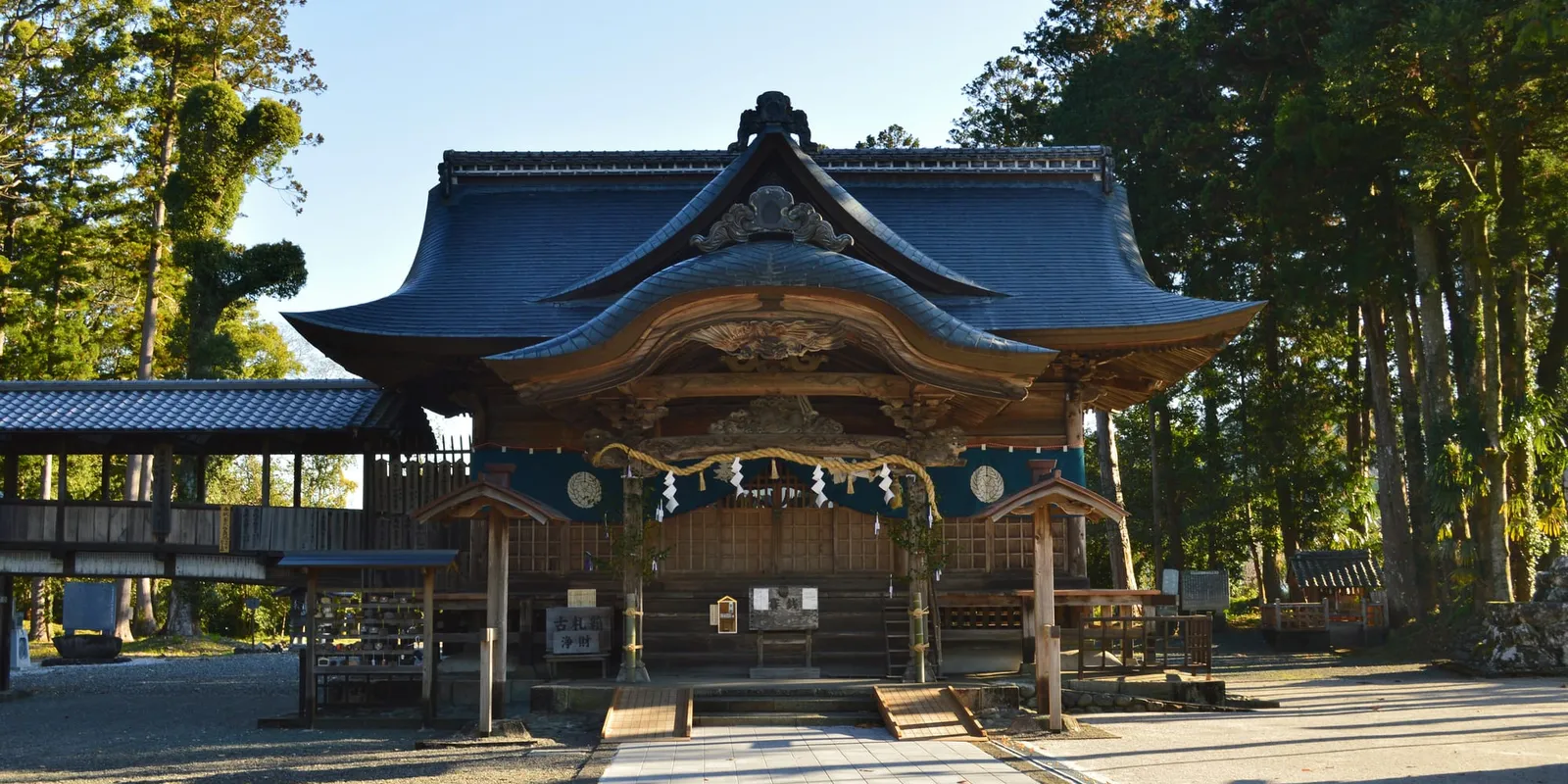
According to the official site, the present shrine buildings were begun in 1865 (Keio 1) and completed in 1869 (Meiji 2). The site describes the buildings as large, with dignified proportions and a calm presence, and says the roof is considered beautiful and graceful for a late-Edo-period structure. It also says the autumn festival is especially grand, ranked “first, Shinane-sama of Ichinomiya; second, Kawakami-sama of Niro.”
Highlights
The shrine buildings are designated cultural properties of Kochi Prefecture (official site). According to a News Kochi article, a signboard beside the main hall reads that its carvings are “the best in Tosa,” and the main hall is surrounded by a variety of carvings.
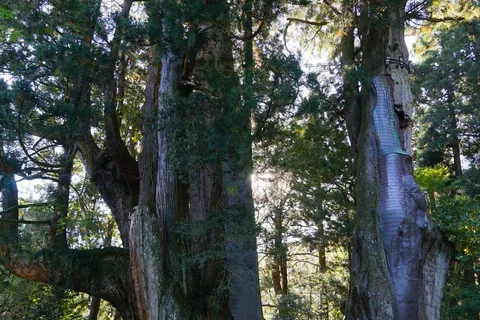
The shrine’s treasures include two kesa-dasuki-pattern dotaku (bronze bells), designated cultural properties of Kochi Prefecture (official site). The sacred tree is said, according to the official site, to have been planted about 1,000 years ago in the Heian period by people praying for good health and a bountiful harvest.
The shrine also holds ceiling paintings dedicated by 31 manga artists, depicting the Four Symbols (Azure Dragon, White Tiger, Vermilion Bird, Black Tortoise) and the zodiac animals. According to the official site, they are painted on 70 cm square wooden boards, each in the artist’s own style. One travelogue says they are normally not open to the public, so please check with the shrine office about viewing.
The link with Yanase Takashi is another distinctive feature. The official site says it offers the zodiac amulets drawn by Yanase, “Yanase Takashi’s Lucky Zodiac Amulets,” which can also be bought through the online shop. A tourism guide by the Monobegawa DMO adds that an original ema drawn by Yanase is also offered.
Visiting Tips
Visiting hours are not stated on the official site. The shrine office’s phone number is given as 0887-59-2878 (Kahoku Branch Office: 0887-59-2311), so if you want an amulet or goshuin, it is reassuring to call ahead.
The official site does not mention goshuin. A third-party listing says they are available and that the distribution office opens only on festival days, but no fee could be confirmed.
It is about 25 minutes by JR Bus from JR Tosa-Yamada Station to “Anpanman Museum-mae,” then about a 1-minute walk. By car it is about 35 minutes from Nankoku IC and about 40 minutes from Kochi Ryoma Airport. Parking is small, about 5 spaces, so on festival days consider public transport or nearby facilities.
Annual Festivals
- Autumn grand festival (November 3): A festival designated an intangible folk cultural property of Kochi Prefecture, featuring a divine procession called “Onabare.” The deity travels in a procession to the Shinmeigu rest shrine and back, with stick-fighting, go-board-swinging, a mikoshi procession, hanataka, a children’s procession, and torige and hakuma, long poles about 5 m tall tipped with feathers (official site). The Japanese Wikipedia, however, gives the autumn festival as November 2–3.
- Summer festival (Kawakami-sama Summer Festival): According to an event-information site, it is one of Kami City’s three great festivals and the first of the three held each year. In 2026 it was held on Monday, July 27 (dates may change from year to year).
Festival dates can change, so check the official site or the shrine office for the latest information.
Nearby Food & Sightseeing
- Yanase Takashi Memorial Hall: According to a News Kochi article, a municipal Kami City facility that includes the Anpanman Museum and the Poem and Fairy-Tale Museum, across National Route 195 from the shrine.
- Michi-no-Eki Birafu: The Japanese Wikipedia describes the shrine’s location as about 100 m north of the traffic light in front of Michi-no-Eki Birafu on National Route 195. A handy landmark.
- Yanase Takashi Honoki Park: According to a News Kochi article, a park in Honoki, the hometown of Yanase’s father, about 3 km from the Yanase Takashi Memorial Hall. It has a monument inscribed with Yanase’s poem, and Yanase and his wife are said to rest beneath it.
Frequently Asked Questions
- Q. What are the visiting hours?
- A. The official site does not state visiting hours. Some listings say the grounds are open to visitors freely, but the shrine office's hours could not be confirmed. If you want an amulet or other item, it is safest to call the shrine office (0887-59-2878) beforehand.
- Q. Can I get a goshuin at Okawakami Birafu Shrine?
- A. The official site does not mention goshuin. A third-party listing says goshuin are available, but it also says the distribution office opens only on festival days, and no fee could be confirmed. We recommend checking with the shrine office (0887-59-2878) in advance.
- Q. How do I get there, and is there parking?
- A. It is about 25 minutes by JR Bus from JR Tosa-Yamada Station to "Anpanman Museum-mae," then about a 1-minute walk (official site). By car it is about 35 minutes from Nankoku IC and about 40 minutes from Kochi Ryoma Airport. Parking is small, about 5 spaces (official site).
- Q. Does the shrine have a connection to Yanase Takashi?
- A. According to the official site, the shrine offers zodiac amulets drawn by Yanase Takashi, the creator of Anpanman (© Yanase Studio). A tourism guide by the Monobegawa DMO also says an original ema (votive plaque) drawn by Yanase is offered. The shrine itself describes its location as about a 1-minute walk from the Anpanman Museum.
- Q. What is the autumn festival's "Onabare"?
- A. According to the official site, the autumn grand festival is held every year on November 3 and is designated an intangible folk cultural property of Kochi Prefecture. "Onabare" is a divine procession in which the deity travels in a procession to the Shinmeigu rest shrine and back, and the shrine says it includes stick-fighting, a go-board-swinging performance, a mikoshi procession, hanataka, a children's procession, and long feather-tipped poles (torige and hakuma, 鳥毛・羽熊).
Plan Your Visit
Before you go, you can book a stay and get your shrine-visit items ready.
Amazon links open Amazon.co.jp (Japan) in English; whether an item ships overseas depends on the product.
※ Contains ads (PR). Links open external sites such as Amazon, Rakuten, Trip.com and Booking.com.