History
According to shrine tradition, this Yasaka Jinja was founded in 912, when a warrior named Sugimoto Taro Yoshiie, who had traveled from Kyoto, enshrined three sacred images — Gion Gozu Tenno, Kifune Daimyojin, and the Buddhist figure Gyoki Bosatsu — at the base of an ancient cedar tree already standing on the site. Gozu Tenno was identified with Susanoo no Mikoto under the syncretic fusion of Shinto and Buddhism, and the shrine has been known as Yasaka Jinja ever since, serving as the guardian shrine of the Sugi district. It shares its name with the famous Yasaka Jinja of Gion in Kyoto, but the two are unrelated, independent shrines, each with its own distinct history.
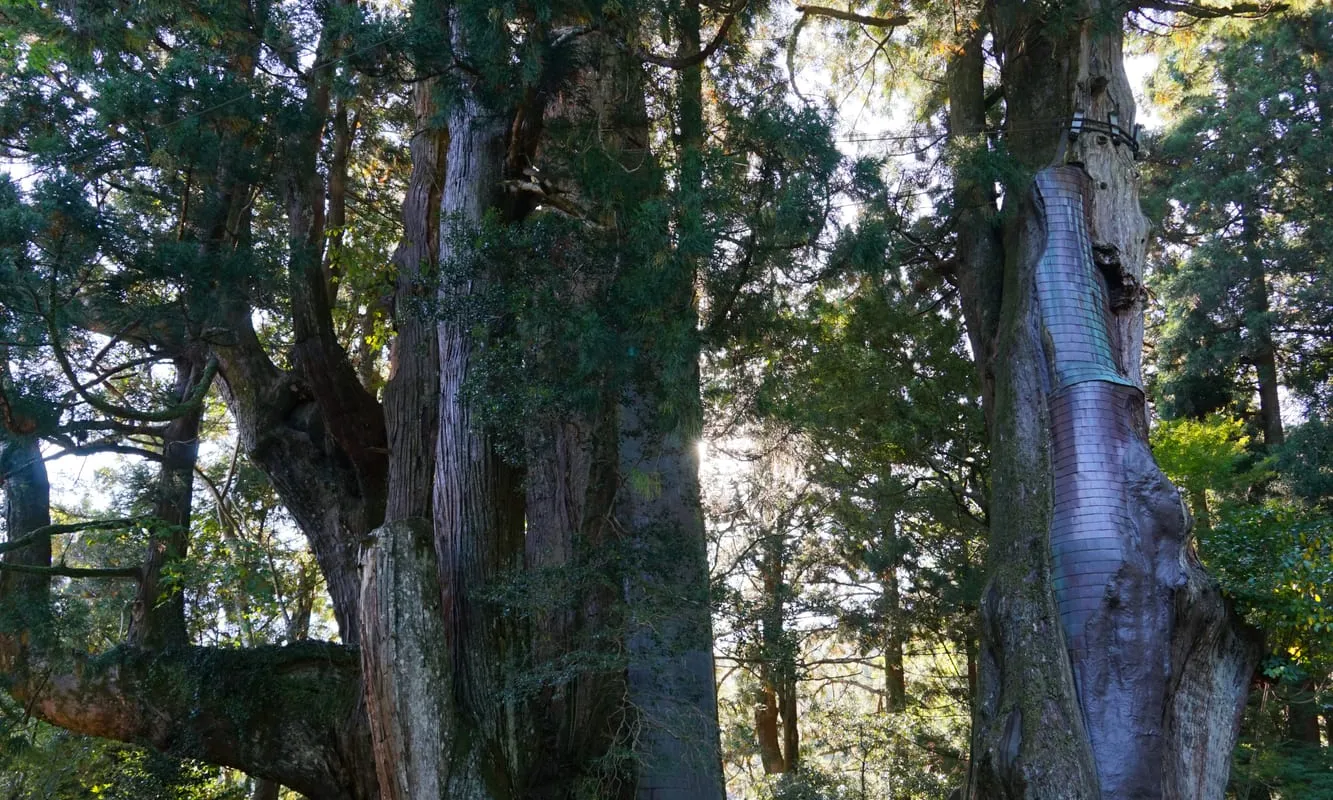
The great cedar enshrined on the grounds, known as Sugi no Osugi, is said by local legend to have been planted by Susanoo no Mikoto himself in the ancient past, and is estimated to be more than 3,000 years old. It was designated a National Natural Monument in 1924, and its status was later upgraded to Special Natural Monument in 1952, making it one of the most revered giant trees in Japan.
Highlights
The centerpiece of a visit is the great cedar itself, which splits into two massive trunks near its base. The southern trunk, “Minami-Osugi,” measures about 20 meters in circumference and 60 meters in height, while the northern trunk, “Kita-Osugi,” measures about 16.5 meters in circumference and 57 meters in height. Standing side by side, they are affectionately nicknamed the “Wedded Cedar” (Meoto-sugi) by locals, and together are considered the largest shrine-grown cedar in Japan, bound together with a thick sacred rope.
The site is equally known for its connection to Misora Hibari, one of postwar Japan’s most beloved singers. On April 28, 1947, the then nine-year-old Hibari, on a regional performing tour, survived a serious accident when the bus she was riding in went off National Route 32 near this spot (then Osugi Village). While recovering, she is said to have prayed at the great cedar to become Japan’s number one singer. Years later, at age 14, as her career began to take off, she returned to the area to greet those who had cared for her and renewed her vow at the tree. After her death, a memorial stone and song monument were erected beside the cedar in 1993, in a small memorial garden called Osugi no Sono. Visitors can still hear a recording of her singing at the monument, and the site remains a pilgrimage spot both for her fans and for those praying for success in the entertainment and arts world.
Visiting Tips
The shrine grounds themselves are open to visitors at all times, but the fenced area for viewing the great cedar up close keeps set hours — 8:00 to 18:00 (8:30 to 17:00 from October through March) — and charges a facility maintenance fee of ¥200 for adults and ¥100 for elementary and middle school students. A flight of stone steps leads up from the roadside parking area on Route 32, so comfortable walking shoes are recommended. Allow about 30–45 minutes to see both the great cedar and the adjoining Misora Hibari memorial garden. Stopping first at Michi-no-Eki Osugi, the roadside station directly across the road, is a convenient way to pick up local tourist information before your visit.
Annual Festivals
- Great Cedar Shimenawa Rite (once a year): Local residents hand-braid a massive sacred rope — some 25–30 cm in diameter and 33–35 meters long — and ceremonially replace the old one binding the two trunks together, followed by a Shinto rite.
- Osugi Summer Festival (summer): A community-run summer festival featuring live band performances and numerous food stalls, capped off with a fireworks display.
- New Year’s Visit (January 1–3): Local residents and visitors drawn to the great cedar’s reputation as a power spot come to make the first shrine visit of the new year.
Nearby Food & Sightseeing
- Michi-no-Eki Osugi: A roadside station directly across from the approach to the great cedar, serving Otoyo’s local specialty “Tachikawa soba” alongside other regional food, souvenirs, and tourist information.
- Burakuji Temple (Yakushido Hall): A historic temple said to have been founded in 724 by the priest Gyoki. Its Heian-era Yakushido hall is designated a National Treasure, offering another window into Otoyo’s long history of faith alongside the great cedar.
- Oboke Gorge Sightseeing Boat: A short drive upstream along the Yoshino River, this roughly 30-minute cruise winds through the dramatic Oboke Gorge, a nationally designated Place of Scenic Beauty and Natural Monument lined with striking rock formations.
Frequently Asked Questions
- Q. What are the visiting hours at Yasaka Jinja (the great cedar)?
- A. The shrine grounds are open to visitors at all times.
- Q. What are the hours and fee for viewing the great cedar?
- A. The fenced viewing area around the great cedar is open 8:00–18:00 (8:30–17:00 from October to March), and a facility maintenance fee of ¥200 for adults and ¥100 for elementary/middle school students applies.
- Q. Is there parking at Yasaka Jinja?
- A. Yes, dedicated parking is available for the great cedar (20 spaces for cars, 1 for large buses, 3 for accessible parking), with the fee included in the facility maintenance charge.
- Q. What is the connection to Misora Hibari?
- A. In 1947, the then nine-year-old singer Misora Hibari survived a serious bus accident near this site and is said to have prayed at the great cedar to become Japan's number one singer. After her death, a memorial stone and song monument were erected beside the tree in 1993 in a small garden called Osugi no Sono.
- Q. How do I get to Yasaka Jinja (the great cedar)?
- A. About 15 minutes on foot from JR Osugi Station on the Dosan Line; about 5 minutes by car from the Otoyo IC on the Kochi Expressway; or about a 5-minute walk from Michi-no-Eki Osugi roadside station on Route 32, directly across the road.
Related Shrines
Kochi, Kochi
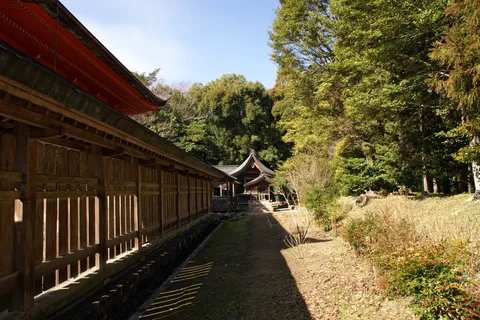
Tosa Jinja
Tosa-jinja
- Success in New Ventures
- Industrial Prosperity
- Household Safety
Hiroshima Prefecture, Miyajima, Hatsukaichi
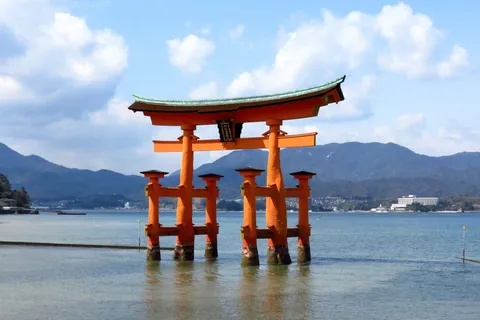
Itsukushima Shrine
Itsukushima-jinja
- Maritime Safety
- Wealth
- Success in the Arts
Osaka Prefecture, Nishi Ward, Osaka
Samuhara Shrine
Samuhara-jinja
- Protection from Misfortune
- Good Fortune
- Good Health