History
Otori Taisha enshrines Yamato Takeru-no-Mikoto, the legendary hero of Japanese mythology, and serves as the ichinomiya (chief shrine) of former Izumi Province. According to tradition, after Yamato Takeru died at Nobono in Ise Province on his way home from a military campaign in the east, his spirit transformed into a white bird and flew toward the capital. The bird is said to have first landed at Kotohiki Plain in Yamato, then at Furuichi in Kawachi, before finally alighting here in Izumi to rest. Local people, moved by the sight, built a shrine to honor the bird’s spirit — and it is this legend that gives Otori Taisha (“Great Bird Shrine”) its name.
The identity of the shrine’s guardian deity has, however, shifted over the centuries. The early Heian-period genealogical record Shinsen Shojiroku traces the ancestry of the Otori clan, who flourished in this area, back to Amenokoyane-no-Mikoto, suggesting that the shrine’s original deity was in fact the clan’s own ancestral spirit, Otori-no-Muraji-no-Oyagami. Later eras saw the shrine’s principal deity variously identified as Amaterasu and then Yamato Takeru, with the latter becoming the accepted tradition. Following a government review of shrine deities in 1896, the official designation reverted to Otori-no-Muraji-no-Oyagami, and in 1961 Yamato Takeru was additionally enshrined alongside it, giving the shrine its present dual dedication.
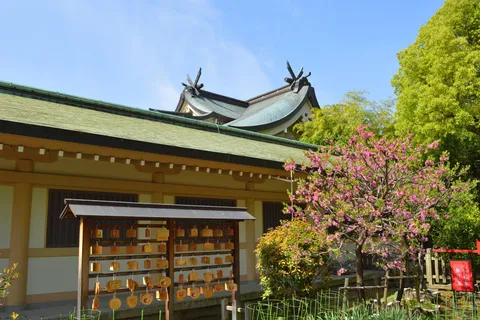
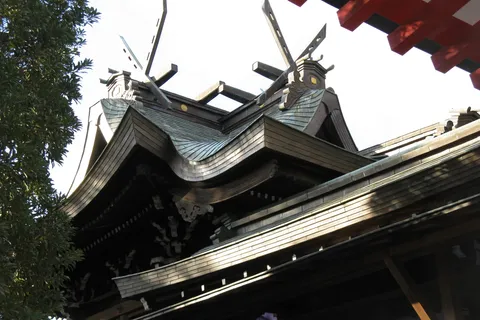
Otori Taisha is recorded in the Engi Shiki of 927 as a Myojin Taisha (“Great Shrine of Renown”) of Izumi Province, and it has long been venerated as that province’s ichinomiya. Under the modern shrine ranking system of the Meiji era it was designated a Kanpei Taisha, one of the highest imperially-funded ranks. The current shrine buildings date to 1909, rebuilt after the previous structures were destroyed by a lightning-caused fire in 1905; they are built in the distinctive Otori-zukuri style, said to be the second-oldest shrine architectural style in Japan after the taisha-zukuri of Izumo Taisha.
Highlights
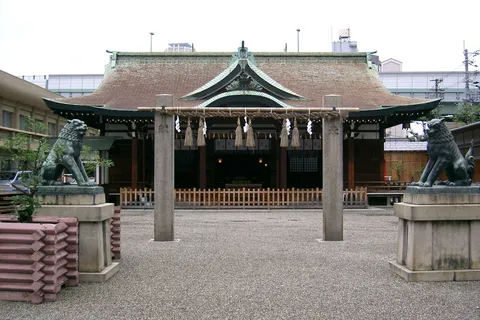
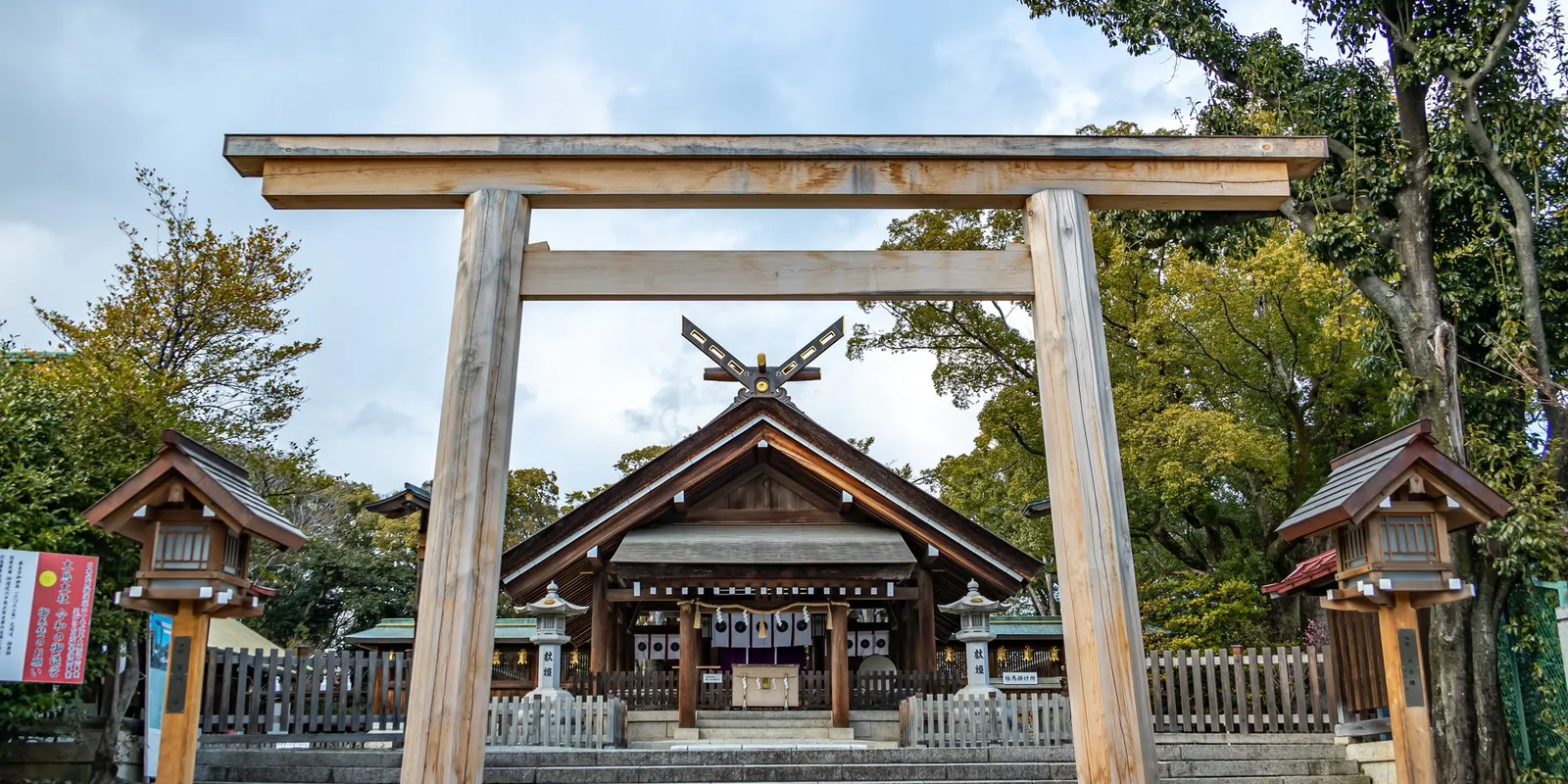
The shrine grounds cover roughly 15,000 tsubo (about 5 hectares) of dense forest, a green oasis in the middle of the city known since antiquity in classical poetry as the “Chigusa Forest.” Walking down the approach, visitors pass beneath a wooden torii gate before reaching the imposing worship hall, whose solid, weighty form is characteristic of Otori-zukuri architecture.
One of the grounds’ most striking features is its sacred tree, a large camphor known as “Ne-agari no Okusu” (“the great camphor with rising roots”) for the way its massive roots have surfaced dramatically above the ground over the centuries. Revered as a symbol of financial growth and prosperity, it has a small torii enshrined at its base. Elsewhere on the grounds stands a bronze statue of a sacred horse donated by worshippers, along with a stone monument commemorating the episode in which Taira no Kiyomori and his son Shigemori are said to have stopped here to pray for victory during the Heiji Rebellion.
Visiting Tips
Given its prestigious status as the ichinomiya of Izumi Province, Otori Taisha draws many visitors seeking good fortune and business prosperity. The amulet office offers a rotating selection of monthly limited-edition goshuin featuring seasonal flowers and festival motifs, which many repeat visitors look forward to collecting.
Because on-site parking is limited, it tends to fill up quickly during the Otori Danjiri Festival in October and around New Year, so public transportation is recommended during those periods. The shrine’s location just 5 minutes on foot from the west exit of Otori Station on the JR Hanwa Line makes it easy to reach. Late April, after the cherry blossoms have faded and the azaleas begin to bloom, is another particularly attractive time to visit.
Annual Festivals
- Main Festival (August 13): The shrine’s most important annual observance, tracing back to a procession to Shukuin Tongu in Sakai that began in 1872; ceremonies are still held today at Minato and Shukuin Tongu.
- Otori Danjiri Festival (first Friday through Sunday of October): An autumn festival centered on the neighborhoods around Otori Taisha’s auxiliary shrine, Otori Minamihi Jinja, featuring spirited danjiri floats paraded through the streets. On the final day, the floats process to Otori Taisha itself in an event known as “miyairi,” drawing large crowds of spectators.
- New Year (Hatsumode): The amulet office extends its hours, and the shrine grounds are open through the night from New Year’s Eve into January 1st, reflecting its stature as Izumi Province’s chief shrine.
Nearby Food & Sightseeing
- Otori Minamihi Jinja: An auxiliary shrine of Otori Taisha and the focal point of the Otori Danjiri Festival. Worth exploring the surrounding neighborhood during the autumn festival season.
- Hamadera Park: One of Osaka Prefecture’s oldest public parks, opened in 1873 near Hamadera-Koen Station on the Nankai Main Line. Known for roughly 5,500 pine trees and a rose garden, it makes an excellent pairing with a visit to Otori Taisha.
- Otori Hondori Shopping Street: A traditional shopping street right by Otori Station with deep ties to the Danjiri Festival, lined with local restaurants and shops — a convenient stop before or after visiting the shrine.
Frequently Asked Questions
- Q. Where does the name Otori Taisha come from?
- A. According to legend, after the hero Yamato Takeru died, his spirit took the form of a white bird (shiratori) and flew off toward the capital, first landing at Kotohiki Plain in Yamato, then at Furuichi in Kawachi, and finally alighting here in Izumi Province to rest. The shrine's name, "Otori" ("great bird"), comes directly from this legend, and a shrine was built where the bird was said to have landed.
- Q. Can I receive a goshuin (shrine stamp) here?
- A. Yes, for a fee of ¥500, available 9:00–16:30. A limited-edition goshuin featuring seasonal flowers and motifs is also offered on a monthly rotating basis, starting from around ¥700.
- Q. What are the visiting hours at Otori Taisha?
- A. The grounds open at 5:30 from April to September and at 6:00 from October to March, closing at 18:00 year-round. The amulet office, where goshuin and charms are available, is open 9:00–16:30.
- Q. How do I get to Otori Taisha?
- A. It's a very convenient 5-minute walk from the west exit of Otori Station on the JR Hanwa Line. If arriving via the Nankai Main Line, it's about a 20-minute walk from Ishizugawa Station.
- Q. Is there parking at Otori Taisha?
- A. A small parking area is available on the grounds, but space is limited. It fills up quickly during the Otori Danjiri Festival in October and around New Year, so visiting by train is recommended during those times.