History
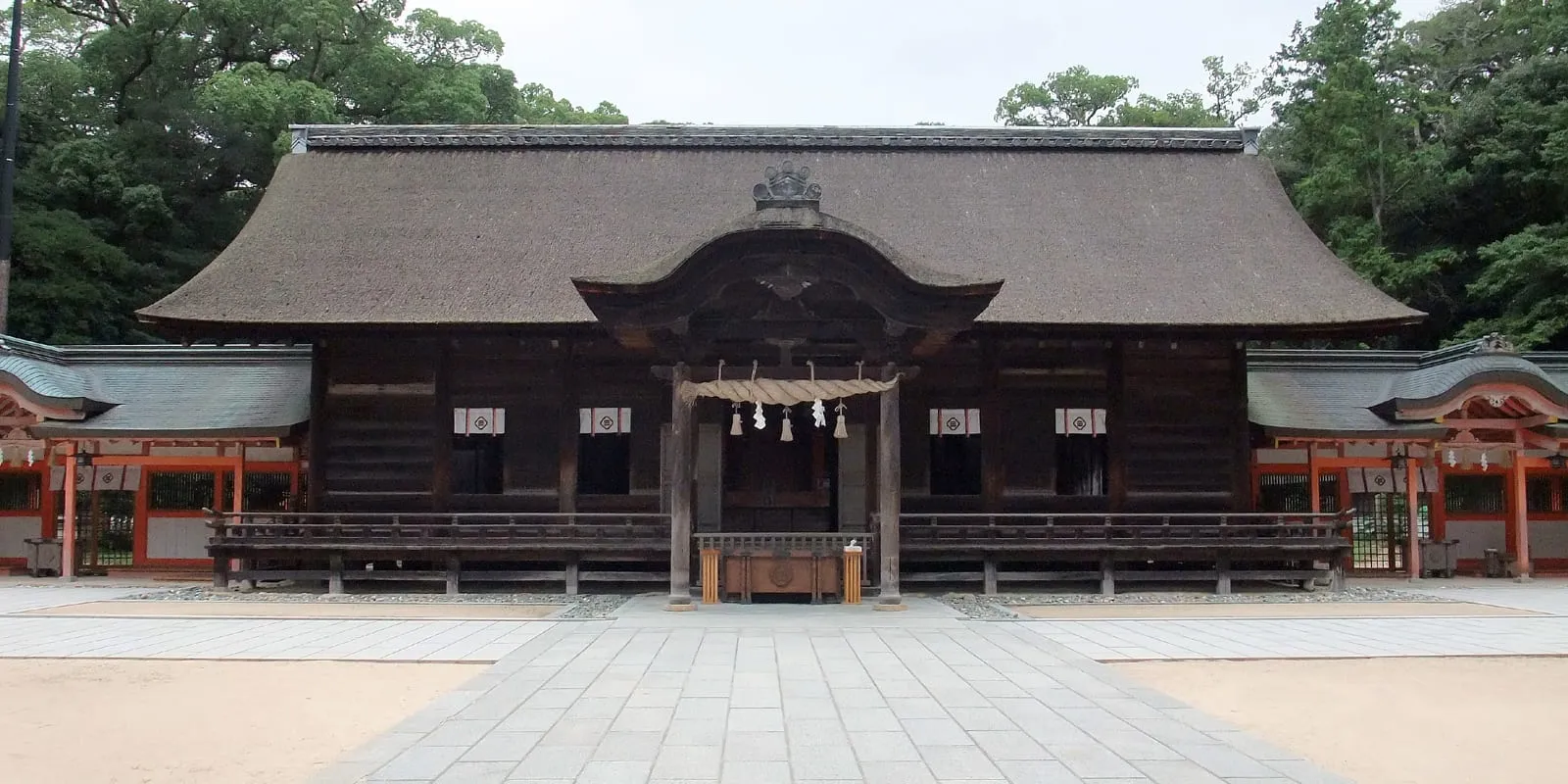
Oyamazumi Jinja stands on the island of Omishima in the Seto Inland Sea, in what is now Imabari City, Ehime Prefecture. Shrine tradition holds that it was founded in 594, during the reign of Empress Suiko. Its enshrined deity, Oyamatsumi no Kami, is said to be the elder brother of the sun goddess Amaterasu, and has long been worshipped as a god of mountains, sea, and war, revered by the imperial court and generations of warriors alike. As the ichinomiya (chief shrine) of former Iyo Province, it is also regarded as the head shrine of roughly ten thousand Yamazumi and Mishima shrines found across Japan.
Because the shrine sits at a strategic crossing point of Seto Inland Sea shipping routes, warriors and naval forces for centuries prayed here for safe voyages and victory in battle, donating great numbers of arms and armor as offerings. Pieces linked to historic figures such as Minamoto no Yoritomo, Minamoto no Yoshitsune, the Kono clan, and the Murakami Kaizoku (Murakami naval forces based on Omishima) are still preserved today in the shrine’s treasure hall.
The shrine continued to be revered as guardian deity of the Seto Inland Sea’s naval forces through the medieval period, and during the Edo period it received land grants from successive lords of the Imabari domain. Across the centuries it has maintained a status prestigious enough to be called “Japan’s guardian shrine,” a name still used to describe it today.
Highlights
The single greatest highlight of Oyamazumi Jinja is its treasure hall, which holds one of the most important collections of samurai arms and armor in Japan. Roughly 40 percent of all armor pieces nationally designated as National Treasures or Important Cultural Properties are held at this one shrine, among a total of 85 designated cultural properties, including 8 National Treasures and 76 Important Cultural Properties. Visitors can view remarkable pieces up close, including armor said to have been dedicated by Minamoto no Yoritomo — a collection essential to understanding the history of Japanese arms and armor.
The shrine grounds are home to numerous ancient trees, including a nationally designated natural monument camphor tree said to be roughly 2,600 years old, planted according to legend by Ochi no Mikoto. Near the approach stands another giant camphor known as “Ikiki no Gomon” (the Living Gate), whose hollowed base has become a popular spot where visitors can walk through the tree itself, said to be a source of spiritual power.
Visiting Tips
Oyamazumi Jinja sits near the center of Omishima Island, a short distance from Miyaura Port. The grounds are larger than they first appear, and visiting both the main shrine and the treasure hall (separate admission required) in full can easily take over an hour, so it’s best to allow plenty of time. Many visitors stop here while cycling or driving across the Shimanami Kaido, and the free parking near the Omishima IC makes access easy.
Annual Festivals
- Grand Festival and Goguu Festival (22nd–23rd day of the 4th lunar month): The shrine’s most important festival, commemorating its founding on this site; together with the preceding robe-changing rite, it forms the “Spring Grand Festival,” drawing visitors from across and beyond the island.
- Rice-Planting Festival (5th day of the 5th lunar month): Sixteen young women chosen from 13 districts across the island, dressed in white robes, perform a sacred rice-planting rite. The festival closes with “Hitorizumo” (solo sumo), a rare Shinto rite in which a wrestler grapples with the invisible spirit of the rice — the year’s harvest is divined from how the match unfolds.
- Fire Ceremony and Year-End Grand Festival (December 31): A closing rite for the year, praying for good health and protection from misfortune, drawing crowds of visitors as the new year approaches.
Nearby Food & Sightseeing
- Kifune: A restaurant right by the shrine serving Ehime specialties like taimeshi (sea bream rice) and seafood bowls, a good stop for lunch after visiting.
- Omishima Brewery: A brewery and restaurant known for craft beers made with Omishima’s citrus, along with dishes highlighting local ingredients.
- Toyo Ito Museum of Architecture, Imabari: About 15 minutes by car from the shrine, this museum showcases the work of celebrated architect Toyo Ito, with the striking buildings themselves as much a highlight as the exhibits.
- Ikiki no Gomon: About a 5-minute walk from the shrine, a famous giant camphor tree whose hollowed base visitors can walk through — one of the island’s best-known spiritual spots.
Frequently Asked Questions
- Q. What are the visiting hours?
- A. The gate opens around sunrise and closes at 17:00; the shrine office and goshuin desk are open 9:00–17:00.
- Q. When is the goshuin office open?
- A. 9:00–17:00, for ¥500.
- Q. Is there parking?
- A. Yes, free parking is available.
- Q. What's notable about the treasure hall?
- A. It holds roughly 40% of all nationally designated National Treasure and Important Cultural Property armor in Japan, including 8 National Treasures among its 85 designated items (separate admission fee applies).
- Q. How do I get there?
- A. About a 10-minute drive from the Omishima IC on the Shimanami Kaido, or get off at the Oyamazumi-jinja-mae island bus stop.