History
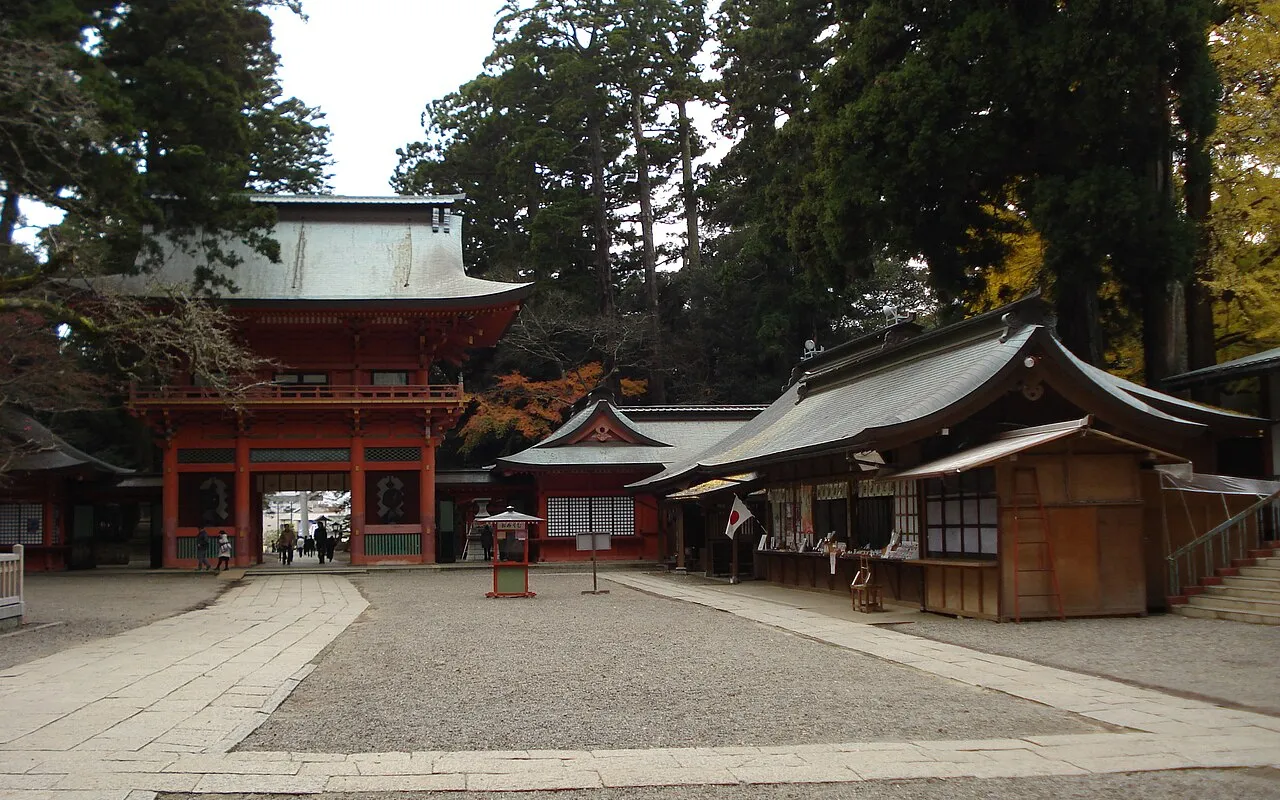
Kashima Jingu is the head shrine of roughly 600 Kashima shrines found across Japan. Its enshrined deity, Takemikazuchi no Okami, is a god of martial valor celebrated in Japanese mythology’s “kuniyuzuri” story for his role in the founding of Japan. The shrine’s founding is traditionally dated to 660 BCE, the first year of Emperor Jinmu’s reign, making it one of the oldest shrines in Japan. Together with Katori Jingu in Chiba Prefecture and Ikisu Jinja in Ibaraki Prefecture, it is counted among the “Three Shrines of the Eastern Provinces” (Tōgoku Sansha).
As a Shikinaisha (Myōjin Taisha) and the Ichinomiya of Hitachi Province, Kashima Jingu received deep reverence from the imperial court and aristocratic families such as the Fujiwara, and from the medieval period onward it drew prayers and donations from warrior leaders including Minamoto no Yoritomo and Tokugawa Ieyasu. When water transport opened on the Tone River during the Edo period, pilgrimages to all three of the Kashima, Katori, and Ikisu shrines — the “Tōgoku Sansha Mairi” — became popular among ordinary people as well. As one of only about a dozen shrines in Japan to bear the title “Jingu,” Kashima Jingu carries its prestige to this day.
Highlights
The “Oku-sando,” the approach deep within the grounds, is a solemn path lined with towering trees said to be centuries old, embodying the sacred atmosphere of Kashima Jingu. The “Kaname-ishi” (keystone), said to hold down the giant catfish believed to cause earthquakes, is another highlight passed down since ancient times.
Visiting Tips
As at Kasuga Taisha in Nara, sacred deer believed to be messengers of the shrine’s deity are kept in the shrine’s “Shikaen” deer park. As a god of martial arts, Kashima Jingu also draws deep devotion from athletes and others facing important contests.
Annual Festivals
- Saito Festival (March 9) — A spirited spring festival in which parishioners divide into left and right teams and parade while striking oak staffs together to the rhythm of drums and flutes.
- Shikinen Taisai Ofune Festival (once every 12 years, in the Year of the Horse) — A grand water festival, said to be the largest of its kind in Japan, in which a fleet of more than 100 boats crosses Lake Kitaura.
- Year-round rites — Kashima Jingu holds more than 90 festivals and rites each year, including the Hakuba Festival and yabusame mounted archery.
Nearby Food & Sightseeing
Visiting neighboring Katori Jingu across the Tone River together with Kashima Jingu — the “Tōgoku Sansha Mairi” — is a time-honored custom, and many visitors combine the two.
- Omachi-dori / Nakamachi-dori — Streets lining the approach to Kashima Jingu, lined with restaurants and sweet shops where you can enjoy a bit of street food.
- Suzusho — A long-established Japanese restaurant near the approach, serving set meals made with local ingredients.
- Kantaro-yaki — A beloved sweet shop along the approach, known for its large imagawayaki-style pancakes filled with red bean paste, cream, and other fillings.
Frequently Asked Questions
- Q. What are the visiting hours?
- A. The grounds are open all day, but the amulet office is open 8:30–16:30.
- Q. When is the goshuin office open?
- A. 8:30–16:30, for ¥500.
- Q. Is there parking?
- A. Yes, paid parking is available nearby.
- Q. What is the "Togoku Sansha Mairi"?
- A. A traditional pilgrimage visiting Kashima Jingu, Katori Jingu, and Ikisu Jinja together, which spread among ordinary people from the Edo period onward.
- Q. How do I get there?
- A. About a 10-minute walk from Kashima-jingu Station on the JR Kashima Line.