History
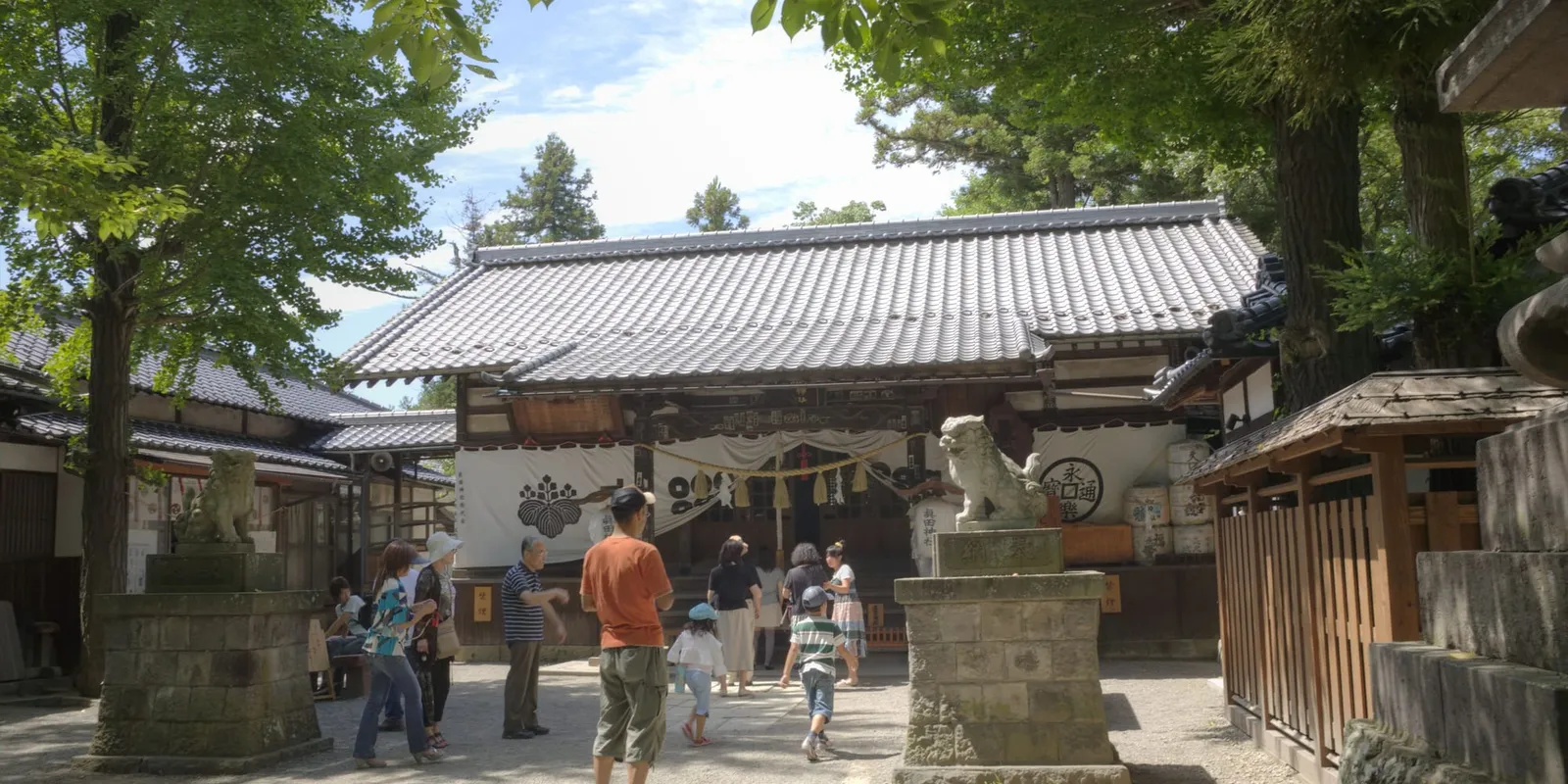
Sanada Shrine stands on the site of the Ueda Castle main enclosure, inside Ueda Castle Ruins Park in Ueda, Nagano. It is read “Sanada-jinja” (the official English page calls it “Sanada Shrine”). The official site’s headings write the name with the older variant 眞田, though its page titles also use 真田; this page follows the official headings. According to the official site, the enshrined deities are the successive lords of Ueda Castle: the Sanada, Sengoku and Matsudaira clans.
The official history says the shrine was originally a shrine to the ancestors of the Matsudaira family and was called “Matsudaira (Shōhei) Shrine.” The Matsudaira, of the Fujii-Matsudaira line, followed the Sanada and Sengoku and served as lords of Ueda Castle for seven generations and more than 160 years, from the middle of the Edo period to the abolition of the domains in the Meiji era. Their first lord, Tadaharu (who took the name Chūzan on retiring), died in 1669 (Kanbun 9) and is buried at Konkai Komyoji in Kyoto. A shrine to his spirit, the Chūzan-sha, was set up in Kyoto, and the official site says this shrine is the origin of the present one.
When the domains were abolished in the Meiji Restoration, Ueda Castle was sold off to private parties, and the castle grounds turned into mulberry orchards and wheat fields. Former Ueda retainers and local supporters then wanted to build a shrine on the castle site, both to repay the former lords and to preserve the ruins as a historic site. Maruyama Heihachiro, who owned the main enclosure, donated its southern half as the shrine grounds, and Nagano Prefecture approved the founding of Matsudaira Shrine in 1879 (Meiji 12). The rest of the main enclosure was later donated as park land, according to the official site.
After the war there were calls to enshrine the earlier Sanada and Sengoku lords as well, and in 1953 (Showa 28) all the successive lords were enshrined together and the shrine was renamed “Ueda Shrine.” Because the name was easily confused with a shrine of the same name that once stood in the city, it took the name of the first lord, the Sanada clan, and was renamed “Sanada Shrine” again in Showa 38, as the official site explains. All of this is the shrine’s own account of its history.
Highlights
The official site introduces several features in the grounds. The “Sanada Well” is described as the only large well inside the castle, and a legend says it had a tunnel leading to the foot of Mt. Tarō to the north of the castle and to the site of the lord’s residence. The “Great Helmet of Sanada Nobushige (Yukimura)” is a huge red-lacquered helmet with antler-shaped side crests, said to have been worn by Nobushige, and you can see it in the grounds. There is also a statue of the young Yukimura (Nobushige) modeled on the moment he gives the order to sortie with his favorite spear, and a distant-worship site for the Inner Shrine of Ise, set up so that visitors can pay respects to Ise Jingu without traveling the 256 km or so to get there (as the official site explains).
At the purification pavilion, seasonal fresh flowers are also floated in the basin (hana-chōzu).
According to the official site, Ueda Castle is known as a “fortress that did not fall,” having repelled the large Tokugawa armies twice under the Sanada, and the prayer page explains that prayers for exam success are rooted in this history. The amulet page lists items such as the “Fortress-That-Did-Not-Fall, Tough-Exam Breakthrough Amulet,” the “Sakura Saku” amulet, the “Victory Amulet,” and amulets for protection from misfortune and traffic safety. The same page also lists a Hello Kitty (Sanada Yukimura) amulet and a goshuin book from a collaboration with the game “Sengoku Musou.”
Visiting Tips
According to the official site, visiting is open to all, and the goshuin and amulet office is open 9:00 AM–4:00 PM (may change with the season). Prayer services include life-event rites such as exam-success and victory prayers, first shrine visits, Shichi-Go-San, and weddings, as well as rites held away from the shrine such as groundbreaking and completion ceremonies; the shrine asks that you consult them before visiting.
Goshuin are given as proof of your visit, and regular goshuin are written in your own goshuin book. Seasonal limited editions are sometimes limited in number and are announced under “News” on the official site. Goshuin books are described as available irregularly and in varying numbers. The offering amount is not stated on the official site, so it is safest to check at the office.
It is about a 17-minute walk from JR Ueda Station (official access page; the official top page says 10 minutes on foot, so the two differ). Two parking lots are listed on the official site, the Ueda Castle North Tourist Parking Lot and the Ueda Castle Ruins Parking Lot; fees and capacities are as given above.
Annual Festivals
The main festivals listed under “Annual Events” on the official site are as follows (dates are given only where the site gives one).
- New Year’s visit (January 1): Thanks for the past year and prayers for safety and peace in the new year.
- Setsubun Tsuina-sai (February 3): Timed with the eve of the start of spring, it drives away the oni (demons) that bring calamity, with prayers for health and safety.
- Spring Grand Festival (April): One of the shrine’s two important annual festivals, held each spring and autumn, offering prayers to the enshrined deities.
- Summer Purification and Chi-no-wa Kuguri (June): Passing through a ring of woven reeds and straw to purify body and mind and pray for good health.
- Sanada Mikoshi (Ueda Wasshoi) (July): The shrine’s Great Helmet of Sanada is carried through the city as a mikoshi in step with Ueda’s city festival.
- Autumn Grand Festival (October): Like the spring festival, a major rite of prayer to the enshrined deities.
- Great Purification (December) and Year-End Rite (December 31): Rites to purify sins and impurities.
Specific dates may change from year to year, so check the official site.
Nearby Food & Sightseeing
- Ueda Castle Ruins Park: The park where the shrine stands. According to the Shinshu Ueda Tourism Association, the “Ueda Castle Senbonzakura Festival” is held on the park’s lawn square, and in 2026 it ran from April 4 to April 12 (dates vary by year).
- Soba-dokoro Senbonzakura: A soba restaurant in the Ueda City Tourism Hall, across the road from Ueda Castle Ruins Park. According to the Shinshu Ueda Tourism Association, its signature dish is the “Rokumonsen Kakiage Tendaru Soba,” themed on the Sanada family’s six-coin crest. Its hours and weekly closing day (Wednesday) are on the same page, but as the page gives no update date, please check the latest information before you go.
- Hokkoku Kaido Yanagimachi: According to the Shinshu Ueda Tourism Association, a street about a 10-minute walk from Ueda Castle where an old townscape remains along the former Hokkoku Kaido. It is described as lined with shops selling Shinshu soba, local sake, bakery goods and local sweets.
Frequently Asked Questions
- Q. What are the visiting hours? Until when is the amulet office open?
- A. According to the official site, you can visit freely. The goshuin and amulet office is open 9:00 AM–4:00 PM, and the hours may change with the season. For prayer services, the shrine asks that you consult them in advance.
- Q. Can I get a goshuin at Sanada Shrine?
- A. Yes. The official site says goshuin are given as proof of your visit. Regular goshuin are written in your own goshuin book, and seasonal two-page limited editions and the like are announced under "News" on the official site (some are limited in number). The offering amount is not stated on the official site, so please check at the office. The hours are 9:00 AM–4:00 PM.
- Q. How do I get there, and is there parking?
- A. The official access page gives about a 17-minute walk from JR Ueda Station (the official top page says 10 minutes on foot, so the two differ). Parking listed on the official site: the Ueda Castle North Tourist Parking Lot (about 5 min on foot; up to 224 cars; free for up to 1 hour in the normal period, ¥500 for up to 3 hours in the special period) and the Ueda Castle Ruins Parking Lot (about 10 min on foot; 88 cars; free for 24 hours in the normal period, with parking possibly prohibited during events).
- Q. Which deities are enshrined here?
- A. According to the official site, the shrine stands on the site of the Ueda Castle main enclosure and enshrines the successive lords of Ueda Castle: the Sanada, Sengoku and Matsudaira clans. It began as "Matsudaira (Shōhei) Shrine" for the Matsudaira lords, was renamed "Ueda Shrine" in 1953 when the Sanada and Sengoku lords were enshrined with them, and became "Sanada Shrine" in Showa 38, taking the name of the castle's first lords, the Sanada.
- Q. What is there to see in the grounds?
- A. The official site introduces the Sanada Well (said to have been the only large well inside the castle, with a legend of a hidden tunnel), a huge red helmet with antler-shaped side crests said to have been worn by Sanada Nobushige (Yukimura), a statue of the young Sanada Yukimura (Nobushige), and a distant-worship site for the Inner Shrine of Ise. The shrine also floats seasonal fresh flowers in its purification basin (hana-chōzu).
Plan Your Visit
Before you go, you can book a stay and get your shrine-visit items ready.
Amazon links open Amazon.co.jp (Japan) in English; whether an item ships overseas depends on the product.
※ Contains ads (PR). Links open external sites such as Amazon, Rakuten, Trip.com and Booking.com.