History
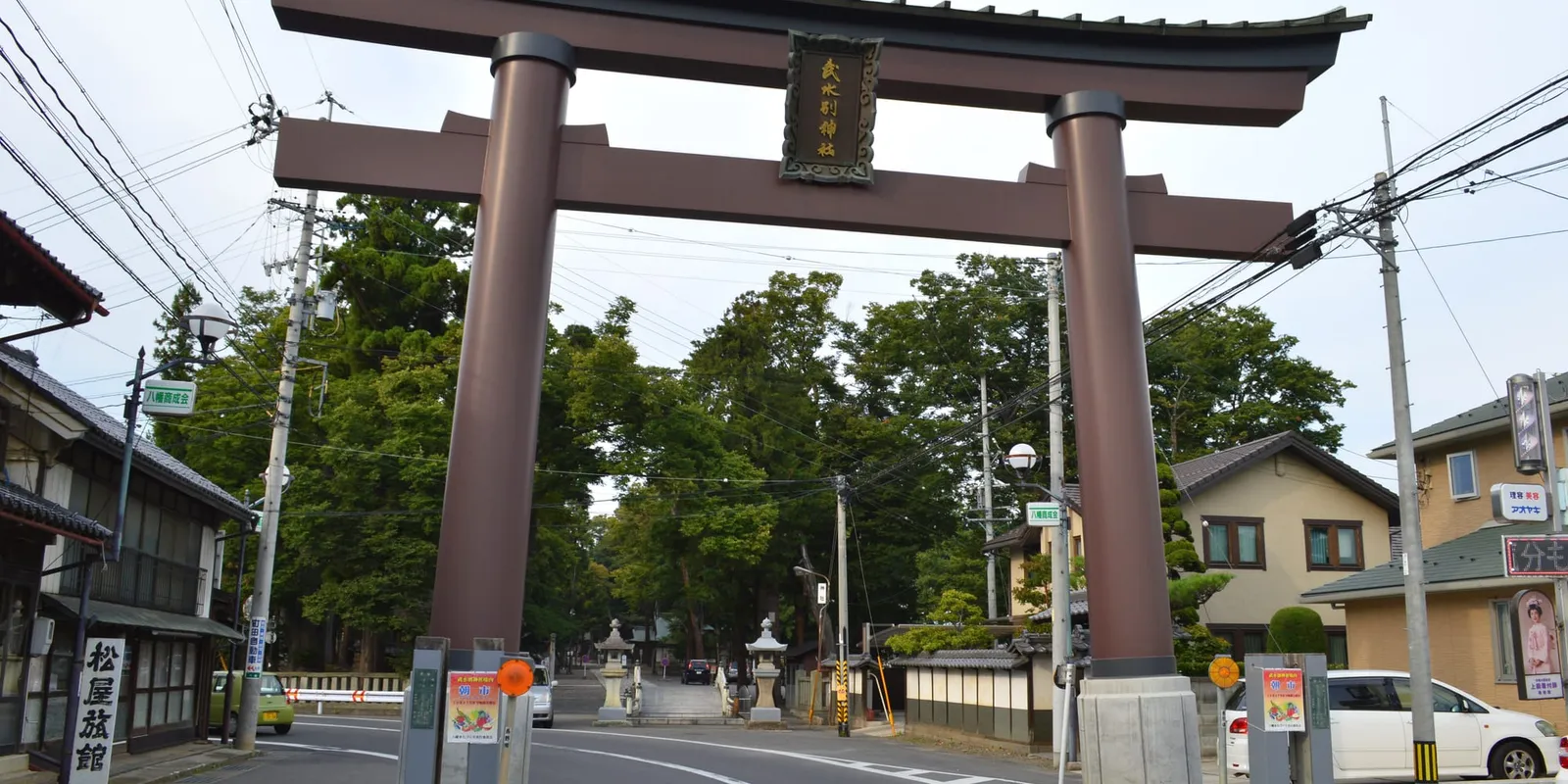
Takemizuwake Jinja stands in Yawata, Chikuma, Nagano Prefecture, and is also known locally as “Hachiman-sama” and “Yawata no Hachimangu.” The reading of the name here comes from the official site’s address (takemizuwake.jp) and Japanese Wikipedia; the official site’s pages themselves give readings only for the enshrined deities. The official site names Takemizuwake no Okami as the principal deity, enshrined alongside Honda-wake no Mikoto (Emperor Ojin), Okinagatarashi-hime no Mikoto (Empress Jingu) and Hime Okami.
According to the official history, the founding date is unknown, but shrine tradition holds that Takemizuwake no Okami was enshrined in the reign of Emperor Kogen. In the Anna era (968–970), Honda-wake no Mikoto and two other deities are said to have been invited from Iwashimizu Hachimangu in Kyoto and enshrined alongside. The official site explains that the shrine is listed as a Myojin Taisha in the Engishiki, and that the Sandai Jitsuroku records it receiving the rank of Junior Fifth Rank, Lower Grade in 860 (Jogan 2) and Junior Second Rank in the 8th year of Jogan. From the Sengoku period through the Edo period it was revered by warlords as the foremost Hachiman shrine of the region, and in 1648 (Keian 1) the shogunate granted it a shuin-chi land holding of 200 koku. It became a prefectural shrine in 1908 (Meiji 41) and is now a Beppyo Jinja of the Association of Shinto Shrines.
The official site says the principal deity Takemizuwake no Okami protects farming and everything to do with water, and was probably enshrined to pray for bountiful harvests on the Zenkoji plain, the largest grain-producing area in Nagano, and for protection from floods of the nearby Chikuma River. There is also a tradition that Kiso Yoshinaka prayed here before the Battle of Yokotagawara, won, and later dedicated rice paddies to the shrine. The official site’s amulet guide says Hachiman-sama has long been revered by Sengoku warlords and is well known as a god of victory. Separately, the shrine’s own text on the origin of its “uzura mochi” calls it “one of the three great shrines of Shinshu.” This is the shrine’s self-description on its own site, not an official certification.
Highlights
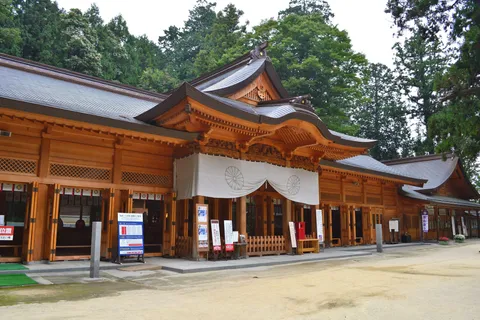
Most of today’s buildings date from after a fire in 1842 (Tenpo 13). The main hall was completed in 1850 (Kaei 3) by Tachikawa Washiro (the second, Tomimasa), a craftsman from Suwa; the official site describes it as covering more than 31 tsubo with delicate carving inside and out. The exterior carries carvings of quail in pairs by Tachikawa Washiro Tomimasa, depicting the quail said to have once flocked on the Chikuma riverbank east of the shrine, according to the shrine’s uzura mochi text. The worship hall was completed in 1856 (Ansei 3).
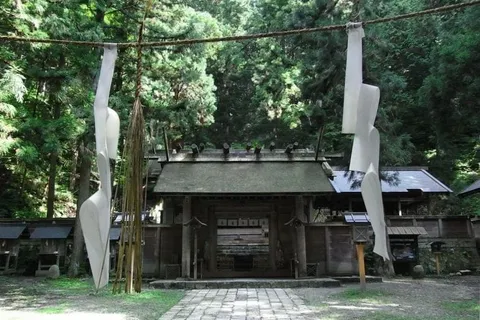
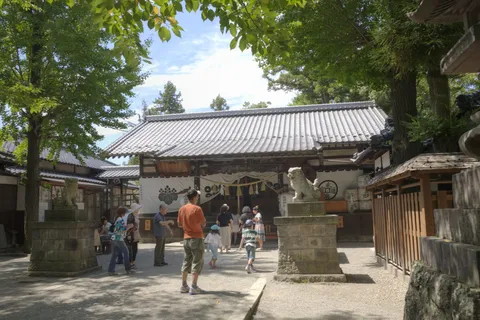
The auxiliary shrine Kora-sha, which escaped the fire, is said by the official site to date from the late Muromachi period and was designated a Nagano Prefectural Treasure in 1975. The Mikoshi Yasumisho (palanquin rest house) next to it is presumed to date from the late Edo period and is described as the only valuable building tied to the rites of the shrine-temple (jinguji) from the era of Shinto-Buddhist syncretism. The Gakuden hall displays old plaques and other items; ask at the shrine office if you wish to see them. The grounds also hold many sub-shrines, such as Jimmu Tenno-sha and Hoso-sha (疱瘡社), and a monument to the Battle of Yawata between Kai and Echigo forces.
Among the annual events, the Daito-sai (Niiname-sai) in December is a nationally selected intangible folk cultural property as the “Tonin rites of Takemizuwake Jinja.” Among the amulets are the “Shigoto-mamori ~Shutsujin~” (work amulet) inspired by the Kiso Yoshinaka tradition, the “Shoun-mamori” (victory amulet) for winning prayers, and dove-shaped ema and fortune dolls. A collaboration goshuin with the TV anime “Turkey!,” set in Chikuma, is also announced on the shrine’s official site (see the FAQ for details).
Visiting Tips
Prayer requests are accepted 9:00 AM–4:00 PM, with the last morning request at 11:50 AM and no requests 11:50 AM–1:00 PM. Reservations by phone are basically not accepted; you go on the day and are guided in turn (hours may change at New Year and on festival days). The official site lists the offering at ¥6,000 and up for general prayers and ¥10,000 and up for group prayers. Years of misfortune are counted by the traditional kazoe-doshi age, and the official site has a yakudoshi chart. The official site says Honda-wake no Mikoto is widely revered as a god of protection from misfortune, good fortune and winning.
Prayer requests, amulets and goshuin are handled at the Saigisho in the grounds. The fee for the regular goshuin and the hours for goshuin alone are not stated on the official site. The shrine also offers original goshuin books (a commissioned one with the main hall on the front and the “Tagoto no Tsuki” moon on the back, plus three other designs). The official site also has a notice that it does not handle the “complete sticker” or the “刻道守” leather amulet in connection with the 御刻印 program.
It is about a 10-minute drive from Yashiro Station (Shinano Railway), Koshoku IC (Joshin-etsu Expressway) or Inariyama Station (JR Shinonoi Line). People coming for traffic-safety prayers use the dedicated parking area in front of the Saigisho. Capacity and fees are not stated on the official site, so it is safest to check by phone (026-272-1144) in advance.
Annual Festivals
- Saitan-sai (January 1): The official site says visitors receive a lucky amulet on New Year’s Day.
- Setsubun Tsuina-sai (February 3): After rites including a shrine maiden dance in the worship hall, year-men and year-women and others throw beans. Caramel boxes bearing the characters for “Take-mizu-wake-jin-ja” are thrown too, and finding the right slip wins a prize (official site).
- Kinen-sai (March 15): Listed among the main festivals on the official site.
- Oharae-shiki (June 30, 3:00 PM; December 31, 2:00 PM): A purification of the past half-year’s impurities; a limited free “konusa” purification wand is given out at the end.
- Hakuyo-sai (July 15, 9:00 AM): Based on the tradition of Kiso Yoshinaka offering small rice cakes on oak leaves in thanks for victory; one offering cake is given to each worshipper after the ceremony. The shrine’s uzura mochi text on the same site says “July 14 to 16,” so the descriptions differ.
- Chushu-sai (September 14) and Reitaisai (September 15): The festival of mid-autumn is described as especially large, and the official site says fireworks (“Tonton”) and other events take place on the night of the 14th.
- Chikuma Grand Chrysanthemum Exhibition (late October to mid-November): Over about three weeks, more than 1,000 pots of chrysanthemums are displayed in the grounds. In 2026 it runs from Saturday, October 24 to Sunday, November 15.
- Meiji-setsu-sai (November 3): In 2026, prayer requests start from around 9:30 AM.
- Daito-sai (December 10–14): A nationally selected intangible folk cultural property harvest festival. The procession from 斎ノ森神社 sets off around 3:00 PM each day, and “gokumaki” offerings are scattered.
Dates can change from year to year, so check “Annual Events” and “News” on the official site for the latest.
Nearby Food & Sightseeing
- Ochaya Uzuraya (Uzura Mochi): A shop introduced on the official site as part of the grounds, selling “uzura mochi,” quail-shaped rice cakes filled with lightly sweet smooth red bean paste. A set of tea and two uzura mochi is ¥400 (per the official site).
- Hotel Uzuraya: According to the official site, an inn 5 minutes on foot from the shrine, overlooking the Obasute terraced rice fields and the Chikuma River. All 21 rooms are Japanese-style, and a hot spring is available 24 hours a day.
- Obasute Terraced Rice Fields (Tagoto no Tsuki): The shrine’s official site says it stands at the foot of “Obasute-yama of Tagoto no Tsuki,” and the moon of Tagoto no Tsuki is also drawn on the back of its original goshuin book.
Frequently Asked Questions
- Q. What are the prayer-request hours?
- A. According to the official site, prayer requests are accepted 9:00 AM–4:00 PM, with the last morning request at 11:50 AM. No requests are taken from 11:50 AM to 1:00 PM. Reservations by phone are basically not accepted; you go to the shrine on the day and are guided in turn. Hours may change at New Year and on festival days. The offering starts at ¥6,000 for general prayers (such as protection from misfortune, household safety and traffic safety) and ¥10,000 for company or group prayers.
- Q. Can I get a goshuin?
- A. Yes. The official site's grounds guide says prayer requests, amulets and goshuin are handled at the Saigisho (ritual hall). However, the fee for the regular goshuin and the hours for goshuin alone are not stated on the official site. Using the prayer-request hours (9:00 AM–4:00 PM, none 11:50 AM–1:00 PM) as a guide, it is safest to confirm by phone (026-272-1144) beforehand.
- Q. Is there an anime "Turkey!" collaboration goshuin?
- A. According to a feature article on the shrine's official site (dated December 7, 2025), the shrine began distributing a collaboration goshuin with the TV anime "Turkey!", which is set in Chikuma, on November 29, 2025. The offering is ¥600 and includes the collaboration goshuin plus one original postcard mount (randomly one of three designs). The article gives no end date for the distribution, so it is unclear whether it is still available; please check with the shrine before visiting.
- Q. How do I get there, and is there parking?
- A. The official site gives about 10 minutes by car from Yashiro Station on the Shinano Railway (city loop buses Meigetsu-go and Chikuma-go are available), about 10 minutes by car from Koshoku IC on the Joshin-etsu Expressway, and about 10 minutes by car from Inariyama Station on the JR Shinonoi Line. For parking, the only information is that people coming for traffic-safety prayers use the dedicated area in front of the Saigisho; capacity and fees are not stated.
- Q. What is the Daito-sai festival?
- A. According to the official site, it is a harvest thanksgiving (Niiname-sai) held every year from December 10 to 14 and designated a nationally selected intangible folk cultural property as the "Tonin rites of Takemizuwake Jinja." It centers on five tonin (festival officers), and the highest-ranking one, the third-ranked tonin, is called the "Daito," which gives the festival its name. The oldest surviving roster of tonin dates back to 1592 (Bunroku 1), the site explains. The procession from 斎ノ森神社 to the shrine sets off around 3:00 PM each day.
Plan Your Visit
Before you go, you can book a stay and get your shrine-visit items ready.
Amazon links open Amazon.co.jp (Japan) in English; whether an item ships overseas depends on the product.
※ Contains ads (PR). Links open external sites such as Amazon, Rakuten, Trip.com and Booking.com.