History
Sendai Toshogu is a shrine in Toshogu, Aoba Ward, Sendai, Miyagi, dedicated to Tokugawa Ieyasu. Its name is read “Sendai Toshogu” (the reading is not given on the official site and comes from an introduction page on the Tohoku tourism site tohokukanko.jp). According to the official site, its formal name is simply “Toshogu,” and it is called Sendai Toshogu to distinguish it from other Toshogu shrines.
According to the official history, it was founded in 1654 (Shoo 3). After the death of Date Masamune, first lord of the Sendai domain, the domain was hit by a series of disasters such as great fires and floods and fell into a serious financial crisis, but is said to have recovered with material and moral support from the shogunate. As a token of gratitude and reverence, the second lord, Date Tadamune, petitioned the shogun Tokugawa Iemitsu in 1649 (Keian 2) for permission to build a Toshogu, and went ahead with construction after receiving it. The official site explains that more than 15 buildings, including the main hall, the Kara-mon, the gate with guardian figures (随身門) and the Sengakuin, the temple that served as the shrine’s administrator, were built over five years with 800,000 workers and 20,000 ryo of gold.
The site is said to be a place where, guided by Date Masamune, Tokugawa Ieyasu once rested, and at that time it lay within the precinct of the Tenjin shrine (now Tsutsujigaoka Tenmangu). It is at exactly the northeast (ushitora) of Sendai Castle, and is said to have been enshrined as a guardian of the Date family and the castle town. The official site also calls it a Toshogu invoked as a local tutelary shrine, which it says is unique in Japan. All of this is the shrine’s own account.
Highlights
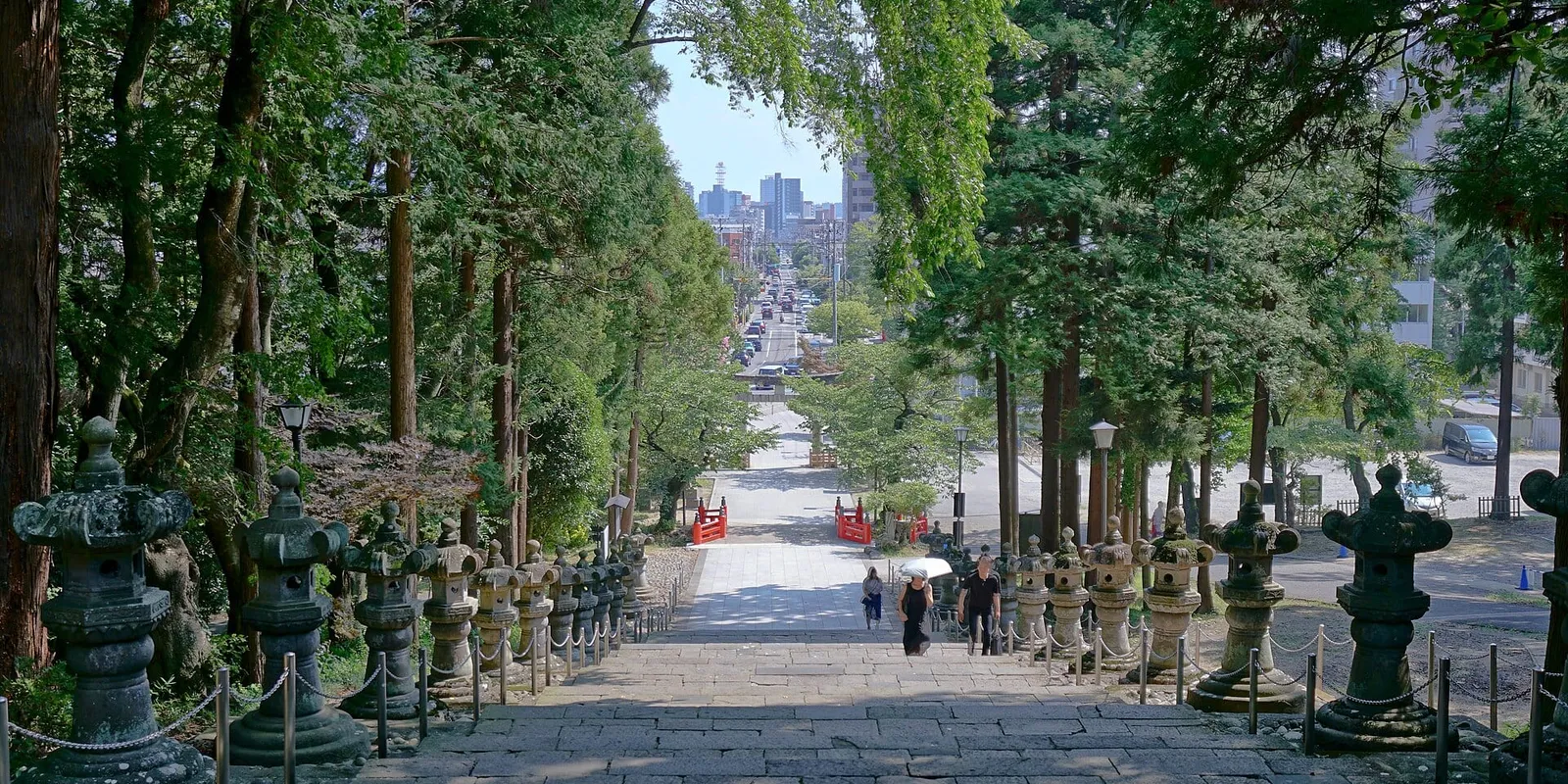
Stone lanterns line the main approach as you look up from the foot of the steps. According to the official precinct guide, the grounds have 38 stone lanterns, 28 of which stand beside the steps of the main approach, and from the top of the steps you look down on Miyamachi-dori, which runs straight for about 1.5 km. The stone torii at the entrance is described as the oldest stone torii in Miyagi, made of granite shipped by sea from Inujima in Okayama Prefecture.
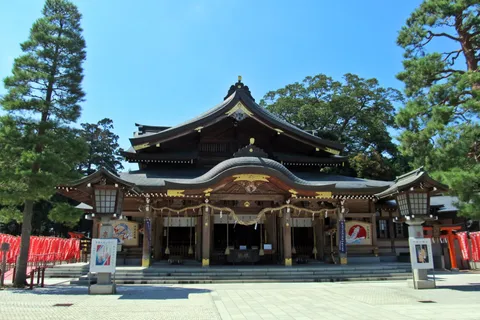
The stone torii, main hall, gate with guardian figures (随身門), Kara-mon, sukibei and stone lanterns are marked “National Important Cultural Property” on the official site (a Sendai City page says “five structures including the main hall and the gate,” so the count differs by source). The main hall has carvings of hawks, heavenly maidens and dragons and is decorated with cloisonne metal fittings. The official site says that among the several dozen Toshogu shrines across Japan, only Nikko Toshogu and Sendai Toshogu use these cloisonne fittings. The doors of the Kara-mon, carved with a phoenix, a qilin and lions, are said to open now only on the festival day of April 17. The sukibei (transparent fence) around the main hall runs about 80 meters around, and you can see inside through its gaps.
In addition, the chozuya is a Prefectural Important Cultural Property and is described as the oldest chozuya building in Miyagi, and Toshogu Kagura, a Sendai City intangible folk cultural property, is offered at the Kagura-den during the spring festival. The worship hall burned down before the war but was rebuilt through the efforts of citizens centered on Miyamachi, says the official site. Unlike the gongen-zukuri style known from Nikko Toshogu and others, where the worship hall and main hall are joined in one building, Sendai’s Toshogu keeps them as separate buildings, according to the official site. The grounds also have about 80 cherry trees (per the official site’s news page).
Visiting Tips
Visiting is possible all day, but per the official site the shrine buildings close at 5:00 PM. The amulet counter is open 9:00 AM–4:30 PM, and prayer services are accepted 9:00 AM–4:00 PM (until 4:30 PM only with an advance booking), on a booking-priority basis. Individual and family prayers start from ¥5,000. Services include protection from misfortune, household safety, traffic safety, exam success, first shrine visit for a baby, safe childbirth and the Shichi-Go-San ceremony, and cars are purified at a dedicated car purification area.
The goshuin costs ¥500, raised from ¥300 on October 1, 2026. A goshuin book is ¥2,500 with the goshuin fee included, and the seasonal limited-edition goshuin paper is ¥500. They are handled 9:00 AM–4:30 PM, but the official site notes that in busy periods there are times when only pre-written paper goshuin are offered.
The shrine is right by Toshogu Station on the JR Senzan Line, one stop from Sendai Station. There are 100 free parking spaces, but around New Year’s, Donto-sai and the spring festival the area gets very crowded, and public transport is advised. Per the official site, visitors with limited mobility or small children can use the “considerate parking” area (8:00 AM–5:00 PM) up the slope.
Annual Festivals
The events page of the official site lists the following. Dates may change from year to year.
- Saitan-sai (January 1, 8:00 AM): A rite celebrating the new year and praying for the prosperity of the Imperial family and the country and for peace in the world.
- Donto-sai (January 14): A rite burning New Year decorations, old amulets and talismans; at Toshogu the fire is lit at 4:00 PM (in 2026 it was put out at 9:30 PM).
- Setsubun-sai (February 3, 3:00 PM): A bean-throwing rite (Mamemaki) at 3:30 PM performed by people born in the year’s zodiac animal.
- Annual festival (April 17, 11:00 AM): The most important festival of the year, said to take its date from the day Tokugawa Ieyasu died at Sunpu Castle.
- Spring festival (third Saturday and Sunday of April): Kagura offerings and a children’s mikoshi. In 2026 it fell on April 18 and 19.
- Nagoshi no Oharae (June 30, 3:00 PM): Said to feature a chinowa (a ring of reeds) to walk through.
- Shichi-Go-San visits (October–November): The official site says they are accepted from late September to early December.
- Niiname-sai (November 23) and Shiwasu no Oharae (December 31, 2:00 PM).
The Toshogu Festival (Sendai-sai), a major festival with a mikoshi procession, is held once every five years at present, according to the official site.
Nearby Food & Sightseeing
- Miyamachi-dori: A street that runs about 2 km north to south from the front of Toshogu. According to the official site, its name comes from its establishment as the shrine’s approach town when Toshogu was built.
- Tsutsujigaoka Tenmangu: The official site says Toshogu’s site was originally within the precinct of the Tenjin shrine (now Tsutsujigaoka Tenmangu).
- Osaki Hachimangu: Another shrine in Sendai. The official site cites its main hall (a National Treasure) as a building by the same master carpenter, the Umemura family, who worked on Toshogu.
Frequently Asked Questions
- Q. What are the visiting hours?
- A. The official access page says the shrine buildings close at 5:00 PM but visiting is possible all day (the page heading carries a note about "temporary hours"). The shrine office is open 9:00 AM–5:00 PM, the amulet counter 9:00 AM–4:30 PM, and prayer services are accepted 9:00 AM–4:00 PM (until 4:30 PM only with an advance booking). Prayer services are booking-priority, and individual services start from ¥5,000.
- Q. Can I get a goshuin at Sendai Toshogu?
- A. Yes. According to the official site, the goshuin fee is ¥500 from October 1, 2026 (it was ¥300 before). A goshuin book is ¥2,500 with the goshuin fee included, and the seasonal limited-edition goshuin paper is ¥500. Goshuin are handled 9:00 AM–4:30 PM, and in busy periods there are times when only pre-written paper goshuin are offered instead of writing in your own book.
- Q. How do I get there, and is there parking?
- A. Per the official site, the shrine is right by Toshogu Station on the JR Senzan Line (one stop from Sendai Station), or you can take the bus from Sendai Station West Exit Bus Terminal, stop no. 28, to "Toshogu 1-chome." By car it is about 20 minutes from Sendai-Miyagi IC on the Tohoku Expressway, with 100 free parking spaces (8:30 AM–5:00 PM; large buses need a reservation). On crowded days such as New Year's and Donto-sai, public transport is advised.
- Q. Which buildings are national Important Cultural Properties?
- A. In the precinct guide on the official site, the stone torii, the main hall, the gate with guardian figures (随身門), the Kara-mon, the sukibei (transparent fence) and the stone lanterns (the torii plus 34 lanterns) are marked "National Important Cultural Property," and the chozuya (purification pavilion) is marked as a Prefectural Important Cultural Property. A Sendai City page, however, says five structures, including the main hall and the gate, are designated national Important Cultural Properties, so the count differs by source. Check the Agency for Cultural Affairs' database of nationally designated cultural properties for the exact designated names.
- Q. When is the spring festival, and when do the cherry blossoms bloom?
- A. Per the official site, the annual festival is on April 17, and the spring festival is held every year on the third Saturday and Sunday of April (April 18 and 19 in 2026). The grounds have about 80 cherry trees, and the spring festival features offerings of Toshogu Kagura and a children's mikoshi. Blooming and events vary by year, so check the news page on the official site.
Plan Your Visit
Before you go, you can book a stay and get your shrine-visit items ready.
Amazon links open Amazon.co.jp (Japan) in English; whether an item ships overseas depends on the product.
※ Contains ads (PR). Links open external sites such as Amazon, Rakuten, Trip.com and Booking.com.