History
Sumidagawa Jinja stands in Tsutsumidori, Sumida Ward, Tokyo. In older times it was called Suijin-gu or Ukishima no Miya, and it is affectionately known as “Suijin-sama,” the water god (Tokyo Shrine Association). The enshrined deities are Hayaakitsuhiko no Kami, Hayaakitsuhime no Kami, Tori no Iwakusufune no Kami and Okaji Kidohime no Kami.
According to the Tokyo Shrine Association’s history, Minamoto no Yoritomo is said to have prayed at the shrine when he met a storm while coming down to the Kanto region in the Jisho era, but the year of its founding is unknown. It is described as the local guardian shrine of Sumida, widely and deeply revered by boatmen and cargo-boat crews, and it was renamed “Sumidagawa Jinja” in 1872.
According to an explanation by the Museum of Maritime Science (Fune no Kagakukan), the site was once the end point of the Sumida River, covered in dense woods, which is why it was called “Suijin no Mori” (the Water God’s Forest), and because it did not flood even when the river rose it was also known as “Ukishima no Miya” (floating-island shrine). Utagawa Hiroshige drew “Sumidagawa Suijin no Mori Massaki” in his One Hundred Famous Views of Edo, and the explanation notes that the shrine’s torii can be seen among the pine trees. The guardian forest on the riverbank was moved about 100 meters by postwar development, and the shrine now stands at its present site.
TV Tokyo’s “Shutsubotsu! Ad-machic Tengoku” featured the shrine, together with Sumida Inari Shrine, at No. 3 (“Two Reitaisai”) in its Kanegafuchi episode broadcast on August 23, 2025 (according to the program’s official page). The page explains that every June, the annual festivals of Sumida Inari Shrine to the east of Kanegafuchi Station and Sumidagawa Shrine to the west are held. Please note that this is a single entry covering the two shrines, not a ranking for Sumidagawa Jinja alone.
Highlights
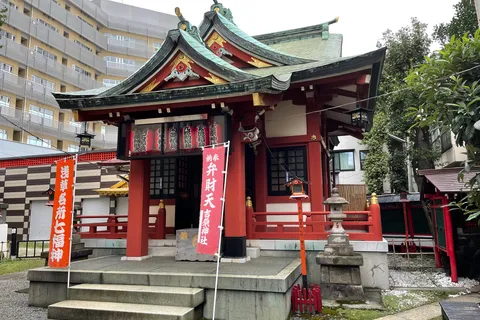
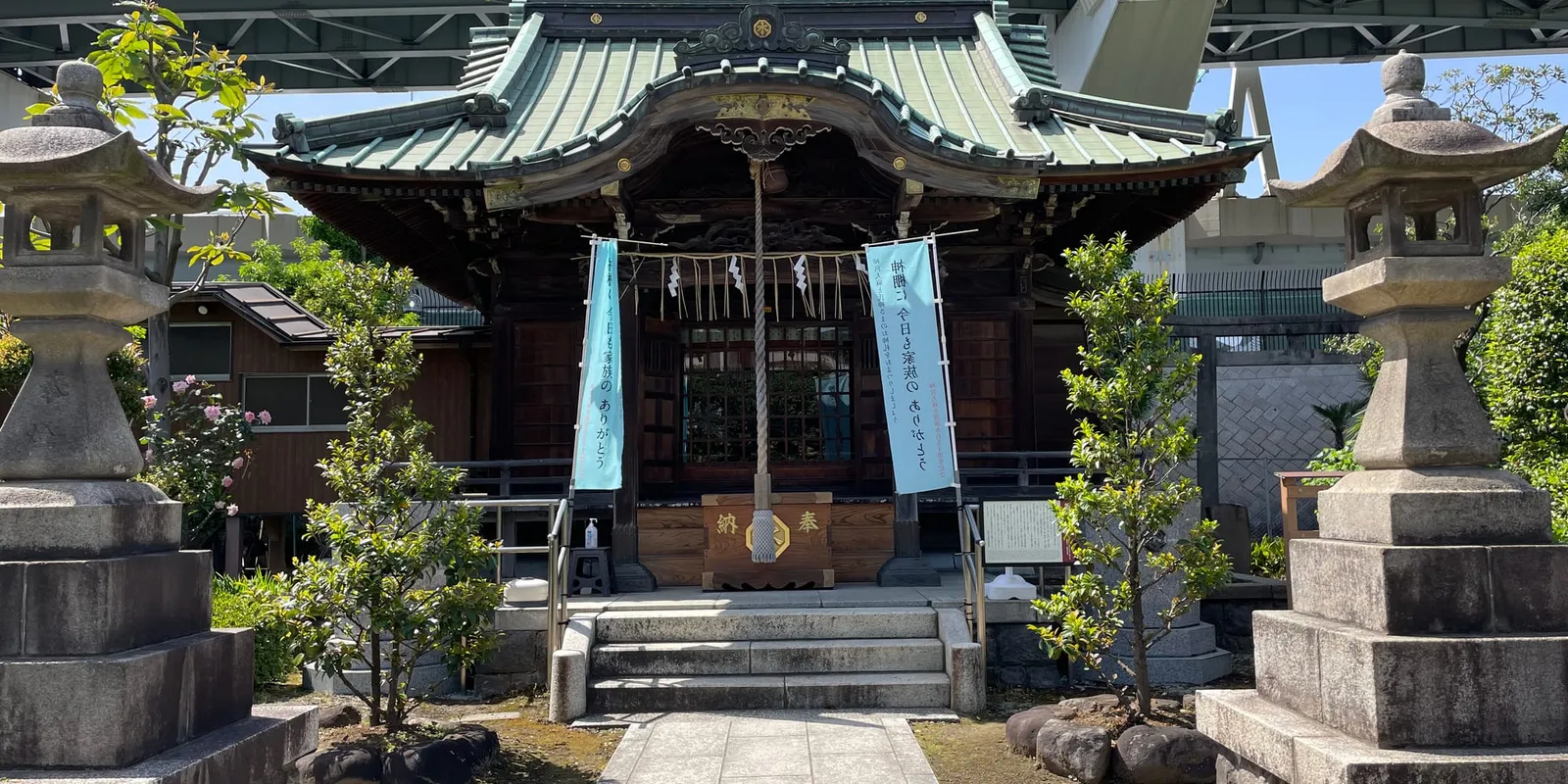
The main highlight is the shrine building, designated by Sumida Ward. According to the ward’s official page, it is a Gongen-style complex of main hall, offering hall and worship hall, rebuilt after the earlier hall (rebuilt in 1848) collapsed in the Ansei Edo earthquake. Ridgepole tablets show that the worship hall was built in 1858 and the main and offering halls in 1864. The roof ornaments such as gables, along with carvings on the frog-leg struts and rainbow beams and the carved side panels, reflect late-Edo to Bakumatsu styles, and as a rare Edo-period shrine building in the ward it became a Registered Tangible Cultural Property on August 27, 2020 and a designated Tangible Cultural Property on October 24, 2024.
The shrine is located within Higashi-Shirahige Park (according to the Japanese Wikipedia and a personal blog). The Sumida tourism association page notes a stone turtle and a ship’s anchor on the grounds, and that Sumida-bayashi festival music is practiced around the kagura-den (sacred dance hall). Some guide sites say that the guardian statues in front of the worship hall are turtles rather than the usual lion-dogs, called “koma-game” (information from personal and guide sites).
Visiting Tips
The shrine is about a 10-minute walk from Kanegafuchi Station on the Tobu Isesaki Line (Tokyo Shrine Association; the Sumida tourism association page says 7 minutes). Visiting hours and shrine-office hours are not given on those pages, and an official shrine website could not be found. The phone number is 03-3611-3089.
According to a personal blog (Jinja Memo), the goshuin costs ¥300 and is said to be a pre-written sheet received at the shrine office. The shrine’s own notice could not be confirmed, so calling ahead is the safest. Parking availability and fees could not be confirmed from official information either, so public transport is recommended.
Annual Festivals
- Annual festival (June 15): The Tokyo Shrine Association lists the festival day as June 15. According to the Museum of Maritime Science, a portable-shrine procession is held at the festival. The Sumida tourism association’s event listing shows the 2024 festival on June 15–16. Dates may change by year, so check with the shrine for the latest information.
Other annual events are not listed because no verifiable information could be found.
Nearby Food & Sightseeing
- Higashi-Shirahige Park: The park in which the shrine stands. One article says the former “Suijin no Mori” area became Higashi-Shirahige Park in 1986.
- Tamon-ji Temple: Featured at No. 5 in the same Kanegafuchi episode, a famous temple enshrining Bishamonten, one of the Sumida River Seven Lucky Gods. The program page says it is believed to have been founded over a thousand years ago.
- Shirahige-Higashi Apartments: Featured at No. 4 in the same episode as one of the country’s leading disaster-prevention housing complexes, on the west side of Kanegafuchi. The program page says 18 thirteen-story buildings stand in a row, stretching about 1.2 kilometers.
Frequently Asked Questions
- Q. What are the visiting hours?
- A. Neither the Tokyo Shrine Association page nor the Sumida tourism association page gives visiting hours or shrine-office hours (an official shrine website could not be found). Both pages list the phone number 03-3611-3089. If timing matters, it is safest to call ahead.
- Q. Can I get a goshuin at Sumidagawa Jinja?
- A. It is reported to be available. According to a personal blog (Jinja Memo), the goshuin costs ¥300 and appears to be mostly a pre-written sheet received at the shrine office. However, the shrine's own fee notice and goshuin hours could not be confirmed, so the amount and times may change. Calling ahead is recommended.
- Q. How do I get there, and is there parking?
- A. It is about a 10-minute walk from Kanegafuchi Station on the Tobu Isesaki Line (Tokyo Shrine Association). The Sumida tourism association page says 7 minutes, so the two pages differ. Neither page mentions parking, so going by public transport is the safer choice.
- Q. Has the shrine been featured on TV?
- A. Yes. TV Tokyo's "Shutsubotsu! Ad-machic Tengoku" (出没!アド街ック天国) featured it at No. 3, "Two Reitaisai" (2つの例大祭), in its Kanegafuchi episode broadcast on Saturday, August 23, 2025 (according to the program's official page). The page says that every June, the annual festivals of Sumida Inari Shrine to the east and Sumidagawa Shrine to the west of Kanegafuchi Station are held. It is a single entry covering both shrines, not a ranking for Sumidagawa Jinja alone. In the October 30, 2010 Kanegafuchi episode, it was also mentioned under No. 1, "Sumida River & Arakawa," as the guardian shrine of the Sumida River with over 800 years of history (both as of the broadcast dates).
- Q. Is the shrine building a cultural property?
- A. Yes. According to the official Sumida Ward page, the shrine building (a Gongen-style complex of main hall, offering hall and worship hall) became a Sumida Ward Registered Tangible Cultural Property on August 27, 2020 (Reiwa 2) and was designated a Sumida Ward Tangible Cultural Property on October 24, 2024 (Reiwa 6). Ridgepole tablets show the worship hall dates from 1858 and the main and offering halls from 1864.
Plan Your Visit
Before you go, you can book a stay and get your shrine-visit items ready.
Amazon links open Amazon.co.jp (Japan) in English; whether an item ships overseas depends on the product.
※ Contains ads (PR). Links open external sites such as Amazon, Rakuten, Trip.com and Booking.com.