History
According to shrine tradition, Sumiyoshi Taisha was founded in 211, the 11th year of the regency of Empress Jingu, giving it roughly 1,800 years of continuous history. Empress Jingu, consort of the 14th emperor, Chuai, is said to have completed a legendary campaign against the kingdom of Silla, and on her return voyage received a divine revelation from the Sumiyoshi deities, whom she then enshrined at this site.
The shrine’s principal deities are the “Three Sumiyoshi Gods” — Sokotsutsunoo no Mikoto, Nakatsutsunoo no Mikoto, and Uwatsutsunoo no Mikoto — said to have emerged from the sea when Izanagi no Mikoto performed a purification ritual after returning from the underworld, and long venerated as protectors of maritime safety. These three deities are enshrined in the First through Third Main Sanctuaries, with Empress Jingu herself enshrined in the Fourth. Sumiyoshi Taisha serves as the head shrine of roughly 2,300 Sumiyoshi shrines across Japan, and held the prestigious rank of ichinomiya (chief shrine) of the former Settsu Province.
From ancient times, the shrine drew devotion from those involved in shipping and trade, including the missions sent to Sui- and Tang-dynasty China, and numerous stone lanterns and torii donated by Edo-period shipping merchants still stand throughout the grounds today. It remains one of Osaka’s most prominent historic shrines, drawing worshippers from across Japan year-round.
Highlights
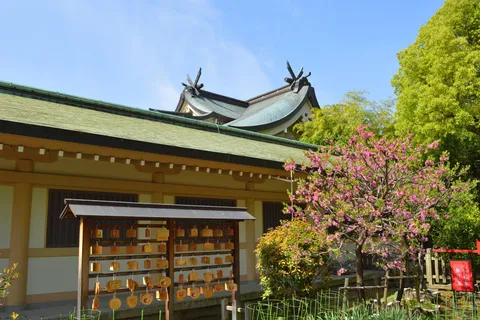
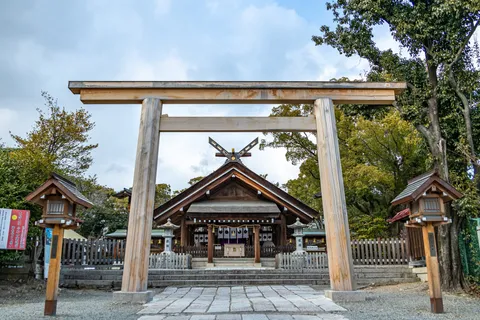
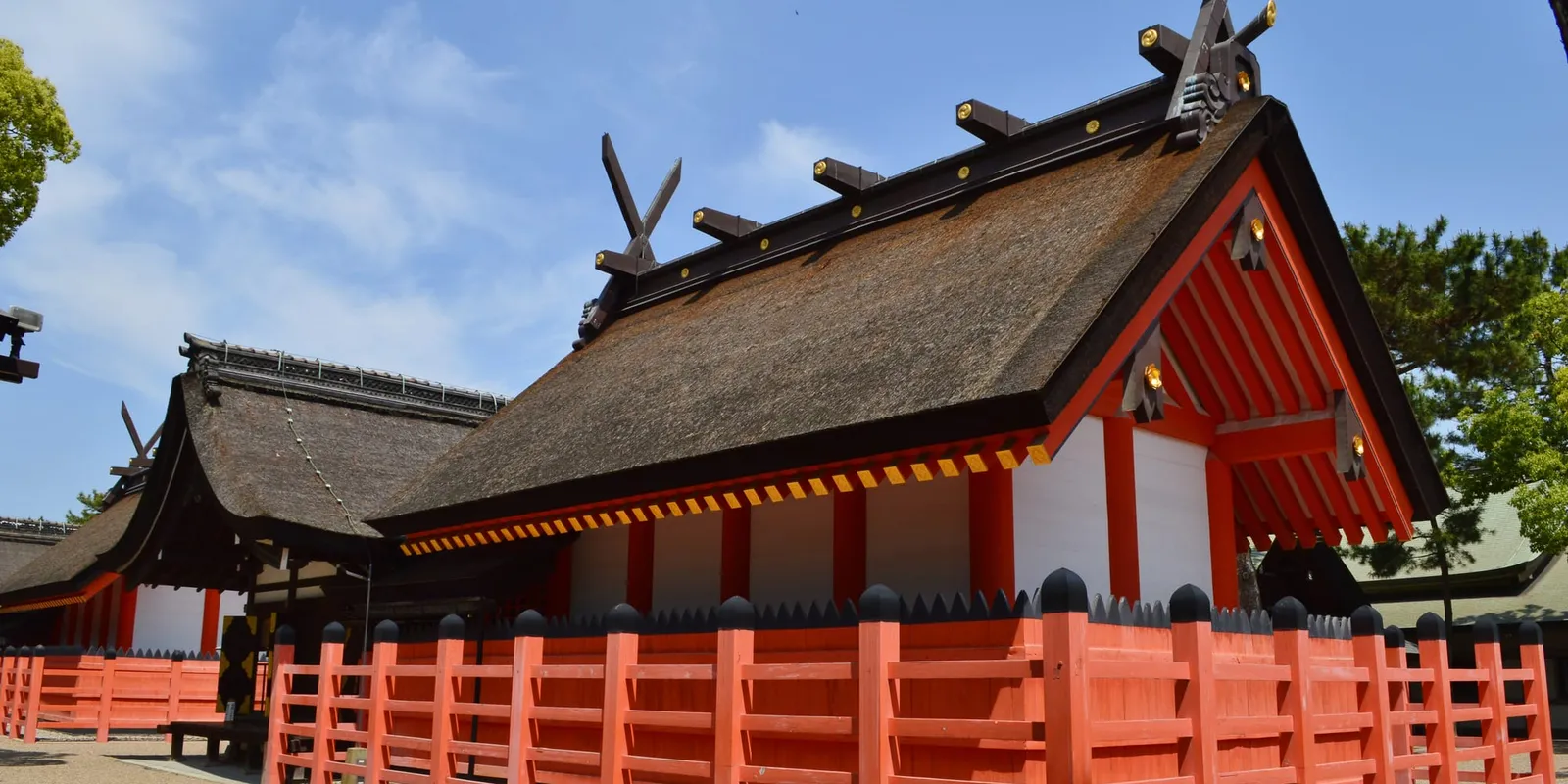
The single greatest highlight of Sumiyoshi Taisha is its set of four main sanctuary buildings, all four designated National Treasures. Known as “Sumiyoshi-zukuri,” this architectural style is among the oldest in Japanese shrine construction, distinguished by its unusual arrangement: rather than standing side by side, the straight-roofed, gable-ended halls are lined up one behind the other. The vivid contrast between vermillion pillars and white-plastered walls preserves an austere grandeur that has changed little since antiquity.
Just as iconic is the steeply arched “Sorihashi,” popularly known as the drum bridge, near the shrine’s entrance. Traditionally said to have been donated by Yodo-gimi in the Keicho era, this vermillion-lacquered bridge and its reflection in the pond below form one of the shrine’s most photographed views, and crossing it is said to purify the visitor of impurity. Other popular spots on the grounds include the “Go-Dai-Riki” stone-hunting tradition at the Goshogozen shrine and Jisha-sha, known for its beckoning-cat charms.
Visiting Tips
Gates open at 6:00 or 6:30 AM depending on the season and close at 4:00 PM (outer gates) or 5:00 PM (inner precinct). The shrine is a short 3–5 minute walk from several Nankai and Hankai stations, and on-site parking for roughly 200 vehicles makes a visit by car convenient as well. More than 2 million visitors come during the first three days of the New Year, making it one of the Kansai region’s busiest hatsumode destinations — visiting early in the morning or outside peak hours is advisable at that time.
Annual Festivals
- Sumiyoshi Matsuri (July 30–August 1): Known as the festival that closes out Osaka’s summer festival season, this grand annual rite — one of Osaka’s “Three Great Summer Festivals” — includes a mikoshi procession that travels as far as the city of Sakai.
- Otaue Shinji Rice-Planting Rite (June 14): Said to date back to the time of Empress Jingu, this Important Intangible Folk Cultural Property features the Eight Maidens’ dance, an armored warrior procession, and the celebrated Sumiyoshi Odori dance.
- Unohana Shinji (first Day of the Rabbit in the fourth lunar month): A rite commemorating the shrine’s founding, marked by offerings of deutzia blossoms before the deities.
- New Year’s Visits (January 1–3): Over 2 million worshippers visit in the first three days of the year alone, making it one of Osaka’s premier hatsumode destinations.
Nearby Food & Sightseeing
- Yoshoku Yaroku: A Western-style diner founded in 1935 with nearly 90 years of history. Its signature “tamago korokke” (egg croquette) has won gold at the national Korokke Grand Prix multiple years running.
- Kikuju: A long-established Japanese sweets shop just steps from the shrine, beloved locally for its fluffy, freshly made dorayaki.
- Sumiyoshi Park: Adjoining the shrine, one of Osaka’s oldest public parks, opened in 1873. Once part of the shrine’s own grounds, this spacious green space is ideal for a stroll after paying your respects.
Frequently Asked Questions
- Q. What are the visiting hours?
- A. Gates open at 6:00 AM (6:30 AM October–March) and close at 5:00 PM (outer gates 4:00 PM). Hours vary during New Year's and the Sumiyoshi Festival.
- Q. When is the goshuin office open?
- A. 9:00 AM–5:00 PM, for ¥500.
- Q. Is there parking?
- A. Yes, on-site parking for worshippers is available (about 200 spaces; ¥200 per 30 minutes for cars, free for 2 hours with a prayer service). Rates and availability change during New Year's and the Sumiyoshi Festival.
- Q. What is distinctive about the shrine's 'Sumiyoshi-zukuri' architecture?
- A. All four main sanctuary buildings are designated National Treasures, built in one of the oldest styles of Japanese shrine architecture, with straight-roofed, gable-ended halls lined up one behind the other rather than side by side.
- Q. How do I get there?
- A. 3 minutes on foot from Sumiyoshi-taisha Station (Nankai Main Line) or Sumiyoshi-toriimae Station (Hankai Uemachi Line); 5 minutes on foot from Sumiyoshi-higashi Station (Nankai Koya Line).