History
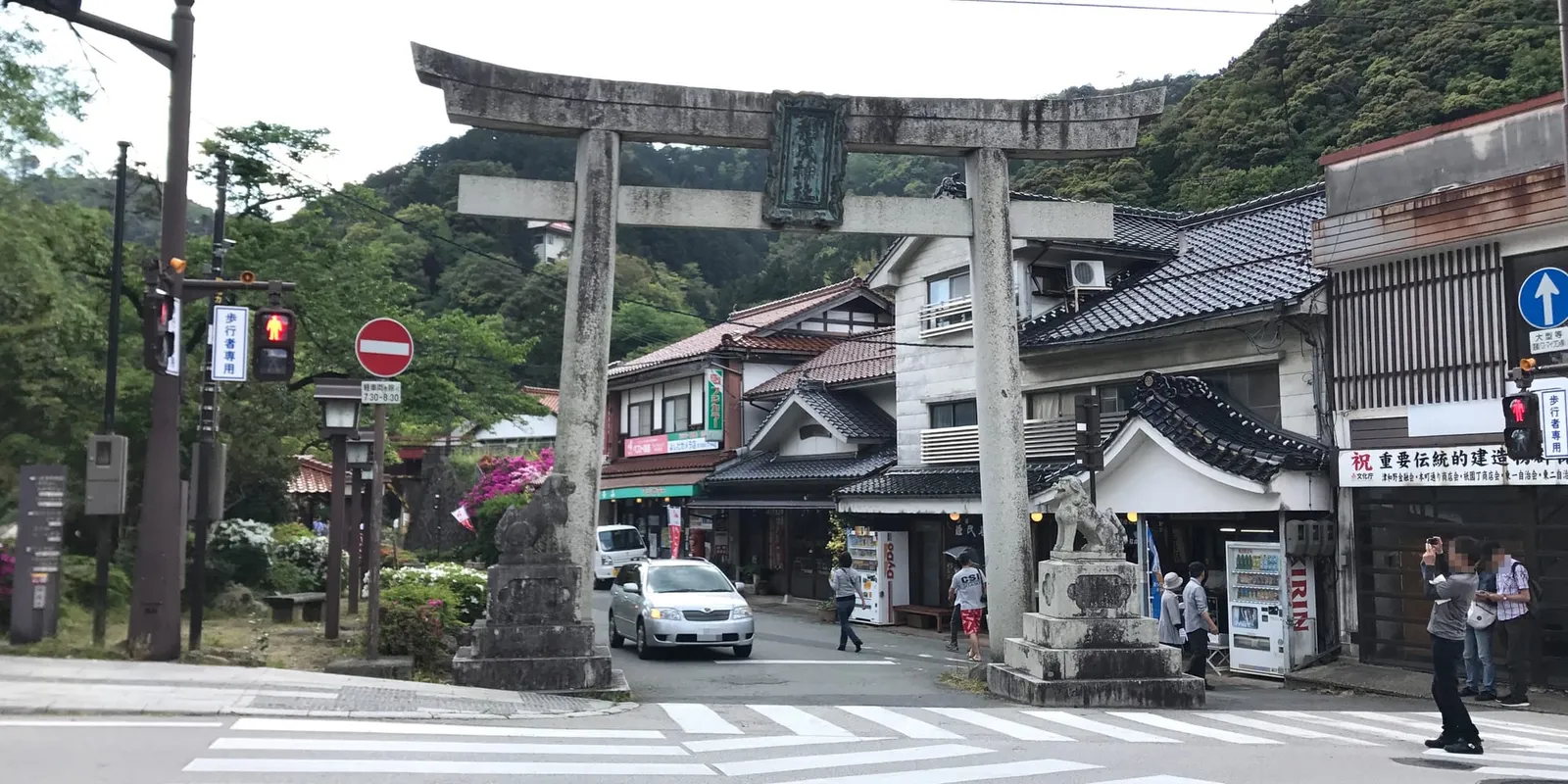
Taikodani Inari Jinja was founded in 1773 by Kamei Noritada, the 7th lord of the Tsuwano domain. Seeking to secure peace and prosperity for his domain and its people, Noritada invited a divided spirit from Kyoto’s great Fushimi Inari Taisha and enshrined it on the ridge of Mt. Taikodani, at the unlucky northeast corner of his castle, Sanbonmatsu-jo (Tsuwano Castle).
For its first century, the shrine was reserved exclusively for the ruling Kamei family, and it was only after the abolition of the domain system, in the Meiji era, that ordinary townspeople were permitted to worship there. In 1924, Imperial Princess Fusako of Kitashirakawa paid a visit and donated treasures to the shrine, leading to the construction of a treasure hall — a mark of the reverence the shrine commanded even within the imperial family. The current main hall was completed in 1969, when a ceremony formally transferred the enshrined spirit to the new building; the older structure survives to this day as the “Motomiya” (original shrine), still honored as a sacred site in its own right.
Taikodani Inari Jinja is counted among Japan’s “Five Great Inari Shrines,” alongside Fushimi Inari Taisha in Kyoto, Kasama Inari Jinja in Ibaraki, Yutoku Inari Jinja in Saga, and Takekoma Jinja in Miyagi. As the foremost Inari shrine of the San-in region, it draws worshippers from across Japan praying for business prosperity and a bountiful harvest.
Highlights
The shrine’s signature sight is the roughly 1,000 vermillion torii gates, each donated by a worshipper, that line the approach from the base of the mountain up to the main hall. Winding alongside 263 stone steps up the mountainside, this tunnel of gates rivals the far more famous senbon-torii at Fushimi Inari Taisha in Kyoto — and walking beneath it, with the rooftops of Tsuwano, the “Little Kyoto of the San-in region,” spread out below, is an experience found nowhere else.
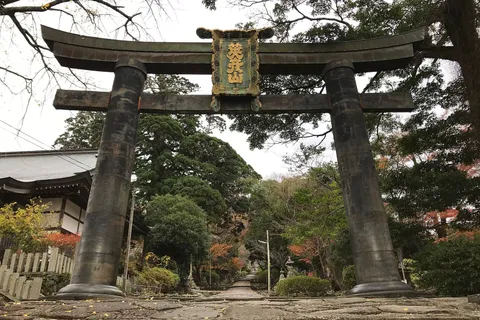
The shrine’s very name holds a second point of interest. While most Inari shrines across Japan write their name with the characters 稲荷, Taikodani Inari Jinja deliberately uses a different second character: 稲成. The character 成 carries the meaning of “coming to fruition” or “wishes granted” — a nod to the shrine’s role in fulfilling worshippers’ most heartfelt prayers. No other Inari-lineage shrine in Japan uses this particular “Inari-nari” (稲成) spelling; the name itself is unique to this shrine and part of its distinct identity.
The view from the main hall takes in the entire Tsuwano basin, including the ruins of Tsuwano Castle and the samurai residences along Tonomachi Street. The shrine grounds also hold a treasure hall built in the Taisho era, displaying items gifted by members of the imperial family.
Visiting Tips
There are two ways to reach the shrine. The traditional route climbs the 263 stone steps and the torii tunnel from the base of the mountain; the more convenient route drives up to a parking area near the summit, close to the main hall. If time and stamina allow, climbing the torii-lined approach in the soft light of morning is highly recommended — the view of Tsuwano’s rooftops gradually opens up below as you ascend. Many visitors instead drive up and enjoy the tunnel of gates on the way back down. Prayer requests are accepted roughly 8:30–16:00, so plan accordingly if you’d like a formal blessing.
Annual Festivals
- Hatsuuma Grand Festival (the first Day of the Horse in February): One of the most important dates on the Inari calendar, drawing large crowds who pray for a bountiful harvest and business prosperity.
- Spring Grand Festival (May 15): A festival held in connection with the shrine’s founding.
- Grand Festival (November 15) and Autumn Grand Festival (November 16): The shrine’s most important annual observances, featuring sacred rites and dedicatory ceremonies.
- New Year’s Festival (January 1): Crowds gather from New Year’s Eve into the first day of the year to pray for good fortune and peace in the year ahead.
Nearby Food & Sightseeing
- Tonomachi Street: The historic heart of “Little Kyoto” Tsuwano, lined with white-walled samurai residences and canals where colorful koi swim. The half-Western, half-Japanese Tsuwano Catholic Church adds an unexpected architectural contrast.
- Tsuwano Castle Ruins: The remains of a mountaintop castle dating to the Kamakura period, reachable by a sightseeing chairlift near Taikodani Inari Jinja. The summit offers a sweeping view over the entire Tsuwano basin.
- Uzume-meshi (local specialty): Tsuwano’s signature dish, a simple bowl of rice with mountain vegetables, mushrooms, or river fish from the Takatsu River tucked beneath the surface — humble comfort food unique to this region.
- Tsuwano Tenmangu (Yasaka Jinja): A shrine to the god of learning, easily combined with a visit to Taikodani Inari Jinja. Its July “Sagi-mai” (Heron Dance) ritual is inscribed as a UNESCO Intangible Cultural Heritage.
Frequently Asked Questions
- Q. What are the visiting hours?
- A. The grounds are free to visit at any time. Prayer requests (kito) are accepted roughly 8:30–16:00.
- Q. Can I get a goshuin here?
- A. Yes, at the shrine office beside the main hall, roughly 8:30–16:00, starting at ¥300. Limited-edition goshuin tied to the season or a festival are sometimes offered as well.
- Q. How do I get to Taikodani Inari Jinja?
- A. It's about a 20–30 minute walk from JR Tsuwano Station, or about 5 minutes by taxi. You can walk up the torii-lined approach, or drive up to a parking area near the summit.
- Q. Is parking available?
- A. Yes, a free parking area (about 100 spaces) is available near the summit. Many visitors drive up and then walk down through the torii tunnel to enjoy it at a relaxed pace.
- Q. How large is the torii tunnel?
- A. About 1,000 vermillion torii gates, donated by worshippers over the years, line the 263 stone steps that wind up the mountainside to the shrine — a sight often ranked alongside the famous torii tunnel at Fushimi Inari Taisha, and the finest of its kind in the San-in region.
Related Shrines
Saitama, Chichibu
Chichibu Jinja
Chichibu-jinja
- Good Fortune
- Academic Success
- Business Prosperity
Tokyo, Koto Ward
Tomioka Hachimangu
Tomioka Hachiman-gu
- Victory in Competition
- Luck in Competition
- Business Prosperity
Fukuoka, Soeda, Tagawa District
Hikosan Jingu
Hikosan Jingu
- Good Fortune
- Protection from Misfortune
- Household Safety