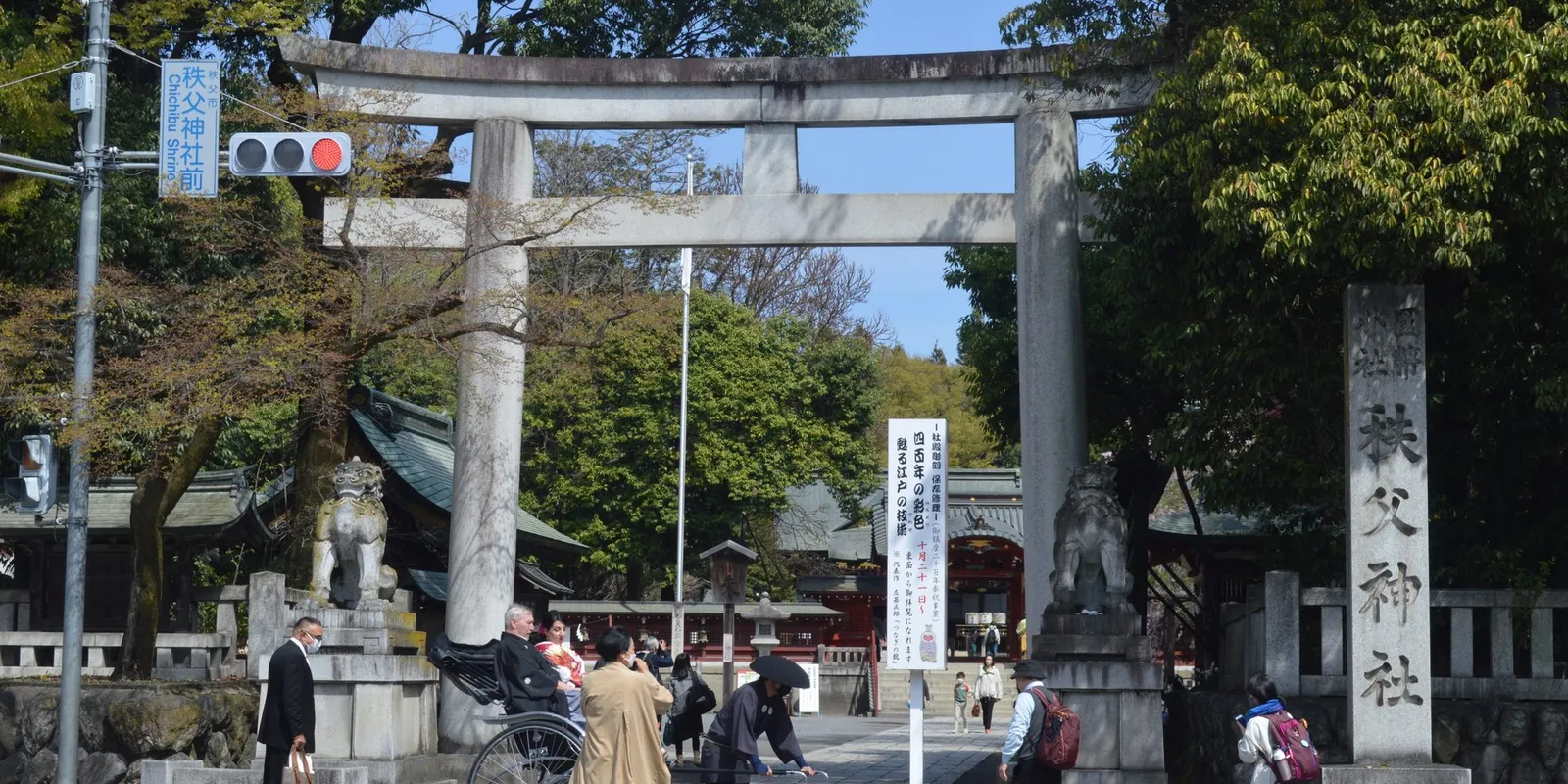
History
Chichibu Jinja’s founding is traced back through the early Heian-period chronicle Sendai Kuji Hongi, in its “Kuni no Miyatsuko Hongi” section. According to that record, during the reign of the 10th emperor, Sujin, a man named Chichibuhiko-no-Mikoto was appointed the first governor (kuni no miyatsuko) of Chichibu Province, and enshrined here his ancestral deity, Yagokoro-omoikane-no-Mikoto — Chichibuhiko’s ancestor ten generations back, and a deity associated with wisdom, learning, industry, and good fortune.
Chichibu Province was an independent ancient land that flourished even before it was absorbed into the larger Musashi Province, and Chichibu Jinja has served as its guardian shrine for the region ever since. The shrine appears in historical records from the Heian period, is said to have received official court rank in the late 9th century, and is listed as a shikinaisha in the 927 Engishiki shrine register. From the medieval period it was also known as “Myoken-gu,” and in the Kamakura era the Pole Star deity Amenominakanushi-no-Kami was enshrined alongside the founding deities, reflecting the merger with Myoken (North Star) worship that also drew the devotion of the warrior class.
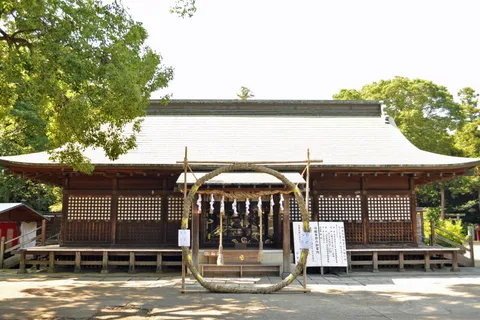
The current shrine buildings date to 1592, funded by Tokugawa Ieyasu, and their vividly painted carvings — done in the ornate Gongen-zukuri style — are traditionally attributed to the legendary master carver Hidari Jingoro, whose lineage is also credited with work at the far grander Nikko Toshogu. Under the modern shrine ranking system of the Meiji era, Chichibu Jinja was designated a prefectural shrine and later a “kokuhei shosha” (a shrine receiving offerings from the state); in 1953, Prince Chichibu Yasuhito, a member of the imperial family, was enshrined here as well. Today the shrine carries a history said to stretch back nearly two thousand years to the age of Chichibu Province itself, making it one of the most storied shrines in the region.
Highlights
The centerpiece of a visit to Chichibu Jinja is the set of early Edo-period carvings decorating all four sides of the main hall. Most celebrated among them is the “Tsunagi no Ryu” (“Chained Dragon”) on the east side, attributed to the master carver Hidari Jingoro. Legend holds that a wild dragon once lived in a nearby pond, and that puddles of water would mysteriously appear beneath this carving whenever the dragon raged — until the carved dragon was bound in chains, after which the disturbances stopped for good.
At the center of the north face of the main hall is a carving known as the “Hokushin no Fukuro” — the “North Star Owl.” Its body faces south, toward the front of the shrine, while its head is twisted a full 180 degrees to face north, watching over Myoken Bosatsu, the deified Pole Star (identified with Amenominakanushi-no-Kami). Because the owl keeps watch in every direction without ever needing to move, it has long been regarded as an auspicious symbol of perceiving all things without wasted effort.
Also not to be missed are the “Genki Zaru” (“Lively Three Monkeys”) — said to be by the same Hidari Jingoro credited with the famous three monkeys at Nikko Toshogu — and a carving of a tiger and cubs symbolizing parental devotion. Where Nikko’s monkeys famously “see no evil, hear no evil, speak no evil,” Chichibu’s three monkeys are carved with eyes, mouths, and ears wide open and expressions full of life, said to represent the courage to face difficulty head-on rather than look away from it. Together, these carvings represent some of the finest Edo-period woodcarving anywhere within easy reach of Tokyo.
Visiting Tips
After paying respects at the worship hall, take time to walk all the way around the main hall to compare its carvings on all four sides — small explanatory plaques are posted beside each one. The “Tsunagi no Ryu” and “Hokushin no Fukuro” face in different directions, so it’s worth seeking out both to appreciate the contrast.
The office where goshuin and amulets are available keeps hours of 8:30–17:00. The shrine grounds themselves aren’t large, and get especially busy during Shichi-Go-San season, New Year’s, and the December Yomatsuri festival — visiting on a weekday morning is the best way to enjoy a quieter atmosphere. On the day of the Yomatsuri itself, both the grounds and the surrounding streets become extremely crowded and are subject to traffic restrictions, so it’s worth checking the shrine’s official website for the latest access information beforehand.
Annual Festivals
- Chichibu Yomatsuri (December 2 eve festival, December 3 main festival): Chichibu Jinja’s grand annual festival and one of Japan’s “three great float festivals,” alongside Kyoto’s Gion Matsuri and the Takayama Festival. Six magnificent floats, each 5–7 meters tall and weighing over ten tons, are pulled through the parish neighborhoods, climaxing on the night of the 3rd as they’re hauled up the steep Dango-zaka slope beneath a display of winter fireworks. Inscribed on the UNESCO Intangible Cultural Heritage list in 2016 as part of “Yama, Hoko, Yatai, float festivals in Japan.”
- Grand Festival and Rice-Planting Rite (April 4): A ritual prayer for a bountiful harvest that has come to mark the arrival of spring in the Chichibu region.
- Setsubun Festival (early February): A bean-throwing ritual to pray for good health and freedom from misfortune in the year ahead.
- New Year’s Visit (January): As the guardian shrine of the whole Chichibu region, the shrine draws its largest crowds of the year from across Saitama and beyond during the New Year holiday.
Nearby Food & Sightseeing
- Chichibu Matsuri Kaikan: Just steps from Chichibu Jinja, this museum displays full-size replicas of the festival’s ornate floats year-round, along with a 3D theater and projection-mapping show recreating the Yomatsuri for visitors who can’t make it in December.
- Bamba-dori Street: The stone-paved approach linking Ohanabatake Station to Chichibu Jinja, lined with buildings evoking the Taisho era. A pleasant place to stroll, snack, and browse souvenir shops on the way to or from the shrine.
- Michi-no-Eki Chichibu (Chichibu Shokudo): A roadside rest stop about 5 minutes from Chichibu Station, serving the local specialty “waraji katsudon” (a giant sandal-sized breaded pork cutlet over rice) alongside other regional dishes and local products.
- Chichibu Imamiya Jinja: Also known as the “Hachidai Ryuo Palace,” this power spot is home to a sacred zelkova tree said to be over 1,000 years old and Chichibu’s oldest sacred spring. Within easy walking distance of Chichibu Jinja, it’s often visited on the same trip.
Frequently Asked Questions
- Q. What are the visiting hours?
- A. The grounds are open 5:00–20:00 in summer (roughly March through October) and 6:00–20:00 in winter. The office where you can receive goshuin and amulets keeps hours of 8:30–17:00.
- Q. Can I get a goshuin here?
- A. Yes, at the shrine office between 8:30 and 17:00, starting at ¥500. The goshuin carries the seal reading "Guardian Shrine of Chichibu Province" alongside the shrine's own seal.
- Q. How do I get to Chichibu Jinja?
- A. It's about a 15-minute walk from Seibu-Chichibu Station on the Seibu Chichibu Line, or a more convenient 3-minute walk from Chichibu Station on the Chichibu Railway. By car, it's about 25km from the Hanazono Interchange on the Kan-etsu Expressway.
- Q. Is parking available?
- A. Yes, there's free parking on the shrine grounds. It gets very crowded during festival days — especially the Chichibu Yomatsuri on December 2–3 — and during autumn foliage weekends, so using a nearby temporary lot or public transport is recommended at those times.
- Q. What is the Chichibu Yomatsuri?
- A. It's Chichibu Jinja's grand annual festival, held every December 2 (eve festival) and 3 (main festival). Six magnificently decorated floats, each 5–7 meters tall and weighing over ten tons, are pulled through the parish neighborhoods; the climax comes on the night of the 3rd, when the floats are hauled up the steep Dango-zaka slope beneath a burst of winter fireworks. Ranked alongside Kyoto's Gion Matsuri and the Takayama Festival as one of Japan's "three great float festivals," it was inscribed on the UNESCO Intangible Cultural Heritage list in 2016 as part of "Yama, Hoko, Yatai, float festivals in Japan."