History
Mikami Jinja stands in Mikami, Yasu City, on the southern shore of Lake Biwa, at the foot of the gracefully cone-shaped, 432-meter Mount Mikami — often called “Omi Fuji” for its resemblance to Mount Fuji’s silhouette. The shrine venerates Mount Mikami itself as its sacred mountain, and according to tradition, its history begins when the enshrined deity, Amenomikage-no-Mikoto, descended onto the mountain’s summit on the 18th day of the 6th month of the 6th year of the legendary Emperor Korei’s reign. Amenomikage-no-Mikoto — a child of Amatsuhikone-no-Mikoto and a grandson of the sun goddess Amaterasu — has long been revered as one of Japan’s foremost deities of sacred fire. Shrine tradition holds that after the deity’s descent, a descendant known as the Mikami-no-hafuri (a hereditary priestly line) began venerating Mount Mikami itself as the deity’s sacred dwelling, or kannabi, marking the origin of Mikami Jinja’s worship.
The present shrine buildings, at the foot of the mountain, were constructed in 718, during the Nara period, under imperial order carried out by the powerful statesman Fujiwara no Fuhito. The 10th-century Engishiki register of shrines lists Mikami Jinja as a Myojin Taisha of Omi Province’s Yasu District — a rank reserved for shrines receiving particularly high veneration from the imperial court. From the Meiji era, it was ranked as a Kanpei-chusha (a mid-ranking shrine under direct state patronage), and it remains today one of the most historically significant shrines in the Omi region.
Highlights
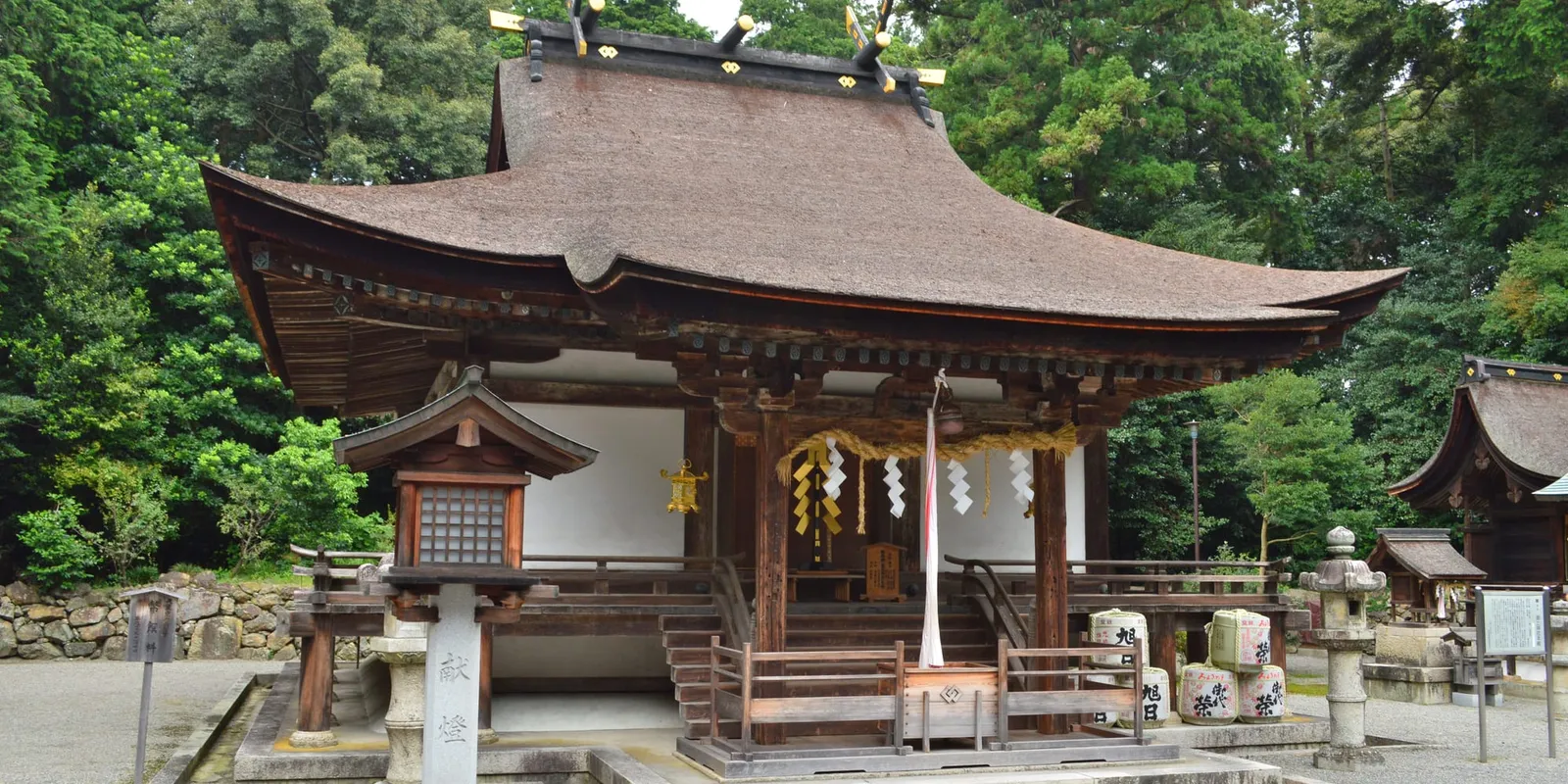
The undisputed highlight of Mikami Jinja is its honden (main hall), designated a National Treasure. Estimated to date from the late Kamakura period, the building is a three-bay-by-three-bay, single-story structure in the irimoya (hip-and-gable) style, with a one-bay front portico and a roof of cypress bark shingles. What sets it apart is its incorporation of features normally associated with Buddhist temple architecture — whitewashed plaster walls and latticed “renji” windows — a fusion sometimes referred to as “Mikami-zukuri.” This blending of shrine, temple, and even palace architectural elements in a single building is exceptionally rare among Japan’s shrine structures, and it earned the honden its National Treasure designation on November 22, 1952.
In front of the honden stand the haiden (worship hall) and romon (two-story gate), both designated Important Cultural Properties. The haiden, built in the late Kamakura period, is a three-bay-by-three-bay irimoya structure with a cypress-bark roof, said to have been built using timber reclaimed from an earlier honden lost to fire. The romon, believed to date from the Muromachi period, is a three-bay, single-gate two-story structure that skillfully combines elements of the native wayo style with those of Zen-influenced karayo architecture. Together with the National Treasure honden, these Important Cultural Property buildings form an imposing cluster of medieval architecture within the shrine’s expansive wooded grounds.
Visiting Tips
The shrine grounds are open at all times, free of charge. The shrine office — where goshuin, amulets, and prayer requests are handled — is open 8:30–17:00, so it’s worth allowing enough time if that’s part of your visit. Climbing Mount Mikami itself, the shrine’s sacred mountain, is also possible; the trailhead is near the shrine grounds, and hikers are asked to contribute toward trail maintenance.
Access is convenient from JR Yasu Station on the Biwako Line, about a 10-minute bus ride away, and the shrine also offers free parking for around 80 vehicles, making a visit by car equally easy. After taking in the National Treasure honden and its surrounding Important Cultural Property buildings, take a moment to enjoy the quiet of the grounds with Mount Mikami rising just behind them.
Annual Festivals
- Zuiki Matsuri (second Monday of October): Mikami Jinja’s principal festival, said to have begun before the Kamakura period, giving thanks for the harvest and praying for the prosperity of descendants. Five ornate “zuiki mikoshi” — portable shrines decorated with taro stems and other harvest produce — are paraded and dedicated, alongside a children’s sumo ritual known as the Shibahara-shiki. The festival preserves the medieval structure of a miyaza (hereditary shrine guild) and its rites, and was designated a National Important Intangible Folk Cultural Property in 2005.
- Rites of Mount Mikami: Throughout the year, the shrine conducts special rituals connected to Mount Mikami itself, reflecting the depth of the mountain-worship tradition at the heart of Mikami Jinja’s faith.
Nearby Food & Sightseeing
- Mount Mikami (Omi Fuji): The shrine’s sacred mountain. At just 432 meters, it’s a popular, easily accessible hike, with views over Lake Biwa and the Hira mountain range from the summit.
- Around Yasu Station: The JR station that serves as the gateway to Mikami Jinja is surrounded by restaurants and shops, convenient for a stop before or after your visit.
- Biwako Konan Park: A lakeside park on the shore of Lake Biwa with views of Mount Mikami, offering a pleasant stroll to pair with a shrine visit.
Frequently Asked Questions
- Q. What are the visiting hours and is there an admission fee?
- A. The shrine grounds are open at all times and there is no admission fee. The shrine office, where you can receive goshuin and amulets, is open 8:30–17:00 (it may close earlier on some days).
- Q. Can I get a goshuin here?
- A. Yes, at the shrine office for a fee of ¥500. Along with the shrine's own seal, goshuin are available for the principal deity Amenomikage-no-Mikoto and for subsidiary shrines within the grounds, including Wakamiya, Izanagi, and Sannomiya.
- Q. How do I get to Mikami Jinja?
- A. Take a Shiga Kotsu bus from the south exit of JR Yasu Station (about 10 minutes) to the "Mikami Jinja-mae" stop, right at the shrine entrance. By car, it's about 10 minutes from either the Ritto or Ryuo exit of the Meishin Expressway via Route 8.
- Q. Is parking available?
- A. Yes, free parking for about 80 vehicles is available on the grounds, near the "Mikami Jinja-mae" intersection on Route 8. Large tour buses should contact the shrine in advance.
- Q. What's distinctive about the National Treasure main hall?
- A. The honden is estimated to date from the late Kamakura period. It's a three-bay-by-three-bay, single-story irimoya (hip-and-gable) structure with a one-bay front portico and a cypress-bark roof, but its whitewashed plaster walls and latticed "renji" windows borrow directly from Buddhist temple architecture — a fusion style sometimes called "Mikami-zukuri" that's rare among Japan's shrine buildings. It was designated a National Treasure in 1952.
Related Shrines
Fukuoka, Soeda, Tagawa District
Hikosan Jingu
Hikosan Jingu
- Good Fortune
- Protection from Misfortune
- Household Safety
Shimane, Tsuwano
Taikodani Inari Jinja
Taikodani Inari-jinja
- Business Prosperity
- Bountiful Harvest
- Good Fortune
Hyogo, Kobe (Chuo Ward)
Minatogawa Jinja
Minatogawa-jinja
- Good Fortune
- Victory in Competition
- Luck in Competition