History
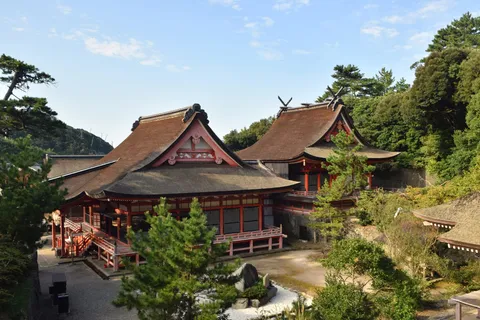
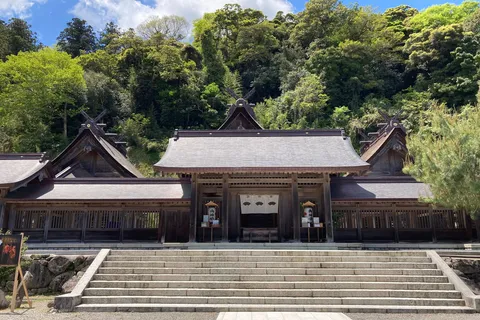
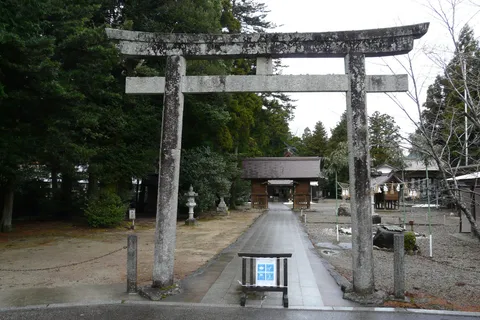
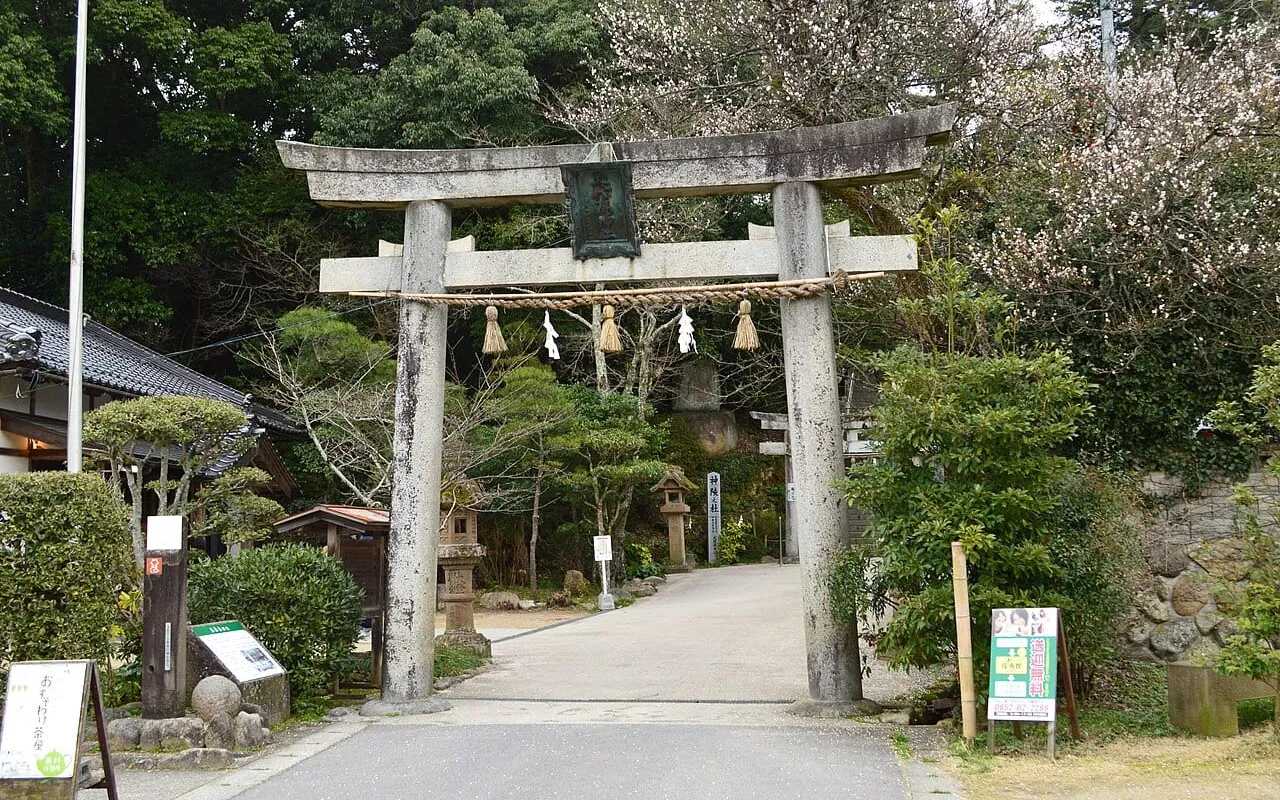
Tamatsukuriyu Shrine (Tamatsukuriyu-jinja) stands at the back of the Tamatsukuri Onsen hot-spring town in Tamayu-cho, Matsue, Shimane. According to Shimane Tourism Navi, Tamatsukuri has been a major production center of magatama and other jewel beads since ancient times and is also known as a hot-spring area called the “bath of the gods” and the “beauty bath,” and this shrine is the guardian of Tamatsukuri Onsen. The name is also written 玉造湯神社 (Japanese Wikipedia).
On the deities, Shimane Tourism Navi explains that Kushiakarutama no Mikoto, the god who made jewels such as the Yasakani no Magatama and the ancestor of the Izumo jewel-makers’ guild, is enshrined together with Onamochi no Mikoto and Sukunahikona no Mikoto, gods who protect the hot spring, its discovery and its healing use. The Karakuni Itate Shrine, which stands within the same shrine, enshrines Itakeru no Mikoto, regarded as a guardian of tree planting, forest nurturing and industrial prosperity.
The year of founding is unknown. According to the Matsue Tourist Association, the Izumo no Kuni Fudoki records it as “Tamatsukuriyu no Yashiro,” and in the Edo period it was cherished as the god of hot springs. According to Japanese Wikipedia, it is a shrine listed in the Engishiki Jinmyocho (a Shikinaisha), and its former shrine rank was prefectural shrine (raised in 1928, Showa 3). A 1558 (Eiroku 1) ridge-beam plaque is said to bear the name “Yuhime Daimyojin,” the shrine was revered by the Matsue domain, and the present main hall was rebuilt in 1857 (Ansei 4) (same source, a description said to be based on the shrine’s history and the on-site signs). Since no official website for the shrine could be found, the above relies on tourism organizations and Japanese Wikipedia.
Highlights
The main attraction is the “wish stone” in the grounds. According to Shimane Tourism Navi, the wish stone, also called “Matama,” is a power spot said to grant wishes to those who touch it and pray. The Matsue Tourist Association explains that you apply the “Kanai-ishi” amulet stone from the shrine office to the wish stone and pray, receiving power passed from stone to stone. Sacred water flows around the wish stone, and it is known that you purify your Kanai-ishi with it before touching.
The red-railed “Miya-bashi” bridge over the Tamayu River in front of the shrine is also a popular photo spot (Shimane Tourism Navi). According to the Matsue Tourist Association, the bridge is also called “Koi-kanai Bridge,” and it is said that if the shrine’s torii gate appears in a photo, you will be blessed with a good match.
The grounds are part of the nationally designated historic site “Izumo Tamatsukuri Ato” (Matsue Tourist Association and Japanese Wikipedia). According to Japanese Wikipedia, beside the stone steps of the approach is a storehouse built in 1960 (Showa 35) that holds about 700 items related to ancient jewel making, some of which are designated National Important Cultural Properties (a description based on the on-site sign). On the hill behind the grounds are the remains of the hilltop castle “Tamatsukuri Yogaiyama Castle,” and the grounds are also said to hold several subsidiary shrines, including Yuhime Daimyojin Shrine.
Visiting Tips
There is no time limit for visiting, and the shrine office window is open 9:00 AM–12:00 PM and 1:00–5:00 PM on weekdays and 8:30 AM–5:00 PM on weekends and holidays (Shimane Tourism Navi). Because the Kanai-ishi and goshuin are received at the shrine office, it is best to visit while the window is open. The Kanai-ishi is a set of a stone, an amulet bag and a wish slip; some guide sites give the offering as ¥600, but this could not be confirmed from official information.
According to Japanese Wikipedia (a description based on the on-site sign), the way to pray is to receive a Kanai-ishi at the shrine office, pour the sacred water over the wish stone and the Kanai-ishi, and gently touch the wish stone with the Kanai-ishi while making your wish three times. Then you write your wish on a wish slip at the shrine office, put one of the two copies in the slip box, and put the other in the amulet bag with the Kanai-ishi. The goshuin fee is not listed in public tourism information, so please check at the shrine office.
It is about 5 minutes by taxi from JR Tamatsukuri-Onsen Station (Shimane Tourism Navi and the Matsue Tourist Association). Parking is free with 20 spaces, but it can get crowded on event days.
Annual Festivals
No official annual event calendar for the shrine could be found, so the following lists events given in Japanese Wikipedia and elsewhere. Dates and content may change from year to year.
- New Year’s treats (January 1–2): According to Japanese Wikipedia, free refreshments are served from 9:00 AM to 4:00 PM, said to include crab soup, zenzai and roasted sweet potatoes.
- Toshitoku-jin Festival (January 3): According to a 2024 column by Izumo Terrace (Epauler), neighborhood Toshitoku-jin portable shrines gather in the shrine plaza, parade around the grounds, and then tour the town.
- Summer festival (July 15): Listed in Japanese Wikipedia.
- Annual festival (October 10): Japanese Wikipedia gives October 10 each year. The Izumo Terrace column says that on the eve, October 9, there is a lion dance and a local purification, and on the day the “Kento no Gi,” an offering of Tamatsukuri hot-spring water, and the “Shikibocho no Gi” are held.
Nearby Food & Sightseeing
- Izumo Tamatsukuri Historic Site Park and Museum: According to the Shimane Prefecture historic-site guide, surveys in 1969 (Showa 44) and 1971 (Showa 46) at the Izumo Tamatsukuri site uncovered the remains of about 30 jewel-workshop buildings, and the historic site park has reconstructed buildings. The museum in the park displays excavated jewels and other finds. According to Matsue City’s museum newsletter, it is open 9:00 AM–5:00 PM (last entry 4:30 PM) and closed on Mondays and the day after a holiday (as of spring 2026; please check Matsue City’s information for the latest).
- Tamatsukuri Onsen: According to Shimane Prefecture, this hot-spring area, which the Izumo no Kuni Fudoki calls the “bath of the gods,” lies just east of the historic site. Shimane Tourism Navi introduces it as a “bath of the gods” and “beauty bath” with a history stretching back 1,300 years.
- Tamatsukuri Yogaiyama Castle Ruins: Remains of a hilltop castle built on the hill behind the grounds, where earthworks, a dry moat and well remains survive, according to Japanese Wikipedia (a description based on the on-site sign).
Frequently Asked Questions
- Q. What are the visiting hours and shrine office hours?
- A. According to Shimane Tourism Navi, there is no time limit for visiting. The shrine office window is open 9:00 AM–12:00 PM and 1:00–5:00 PM on weekdays, and 8:30 AM–5:00 PM on weekends and holidays (no official shrine website could be found). Hours can change for events, so calling the shrine (0852-62-0006) is a safe extra step.
- Q. What are the "wish stone" and the "kanai stone," and how do you pray with them?
- A. According to Shimane Tourism Navi, the "Matama" (the "wish stone," Negai-ishi) in the grounds is said to grant wishes to those who touch it and pray. Per Japanese Wikipedia (a description based on the on-site sign), you receive a "Kanai-ishi" (fulfillment stone) at the shrine office, pour the sacred water over the wish stone and the Kanai-ishi, gently touch the wish stone with the Kanai-ishi while making your wish three times, then write your wish on a wish slip at the shrine office and put one of the two copies in the slip box and the other in the amulet bag together with the Kanai-ishi. Several guide sites give the offering for a Kanai-ishi as ¥600, but this could not be confirmed from official information.
- Q. Can I get a goshuin?
- A. According to guide sites, goshuin are given out at the shrine office. The fee is not listed in public tourism information such as Shimane Tourism Navi or the Matsue Tourist Association, and no official shrine website could be found, so please check the amount and hours at the shrine office. As a guide, the office window is open 9:00 AM–12:00 PM and 1:00–5:00 PM on weekdays, and 8:30 AM–5:00 PM on weekends and holidays.
- Q. How do I get there, and is there parking?
- A. Shimane Tourism Navi and the Matsue Tourist Association give about 5 minutes by taxi from JR Tamatsukuri-Onsen Station. Per Japanese Wikipedia, the nearest bus stop is "Tamatsukuri Onsen" on the Ichibata Bus line. Parking is free with 20 spaces, and bicycle parking is also free (Shimane Tourism Navi).
- Q. When is the annual festival?
- A. Japanese Wikipedia gives the annual festival (Reitaisai) as October 10 each year. A 2024 column by Izumo Terrace (Epauler) says that on the eve, October 9, there is a lion dance and a local purification, and on the day there is the "Kento no Gi" (an offering of Tamatsukuri hot-spring water) and the "Shikibocho no Gi" (a ceremonial fish-carving rite). Details may change from year to year, so please check at the shrine office.
Plan Your Visit
Before you go, you can book a stay and get your shrine-visit items ready.
Amazon links open Amazon.co.jp (Japan) in English; whether an item ships overseas depends on the product.
※ Contains ads (PR). Links open external sites such as Amazon, Rakuten, Trip.com and Booking.com.