History
Tanzan Jinja enshrines Fujiwara no Kamatari, a statesman of the Asuka period. The shrine’s name derives from “Katarai-yama” (“the mountain of discussion”), the place where Kamatari is said to have talked with Prince Naka no Oe (later Emperor Tenji) about the political reforms that would come to be known as the Taika Reforms. The shrine’s origins trace to 678, when Kamatari’s eldest son built a thirteen-story pagoda in his memory.
Kamatari’s eldest son, the priest Jo’e, had just returned from China when he reinterred part of his father’s remains atop Mt. Tonomine and built the thirteen-story pagoda and a lecture hall, naming the complex “Myorakuji.” In 701, a shrine hall was built and an image of Kamatari was enshrined within it. From then on, the site at Tonomine long followed the syncretic Buddhist–Shinto tradition and was known by names such as “Tanzan Gongen” and “Tonomine-dera.” With the 1869 edict separating Buddhism and Shinto, however, Myorakuji was abolished, its monks returned to secular life to become Shinto priests, and the site was renamed to its present name, Tanzan Jinja.
Highlights
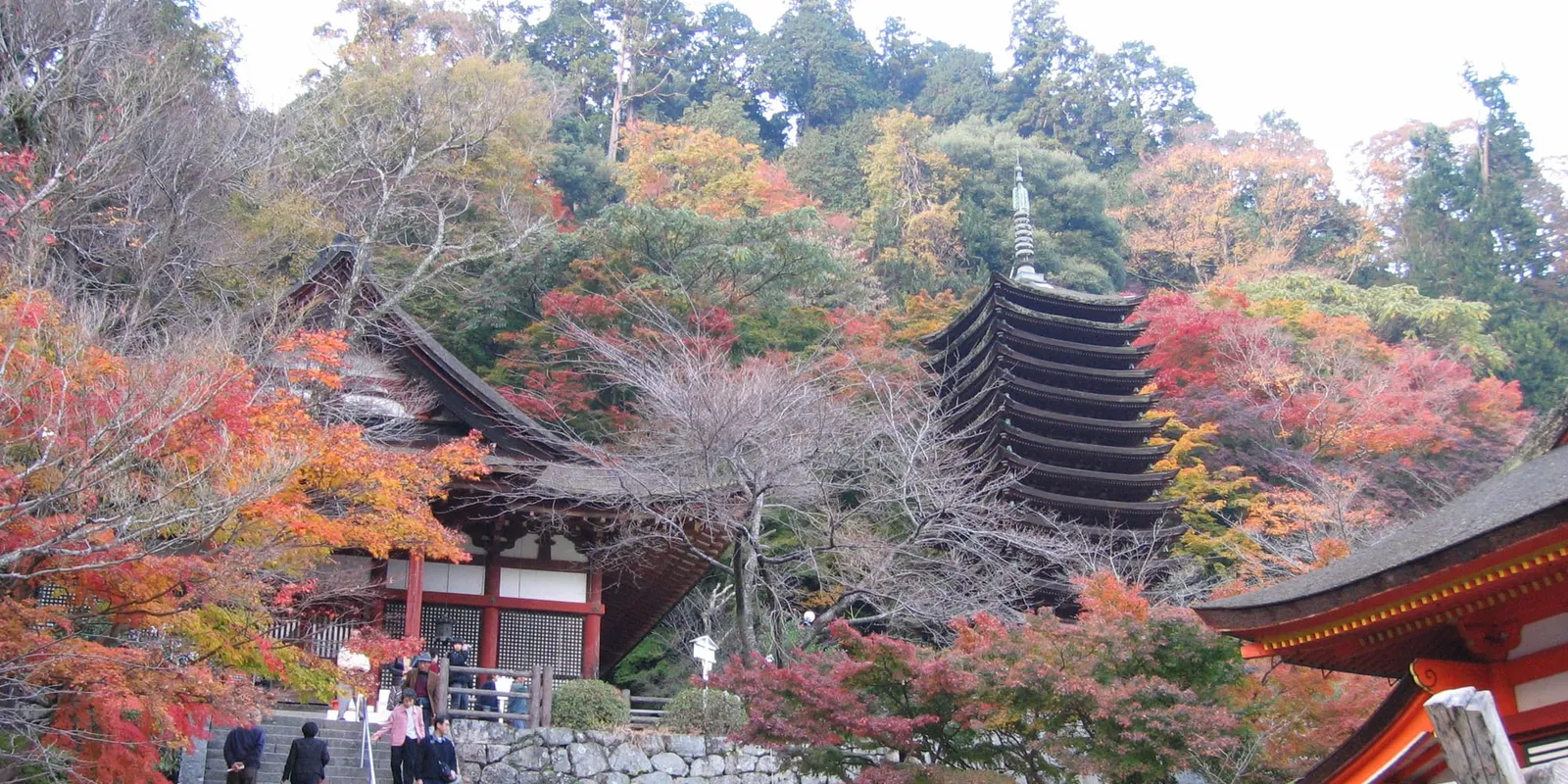
The wooden thirteen-story pagoda rising within the shrine grounds is the only wooden pagoda of its kind still standing anywhere in the world, and it is the building most closely associated with Tanzan Jinja. Set deep in the mountains of Tonomine, the shrine draws many visitors especially in autumn, when its vermillion halls are set against a backdrop of brilliant fall foliage.
Visiting Tips
Tucked away in a quiet mountain valley, the shrine offers a rich sense of nature in every season. As the site associated with the Taika Reforms — the very event that gave the shrine its name — it is also a popular destination for history enthusiasts.
Annual Festivals
- Kemari Festival: Held every year on April 29 and November 3, this event commemorates the story of how Kamatari and Prince Naka no Oe first met over a game of kemari (ancient Japanese kickball), with participants in traditional kemari costume performing the ritual game as an offering.
- Reitaisai (Grand Festival): Held every year on November 17, the anniversary of Kamatari’s death, this is the shrine’s largest festival of the year.
- Shinkosai: Held on the second Sunday of April, at the height of cherry blossom season, this is the only festival of the year at which a mikoshi (portable shrine) procession can be seen on the grounds.
Nearby Food & Sightseeing
The road up to Tonomine winds through beautiful mountain scenery, making for a lovely drive from central Sakurai, and the shrine pairs well with a historical stroll through nearby Asuka Village.
- Tonomine Kanko Hotel: Located near the shrine grounds, its view restaurant lets you enjoy a meal while overlooking the mountains of Tonomine.
- Grill Momiji: A popular restaurant near Tanzan Jinja known for lunch with views of the autumn foliage.
- Teahouses along the approach serve coffee brewed with local well water, among other simple pleasures unique to this mountain setting.
Frequently Asked Questions
- Q. What are the visiting hours?
- A. 8:30–16:30 (last admission 16:00).
- Q. When is the goshuin office open?
- A. 8:30–16:00, for ¥500.
- Q. Is there parking?
- A. Yes, paid parking is available nearby.
- Q. What is the wooden thirteen-story pagoda?
- A. It's the only surviving wooden thirteen-story pagoda in the world, and the shrine's signature landmark.
- Q. How do I get there?
- A. About a 25-minute bus ride from Kintetsu/JR Sakurai Station, getting off at the "Tanzan Jinja" stop.
Related Shrines
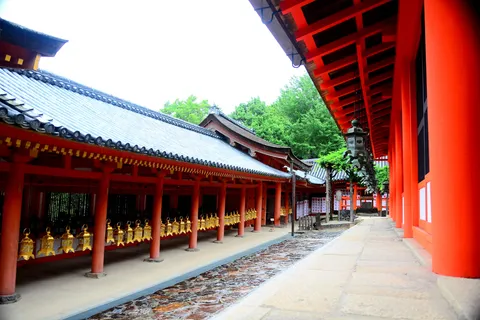
Nara Prefecture, Nara
Kasuga Taisha
Kasuga-taisha
- Protection from Misfortune
- Good Fortune
- Good Relationships
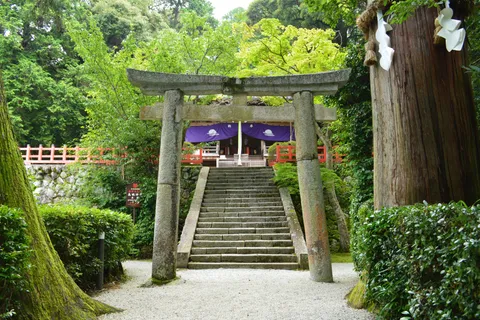
Nara Prefecture, Gose
Takakamo Jinja
Takakamo-jinja
- Recovery from Illness
- Rebirth and Revival
- Abundant Harvest
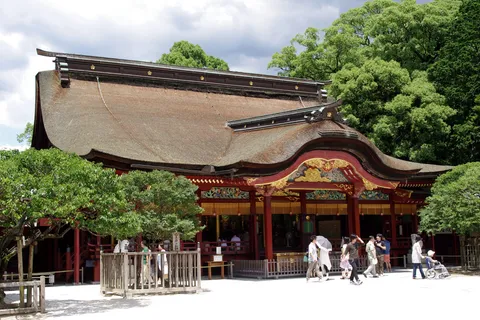
Fukuoka Prefecture, Dazaifu
Dazaifu Tenmangu
Dazaifu Tenmangū
- Academic Success
- Exam Success
- Protection from Misfortune