History
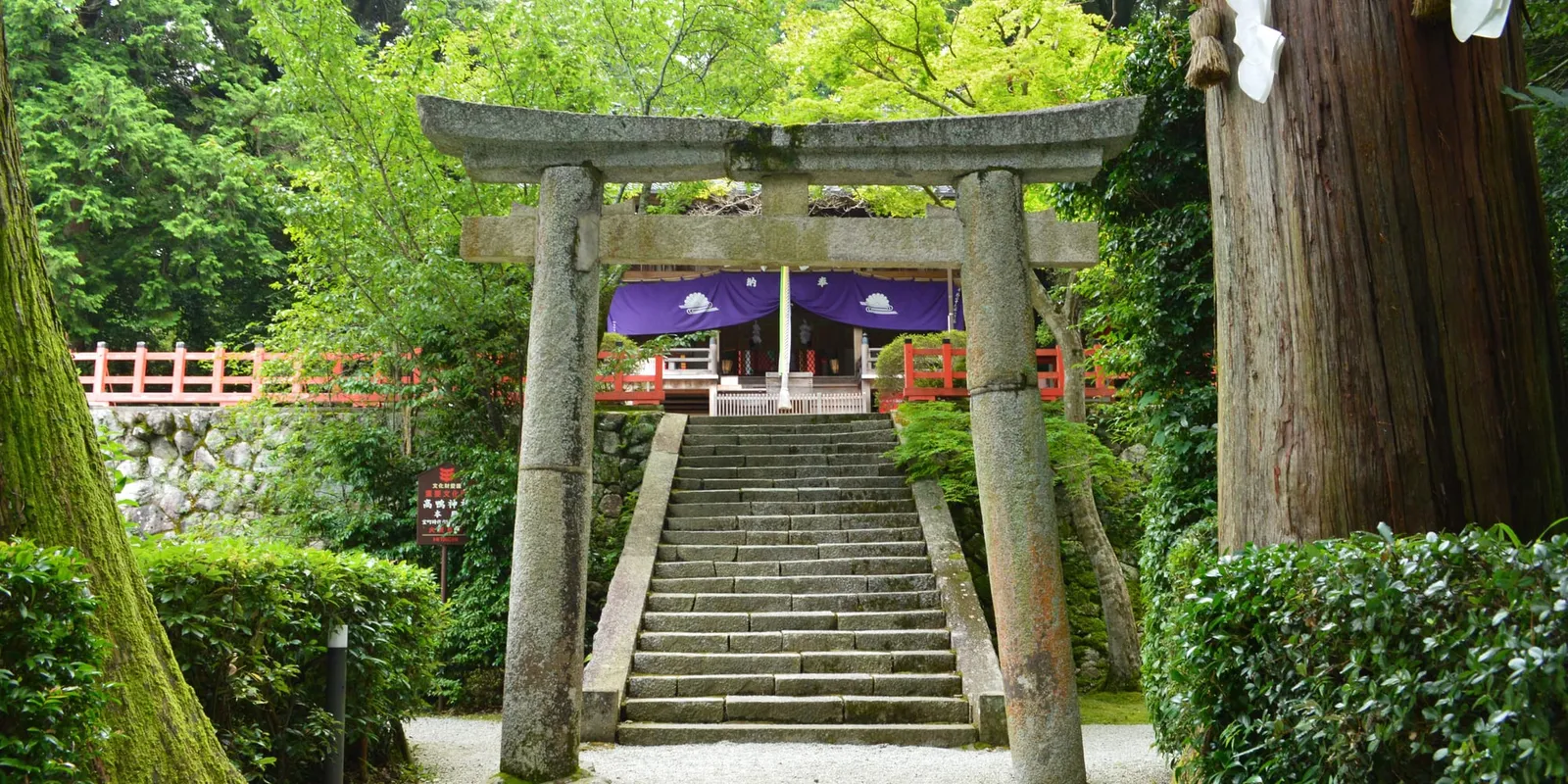
Takakamo Jinja stands at Kamogami in Gose City, Nara Prefecture, on the eastern foothills of Mount Kongo. Shrine tradition holds that rituals have been performed on this site since the middle of the Yayoi period, making it one of Japan’s oldest continuously worshipped shrines. This area is considered the birthplace of the Kamo clan (also written 賀茂 or 加茂), a powerful and ancient family of the Yamato region, and traces of that ancestral worship remain alive in the shrine’s precincts today.
The 10th-century Engishiki shrine registry records the shrine as “Takakamo Ajisuki Takahikone Shrine, Four Seats,” ranking it as a Myojin Taisha — a shrine of the very highest classification, entitled to receive imperial offerings at the Tsukinami, Aiiname, and Niiname festivals. In the first month of 859, during the reign of Emperor Seiwa, its enshrined deity was elevated to Senior First Rank alongside two of Yamato’s other great shrines, Omiwa Jinja and Yamato Okunitama Jinja.
In the middle of the Yayoi period, part of the Kamo clan is said to have moved from this hill country to the southwestern edge of the Yamato plain, in what is now the city of Gose, where they founded Kamotsuba Jinja on the banks of the Katsuragi River and began cultivating wet-rice paddies. Generations later, another branch of the clan advanced into Yamashiro Province — present-day Kyoto — where they founded Kamigamo Jinja (Kamo-wakeikazuchi Jinja) and Shimogamo Jinja (Kamo-mioya Jinja). Because of this lineage, Takakamo Jinja is regarded as the head shrine and point of origin for every shrine across Japan named Kamo, Kamo, or Kamo, including Kyoto’s renowned Kamigamo and Shimogamo shrines.
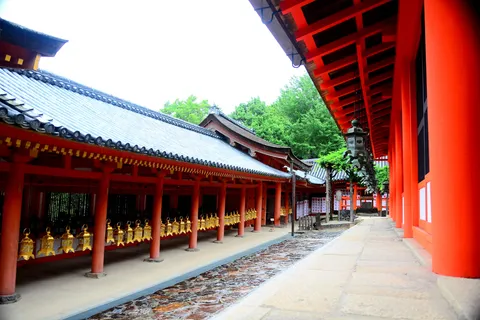
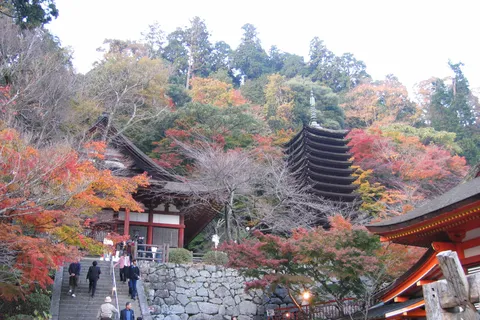
The present main hall was rebuilt in 1543, during the Muromachi period, in the sangen-sha nagare-zukuri architectural style, and is designated a National Important Cultural Property. The grounds also hold an East and a West subsidiary hall, sixteen smaller auxiliary shrines, a prefecturally designated building, and a great cedar tree registered as a natural monument, all within a dense sacred forest.
The Enshrined Deities
The principal deity, Ajisukitakahikone-no-Mikoto, is honored in the Kojiki under the exalted title “Kamo-no-Okami” (迦毛之大御神). Within the entire Kojiki, the title “Okami” — the same suffix carried by the sun goddess Amaterasu-Omikami — is bestowed on only a small handful of deities, underscoring the exceptional status this god holds in Japanese mythology.
According to the Kojiki and Nihon Shoki, Ajisukitakahikone-no-Mikoto so closely resembled the deceased Amewakahiko-no-Mikoto in appearance that when he came to pay his respects at Amewakahiko’s funeral, the grieving family mistook him for their lost kinsman returned to life and embraced him. Enraged at being mistaken for a corpse, he drew his sword and cut down the mourning hut, which is said to have fallen to earth and become Mount Moyama in Mino Province. Out of this myth — a god mistaken for the dead who rose up and struck down his own funeral hall — Ajisukitakahikone-no-Mikoto came to be venerated as a deity of rebirth, revival, and recovery from illness.
Alongside him are enshrined Kotoshironushi-no-Mikoto (a son of Okuninushi-no-Mikoto), Ajisukihayao-no-Mikoto, and the principal deity’s younger sister Shitateruhime-no-Mikoto together with her consort Amewakahiko-no-Mikoto.
Highlights
A pond known as Miya-ike sits within the grounds, its waters home to brightly colored carp, with a stage built at its edge for ritual performances. On the night of the mid-autumn harvest moon, gagaku court music is performed on this stage, filling the shrine with an otherworldly atmosphere. A statue of the medieval loyalist Kusunoki Masashige stands along the approach, and the quiet forest paths invite a leisurely walk past the shrine’s many subsidiary halls.
Another highlight is the shrine’s collection of Japanese primrose (Sakurasō), gathered and cultivated across three generations of a single family since the final years of the Meiji era. Every year from late April into early May, more than 500 varieties of primrose bloom across the grounds in a range of colors, drawing both worshippers and flower enthusiasts.
Visiting Tips
The shrine grounds are open 8:00–17:00, but the office where goshuin and amulets are available closes earlier, at 16:30, so it’s worth allowing enough time. The walk from Kintetsu Gose Station is a considerable distance, so visiting by car is convenient — two free parking areas are available right in front of the grounds. Nestled in the foothills of Mount Kongo, the shrine is often described as feeling cool even in summer, making it a rewarding destination for visitors seeking a quiet, ancient sanctuary.
Nearby Food & Sightseeing
- Takamahiko Jinja: Another ancient shrine along the Katsuragi Kodo path, near Takakamo Jinja, associated with the legend of Takamagahara (the mythical High Plain of Heaven). Many visitors combine a visit to both shrines.
- Katsuragi Kodo: An old path running north-south along the eastern foothills of Mounts Kongo and Katsuragi, dotted with ancient shrines, including Takakamo Jinja, and terraced rice-field scenery.
- Mount Kongo: The sacred peak rising behind Takakamo Jinja, with well-maintained hiking trails from its trailheads.
Frequently Asked Questions
- Q. What are the visiting hours?
- A. The shrine grounds are open 8:00–17:00. The office where you can receive a goshuin or amulets is open 8:00–16:30, and prayer services are accepted 9:00–15:00 (excluding festival days and equinox periods).
- Q. Can I get a goshuin here?
- A. Yes, at the shrine office, open 8:00–16:30. A customary offering (hatsuho-ryo) is requested in exchange — please check the current amount at the office itself.
- Q. How do I get to Takakamo Jinja?
- A. It's about a 30-minute bus ride from Kintetsu Gose Station to the "Kaze no Mori" bus stop, followed by a 15-minute walk. By car, it's about 10 minutes from the Gose Interchange on the Kinki Nara Expressway, or about 15–20 minutes by taxi from Kintetsu Gose Station or JR Gose Station.
- Q. Is parking available?
- A. Yes, there are two free parking areas for worshippers in front of the shrine grounds.
- Q. Why is Takakamo Jinja called the head shrine of all Kamo shrines in Japan?
- A. The area around Takakamo Jinja is considered the birthplace of the Kamo (also written Kamo/Kamo) clan, a powerful family of ancient Yamato, with rituals here dating back to the middle of the Yayoi period. Members of the Kamo clan later moved into Yamashiro Province (present-day Kyoto) and founded Kamigamo Jinja and Shimogamo Jinja. Because of this lineage, Takakamo Jinja is regarded as the head shrine and point of origin for every shrine across Japan named Kamo, Kamo, or Kamo — including Kyoto's famous Kamo shrines.