History
Tatsuta Taisha’s founding is traced, in shrine tradition, to the reign of the 10th emperor, Sujin. According to this account, the land suffered years of poor harvests and epidemic disease, and when the emperor prayed for guidance, the deities appeared to him in a dream, instructing that they be enshrined at “Tatsuno field in Tatsuta, where the morning sun rises and the evening sun sets.” Once the shrine was built as instructed, the harvests are said to have grown abundant again and the epidemic to have subsided — the founding legend behind the shrine.
The earliest firmly documented reference to worship at Tatsuta appears in the Nihon Shoki, in its entry for the 10th day of the 4th month of 675 CE (the 4th year of Emperor Tenmu’s reign), which records that the Imperial court dispatched envoys to worship the wind deity at Tatsuta and the water deity — known as the Great Imibe deity — at Hirose (present-day Hirose Taisha in Kawai, Nara Prefecture) on the same day. From then on, twice each year, in the 4th and 7th months, an imperial envoy of fifth rank or higher together with an official of the Department of Divinities of sixth rank or higher were sent from the court to conduct the Wind God Festival (Fujin-sai) at Tatsuta and the Great Imibe Festival (Oimi-sai) at Hirose. This paired system of wind and water rites continued without interruption until the Nanboku-cho period, and the Heian-era Engishiki already records these observances fixed on the 4th day of the 4th and 7th months. As shrines dedicated to wind and water respectively — the two forces underpinning the land and its harvests — Tatsuta and Hirose held a special place in the state ritual calendar of ancient Japan.
In terms of shrine rank, Tatsuta Taisha was listed as a Myojin Taisha (two-seat) in the Engishiki’s register of deities, and was also counted among the “Middle Seven” of the Twenty-Two Shrines especially honored by the Heian court. From the Meiji era it was ranked a Kanpei Taisha, a first-rank government-supported shrine, from 1871 to 1946, and today holds Beppyo status within the Association of Shinto Shrines. The enshrined deities are Ame no Mihashira no Okami (also known as Shinatsuhiko no Kami) and Kuni no Mihashira no Okami (also known as Shinatsuhime no Kami), a male-and-female pair of wind deities also known by the names Shinatsuhiko no Mikoto and Shinatsuhime no Mikoto.
Highlights
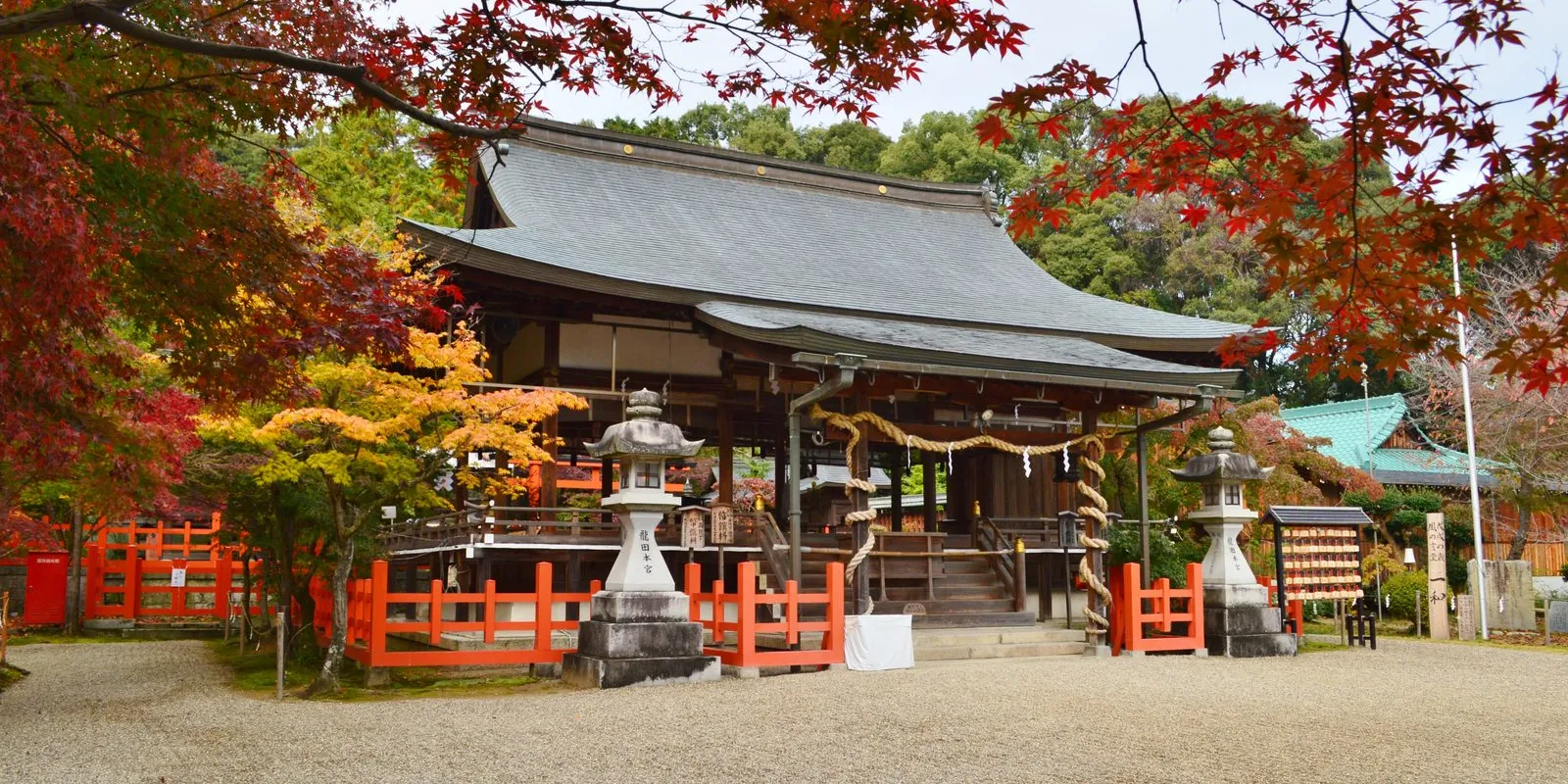
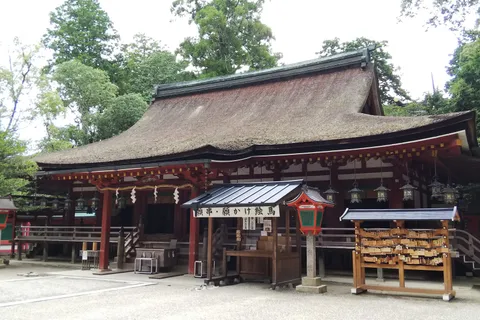
The shrine grounds sit on a rise at Tatono, at the southern foot of the Ikoma mountains overlooking the Yamato River, long known as the seat of the “wind god of Tatsuta.” The worship hall and main sanctuary preserve a venerable atmosphere, and the grounds include subsidiary shrines such as Tatsuta Ebisu Jinja, associated with business prosperity, and Shiraryu Jinja (White Dragon Shrine), known for its distinctive practice of pouring water while praying — drawing visitors seeking good relationships and protection from misfortune alike.
Tatsuta Taisha is also known as a popular spot for autumn foliage, with the grounds turning brilliant colors each fall and drawing visitors and photographers alike. Behind the shrine, a mountain trail connects to the Tatsuta Kodo, an ancient road that in the Asuka and Nara periods served as a key route linking the Yamato basin with Naniwa (Osaka), where travelers prayed for safe passage. This historical association is part of why visitors today travel from across Japan to pray for maritime safety, aviation safety, and safe travel more broadly.
Visiting Tips
The shrine office is open 9:00–17:00, and prayer requests (gokito) are accepted until 16:00. Free parking near the first torii gate makes visiting by car convenient. It’s about a 5–10 minute walk from JR Sango Station, though the approach is a gentle uphill slope, so comfortable footwear is recommended. Many visitors combine a visit here with nearby Horyuji Temple in neighboring Ikaruga, or with Shigisan Chogosonshiji Temple.
Annual Festivals
- Fuchin Taisai (Wind-Calming Grand Festival, typically the first Sunday of July): The shrine’s largest festival, carrying on the tradition of the Wind God Festival said to have begun in 675 CE under Emperor Tenmu. Daytime rites are followed by an evening fireworks display known as the “Wind God Fireworks.”
- Reitaisai (typically April): A spring festival that carries on the tradition of the ancient Wind God Festival’s spring observance, originally fixed on the 4th day of the 4th month.
- Monthly goshuin and seasonal offerings: Limited-edition goshuin with a different design are sometimes offered each month, giving visitors a reason to return through the seasons.
Nearby Food & Sightseeing
- Shigisan Chogosonshiji Temple: A renowned temple dedicated to Bishamonten, about a 10-minute drive from Tatsuta Taisha, famous for its giant papier-mache tiger.
- Horyuji Temple: A UNESCO World Heritage Site associated with Prince Shotoku, located in Ikaruga, the town directly adjacent to Sango. It is home to some of the oldest surviving wooden structures in the world.
- JR Oji Station area: The central station of neighboring Oji Town, one stop from Sango Station, with restaurants and shopping convenient for a stop before or after visiting the shrine.
Frequently Asked Questions
- Q. Who is enshrined at Tatsuta Taisha, and what blessings is it known for?
- A. Tatsuta Taisha enshrines a male-and-female pair of wind deities: Ame no Mihashira no Okami (also known as Shinatsuhiko no Kami) and Kuni no Mihashira no Okami (also known as Shinatsuhime no Kami). Since ancient times the shrine has been revered by the Imperial court for calming destructive winds and ensuring bountiful harvests, and today it is also known for blessings of maritime safety, aviation safety, and safe travel.
- Q. What is the historical relationship between Tatsuta Taisha and Hirose Taisha?
- A. The Nihon Shoki records that, on the 10th day of the 4th month of 675 CE (the 4th year of Emperor Tenmu's reign), the Imperial court dispatched envoys to worship the wind deity at Tatsuta and the water deity — the Great Imibe deity — at Hirose (present-day Hirose Taisha in Kawai, Nara) on the same day. From then on, twice each year in the 4th and 7th months, an imperial envoy of fifth rank or higher and an official from the Department of Divinities were sent to conduct the Wind God Festival at Tatsuta and the Great Imibe Festival at Hirose, a paired ritual that continued without interruption until the Nanboku-cho period. The Heian-era Engishiki fixed these observances on the 4th day of the 4th and 7th months, and the two shrines — one for wind, one for water — have been spoken of together as a pair since antiquity. Hirose Taisha is not yet covered on this site.
- Q. What are the goshuin hours and fee at Tatsuta Taisha?
- A. The shrine office is open 9:00–17:00, and the goshuin costs ¥500. Its distinctive design uses an unusual variant form of the character for "dragon" (tatsu), with the final strokes rendered differently from the standard character.
- Q. How do I get to Tatsuta Taisha?
- A. It's about a 5–10 minute walk from Sango Station on the JR Yamatoji Line, though the approach is a gentle uphill slope. From Shigisanshita Station on the Kintetsu Ikoma Line, it's about a 15-minute walk. Free parking is available near the first torii gate for those arriving by car.
- Q. What is the Fuchin Taisai festival at Tatsuta Taisha?
- A. The Fuchin Taisai (Wind-Calming Grand Festival) is held every year on the first Sunday of July and is the shrine's largest festival, carrying on the tradition of the Wind God Festival said to have begun in 675 CE under Emperor Tenmu. Daytime rites are followed in the evening by a fireworks display known as the "Wind God Fireworks," drawing large crowds of visitors.
Related Shrines
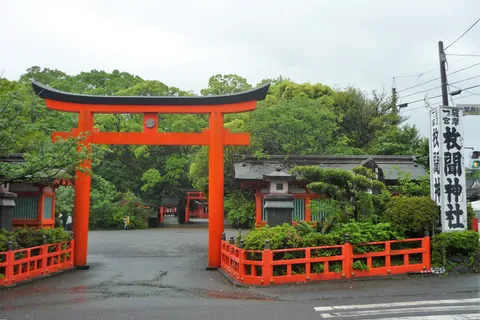
Kagoshima Prefecture, Ibusuki
Hirakiki Jinja
Hirakiki Jinja
- Maritime Safety
- Traffic Safety
- Bountiful Harvest
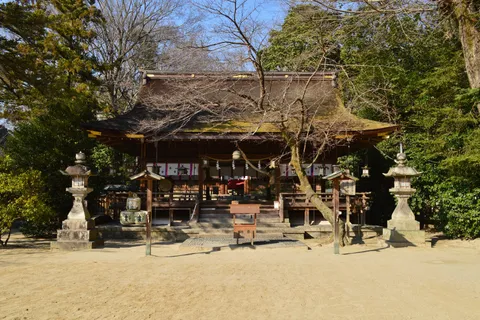
Nara, Kawai, Kitakatsuragi District
Hirose Taisha
Hirose Taisha
- Bountiful Harvest
- Household Safety
- Protection from Flooding
Nara, Tenri
Isonokami Jingu
Isonokami-jingū
- Victory in Battle
- Good Health
- Good Fortune