History
Hirakiki Jinja stands at the foot of Mt. Kaimon, a 924-meter volcanic cone at the southern tip of the Satsuma Peninsula so symmetrically shaped it is often called “Satsuma Fuji.” Listed among the shikinaisha shrines of the Engishiki register, it has long been revered as the ichinomiya — the premier shrine — of former Satsuma Province. Tradition traces its founding to the age of the gods, though shrine records give 708 AD (Wado 1) as the year it was established.
The shrine originally stood on the southern foot of Mt. Kaimon itself, worshipping the mountain directly as its sacred body in a form of mountain worship. Repeated eruptions of Mt. Kaimon during the Jogan era (859-877) prompted the imperial court to grant the mountain’s deity successive rises in court rank in an effort to appease it — an episode recorded in the Sandai Jitsuroku chronicle — and it was around this time that the shrine is believed to have relocated to its present site, north of the peak. By 927, when the Engishiki shrine register was compiled, it was formally recorded as “Hirakiki Jinja of Ei District, Satsuma Province,” and it has stood as one of the region’s foremost ancient shrines for over a thousand years since.
The shrine’s ichinomiya status has not gone uncontested: tradition holds that during the Kamakura period, after the shogunate ordered prayers at each province’s ichinomiya to help repel the Mongol invasions, a dispute broke out between Hirakiki Jinja and Nitta Jingu, in present-day Satsumasendai, over which shrine truly held the title. The question was never definitively resolved, and both shrines continue to be recognized as Satsuma’s ichinomiya today — though Hirakiki Jinja’s claim, backed by its appearance in the Engishiki, is treated locally as the older and more authoritative one.
The shrine’s principal deity is Ohirumemuchi no Mikoto, another name for Amaterasu Omikami, worshipped alongside the Five Male and Three Female Kami. Facing out toward the open sea beneath Mt. Kaimon, it has long been worshipped by fishermen and travelers as a guardian of safe travel by land and sea. From 1613 onward, Ryukyuan envoys dispatched to pay tribute to the Satsuma domain would land at Yamakawa Harbor and visit Hirakiki Jinja first, before proceeding on to Kagoshima Castle, dedicating inscribed plaques in gratitude for safe passage across the sea. Seven of these Ryukyuan plaques survive in the shrine’s collection today and are designated cultural properties of Ibusuki City.
Among the shrine’s treasures is the Matsu-ume Makie Kushige, a lacquered cosmetic box decorated with a pine-and-plum design and made in 1523, which is designated a National Important Cultural Property and kept in the shrine’s treasure hall. The main shrine hall itself is a Kagoshima Prefecture Tangible Cultural Property.
Highlights
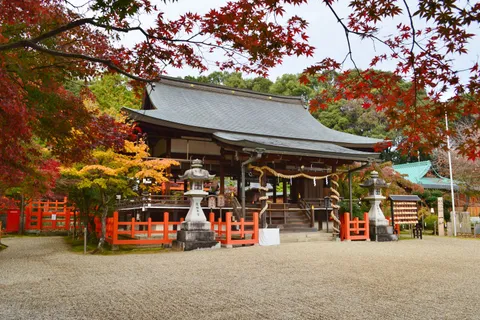
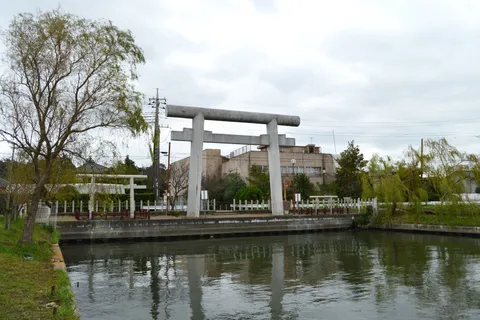
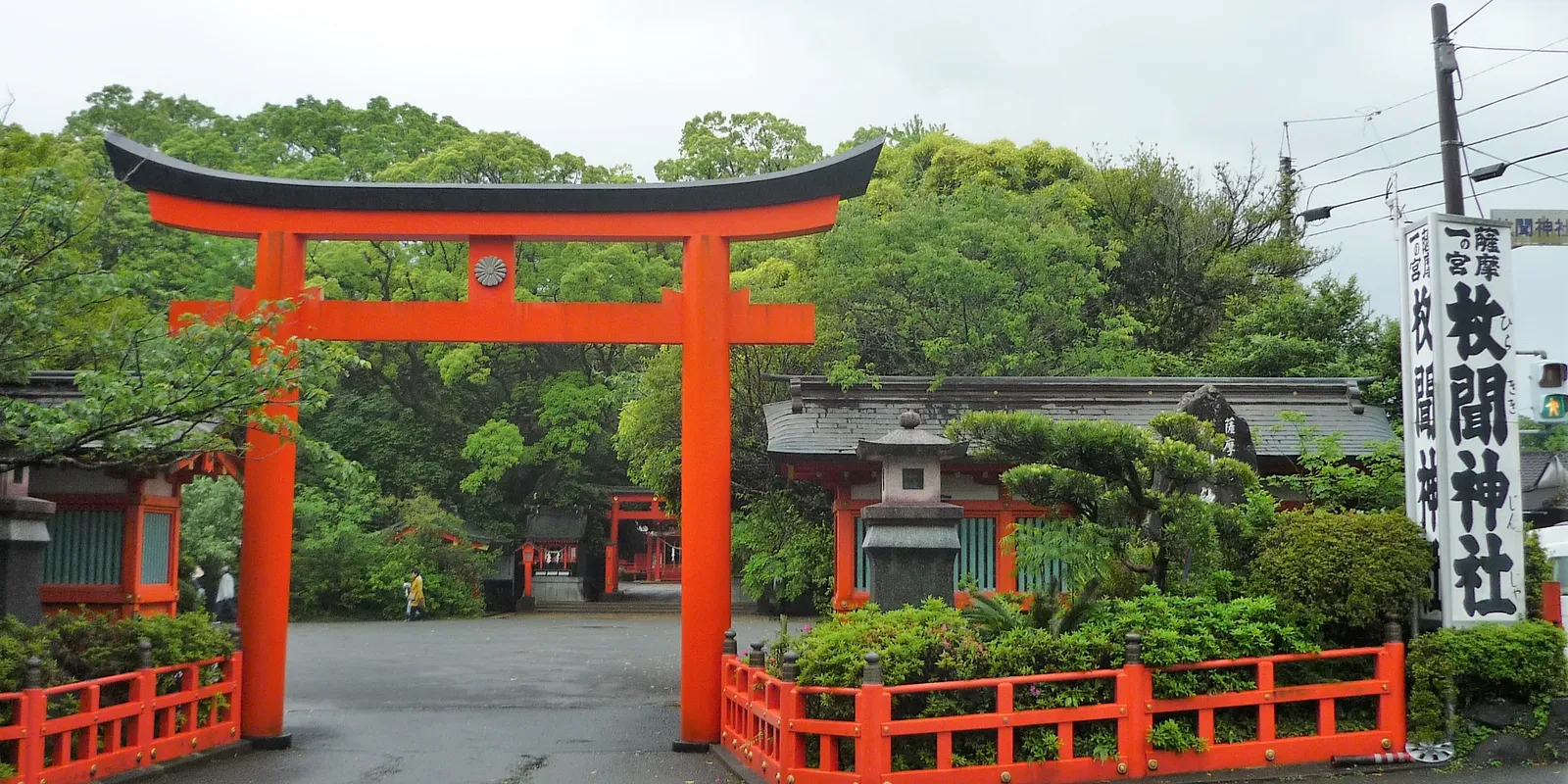
Beyond the shrine’s second torii gate stands the chokushiden, the hall once used to receive imperial envoys. The shrine buildings were traditionally positioned so that the silhouette of Mt. Kaimon appeared directly behind the main hall when viewed from the approach, though the view is now partly obscured by trees that have grown up around the grounds. The vermilion torii gates and shrine buildings stand out vividly against the subtropical light of southern Kagoshima, giving the whole precinct a dignified, hushed atmosphere.
Toward the back of the grounds lies Tama-no-i, an ancient well said to be the very spot where Toyotama-hime, daughter of the sea god, first met the god Hikohohodemi (Yamasachihiko) — one of Japan’s oldest recorded wells, and a vivid reminder that the Kaimon area has long been associated with the undersea Dragon Palace of Japanese legend.
The treasure hall houses the National Important Cultural Property comb box along with other shrine treasures, but it is not on permanent display — it is opened to the public only during two brief windows each year, roughly around January and May, each lasting about a month (entry ¥100). Since exact dates vary from year to year, it’s worth contacting the shrine directly before planning a visit around this.
Visiting Tips
The grounds themselves can be visited at any time, but the shrine office — for goshuin and amulets — is open 8:00-17:00, except during special periods. Goshuin cost ¥500 and are written directly in your goshuin book on request. Free parking for 50 vehicles is available on-site, making a visit by car straightforward. The nearest station is Kaimon Station on the JR Ibusuki-Makurazaki Line, about a 10-minute walk away. Many visitors combine a stop here with nearby Mt. Kaimon and Cape Nagasakibana as part of a broader day exploring the Ibusuki area.
Annual Festivals
- Hoze Festival (October 14-16): An autumn harvest thanksgiving festival said to have continued for roughly 300 years since the Edo period. On the evening of the 14th, the shrine’s youth association performs four sacred kagura dances — the sword dance, the southern dance, the central dance, and the Uzume dance — around ceremonial bonfires on the grounds.
- Divine Procession, Shinkosai (October 15): A portable-shrine procession tours four districts of the parish, with local families preparing rice balls to distribute to visitors at the resting shrine (otabisho) along the route.
- Return Procession, Kankosai (October 16): The deity is returned to the main shrine, and the festival concludes with dedicatory sumo and kendo matches held on the shrine grounds.
Nearby Food & Sightseeing
- Cape Nagasakibana: A scenic cape near the southernmost tip of Kyushu, famous for its open views of Mt. Kaimon across the water — a natural pairing with a visit to Hirakiki Jinja on any Ibusuki sightseeing trip.
- Mt. Kaimon: The symmetrical volcanic cone nicknamed “Satsuma Fuji,” and the sacred mountain Hirakiki Jinja has worshipped since ancient times. A maintained trail leads to the summit, with views over the Satsuma and Osumi peninsulas.
- Sunamushi Kaikan Saraku: A facility offering easy access to Ibusuki’s famous “sand steaming” hot spring baths, about a 20-minute drive from the shrine — a relaxing way to warm up after paying your respects.
Frequently Asked Questions
- Q. What are the goshuin hours and fee at Hirakiki Jinja?
- A. Goshuin are available 8:00-17:00 (except during special periods) for ¥500. Bring your goshuin book and it will be written directly on the spot.
- Q. Is there parking at Hirakiki Jinja?
- A. Yes, there is free parking for 50 vehicles on the grounds. The shrine is also about a 10-minute walk from JR Kaimon Station, so it's reachable by public transport as well.
- Q. How do I get to Hirakiki Jinja?
- A. It's a 10-minute walk from Kaimon Station on the JR Ibusuki-Makurazaki Line. By car, it's about 26 minutes from the Ei Interchange on the Ibusuki Toll Road. Many visitors combine a visit with nearby Cape Nagasakibana and Mt. Kaimon as part of a wider Ibusuki sightseeing trip.
- Q. Why is Hirakiki Jinja called the ichinomiya of Satsuma Province?
- A. Hirakiki Jinja is an ancient shrine listed in the Engishiki shrine register of 927 as "Hirakiki Jinja of Ei District, Satsuma Province," and has long been venerated as the ichinomiya (highest-ranked shrine) of former Satsuma Province. During the Kamakura period, a dispute arose with Nitta Jingu in what is now Satsumasendai over which shrine held the title, following orders from the shogunate for prayers against the Mongol invasions. The matter was never conclusively settled, and both shrines still claim ichinomiya status today — though Hirakiki Jinja, as the shrine actually recorded in the Engishiki, is regarded locally as holding the older and more authoritative claim.
- Q. What is the Hoze Festival at Hirakiki Jinja?
- A. Held every year from October 14 to 16, the Hoze Festival is an autumn harvest thanksgiving festival said to have continued for roughly 300 years since the Edo period. On the 14th, the shrine's youth association performs four sacred kagura dances (the sword dance, the southern dance, the central dance, and the Uzume dance) around ceremonial bonfires; on the 15th, a portable-shrine procession tours four local districts; and on the 16th, the closing rites are marked by dedicatory sumo and kendo matches on the shrine grounds.