History
Hirose Taisha’s founding is traced, in shrine tradition, to the 9th year of the reign of the 10th emperor, Sujin. According to this account, a divine oracle came to the village headman, Hirose no Omi Fujitoki, beside a pond called Mizutari-ike that would become the shrine’s site. Overnight, the marsh is said to have turned to dry land, with numerous tachibana citrus trees sprouting on it. This auspicious sign was reported to the emperor, and a shrine was built on the spot to honor the deities behind it — the founding legend behind Hirose Taisha.
The earliest firmly documented reference to worship at Hirose appears in the Nihon Shoki, in its entry for the 10th day of the 4th month of 675 CE (the 4th year of Emperor Tenmu’s reign), which records that the Imperial court dispatched envoys to worship the wind deity at Tatsuta and the water deity — known as the Great Imibe deity — at the river bend of Hirose on the same day. From then on, twice each year, in the 4th and 7th months, an imperial envoy of fifth rank or higher together with an official of the Department of Divinities of sixth rank or higher were sent from the court to conduct the Wind God Festival (Fujin-sai) at Tatsuta and the Great Imibe Festival (Oimi-sai) at Hirose. This paired system of wind and water rites continued without interruption until the Nanboku-cho period, and the Heian-era Engishiki already records these observances fixed on the 4th day of the 4th and 7th months. As shrines dedicated to wind and water respectively — the two forces underpinning the land and its harvests — Tatsuta and Hirose held a special place in the state ritual calendar of ancient Japan.
In terms of shrine rank, Hirose Taisha was listed as a Myojin Taisha in the Engishiki’s register of deities, and was also counted among the “Middle Seven” of the Twenty-Two Shrines especially honored by the Heian court. From the Meiji era it was ranked a Kanpei Taisha, a first-rank government-supported shrine, and today holds Beppyo status within the Association of Shinto Shrines. The enshrined deity, Wakaukanome no Mikoto, is said to have served in the heavens as the deity overseeing Amaterasu’s sacred meals, earning her the alternate name Oimi no Kami (“Great Imibe deity”); some traditions identify her with Toyouke no Okami of Ise Jingu’s Outer Shrine and Ukanomitama no Kami of Fushimi Inari Taisha. The companion shrines enshrine Kushitama no Mikoto (also known as Nigihayahi no Mikoto) and Honoikazuchi no Mikoto.
Highlights
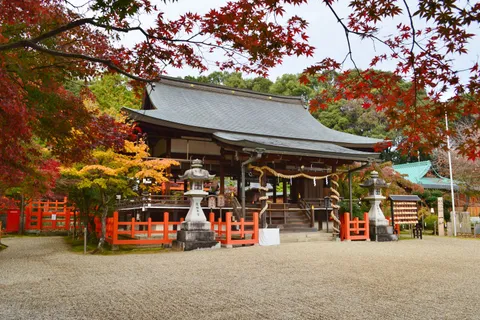
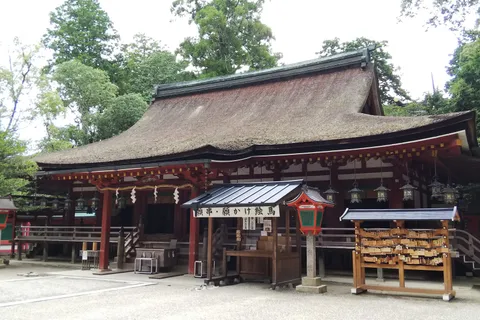
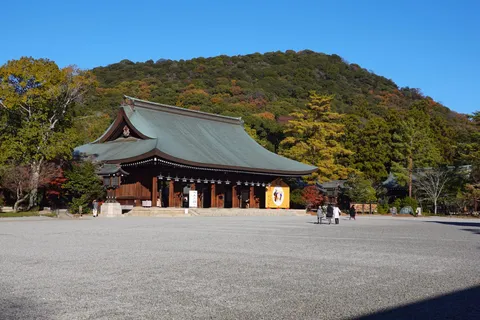
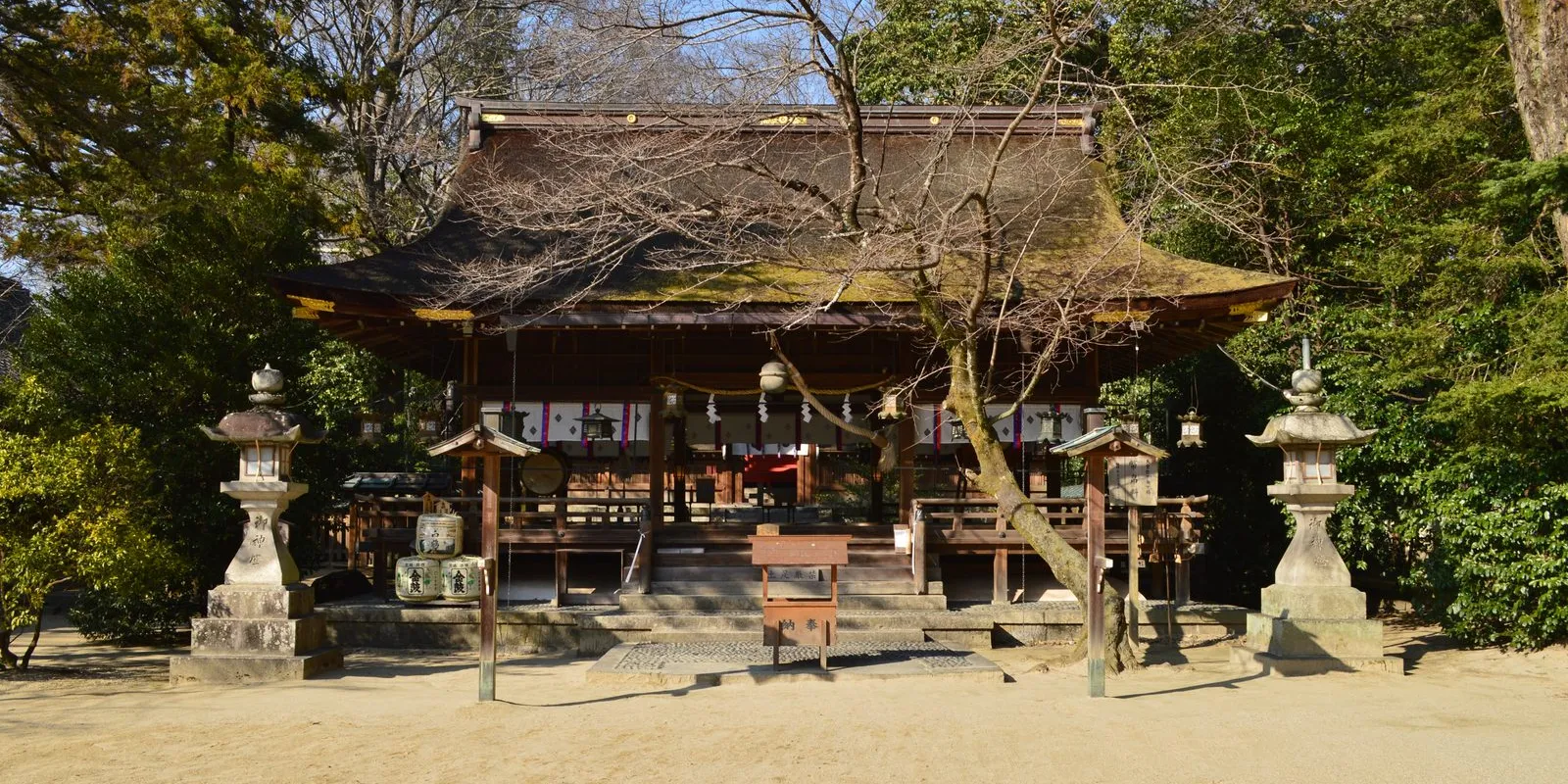
The shrine stands near the point where the Yamato, Soga, and Katsuragi rivers — nearly every river flowing through the Nara Basin — converge, and it has long been revered as a deity who controls floodwaters and brings bountiful harvests. The worship hall and main sanctuary preserve a venerable atmosphere, and the grounds include tachibana trees planted in reference to the shrine’s founding legend.
Because the enshrined deity is also said to be an eternal guardian of food, clothing, and shelter, many visitors come to pray for household safety and business prosperity as well. Neighboring Ikaruga, home to Horyuji Temple, is just a 5-minute drive away, and many visitors combine a stop here with a visit to the temple. Hirose Taisha has also been spoken of together with Tatsuta Taisha as a wind-and-water pair since antiquity, and some visitors make a point of visiting both shrines together.
Visiting Tips
Prayer requests (gokito) and goshuin are available 8:00–17:00. Free parking is available for visitors, making a visit by car convenient. It’s about a 30-minute walk from JR Horyuji Station, so a taxi or rental bicycle is a convenient alternative; it’s about a 25-minute walk from Kintetsu Ikebe Station.
Annual Festivals
- Sunakake Matsuri (Sand-Throwing Festival, February 11th): A distinctive rite carrying on the tradition of the ancient Great Imibe Festival. Following a hall ceremony to divine the year’s harvest, worshippers and parishioners throw sand at each other in the shrine grounds as a stand-in for rain, praying for a bountiful harvest and plentiful rainfall. Designated an Intangible Folk Cultural Property of Kawai Town in 2009.
- Reitaisai (typically April 4th): A spring festival carrying on the tradition of the ancient Great Imibe Festival’s spring observance.
- Natsugoshi Oharae and Tanabata Festival: Seasonal rites held throughout the year, drawing deep devotion from the local parish.
Nearby Food & Sightseeing
- Horyuji Temple: A UNESCO World Heritage Site associated with Prince Shotoku, about a 5-minute drive from Hirose Taisha in neighboring Ikaruga. It is home to some of the oldest surviving wooden structures in the world.
- Tatsuta Taisha: A shrine to the wind deity that has been spoken of together with Hirose Taisha as a wind-and-water pair since antiquity. Some visitors make a point of visiting both shrines together.
- JR Horyuji Station area: The nearest station to Hirose Taisha, with restaurants and souvenir shops convenient for a stop before or after visiting the shrine.
Frequently Asked Questions
- Q. Who is enshrined at Hirose Taisha, and what blessings is it known for?
- A. Hirose Taisha enshrines Wakaukanome no Mikoto. In her name, "Waka" is an honorific, "Uka" refers to grain, and "Me" marks a female deity; because she is said to have served in the heavens as the deity overseeing Amaterasu's sacred meals, she is also known as Oimi no Kami ("Great Imibe deity"). Some traditions identify her with Toyouke no Okami of Ise Jingu's Outer Shrine and Ukanomitama no Kami of Fushimi Inari Taisha, and the companion shrines enshrine Kushitama no Mikoto (also known as Nigihayahi no Mikoto) and Honoikazuchi no Mikoto. Standing near the point where nearly every river in the Nara Basin converges, the shrine has long been revered as a deity who controls floodwaters and brings bountiful harvests, and today is also known for blessings of household safety and protection from flooding.
- Q. What is the historical relationship between Hirose Taisha and Tatsuta Taisha?
- A. The Nihon Shoki records that, on the 10th day of the 4th month of 675 CE (the 4th year of Emperor Tenmu's reign), the Imperial court dispatched envoys to worship the wind deity at Tatsuta (present-day Tatsuta Taisha in Sango, Nara) and the water deity — the Great Imibe deity — at Hirose on the same day. From then on, twice each year in the 4th and 7th months, the court sent envoys to conduct the Wind God Festival at Tatsuta and the Great Imibe Festival at Hirose, a paired ritual that continued without interruption until the Nanboku-cho period. The Heian-era Engishiki fixed these observances on the 4th day of the 4th and 7th months, and the two shrines — one for wind, one for water — have been spoken of together as a pair since antiquity.
- Q. What are the goshuin hours and fee at Hirose Taisha?
- A. The goshuin is available 8:00–17:00 for a fee of ¥300, from the shrine office just inside the second torii gate on the left.
- Q. How do I get to Hirose Taisha?
- A. It's about a 30-minute walk from the south exit of Horyuji Station on the JR Yamatoji Line (about 5 minutes by taxi, or 10 minutes by rental bicycle). From Ikebe Station on the Kintetsu Tawaramoto Line, it's about a 25-minute walk. By car, it's about 5 minutes from the Horyuji Interchange on the Nishi-Meihan Expressway, and free parking is available for visitors.
- Q. What is the Sunakake Matsuri (Sand-Throwing Festival) at Hirose Taisha?
- A. The Sunakake Matsuri is a distinctive rite held every year on February 11th that carries on the tradition of the ancient Great Imibe Festival. Following a hall ceremony to divine the year's harvest, worshippers and parishioners throw sand at each other in the shrine grounds as a stand-in for rain, praying for a bountiful harvest and plentiful rainfall. It was designated an Intangible Folk Cultural Property of Kawai Town in 2009.