History
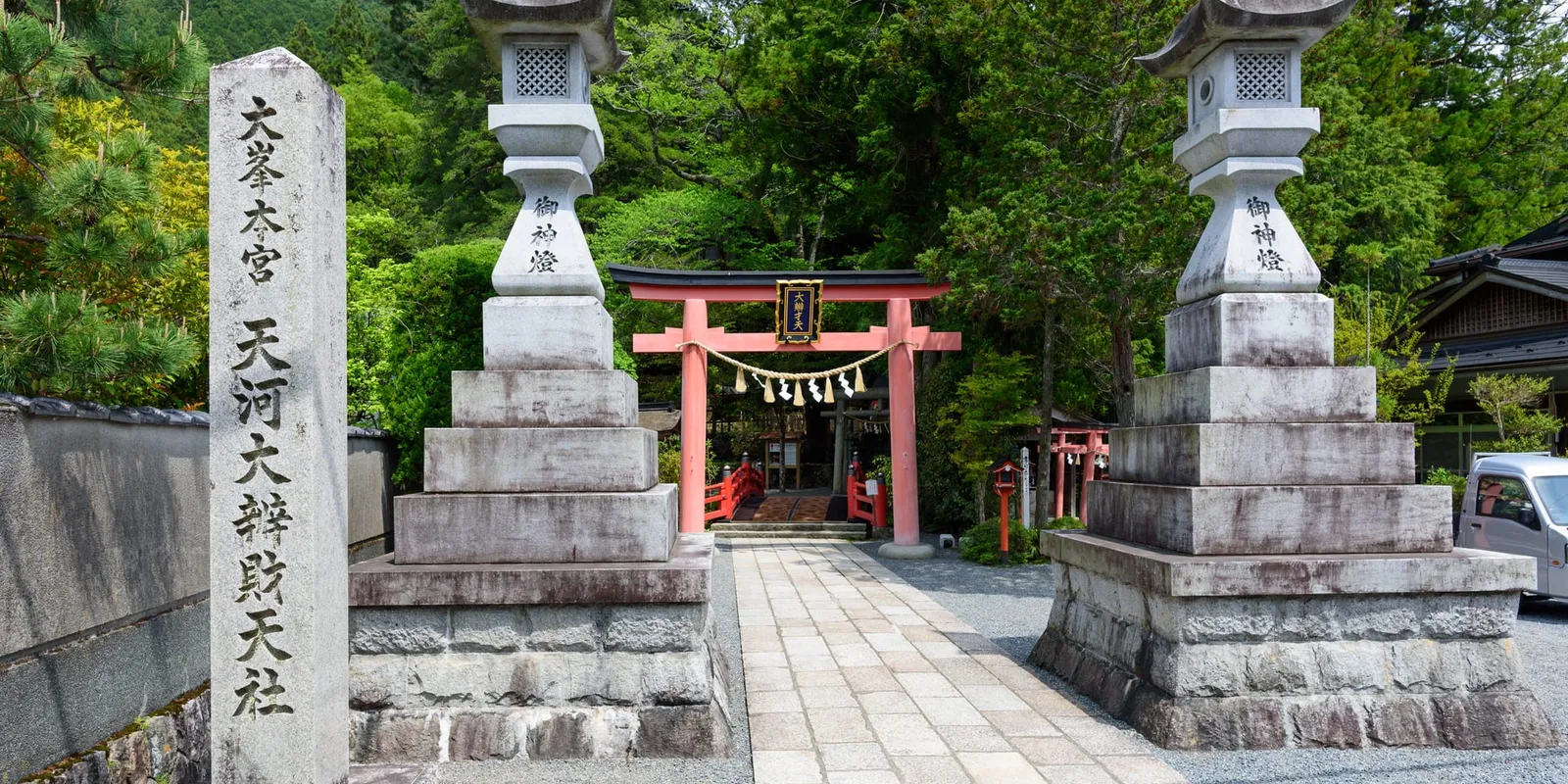
Tenkawa Daibenzaitensha stands in Tsubouchi, Tenkawa Village, Yoshino District, Nara Prefecture, and is generally known as “Tenkawa Jinja.” Its formal name on the official site is “Omine Hongu Tenkawa Daibenzaiten-sha.” The official site gives no reading of the name; Japanese Wikipedia and several guide sites read it “Tenkawa Daibenzaitensha,” and this page follows them.
The deities named on the official site are Ichikishimahime-no-mikoto (also worshipped as Benzaiten), Kumano-nimasu-okami, Yoshino-nimasu-okami, the spirits of the four Southern Court emperors, and the hundred deities beginning with Ame-no-minakanushi. Its divine virtues are described as those of water, eloquence and wisdom, music, the arts and performing arts, and treasure. The official site explains that Benzaiten originates from the ancient Indian river goddess Sarasvati and became linked with Japanese water-deity worship.
According to the shrine’s short history, it began when En no Gyoja opened Omine in the Asuka period: the deity was invoked ahead of Omine Zao Gongen and enshrined as the guardian of Mt. Misen, the highest peak. A hall is described as having been built at the present site, Tsubonouchi, in the reign of Emperor Tenmu, establishing its standing as the general shrine of Yoshino. It is also said that Kobo Daishi stayed here in retreat in the Konin era, and objects associated with him, including a gokorei bell, the “Daishi-hitsu Sho Hokke-kyo” and the “A-ji-kan stele,” are said to remain. The shrine is called the foremost of Omine and the place where the abbots (monzeki) of Shogoin and Sanbo-in stayed in retreat when entering the mountains. All of this is the shrine’s own account.
The official site adds that the Tenkawa district has many sites and traditions linked to the Southern Court, and that 13 imperial edicts (rinji and ryoji) survive, including some that grant land to Tenkawa Benzaiten.
Highlights
The shrine is also known for its ties to Noh. The official site says 30 Noh masks (Important Cultural Property) and 30 Noh costumes (prefectural cultural property) survive here, including the “Ako Chichijo” mask associated with Zeami, a “Shojo” mask by Yamazaki Hyoe, and a karaori costume said to have been dedicated by Toyotomi Hideyoshi in Bunroku 3. In 1430 Zeami’s son Kanze Juro Motomasa is said to have dedicated the Noh play “Karafune” and donated the “Ako Chichijo” mask on that occasion. In the Edo period the shrine’s priests performed Noh; after it lapsed from the mid-Meiji era onward, it was revived in Showa 23 (1948) by volunteers from the shrine families.
Ties to music and the performing arts run deep as well. The official site posts footage of a dedicated performance by Kitaro (Instagram / YouTube) in November 2019 together with a peace dialogue, and of Haruomi Hosono’s dedicated performance in October 2022, his first in 34 years.
The sacred treasure “Isuzu” is said to be the same as the divine-age bell that Ame-no-uzume used when she danced before the heavenly rock cave, and is described as consisting of three spherical bells. The official site says its clear, stream-like sound purifies body and mind, and that actors, dancers, singers and other entertainers have treasured it as an object to pray over for progress in their art. The “Isuzu-mamori” amulets are in short supply, mail distribution is currently suspended, and they are basically handed out in person at the shrine office.
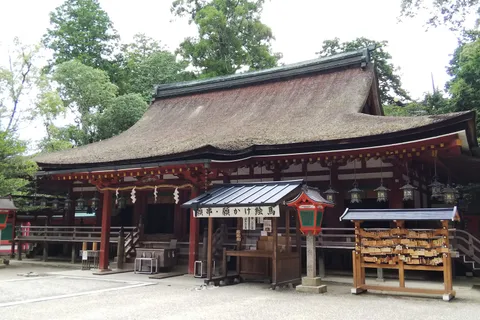
On the grounds are the main hall (cypress, nagare-zukuri) and worship hall (cypress, irimoya-zukuri), plus a kagura hall used for kagura, Noh, musical offerings and weddings. At the foot of the stone steps is the Gosha-den, enshrining Ryujin-okami and others, and down the steps behind the worship hall stands the En no Gyoja hall. To the west of the grounds is Raigoin, a Shingon Daigo-school temple described as the shrine’s jingu-ji, as well as a giant ginkgo said to have been planted by Kukai and to be over 1,200 years old, and to the east are the remains of the Southern Court’s Kurogi Palace (per the official grounds guide).
Visiting Tips
The official site gives no opening hours for the grounds, but the shrine office distributes amulets and goshuin from 8:00 AM to 4:30 PM. Prayer requests are accepted from 9:00 AM until 2:30 PM and must be booked by phone at least 2 days ahead. Prayers may not be available on festival or work-service days. For prayers in the sanctuary, visitors are asked to avoid casual dress, bare feet and revealing clothing, and to be sure to wear socks. A morning service of about 30 minutes is held in the sanctuary at 7:30 AM every day, with no booking needed.
Amulets include arts amulets and amulets for progress in various arts (¥800 each), and ofuda and Isuzu-mamori are also available. The official site does not state the goshuin fee, so please check at the office. It also notes that staff are few and may not be able to answer the phone.
It is about 1 hour by Nara Kotsu bus from Shimoichiguchi Station (Kintetsu Yoshino Line), bound for “Nakaisumi,” getting off right at “Tenkawa Daibenzaiten-sha.” Buses are infrequent, so checking the timetable beforehand is recommended. By car, take National Route 309 from the Keinawa Expressway “Gose-Minami IC”; it is about 2 hours from Osaka or central Nara. The grounds have 30 parking spaces.
Annual Festivals
The following comes from the official site’s 2026 (Reiwa 8) festival list and its November announcement. Lunar-calendar events are given only by their lunar dates. Schedules change from year to year, so check the official site before you plan to attend or visit.
- Monthly rite (1st and 15th of each month): Held every month; in November 2026, on the 1st and 15th at 7:30 AM.
- New Year’s Day rite (January 1), Setsubun Festival (February 3) and Spring Grand Festival (April 14): All appear in the 2026 festival list.
- Misen Okumiya Grand Festival (May, the Saturday nearest the 15th): Listed as the festival of the inner shrine on Mt. Misen.
- Annual festival (July 17, with the eve festival on the 16th): Dates from the 2026 festival list.
- Lunar seasonal festivals: The Peach Festival on lunar March 3, the Boys’ Festival on lunar May 5, Tanabata on lunar July 7, and the Chrysanthemum Festival on lunar September 9, among others.
- Autumn Grand Festival (November 2): In 2026, the ceremony and kagura at 10:30 AM, the Noh play “Tsunemasa” at 1:00 PM, and a rice-cake scattering after the Noh. Attendance requires advance booking by phone (deadline October 25), and a screening of the film “Shiromi” is held at 7:00 PM the same day.
- Niiname-sai harvest festival (November 23): A harvest thanksgiving, at 11:00 AM in 2026.
- Year-end purification and New Year’s Eve rite (December 31): Both appear in the 2026 festival list.
Nearby Food & Sightseeing
- Raigoin: According to the official grounds guide, a Shingon Daigo-school temple west of the shrine, described as its jingu-ji, whose principal images are Dainichi Nyorai, Fudo Myoo and the Eleven-faced Thousand-armed Kannon.
- Remains of the Southern Court Kurogi Palace: East of the shrine, where a stone-built wall and a hokyoin pagoda remain (per the official grounds guide).
- Chinkon-den (Misogi-den): Set deep along the river, about a 10-minute walk from the main grounds, with its own parking lot, according to the official grounds guide.
Frequently Asked Questions
- Q. What are the visiting and amulet hours?
- A. The official site does not give opening hours for the grounds. It lists amulets and goshuin at the shrine office from 8:00 AM to 4:30 PM, and prayer requests are accepted from 9:00 AM until 2:30 PM. Prayers must be booked by phone at least 2 days ahead, with no same-day bookings. A morning service of about 30 minutes is held in the sanctuary at 7:30 AM every day (no booking needed, not held on festival days).
- Q. Can I get a goshuin at Tenkawa Daibenzaitensha?
- A. Yes. According to the official site, goshuin are distributed at the shrine office together with amulets, from 8:00 AM to 4:30 PM. The official site does not state the fee or the types available, so please check at the office when you visit.
- Q. How do I get there, and is there parking?
- A. The official site says to take a Nara Kotsu bus bound for "Nakaisumi" from Shimoichiguchi Station on the Kintetsu Yoshino Line (about 1 hour) and get off right at "Tenkawa Daibenzaiten-sha." Buses are infrequent, so it recommends checking the timetable beforehand. By car, take National Route 309 from the Keinawa Expressway "Gose-Minami IC"; it is about 2 hours from both Osaka and central Nara. The grounds have 30 parking spaces, and no fee is stated.
- Q. Why is it known as a shrine for the arts?
- A. According to the official site, the main deity Ichikishimahime-no-mikoto is also worshipped as Benzaiten and is regarded as a deity of water, eloquence and wisdom, music, the arts and performing arts, and treasure. The shrine holds 30 Noh masks (Important Cultural Property) and 30 Noh costumes (prefectural designation), and also keeps the sacred treasure "Isuzu," which performers pray over for progress in their art. The official site also posts footage of a dedicated performance by Kitaro in November 2019, together with a peace dialogue, and of Haruomi Hosono's dedicated performance in October 2022, his first in 34 years.
- Q. What happens at the Autumn Grand Festival?
- A. In the official 2026 (Reiwa 8) announcement, the Autumn Grand Festival (Inoko Festival) is on Monday, November 2: the ceremony with sacred kagura dance at 10:30 AM, the Noh play "Tsunemasa" (Kanze school, with Katayama Kuroemon and company) at 1:00 PM, and a rice-cake scattering on the grounds after the Noh. Attending the ceremony requires advance booking by phone (deadline October 25), with an offering of ¥5,000 or more per person. Noh seats go first to those who registered, and any remaining seats are open on the day. General visitors are asked to refrain from worshipping during the ceremony (10:00–11:30 AM) and the Noh performance (1:00–2:30 PM). A screening of the film "Shiromi" (directed by Akasaka Tomoaki) is also scheduled for 7:00 PM the same day.
Plan Your Visit
Before you go, you can book a stay and get your shrine-visit items ready.
Amazon links open Amazon.co.jp (Japan) in English; whether an item ships overseas depends on the product.
※ Contains ads (PR). Links open external sites such as Amazon, Rakuten, Trip.com and Booking.com.