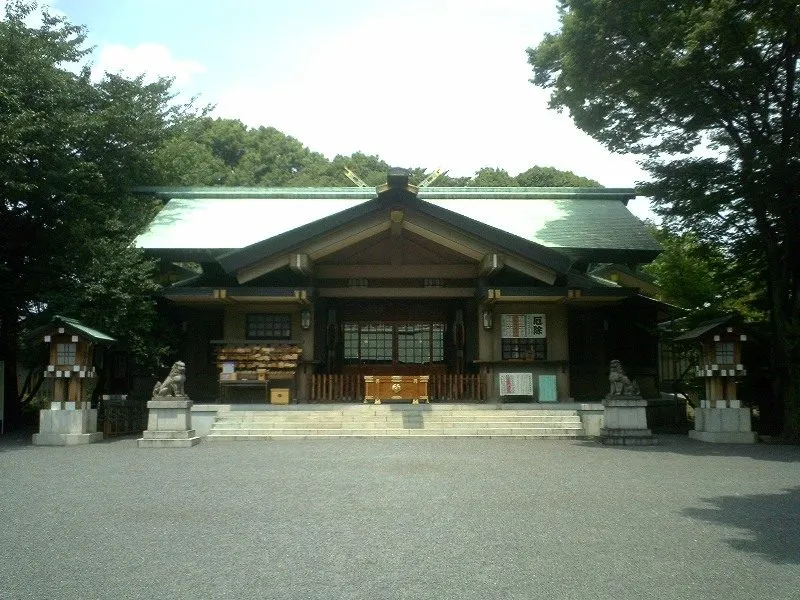
History
Togo Jinja enshrines Togo Heihachiro (1848–1934), the Combined Fleet’s Commander-in-Chief who led the Imperial Japanese Navy to victory over Russia’s Baltic Fleet at the Battle of Tsushima during the Russo-Japanese War (1904–1905). Hailed at home and abroad as the “Nelson of the East” for that decisive naval victory, Togo went on to oversee the education of the future Emperor Showa in his later years, cementing his standing as one of Japan’s most celebrated naval figures.
After Togo’s death on May 30, 1934, requests and donations poured in from naval circles and the public nationwide calling for a shrine to honor his achievements. Navy Minister Osumi Mineo established the Togo Marshal Memorial Society to organize the project using the funds collected. The land for the shrine, roughly 12,000 tsubo, was donated from his private estate by Marquis Ikeda Nobumasa, the 15th head of the Ikeda family of the former Okayama domain and a descendant of the Ikeda lords of Tottori. The dedication ceremony took place on May 27, 1940 — then Navy Day — marking the shrine’s founding.
Just five years later, in 1945, much of the shrine was destroyed in the bombing of Tokyo, but it was rebuilt after the war, with the present buildings completed in 1964. Ever since, Togo Jinja has drawn deep devotion as a shrine of victory, particularly among athletes and others facing a decisive contest.
Highlights
Togo Jinja’s most distinctive feature is the contrast between its setting and its atmosphere: it stands just off Takeshita-dori, one of Harajuku’s best-known youth-fashion shopping streets, yet passing through its torii opens onto a hushed world enclosed by dense trees. The grounds hold Shinchi, a large pond designed by the landscape architect Nagaoka Yasuhei, where carp glide beneath the surface as visitors stroll along its banks. The adjoining Togo Kinenkan, a hall housing a wedding venue and restaurant, draws many visitors who pair a meal or event there with their shrine visit.
The grounds also hold memorials and artifacts related to Togo Heihachiro’s naval career and the Battle of Tsushima, offering plenty for visitors with an interest in naval history. This juxtaposition — an oasis of stillness a stone’s throw from Harajuku’s bustle, sharing the same small plot of land — is exactly what makes Togo Jinja unique.
Visiting Tips
Just a few minutes’ walk from the crowds of Takeshita-dori brings you into the quiet of the shrine’s green grounds. Known as the “god of victory,” Togo Jinja draws many visitors ahead of a decisive moment of their own — an exam, a sports competition, a job interview — coming to pray for success. After paying respects, a stroll around the edge of Shinchi pond or a break at the cafe in the Togo Kinenkan makes for a pleasant way to round out the visit.
Annual Festivals
- Reitaisai (May 28): The shrine’s most important festival, honoring the memory of Togo Heihachiro with sacred dance (kagura) and dedicatory events.
- Chinza Anniversary (May 27): Marks the anniversary of the 1940 dedication ceremony, held on that year’s Navy Day.
- Setsubun Festival (early February): An annual bean-throwing rite to ward off misfortune and invite good fortune.
- Hatsumode (New Year’s visit): Thanks to its location near Takeshita-dori, the shrine draws large crowds as a popular New Year’s visiting spot in the Harajuku-Omotesando area.
Nearby Food & Sightseeing
Togo Jinja sits right beside Harajuku’s Takeshita-dori and Meiji-dori, in the heart of an area famous as a hub of youth culture.
- Togo Kinenkan: A wedding hall and restaurant facility adjoining the shrine grounds; its cafe serves coffee and sweets starting from the New Year.
- Takeshita-dori is lined with food-walking snacks, sweets shops, and secondhand clothing stores, capturing Harajuku’s lively atmosphere at its best.
- Omotesando, nearby, offers a range of more upscale restaurants and cafes, making for a popular route to continue exploring after visiting the shrine.
Frequently Asked Questions
- Q. What kind of shrine is Togo Jinja?
- A. Togo Jinja, founded in 1940, enshrines Admiral Togo Heihachiro, Commander-in-Chief of the Combined Fleet who defeated Russia's Baltic Fleet at the Battle of Tsushima during the Russo-Japanese War. Known as the "god of victory," it draws many visitors praying for success in sports, exams, and other high-stakes competitions.
- Q. What are the visiting hours?
- A. 6:00–17:00 from April through October, and 6:30–17:00 from November through March (opens at 0:00 on New Year's Day; closes at 18:00 during the first three days of January).
- Q. Can I receive a goshuin here?
- A. Yes, roughly 9:00–17:00, for ¥500.
- Q. Is there parking?
- A. Yes, paid parking is available (¥500 per 30 minutes, capped at ¥3,000 on weekdays).
- Q. How do I get there?
- A. About a 3-minute walk from JR Harajuku Station's Takeshita exit, or 3 minutes from Exit 5 of Tokyo Metro's Meiji-jingumae (Harajuku) Station.