History
Tosa Jinja, affectionately known to locals as “Shinane-sama,” is the ichinomiya (chief shrine) of the former Tosa Province. Its exact founding date is unknown, but the Nihon Shoki, compiled in 720, records that a sacred sword was presented to the “Great Deity of Tosa” in 675, during the reign of Emperor Tenmu, and that the imperial court sent offerings again in 686 — evidence that the shrine already commanded imperial recognition as far back as the Asuka period. Two deities are enshrined here: Ajisukitakahikone no Kami, a child of Okuninushi no Kami revered as a god of land development and industry, and Hitokotonushi no Kami, an oracle deity said to grant wishes spoken in a single word.
The shrine buildings were lost to fire during the wars of the Sengoku period, but in 1570 Chosokabe Motochika, the warlord who unified Tosa Province, rebuilt the main hall, offering hall, and worship hall. Those buildings still stand today and are designated an Important Cultural Property of Japan. During the Edo period, Yamauchi Tadayoshi, son of the first Tosa domain lord Yamauchi Kazutoyo, further developed the grounds, including its gate tower, and successive domain lords revered the shrine as “the foremost place of prayer in Tosa.”
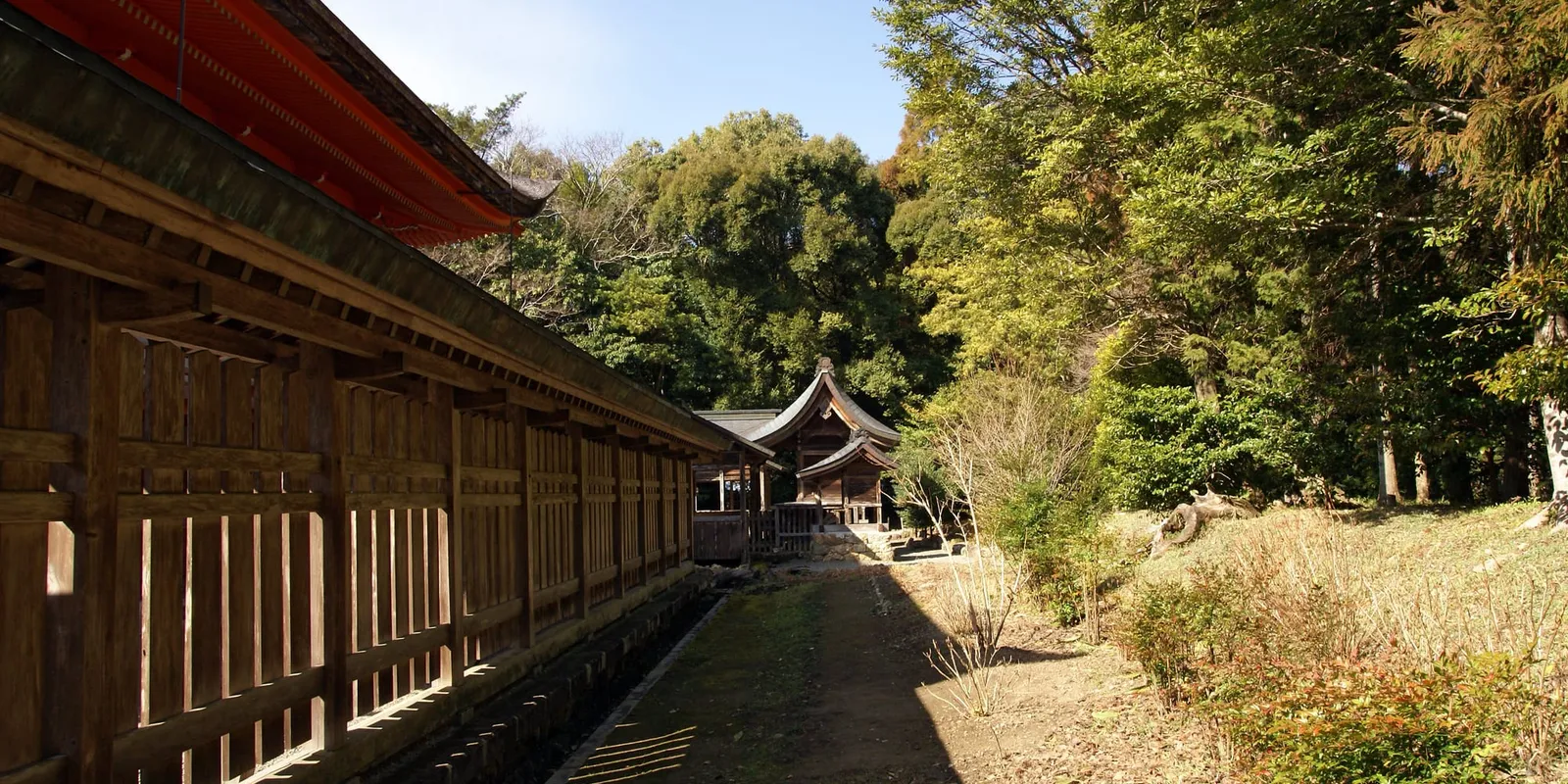
The distinctive layout in which the main hall, offering hall, and worship hall are joined by covered corridors is known as “shinane-zukuri,” and is said to take the shape, when seen from above, of a dragonfly diving toward the main hall — architecture found nowhere else in Japan.
Highlights
The centerpiece of any visit is the main hall, offering hall, and worship hall rebuilt by Chosokabe Motochika. Connected by covered corridors and trimmed in vermillion along the eaves, this “shinane-zukuri” ensemble is a rare surviving example of shrine architecture bridging the Sengoku and early Edo periods, and is designated a National Important Cultural Property. The grounds are also dotted with other historic structures, including a gate tower said to date from 1631 and a drum tower from 1649.
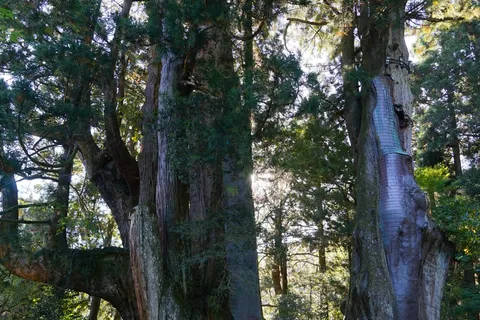
Towering within the precincts is a massive sacred cedar tree, wrapped in a shimenawa rope that lends the grove an appropriately solemn air. Elsewhere on the grounds, sacred stones tied to the shrine’s founding legends are enshrined throughout — including the “Tsubute-ishi,” said to mark the spot where the great deity threw a stone to determine where the shrine should stand, and the “Misogi-iwa,” associated with ritual purification. Many visitors also stop next door at Zenrakuji, the 30th temple of the Shikoku 88-temple pilgrimage route, which sits immediately beside the shrine.
Visiting Tips
The grounds are wrapped in a quiet grove of trees; visiting just the main hall area takes about 30 minutes, while exploring the sacred stones and subsidiary sites as well takes closer to an hour. Prayer reception runs from 9:00 to 16:00, in 30-minute intervals, and goshuin stamps can be received at the prayer reception office on the grounds from 8:30 to 17:00 for ¥500. Both parking and admission are free, making this an easy shrine to visit by car. Combining a visit with neighboring Zenrakuji temple makes for a route that also reflects Japan’s historical blending of Shinto and Buddhist practice.
Annual Festivals
- New Year’s Festival (January 1): A rite celebrating the new year and praying for the nation’s prosperity and a peaceful year ahead.
- Igomori Festival (March 11–13): A festival praying for a bountiful harvest, during which the sacred precincts are strictly guarded and public access is restricted.
- Summer Purification Rite (June 30): A ritual cleansing away half a year’s accumulated impurities, in which visitors pass through a ring of sacred reeds to purify body and spirit.
- Shinane Festival (August 24–25): The shrine’s most important festival and one of Tosa’s “Three Great Festivals.” A sacred fire ceremony and eve festival are held on the 24th, followed by the main festival and a grand procession on the 25th; torches lit from the sacred fire are carried home by worshippers, who believe they ward off misfortune.
- Niiname-sai Thanksgiving Festival (November 23): A rite of thanks for the year’s harvest and a prayer for continued abundance.
Nearby Food & Sightseeing
- Zenrakuji: The 30th temple of the Shikoku 88-temple pilgrimage, standing right next to Tosa Jinja. It once served as the shrine’s Buddhist administrative temple, making it a natural stop to pair with a visit here.
- Hirome Market: A lively food-hall-style market in central Kochi where visitors can casually sample local specialties, including katsuo no tataki (seared bonito) charred over straw fire.
- Kochi Castle: The seat of the Yamauchi clan, lords of the Tosa domain, and one of the few castles in Japan where both the main keep and the palace within its inner bailey survive intact — a fitting historical counterpart to the Yamauchi-era history at Tosa Jinja.
Frequently Asked Questions
- Q. What are the visiting hours?
- A. The grounds are open to visitors at all times; prayer reception is 9:00–16:00.
- Q. When is the goshuin office open?
- A. 8:30–17:00, for ¥500.
- Q. Is there parking?
- A. Yes, free parking is available, and admission to the shrine is also free.
- Q. What is "Shinane-zukuri"?
- A. A distinctive style where the main hall, offering hall, and worship hall are linked by a covered corridor — said to resemble a dragonfly diving into the main hall when viewed from above.
- Q. How do I get there?
- A. About a 5-minute walk from the Tosa-jinja-mae stop on Tosaden Kotsu buses.
Related Shrines
Hokkaido, Chuo-ku, Sapporo
Hokkaido Jingu
Hokkaidō-jingū
- Success in New Ventures
- Household Safety
- Business Prosperity
Gunma, Tomioka
Ichinomiya Nukisaki Jinja
Ichinomiya Nukisaki-jinja
- Victory in Competition
- Industrial Prosperity
- Traffic Safety
Kochi, Otoyo
Yasaka Jinja (Otoyo)
Yasaka-jinja
- Success in the Arts
- Protection from Epidemics
- Good Health