History
Ichinomiya Nukisaki Jinja, commonly known as Nukisaki Jinja, has long held the rank of ichinomiya — the highest-ranked shrine — of the former Kozuke Province, in what is now Gunma Prefecture. According to shrine tradition, the Isobe clan of the Mononobe lineage first enshrined their clan deity Futsunushi no Kami at Saginomiya (in present-day Annaka), before establishing the shrine at its current site in 531 CE, in the first year of Emperor Ankan’s reign. Records show the first imperial offerings were made here in 673 CE, underscoring its status as one of eastern Japan’s most venerable shrines.
The shrine enshrines two deities: Futsunushi no Kami, the sword deity also worshipped at Katori Jingu, and Hime Okami, a goddess associated with sericulture and weaving. Little is recorded about Hime Okami’s exact identity or origin, but one theory holds that she was a deity worshipped by immigrants from the Korean peninsula who settled in the area and introduced silk-weaving techniques — a fitting reflection of the Tomioka and Kanra region’s long history as a center of the silk industry. The current main hall, worship hall, and two-story gate, all designated Important Cultural Properties, were rebuilt in 1635 by order of the third Tokugawa shogun, Iemitsu.
Highlights
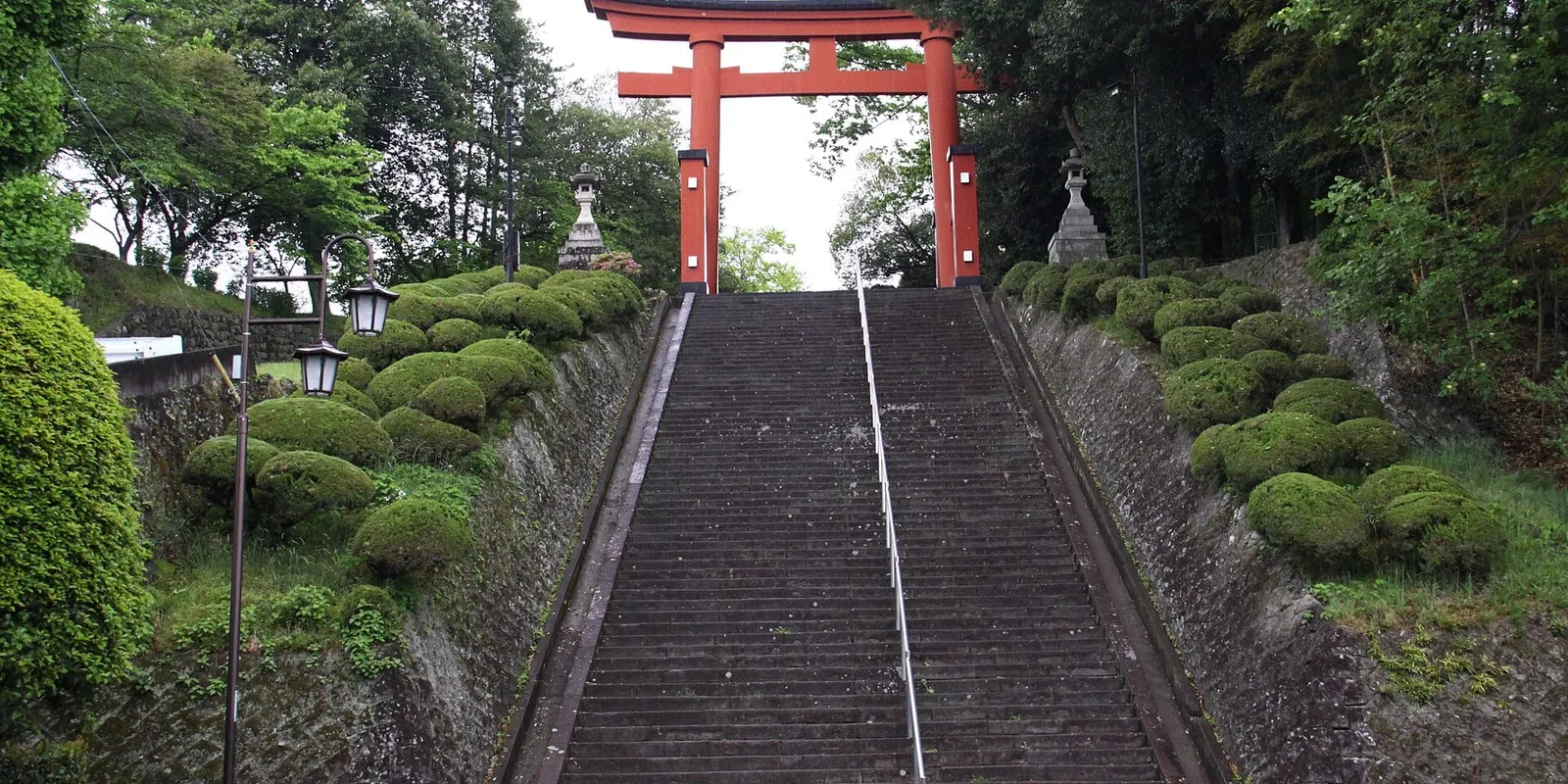
Nukisaki Jinja’s defining feature is its rare “descending shrine” (kudari-miya) layout: after passing through the outer gate and torii, visitors walk down a stone staircase to reach the main hall, rather than climbing up as at nearly every other shrine in Japan. The shrine’s main hall sits in a low hollow below the approach, and it is counted among Japan’s “Three Great Descending Shrines.” The view of the vermillion buildings and stone steps seen through the torii from above is a striking and rarely-seen sight in shrine architecture.
The lacquered, richly carved main hall, worship hall, and two-story gate showcase the height of early Edo-period craftsmanship and carry the dignity befitting their status as Important Cultural Properties. The grounds also hold a massive old sudajii (chinquapin) tree and a curiously frog-shaped tree, adding natural charm to the shrine’s quiet, wooded atmosphere.
Visiting Tips
Because the route descends to the main hall and then climbs back up to the outer gate, the round trip takes more effort than it might appear. The stone steps can be mossy and slippery in places, so extra care is advised in wet weather or winter. A visit typically takes about 30 minutes, or about an hour if you want to take in the grounds’ historic sites and old trees at a leisurely pace. Goshuin can be received at the shrine office, though the reception generally closes around 4:30 PM, so it’s best to arrive with some time to spare.
Annual Festivals
- Mitobiraki-sai Door-Opening Rite (March 14 and December 12): The shrine’s most important ritual, held only twice a year, in which the normally sealed doors of the main hall are opened to welcome and see off the enshrined deities.
- Shikaura Shinji Deer-Divination Rite: An ancient ritual in which a deer’s shoulder blade is burned to divine the fortunes of the coming year.
- Shikinen Sengu Grand Renewal (once every 12 years): A cyclical renewal following the zodiac calendar, with a temporary enshrinement rite in the Year of the Monkey and a rite returning the deity to the rebuilt main hall in the following Year of the Rooster.
- Ninen-mairi (December 31–January 1): Many visitors come to pray as the old year turns into the new.
Nearby Food & Sightseeing
- Tomioka Silk Mill: About 15 minutes by car from Nukisaki Jinja, Japan’s first government-run silk-reeling mill, established by the Meiji government, and a UNESCO World Heritage Site since 2014.
- Hayaaji: A Japanese restaurant right in front of the Tomioka Silk Mill’s main gate, known for “okkirikomi,” a Gunma comfort-food noodle dish with wide, flat noodles and root vegetables.
- Gunma Safari Park: A drive-through safari park with lions, tigers, and more, about 15–20 minutes by car from Nukisaki Jinja and a great family-friendly stop.
Frequently Asked Questions
- Q. What are the visiting hours?
- A. The outer gate is open at all times; the area inside the inner gate is open 6:00 AM–5:00 PM.
- Q. When is the goshuin office open?
- A. Around 9:00 AM–4:30 PM, for ¥500.
- Q. Is there parking?
- A. Yes, free parking is available in front of and to the west of the outer gate.
- Q. What does "descending shrine" mean?
- A. Unlike most shrines, visitors walk down a staircase after passing through the torii to reach the main hall — one of Japan's "three great descending shrines."
- Q. How do I get there?
- A. About a 15-minute walk from Joshu-Ichinomiya Station on the Joshin Dentetsu Line.
Related Shrines
Oita Prefecture, Usa
Usa Jingu
Usa-jingū
- Victory in Competition
- Protection from Misfortune
- Household Safety
Kyoto Prefecture, Yawata
Iwashimizu Hachimangu
Iwashimizu Hachimangū
- Protection from Misfortune
- Victory in Competition
- Household Safety
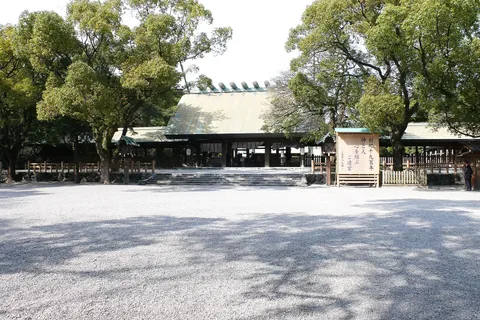
Aichi Prefecture, Nagoya
Atsuta Jingu
Atsuta-jingū
- Good Fortune
- Household Safety
- Victory in Competition