History
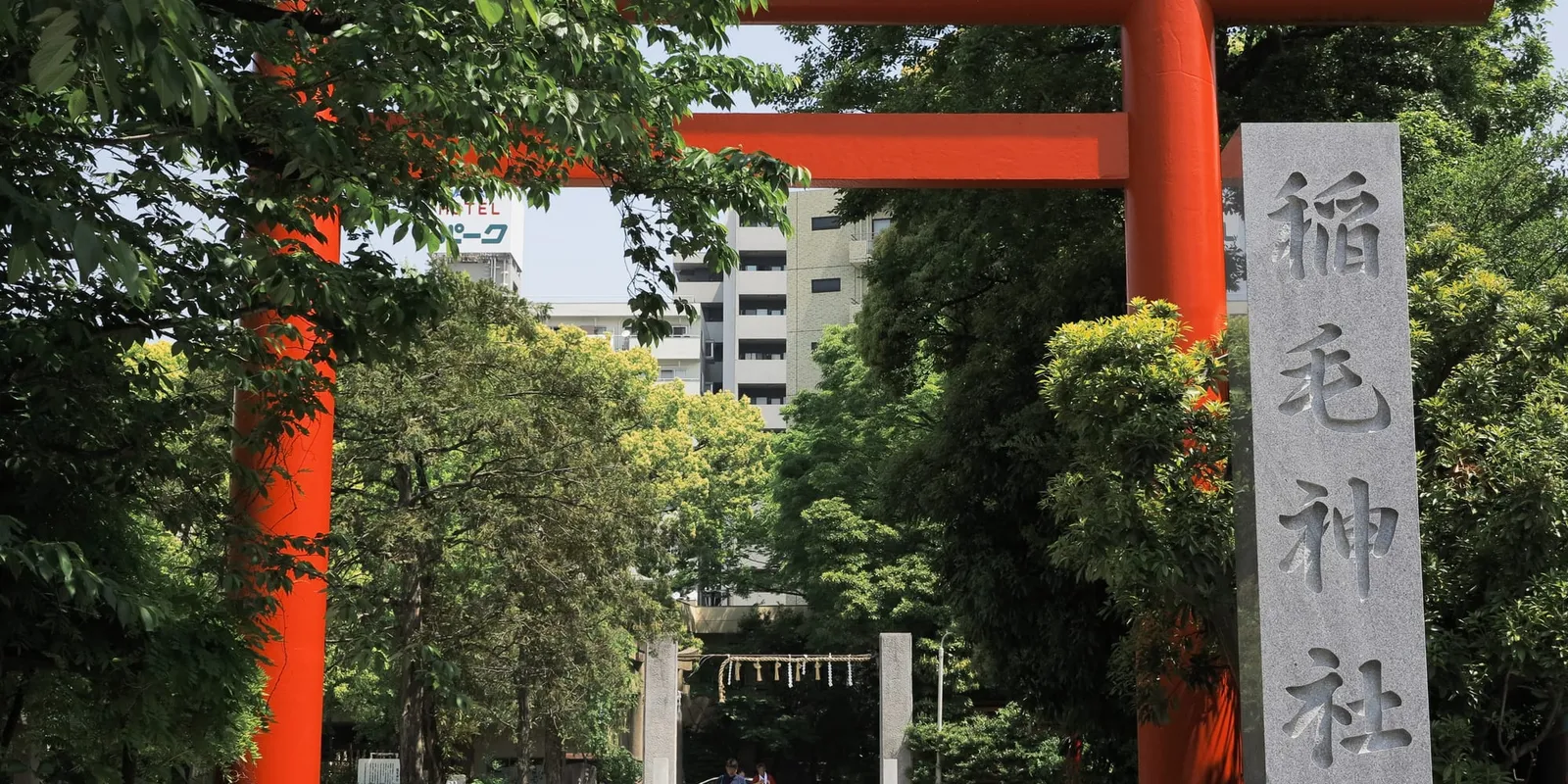
Inage Shrine stands in Miyamoto-cho, Kawasaki-ku, Kawasaki, Kanagawa. It is read “Inage-jinja,” and the header of its official site reads “Kawasaki Sanno-sha, Inage Shrine.” The chief deity is Takemikazuchi no Kami, with Futsunushi no Kami, Kukurihime no Kami, Izanagi no Kami and Izanami no Kami enshrined alongside. The official site sums up the shrine’s blessings in two characters: “victory” (勝) and “harmony” (和).
According to the official history, the year of founding is unclear. It is said to have begun when a martial deity was enshrined to pray for the emperor’s victory in the turbulent east, and tradition holds that Emperor Keiko took refuge there and that Emperor Kinmei made it an imperial prayer site and enshrined further deities. The hall is said to have been rebuilt on the orders of Minamoto no Yoritomo in the Kamakura period, and in the Edo period the shrine also received Tokugawa patronage, with its annual festival becoming well known to travelers on the highway. It was once called “Takemikazuchi-gu,” “Kawasaki Sanno-sha” and “Horinouchi Sanno Gongen,” among other names, was renamed “Kawasaki Daijin Inage Jinja” in 1868 (Keio 4/Meiji 1), and by the middle of the Meiji era the name “Inage Shrine” had become standard, the official site explains. The old main hall was destroyed in an air raid in 1945 (Showa 20), and a reinforced-concrete hall was completed in 1963 (Showa 38).
Because it was called a “Sanno-sha” until the modern era, its annual festival is still known as the Kawasaki Sanno Festival. All of this is the shrine’s own account.
Highlights
The star attraction is the sacred great ginkgo, said to be over 1,000 years old. According to the official site, it was known to Tokaido travelers in the Edo period and was a prefectural natural monument before the war. Badly damaged in the 1945 fires, it recovered and is now seen as a symbol of peace. Wishes made while circling it are said to come true, and in 1986 a “Junishi Meguri” circuit of twelve bronze zodiac statues was set up around it. A small shrine to a dragon deity stands at its base.
The grounds hold auxiliary and subsidiary shrines including Sengen Shrine, Sasaki Shrine, Wajima Benzaiten, Otori Shrine, Hotta Inari and Dairokuten Shrines, Ne Shrine, and Nanasha-gu. The official site says Ne Shrine was built in 1870 and is the only building surviving from the Kawasaki post-town era (moved to its present spot in 1957).
Among historic sites, the “Chozu-ishi” washbasin stone, associated with Tanaka Kyugu, who worked on reforms in Kawasaki-juku, is a Kawasaki City Important Historical Monument (designated 1988; said to have been dedicated in 1729). The official site also lists the remains of the stone Kotoro Bridge, which carried the Tokaido over the Shinkawa-bori canal (moved to the grounds in 1986), and the stone frame of the “Gojinsui Fukiage” well, donated by Kawasaki-juku inns in the Edo period. There are also haiku monuments to Basho and Masaoka Shiki and a poem monument to Sato Sonosuke.
The “Koshiki Miyaza-shiki,” a ritual performed at the Kawasaki Sanno Festival, is a Kanagawa Prefecture Selected Intangible Folk Cultural Property (listed as “Kawasaki Sanno-matsuri no Miyaza-shiki,” dated February 8, 1991). The shrine’s own page and a newspaper describe it as “prefecturally designated,” so the wording differs by source.
Visiting Tips
The shrine office is normally open 9:00 AM–5:00 PM (official site). Prayer services include protection from misfortune, safe childbirth, first shrine visits, Shichi-Go-San and weddings, and the official site has application forms for group prayers and off-site ceremonies.
According to the official site, goshuin are handled at the shrine office, and because each is handwritten there is some wait. The fee is not stated. Examples of amulets listed on the official site include the Katsu-mamori (¥300), Washo-mamori (¥800), a ginkgo-themed Kensho Kengo amulet (¥800) and a safe-childbirth amulet (¥1,000) (prices as listed; they may change).
It is about a 10-minute walk from JR Kawasaki Station and about 6 minutes from Keikyu Kawasaki Station. Since the official site gives no parking information, going by train is the safer choice. During events in the grounds, radio-controlled aircraft and drones are prohibited.
Annual Festivals
- Kawasaki Sanno Festival (annual festival): The shrine’s parishioners’ council says it was even called the “Gion of the East” in the Edo period. Long held in August, it moved to June from 2026 per the official site. The 2026 schedule was: eve festival on June 14; Sanno festival and the Koshiki Miyaza-shiki (closed to the public) on June 15; neighborhood mikoshi on June 20; and the Shinko-sai on June 21, in which two large mikoshi, Kujaku (male deity) and Tama (female deity), were to tour 23 neighborhoods. Check the official site for 2027 and later.
- New Year’s Day festivals (January 1)
- Setsubun Festival (Setsubun day)
- Inari-ko Sakura Matsuri (first Sunday of April)
- Ne Shrine festival (September 19) and Sasaki Shrine festival (October 19): Listed on the official site as festivals of auxiliary shrines.
- Shichi-Go-San visits (November 15)
- Tori-no-Ichi (Tori days in November): Held with the festival of Otori Shrine. The official site’s front page gives November 7 and 19.
- Niiname-sai (November 23)
- Winter Solstice Festival (December 21)
- New Year’s Eve purification and Joya-sai (December 31)
Dates can change from year to year, so check the “Festivals” page of the official site for the latest.
Nearby Food & Sightseeing
- Tokaido Kawasaki-juku Koryukan: A facility in Honcho, Kawasaki-ku, where you can learn about the history of the Tokaido’s Kawasaki post town. The address is from Kawasaki City materials (1-8-4 Honcho, Kawasaki-ku). Check opening days and exhibits beforehand.
- Kawasaki Daishi (Heiken-ji): A temple in Daishi-cho, in the same ward (address per its official site). Pair it with the shrine for a day of Kawasaki history.
Frequently Asked Questions
- Q. What are the visiting hours?
- A. The official site says the shrine office is normally open 9:00 AM–5:00 PM, and prayer services are also accepted 9:00 AM–5:00 PM (these may differ depending on the festival schedule). It gives no separate opening hours for the grounds themselves.
- Q. Can I get a goshuin at Inage Shrine?
- A. Yes. The official site says goshuin are handled at the shrine office along with other offerings. Each one is handwritten, so there is some wait before it is handed over. The fee and separate goshuin hours are not stated on the official site, so use the office hours (9:00 AM–5:00 PM) as a guide and allow plenty of time.
- Q. How do I get there, and is there parking?
- A. Per the official site, it is about a 10-minute walk from JR Kawasaki Station and about 6 minutes from Keikyu Kawasaki Station. The official site does not mention parking. During the Kawasaki Sanno Festival, stopping and parking near the shrine and along the mikoshi route is prohibited, so going by train is advised.
- Q. What is the sacred ginkgo tree at Inage Shrine?
- A. According to the official site, the great ginkgo in the grounds is a sacred tree thought to be over 1,000 years old. It was known to travelers on the Tokaido in the Edo period and was a prefectural natural monument before the war. It was badly damaged in the 1945 wartime fires but recovered, and is now seen as a symbol of peace. Wishes made while circling the tree are said to come true, and the shrine associates it especially with matchmaking, childbirth and learning.
- Q. When is the Kawasaki Sanno Festival?
- A. The official site says the festival was held in August for many years but moved to June starting in 2026. The official 2026 schedule listed the eve festival on June 14 and the Sanno festival on June 15, then neighborhood mikoshi on June 20 and the Shinko-sai procession of the two large mikoshi, Kujaku and Tama, on June 21. Check the official site for 2027 and later dates.
Plan Your Visit
Before you go, you can book a stay and get your shrine-visit items ready.
Amazon links open Amazon.co.jp (Japan) in English; whether an item ships overseas depends on the product.
※ Contains ads (PR). Links open external sites such as Amazon, Rakuten, Trip.com and Booking.com.