History
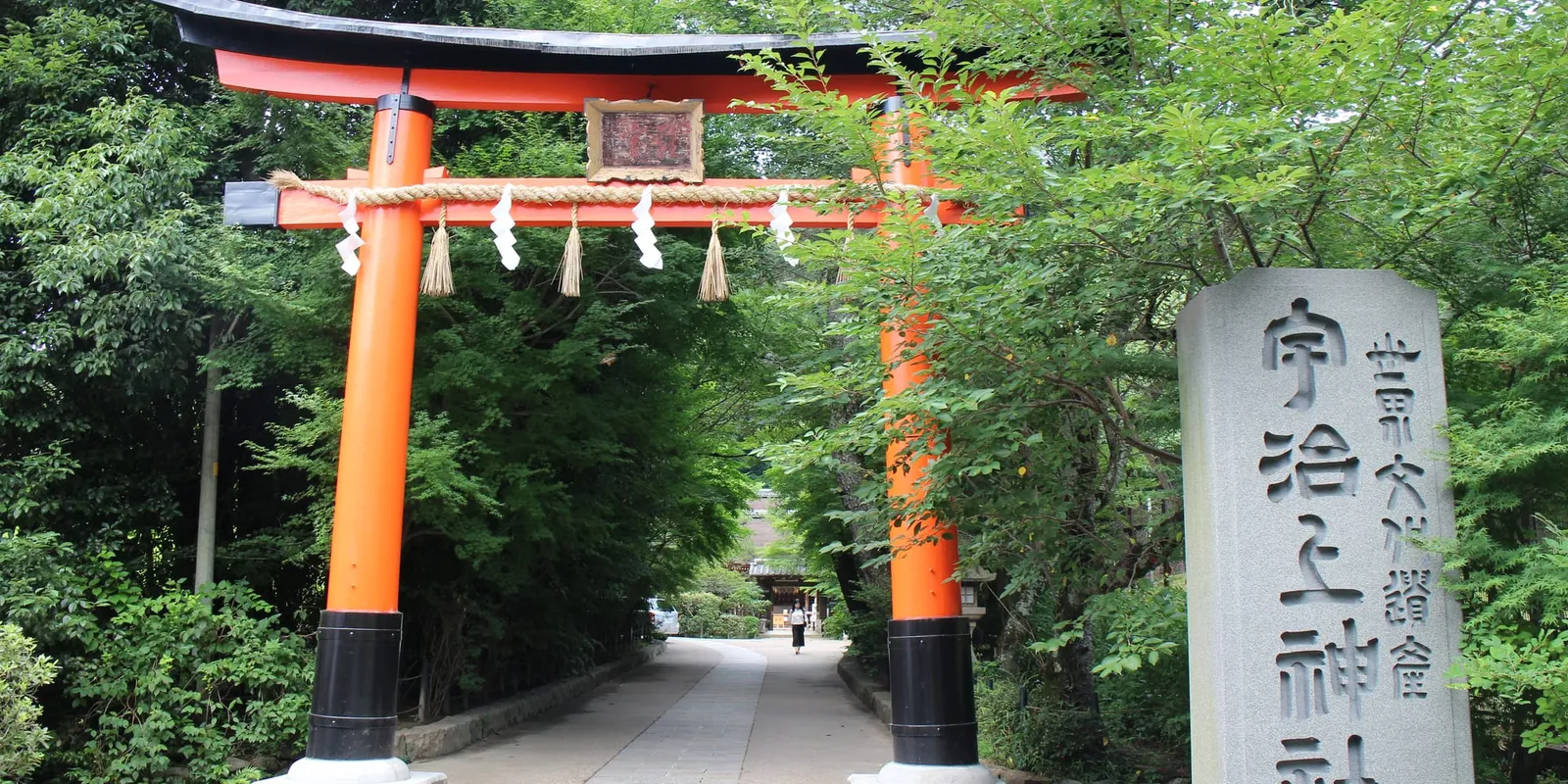
Ujigami Shrine stands in the hills of Uji-Yamada on the east bank of the Uji River in Uji, Kyoto Prefecture, close to Byodoin. According to the official website, it enshrines three deities: Uji no Wakiiratsuko no Mikoto, Emperor Ojin, and Emperor Nintoku. Uji no Wakiiratsuko, the youngest son of Emperor Ojin, was made crown prince but, after his father’s death, yielded the throne to his elder brother Nintoku and built a detached palace at Uji. The two spent three years deferring to one another, which unsettled the country, and Uji no Wakiiratsuko is said to have taken his own life. Nintoku’s honorable burial of him is given as the origin of the shrine.
The founding date is not known, and the shrine is said to have been established on the site of Prince Uji no Wakiiratsuko’s palace. Before the modern era, Uji Shrine (the “lower shrine”) and Ujigami Shrine (the “upper shrine”) were together called “Uji Rikyu Myojin.” In 1994 (Heisei 6), the shrine was inscribed on the UNESCO World Heritage List as one of the component sites of the Historic Monuments of Ancient Kyoto.
Highlights
The main attraction is the main hall (honden), a late Heian-period building. Tree-ring dating placed its construction at around 1060, and it is regarded as the oldest surviving shrine building in Japan. Three inner sanctuaries sit side by side under a single roof, and the hall was designated a National Treasure in 1952 (Showa 27).
The worship hall (haiden) in front dates from the early Kamakura period and is said to retain the feel of shinden-zukuri, the residential style of Heian-period aristocrats. It was also designated a National Treasure in 1952. Having both a main hall and a worship hall as National Treasures is rare, and both are World Heritage component sites.
The grounds also contain Kirihara-sui, a spring used as the hand-purification water. It is the only one of the former “Seven Famous Waters of Uji” that still flows today, welling up from between natural stones inside a small roofed enclosure. Worshippers use a ladle to rinse their hands and mouth before praying.
Visiting Tips
Admission is free, with the gate open from 5:00 AM to 4:00 PM. The shrine office (goshuin, amulets, and fortune slips) is open 9:00 AM–3:50 PM and issues nothing before or after those hours. Direct writing of the goshuin is sometimes unavailable depending on the calligrapher’s schedule, in which case a pre-written copy is provided. Colored and seasonal limited-edition goshuin may be limited in number, so a morning visit is safer. Payment is cash only; credit cards and QR payments are not accepted.
There are no restrooms or vending machines on the grounds, according to the official site. The parking lot is free only while you are visiting or receiving prayers, and ¥3,000 is charged if you leave the grounds. Large buses cannot enter because the surrounding roads are narrow, so going by public transport is recommended: about 10 minutes on foot from Uji Station on the Keihan Uji Line, or about 20 minutes from Uji Station on the JR Nara Line.
Annual Festivals
- Spring Grand Festival (May 3 and 5): A departure ceremony (Shinko-sai) takes place on May 3 and a return ceremony (Kanko-sai) on May 5, with a mikoshi and a phoenix-crowned palanquin (horen) touring the Makishima-higashi parishioner district. The mikoshi carries the spirit of Emperor Nintoku and the horen that of Uji no Wakiiratsuko, according to news reports of the 2023 and 2024 festivals; the dates may change from year to year.
- Hassaku Festival (September 1): A festival at which parishioners offer purifying sand.
- New Year’s Day Festival and hatsumode (from January 1): The first three days of the year are crowded; parking is limited and runs on a one-way system from 10:00 AM to 4:00 PM, so public transport is encouraged. The official site suggests that around 9:00–10:00 AM or after 4:30 PM are usually calmer.
Nearby Food & Sightseeing
- Uji Shrine: The “lower shrine” paired with Ujigami Shrine, dedicated to Uji no Wakiiratsuko no Mikoto. It is about a 5-minute walk from Keihan Uji Station and easy to visit together with Ujigami.
- Byodoin: A temple also inscribed on the World Heritage List as part of the Historic Monuments of Ancient Kyoto, and one of Uji’s signature sights alongside Ujigami Shrine.
- Byodoin Omotesando: The approach to Byodoin, lined with long-established Uji tea shops and cafes serving matcha sweets, a good place for a break after your visit.
- Koshoji Temple: A temple near Ujigami Shrine that can be worked into a walk around Uji.
Frequently Asked Questions
- Q. What are the visiting hours and is there an admission fee?
- A. According to the official website, the gate opens at 5:00 AM and closes at 4:00 PM, and admission is free. The shrine office (goshuin and amulets) is open 9:00 AM–3:50 PM (last acceptance 3:50 PM); nothing is issued before it opens or after it closes.
- Q. Where can I get a goshuin at Ujigami Shrine?
- A. At the shrine office between 9:00 AM and 3:50 PM. Only the standard black-ink goshuin is written directly in your book, and when the calligrapher is unavailable a pre-written copy is given instead. The colored goshuin are attached by the visitor. The fee is said to be roughly ¥300–500 depending on the type, but the official site lists no amount, so please check on site. Payment is cash only.
- Q. Is there parking?
- A. There is a parking lot that is free only while you are visiting or receiving prayers. If you leave the grounds for other purposes, ¥3,000 is charged at the shrine office. Large buses and microbuses cannot enter because the surrounding roads are narrow.
- Q. What makes Ujigami Shrine special?
- A. Its main hall dates from the late Heian period and was dated by tree-ring analysis to around 1060, making it the oldest surviving shrine building. The worship hall is from the early Kamakura period, and both are designated National Treasures. In 1994 the shrine was inscribed on the World Heritage List as part of the Historic Monuments of Ancient Kyoto.
- Q. Which deities are enshrined here?
- A. Prince Uji no Wakiiratsuko, Emperor Ojin, and Emperor Nintoku. Uji no Wakiiratsuko was Emperor Ojin's youngest son; after he and his elder brother Nintoku each tried to yield the throne to the other, he is said to have taken his own life, and Nintoku's honorable burial of him is given as the origin of the shrine. The official site lists academic success, martial fortune, and household safety as its blessings.
Plan Your Visit
Before you go, you can book a stay and get your shrine-visit items ready.
Amazon links open Amazon.co.jp (Japan) in English; whether an item ships overseas depends on the product.
※ Contains ads (PR). Links open external sites such as Amazon, Rakuten, Trip.com and Booking.com.