History
Yasukuni Jinja was founded in 1869 by the will of Emperor Meiji. It enshrines the spirits of a great many people who gave their lives in times of national crisis from the closing years of the Edo period to the present day, without distinction of rank or achievement. The name “Yasukuni” embodies the wish for the nation to be at peace.
The shrine’s founding grew out of a movement to console the spirits of those who died during the turbulent years from the end of the Edo period through the Meiji Restoration. Following a proposal by Omura Masujiro, regarded as the founder of the Imperial Japanese Army, and others, the “Tokyo Shokonsha” was established in Tokyo in June 1869, initially enshrining 3,588 people who died in the Boshin War. It was renamed “Yasukuni Jinja” in 1879 and designated a bekkaku kanpeisha (special government shrine), and from 1887 onward it was administered under the jurisdiction of the Army and Navy Ministries.
Highlights
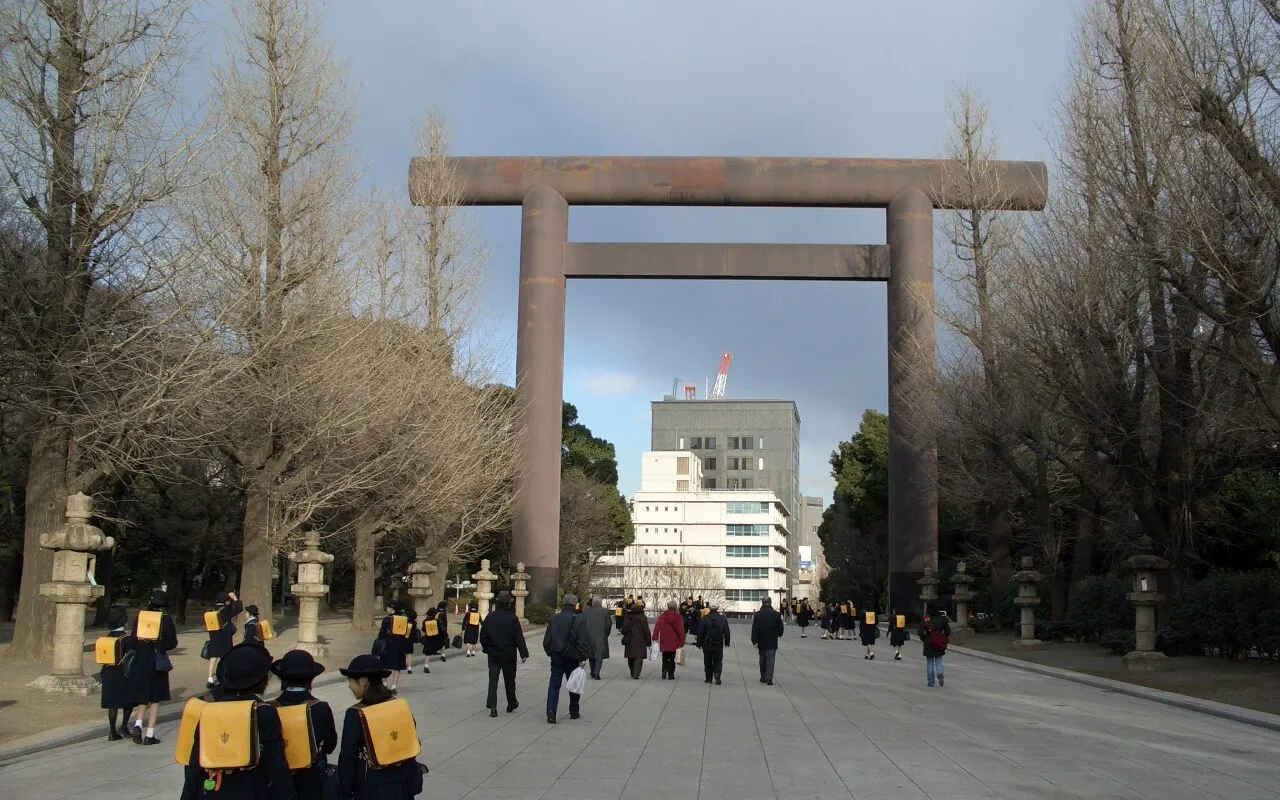
The First Torii (Great Torii) standing at the entrance to the shrine grounds rises to a height of about 25 meters, making it one of the largest torii gates in Japan, and it greets visitors as they arrive. Despite its central Tokyo location, the shrine grounds are lush with greenery and are especially known as a cherry blossom viewing spot — the Japan Meteorological Agency’s official reference tree for announcing the start of cherry blossom season in Tokyo stands here.
Visiting Tips
Yushukan, a museum located on the grounds, displays materials related to Japanese history. When visiting, please be mindful of the quiet, solemn atmosphere of the shrine and pay your respects calmly.
Annual Festivals
- Spring Grand Festival: Held every year from April 21 to 23, this is one of the year’s most important festivals, with performances of traditional arts and flower exhibitions held during the period.
- Mitama Matsuri: Held every July, this summer festival began in 1947. More than 30,000 lanterns and bonbori light the shrine grounds, and it is a beloved feature of summer in Tokyo.
- Autumn Grand Festival: Held every year from October 17 to 19, this festival features exhibitions of flowers and chrysanthemums, as well as performances of traditional Noh theater at the shrine’s Noh stage.
Nearby Food & Sightseeing
The area around Kudanshita and Kitanomaru Park includes facilities such as the Nippon Budokan and the Science Museum, and many visitors combine a visit here with a stroll through the surrounding area.
- Saryo Yui Yasukuni Jinja-ten: A coffee shop in Kudankita, Chiyoda Ward, offering light meals such as curry rice.
- Around Kudanshita Station are several cafes, including Starbucks and Segafredo Zanetti, convenient for a break after visiting.
- Chidorigafuchi is also known as a cherry blossom viewing spot in spring, and many visitors combine a stroll there with their visit.
Frequently Asked Questions
- Q. What are the visiting hours?
- A. Generally 6:00–18:00, varying by season.
- Q. When is the goshuin office open?
- A. Around 9:00–16:00, for ¥500.
- Q. Is there parking?
- A. Yes, paid parking is available nearby.
- Q. Is it known for cherry blossoms?
- A. Yes — the grounds include the Japan Meteorological Agency's official cherry blossom reference tree for Tokyo.
- Q. How do I get there?
- A. About a 5-minute walk from Kudanshita Station (subway).