History
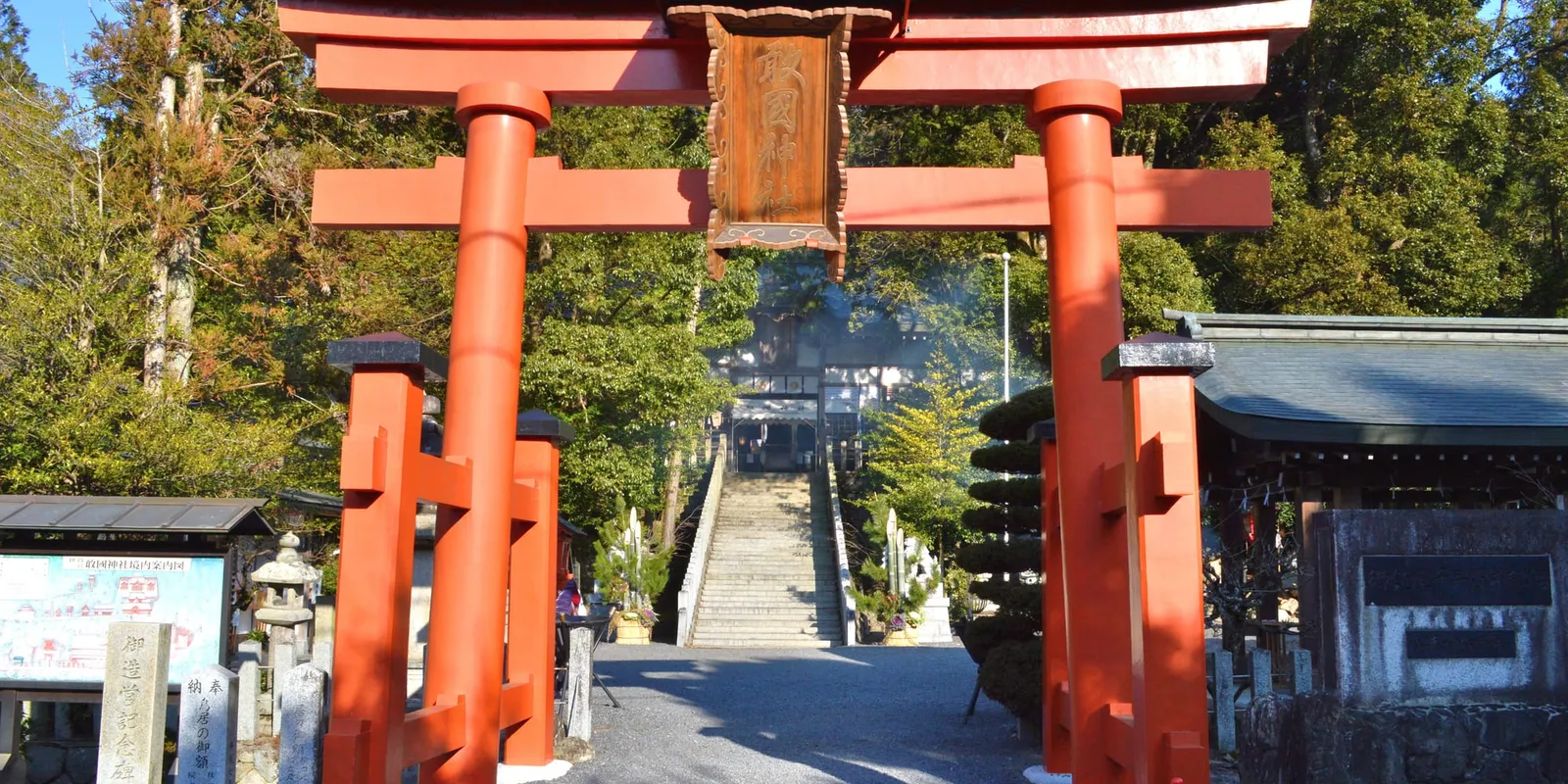
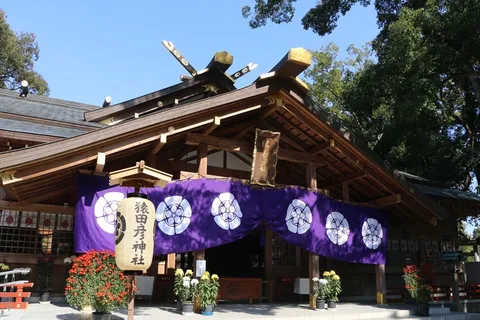
Aekuni Jinja stands in the Ichinomiya district of Iga City, Mie Prefecture, and is regarded as the foremost ancient shrine of former Iga Province. Shrine tradition places its founding in 658 CE, during the reign of Empress Saimei, though the surviving accounts of its origin are not backed by firm historical documentation. Its principal deity, Ōhiko-no-Mikoto, was the eldest son of the 8th Emperor, Kōgen, and according to the Nihon Shoki was dispatched as one of the four Shido Shogun generals to pacify the Hokuriku region. His descendants are said to have settled in the Abai district of Iga Province, which is the reason given for his enshrinement here.
The shrine appears in the Engishiki shrine registry, compiled in 927, listed as “Aekuni Jinja, Tai (Major)” in Abai District, Iga Province — a ranking held by no other shrine in the province. This distinction underlies its long-standing status as Iga’s Ichinomiya. Under the Meiji-era shrine ranking system it was classified as a Kokuhei-chūsha (mid-ranked national shrine), and today it holds Beppyo status under the Association of Shinto Shrines.
During the Tenshō Iga War of 1581, the shrine’s buildings were burned by forces loyal to Oda Nobunaga. It was later rebuilt through the efforts of mountain ascetics and under the patronage of Tōdō Takatora, lord of Iga Ueno Castle; in the Genna era, Takatora is said to have positioned the rebuilt shrine to guard the castle’s vulnerable northeast (kimon) quarter.
Enshrined Deities
The principal deity, Ōhiko-no-Mikoto, is an imperial figure associated with the pacification of the Hokuriku region, and — through the settlement of his descendants, the Abe clan, in the area — also carries something of the character of a local tutelary founder-deity. He is joined by Sukunahikona-no-Mikoto, known as a deity of medicine, sake-brewing, and wisdom, and by Kanayama-hime-no-Mikoto, a metalworking deity also enshrined at Nangu Taisha, the Ichinomiya of Mino Province in present-day Gifu.
The Iga Ninja Connection
Aekuni Jinja’s tie to Iga’s ninja heritage is not merely modern tourism branding — it rests on a documented historical basis. The shrine is an officially recognized constituent property of the Agency for Cultural Affairs’ Japan Heritage certification, under the story “Shinobi no Sato: Iga and Koga” (The Ninja’s Hometown). In the closing decades of the medieval period, governance in Iga passed largely out of the hands of formal authorities like the provincial shugo and into those of local warrior-landholders (dogō); the shrine’s festival administration is thought to have served as a mechanism through which these landholders — later organized into the confederation known as the Iga-shu — built cohesion among themselves. Ninja residences are said to have been scattered in the surrounding area, and the shrine, as the tutelary shrine of the surrounding villages, appears to have doubled as a meeting ground for the region.
The shrine’s best-documented connection is the Kurando Festival (Kurando Matsuri), once privately administered by the Hattori clan — the lineage that would later produce the noted ninja retainer Hattori Hanzō. Participants in the rite were, by tradition, limited to clan members, who dressed in black for the occasion — a custom sometimes cited as one origin of the black ninja garb popularized in later tradition. The festival lapsed for a long period before being revived in 1995, roughly 450 years after it had ceased, and today it is held annually on November 23 with a lion dance and ninja-themed performances.
It is worth noting that the Ninja Museum of Igaryu — a separate facility in nearby Ueno Park — and the wider ninja-tourism infrastructure of Iga Ueno’s city center developed independently of the shrine itself, as modern attractions built around this same regional heritage; they are best understood as neighbors to Aekuni Jinja’s own history rather than part of it.
Highlights
The shrine preserves a Shishi Kagura (lion dance) designated an Intangible Folk Cultural Property of Mie Prefecture, said to trace its origins to the Keichō era (1596–1615) and regarded as the prototype for lion dances performed across the wider Iga region. It is presented at the Maizome Festival on January 3, the Maiage Festival on April 17, and the shrine’s principal annual festival on December 5. The grounds also hold several subsidiary shrines, including Ōishi-sha, Musubi-sha, Kosazuke-sha, and Ichikishima-hime-sha, each associated with its own particular blessing.
Visiting Tips
The shrine office is open 8:30–16:00, and prayer service reception runs 9:00–15:00 (last reception 14:30). The wooded grounds have a calm, unhurried atmosphere, and the shrine is easily reached by a short bus ride from Ueno-shi Station on the Iga Railway. Free parking for about 20 cars is available on-site, making a visit by car convenient as well. Visitors with flexible schedules may want to time a trip around the lion dance festivals or the Kurando Festival.
Annual Festivals
- Kurando Festival (November 23): Once privately administered by the Hattori clan, this festival lapsed for centuries before being revived in 1995, roughly 450 years after it ceased. It is now held with a lion dance and ninja-themed performances — a rite unique to Aekuni Jinja among Iga’s shrines.
- Shishi Kagura Maizome Festival (January 3) and Maiage Festival (April 17): Performances of the prefecturally designated lion dance.
- Annual Festival (Reisai) (December 5): The shrine’s most important yearly rite.
Nearby Food and Sightseeing
- Ninja Museum of Igaryu: A ninja history museum in Ueno Park offering tours of a trick-door ninja house, shuriken-throwing experiences, and live ninjutsu demonstrations — one of Iga’s signature attractions.
- Iga Ueno Castle: A historic castle associated with Tōdō Takatora, famed for stone walls said to be among the tallest in Japan — and a tangible link to the same lord who once protected Aekuni Jinja.
- Ueno Tenjingu: Home of the Ueno Tenjin Festival, recognized as a UNESCO Intangible Cultural Heritage, nationally famous for its danjiri floats and procession of oni (demon) figures.
Frequently Asked Questions
- Q. Who is enshrined at Aekuni Jinja?
- A. The principal deity is Ōhiko-no-Mikoto, traditionally held to be the eldest son of the 8th Emperor, Kōgen. The Nihon Shoki records him as one of the four Shido Shogun generals sent to pacify the Hokuriku region, and his descendants are said to have settled in the Abai district of Iga Province, which is why he is enshrined here. He is joined by Sukunahikona-no-Mikoto, a deity of medicine and sake-brewing, and Kanayama-hime-no-Mikoto, a deity connected to Nangu Taisha in Gifu Prefecture.
- Q. Can I get a goshuin here?
- A. Yes, at the shrine office, open 8:30–16:00, for a fee of ¥500. Outside these hours, you can fill in a request form left at the office entrance, and a hand-written goshuin will be mailed to you afterward.
- Q. Why is Aekuni Jinja considered the Ichinomiya of Iga Province?
- A. It is listed in the Engishiki shrine registry, compiled in 927, as "Aekuni Jinja, Tai (Major)" — a shrine of the highest rank recognized under that system, and the only shrine in Iga Province to hold it. This high standing is why it has long been revered as Iga's Ichinomiya, its foremost shrine.
- Q. Is Aekuni Jinja's connection to Iga's ninja really genuine, or just tourism branding?
- A. It's genuine: the shrine is an officially recognized constituent property of the Agency for Cultural Affairs' Japan Heritage program, under the story "Shinobi no Sato: Iga and Koga" (The Ninja's Hometown). In the late medieval period, local warrior-landholders in the area — later known as the Iga-shu — are thought to have used the shrine's festival administration as a way to build solidarity among themselves, effectively making the shrine a meeting ground for the region's ninja-affiliated clans. Its best-known link is the Kurando Festival, once privately run by the Hattori clan (ancestors of the famous ninja Hattori Hanzo), whose participants dressed in black — a custom sometimes cited as one origin of ninja clothing. The festival lapsed for centuries before being revived in 1995, and it's now held every November 23 with a lion dance and ninja-themed performances.
- Q. How do I get to Aekuni Jinja, and is there parking?
- A. From Ueno-shi Station on the Iga Railway, take Mie Kotsu bus route 29 (Tsuge Line) to the "Aekuni Jinja" or "Jinja-mae" stop, about a 2-minute walk from there (the ride itself takes roughly 10–15 minutes). By car, it's about 5 minutes from the Iga-Ichinomiya interchange on the Meihan National Highway, with free parking on the grounds for about 20 cars. It's also around a 30-minute walk from Sanagu Station on the JR Kansai Main Line.
Related Shrines
Mie Prefecture, Futami-cho, Ise
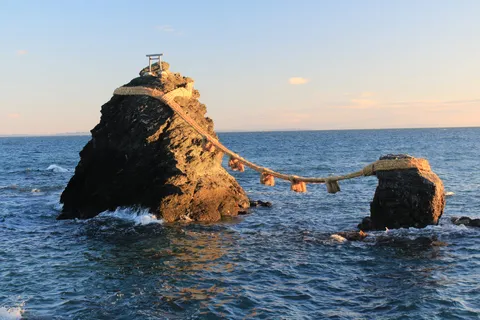
Futami Okitama Jinja
Futami Okitama Jinja
- Marital Harmony
- Good Relationships
- Good Fortune
Mie Prefecture, Tado-cho, Kuwana
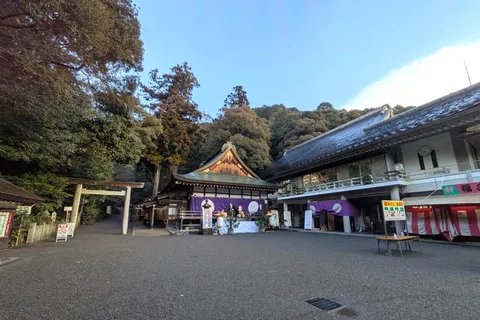
Tado Taisha
Tado Taisha
- Good Fortune
- Financial Luck
- Matchmaking
Mie Prefecture, Ise
Sarutahiko Jinja
Sarutahiko-jinja
- Directional Protection
- Good Fortune
- Good Relationships