History
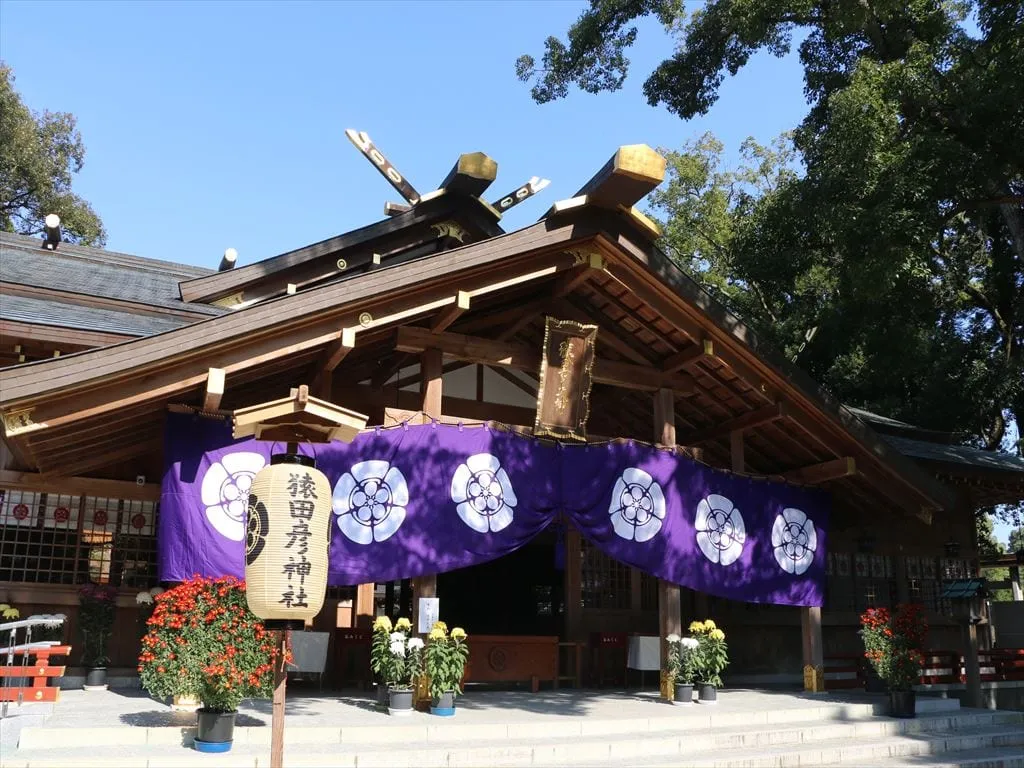
Sarutahiko Jinja enshrines Sarutahiko-no-Okami, revered as the “kami who opens the way,” together with his descendant Ota-no-Mikoto. According to the Kojiki and Nihon Shoki, when Ninigi-no-Mikoto — grandson of the sun goddess Amaterasu-Omikami — descended from the heavens to the earth in the episode known as the tenson korin (the “descent of the heavenly grandchild”), Sarutahiko-no-Okami stood at the crossroads of heaven and guided the way down to Takachiho. For this act, he has long been venerated as the deity who “appears at the beginning of all things and guides them toward the best outcome” — a kami of guidance, directions, and new beginnings.
Having completed his task of guiding the way, Sarutahiko-no-Okami returned, together with Ame-no-Uzume-no-Mikoto — the kami who had accompanied and greeted him during the descent — to his own home ground: the upper reaches of the Isuzu River in Sanada, Ise. There, the two kami are said to have taken up the work of settling and developing the region. The two later married, and Ame-no-Uzume-no-Mikoto took the new name Sarume-no-Kimi in honor of the union — the origin of her enshrinement, to this day, at the on-site Sarume Jinja.
Generations later, in the reign of Emperor Suinin, Sarutahiko’s descendant Ota-no-Mikoto met Princess Yamatohime-no-Mikoto as she traveled the provinces in search of a fitting place to enshrine Amaterasu-Omikami. Ota-no-Mikoto welcomed her at the upper Isuzu River and offered this land for the shrine, laying the groundwork for the founding of Ise Jingu’s Inner Shrine (Naiku). His descendants, the Uji-Tokoro family, went on to hold the hereditary post of Tamagushi Ouchindo, a key priestly role at Ise Jingu responsible for crafting the sacred central pillar (shin-no-mihashira) and the sacred vessel (mifunashiro) at each periodic rebuilding of the shrine. Sarutahiko Jinja itself began as a private household shrine, in which the Uji-Tokoro family enshrined their ancestral kami Sarutahiko and Ota-no-Mikoto. The shrine moved to its present site in 1677, and when the hereditary priesthood system was abolished in the Meiji era, it was formally re-established as a shrine open to public worship.
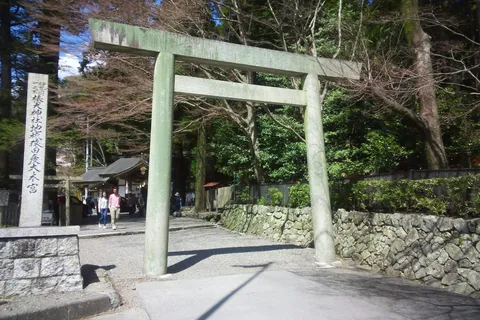
More than 2,000 shrines dedicated to Sarutahiko-no-Okami are said to exist across Japan. While Tsubaki Grand Shrine in Suzuka, also in Mie Prefecture, is traditionally counted as their head shrine, Sarutahiko Jinja — standing just steps from Ise Jingu and carrying a direct lineage tied to the Inner Shrine’s own founding through Ota-no-Mikoto — is likewise revered as one of the most important shrines in the entire Sarutahiko tradition.
Highlights
The Hoi-seki, an octagonal stone pillar standing before the worship hall, represents all eight cardinal directions and reflects Sarutahiko-no-Okami’s role as a guardian against unlucky directions. Visitors touch its faces in a particular sequence depending on their wish — career, wealth, family harmony, or popularity — making it one of the shrine’s best-loved features. The main hall itself is built in a distinctive style known as Sadahiko-zukuri, with octagonal motifs worked into the roof finials, pillars, and railings throughout, echoing the principal deity’s dominion over direction.
Facing the main hall is Sarume Jinja, dedicated to Ame-no-Uzume-no-Mikoto. Having greeted Sarutahiko during the heavenly descent and later become his wife, she is venerated for blessings in the performing arts, entertainment, and good relationships and marital harmony — and draws many visitors from the world of entertainment. The grounds are also home to a celebrated Sazareishi stone, the auspicious conglomerate rock immortalized in Japan’s national anthem, “Kimigayo.”
Visiting Tips
Standing only about a 10-minute walk from Ise Jingu’s Naiku (Inner Shrine), Sarutahiko Jinja is visited by a great many travelers as part of the same trip. Because Sarutahiko-no-Okami is the “kami who opens the way,” many visitors make a point of stopping here first — often right after visiting Ise Jingu’s Outer Shrine (Geku) — to set their intentions before continuing on to the Inner Shrine, and the shrine is a popular stop for those about to start a new job, move house, or take on a new challenge. Others prefer to visit on the way back from Naiku, after a stroll and a meal along Okage Yokocho and Oharai-machi.
The goshuin and prayer reception close at 17:00, so if you’re combining a visit with Naiku, it’s worth allowing enough time to reach the office before it closes.
Annual Festivals
- Spring Grand Festival (April 4–5) — One of two grand festivals held each year. The evening rite on the 4th, the Yoi-miya-sai, is performed in solemn darkness lit only by candlelight.
- Otaue Festival (May 5) — Planters dressed in Momoyama-era costume plant seedlings to the rhythm of dengaku music, praying for a bountiful harvest. Designated an Intangible Folk Cultural Property of Mie Prefecture.
- Sarume Jinja Grand Festival (August 17–18) — The annual festival of Sarume Jinja, marked by lantern displays and dedicated performing-arts offerings.
- Autumn Grand Festival (November 4–5) — The counterpart to the spring grand festival, held twice each year.
- Shichi-Go-San Festival (November 15) — A rite praying for children’s healthy growth.
Nearby Food & Sightseeing
Located about a 10-minute walk from Ise Jingu’s Inner Shrine, Sarutahiko Jinja is a natural stop before or after a visit to Naiku.
- Ise Jingu Naiku (Kotai Jingu) — About a 10-minute walk away. Japan’s most revered shrine, dedicated to the sun goddess Amaterasu-Omikami; almost all visitors combine a visit here with Sarutahiko Jinja.
- Okage Yokocho / Oharai-machi — A historic shopping street leading from Naiku’s Uji Bridge, lined with shops selling Ise udon, akafuku mochi, and other local specialties — a popular place to stroll and eat.
- Isuzu River — The clear river running between Sarutahiko Jinja and Naiku, with a pleasant walking path along its banks.
Frequently Asked Questions
- Q. Can I get a goshuin here?
- A. Yes, at the shrine office open 8:30–17:00, for a fee of ¥500. The goshuin of the on-site Sarume Jinja is also ¥500.
- Q. What are the visiting hours?
- A. The shrine grounds can be visited at any time. The office where you can receive a goshuin or amulets, and prayer reception, are open 8:30–17:00 (kagura dance reception closes at 16:00).
- Q. Is parking available?
- A. Yes, there's a parking area for worshippers on the grounds. The first 30 minutes are free, and parking is free while you're attending a prayer ceremony. Space is limited, so nearby coin-operated parking lots are worth knowing about when it's busy.
- Q. How do I get to Sarutahiko Jinja?
- A. It's a short walk from the 'Sarutahiko Jinja-mae' bus stop, served by Mie Kotsu buses running between Ise Jingu's Naiku (Inner Shrine), Uji-Yamada Station, and Ise-shi Station — Naiku itself is about a 10-minute walk away. By taxi, it's about 5–10 minutes from JR/Kintetsu Ise-shi Station or Kintetsu Uji-Yamada Station.
- Q. What is the Hoi-seki (directional stone) in front of the hall?
- A. It's an octagonal stone pillar placed before the worship hall, representing all eight cardinal directions in honor of Sarutahiko-no-Okami's role as a guardian of directions. Visitors touch its faces in a particular order depending on their wish — for career, wealth, family harmony, or popularity — making it one of the shrine's most distinctive features.
Related Shrines
Mie Prefecture, Suzuka
Tsubaki Grand Shrine
Tsubaki Ōkami Yashiro
- Directional Protection
- Good Fortune
- Good Relationships
Mie Prefecture, Futami-cho, Ise
Futami Okitama Jinja
Futami Okitama Jinja
- Marital Harmony
- Good Relationships
- Good Fortune
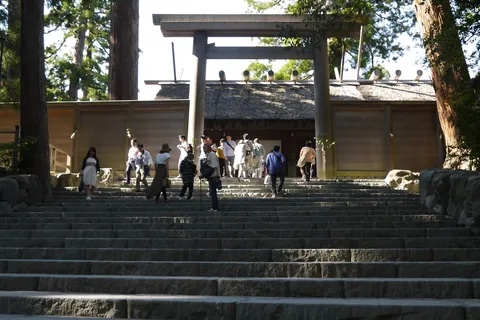
Mie Prefecture, Ise
Ise Jingu
Ise-jingū
- Good Fortune
- Peace of the Nation
- Bountiful Harvest