History
Amanoiwato Shrine consists of a West Shrine and an East Shrine facing each other across the Iwato River, in the Iwato district of Takachiho, Miyazaki. It stands at the place said to be the setting of the “Amanoiwato” myth, in which the sun goddess hid herself away. The Kojiki and Nihon Shoki record that Amaterasu Omikami, the imperial ancestress, shut herself in the Heavenly Rock Cave (Amanoiwato) to escape the violence of her younger brother Susanoo no Mikoto, and this shrine honors that sacred site.
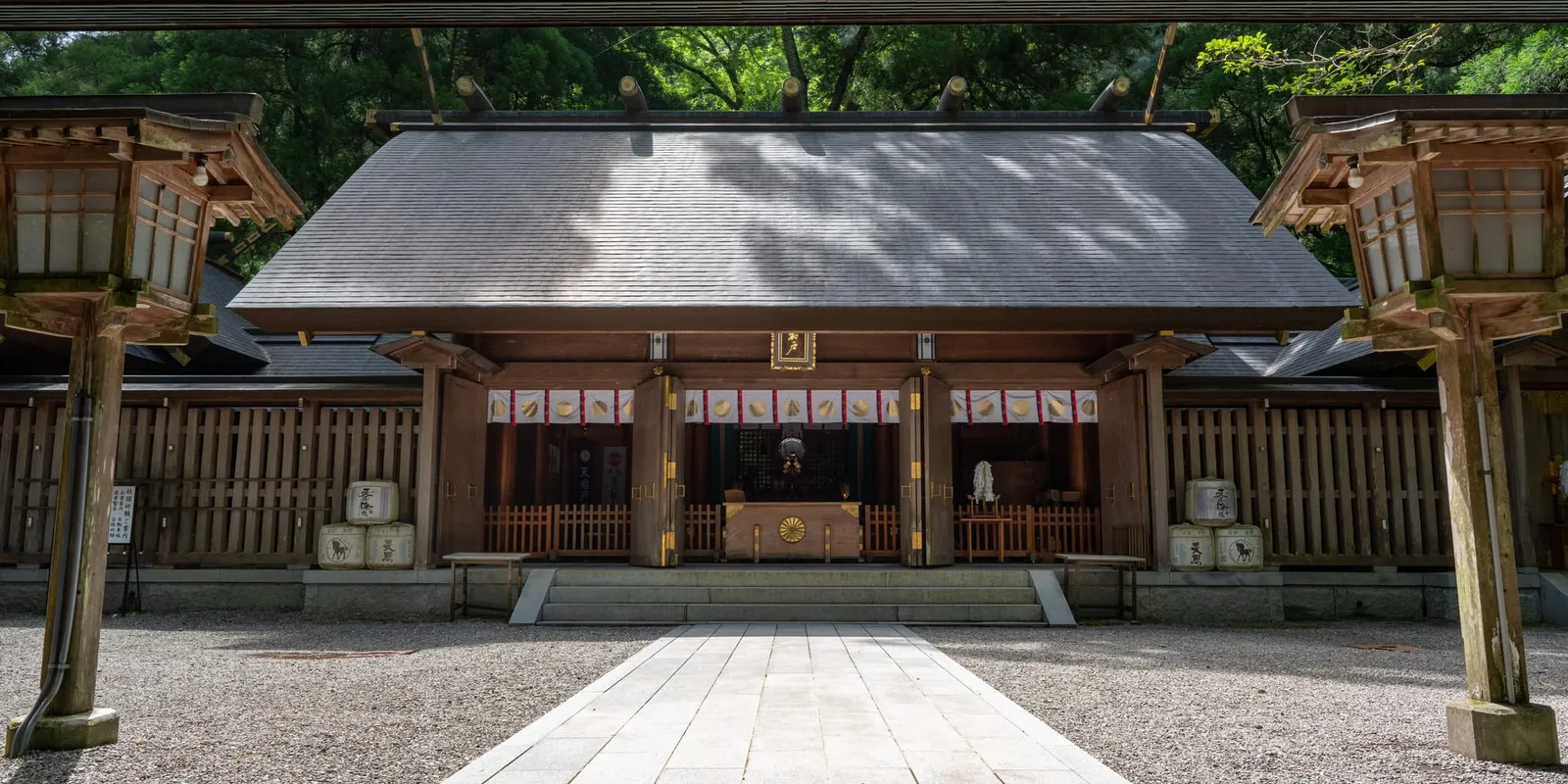
The West Shrine enshrines Ohirume no Mikoto, another name for Amaterasu, and takes the cave itself, the Amanoiwato where she hid, as its sacred object. The East Shrine enshrines Amaterasu Sumeomikami and is said to mark the place where she first lived after emerging from the cave. The date of founding is not known in detail, but shrine tradition says that Ninigi no Mikoto enshrined the site in memory of the Iwato story, and that Oga no Koremoto rebuilt the shrine buildings in 812 (the 3rd year of Konin). The two main shrines, originally separate, merged in 1970 to take their present form. The shrine was formerly ranked as a village shrine and is now a Beppyo Shrine of the Association of Shinto Shrines.
Takachiho Jinja, in the center of the same town, enshrines the three generations of deities connected with the descent of the heavenly grandson. Amanoiwato Shrine, by contrast, keeps alive the story of Amaterasu and the hiding in the cave. Visiting both gives a fuller picture of Takachiho’s mythology.
Highlights
The main attraction is worshipping the sacred cave, Amanoiwato, from a distance. The cave lies halfway up the cliff on the far side of the valley from the West Shrine, and no one can approach it. A Shinto priest guides visitors to the viewing platform behind the worship hall, which is wheelchair accessible. You cannot clearly see the cave mouth from here. Visitors worship what remains of the rock face halfway up the cliff, and according to visitor accounts photography is discouraged at the platform. In December 2020, a sacred shimenawa rope was hung on the cave for the first time since the shrine’s founding, and the rope is now replaced every year at the winter solstice in a dedicated ritual.
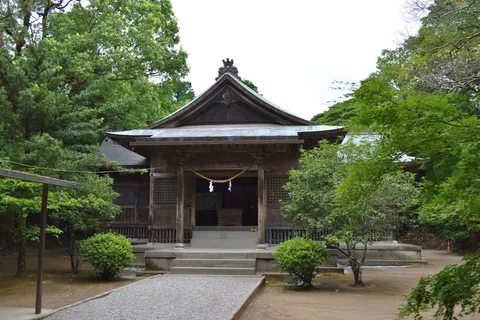
The West Shrine grounds include the sacred ogatama tree (Magnolia compressa), whose branch, in tradition, was held by Ame-no-Uzume when she danced before the cave and is said to be the origin of the kagura bell, as well as a statue of Tajikarao no Mikoto. Beside the shrine stands a kagura hall that preserves part of the Meiji-era former shrine buildings, where Amanoiwato Kagura, depicting the Iwato myth, is offered. The shrine’s website also lists the Amanoiwato Museum on the grounds (shown with opening hours of 9:00 AM–4:00 PM).
The East Shrine is about a 5-minute walk from the West Shrine, through the shopping street directly in front of it. Behind its main hall is a sacred spring that wells up from the roots of a cedar tree. Nearby, a walking path built in August 2014 lets you view the Seven-Trunk Cedar (Shichihonsugi), a sacred tree whose roots join seven trunks, from a distance, and a statue of Ame-no-Uzume stands there as well, representing the “Uzume” dance, No. 29 of the Amanoiwato Kagura.
About 500 meters upstream along the Iwato River from the West Shrine lies Amanoyasukawara. This riverbed is said to be where the eight million gods gathered to discuss how to lure Amaterasu out. At its far end is a huge cave, Gyobogaiwaya, with a mouth 40 meters wide and 30 meters deep, where Amanoyasukawara Shrine enshrines Omoikane no Kami and the eight million gods. Visitors pile small stones with their wishes, and countless cairns fill the area in front of the cave.
Visiting Tips
The shrine office is open 8:30 AM–5:00 PM. Goshuin are issued only at the West Shrine’s amulet office, which handles Amanoiwato Shrine, Amanoyasukawara Shrine, and four affiliated shrines (Ochitachi, Hoko, Futatsudake, and Ishigami). Most visitor accounts give ¥300 each, but the official website does not list a price, so please confirm at the office. Paper goshuin are available if you forget your goshuin book, and the shrine also sells original goshuin books decorated with myth-themed designs.
According to the guided-visit timetable on the official website, the guided viewing of the sacred cave leaves every 30 minutes from 9:00 AM to 4:00 PM (including a 12:30 PM slot), and the last one starts at 4:40 PM. If you want to join, gather at the on-site rest area before the start time; if nobody is waiting at the meeting time, that slot rolls over to the next one. The guide is free, and there is a donation box if you wish to contribute. The website’s text puts the guided visit at 10–15 minutes, while its timetable says 20. The timetable may change, so check the official website before you visit.
Amanoyasukawara can only be reached on foot, via the West Shrine. It is about a 10–15-minute walk each way, and because the path has stairs, wheelchairs and strollers cannot pass. There are no outdoor lights, so visit in daylight. The approach path is sometimes temporarily restricted for rock-stability surveys, so allow extra time. The whole precinct is no-smoking, and food and drink are for the rest area only.
There are four parking lots. Lot No. 1, in front of the West Shrine, is paid (¥500 per visit); Lots No. 2 and 3, on the East Shrine side, are free. There is no train station, and by public transport the Takachiho town Fureai Bus (Iwato Line) from Takachiho Bus Center to the Iwato stop takes about 15 minutes, but service is infrequent, so check the timetable in advance.
Annual Festivals
- New Year’s Day Festival (January 1, 0:00): The first ceremony of the new year.
- Spring Grand Festival / West Shrine Festival (May 2–3): The main ceremony takes place at 11:00 AM on May 2, and a mikoshi procession (Gojinko-sai) at 2:00 PM on May 3, in which the spirit of the East Shrine is carried to the West Shrine’s temporary shrine. Kagura is offered on both days.
- Summer Purification Rite, Nagoshi no Harae (June 30, 4:00 PM): A rite to purify the impurities of the first half of the year.
- Autumn Grand Festival / East Shrine Festival (September 22–23): The main ceremony takes place at 11:00 AM on September 22, and a mikoshi procession at 2:00 PM on September 23. In 2026, Amanoiwato Kagura was offered from 9:30 AM on the 22nd at the East Shrine’s kagura hall, and again in the afternoon at the West Shrine’s kagura hall. The official schedule adds a note, “in case of rain, kagura offering” (per the notice of September 4, 2026).
- Amanoiwato Yokagura 33-Dance Grand Public Performance (November 3): All 33 dances of Amanoiwato Kagura, the local form of the nationally designated Important Intangible Folk Cultural Property “Takachiho no Yokagura,” are offered not overnight but from 10:00 AM to 10:00 PM. The 2026 edition is the 65th, held at the West Shrine’s Saikan hall, and is announced as free to watch.
- Amanoiwato Shimenawa Ritual (eve of the winter solstice and the solstice itself): An eve festival from 3:00 to 9:00 PM the night before, and the main ritual from 6:50 to about 10:30 AM on the solstice morning, to replace the shimenawa rope on the sacred cave.
- Year-end Purification Rite, Toshikoshi no Harae (December 31, 2:00 PM): A purification rite to close out the year.
Nearby Food & Sightseeing
- Amanoyasukawara: About 500 meters upstream from the West Shrine, a 10–15-minute walk each way. This riverbed is said to be where the eight million gods gathered to confer, and Amanoyasukawara Shrine sits in the huge Gyobogaiwaya cave. The path has stairs and no lighting, so plan to go in daylight.
- Amanoiwato Shrine, East Shrine: About a 5-minute walk from the West Shrine. It has the sacred spring behind its main hall and a walking path with a view of the Seven-Trunk Cedar, and is normally visited together with the West Shrine.
- Takachiho Jinja: In the center of Takachiho, enshrining the three generations of deities tied to the descent of the heavenly grandson. Its nightly Takachiho Kagura program includes dances tied to the Iwato myth, such as Tajikarao no Mai and Uzume no Mai.
- Takachiho Gorge: A scenic gorge known for its columnar-jointed cliffs and the Manai Falls, in the center of town and about 5 minutes by car from Takachiho Jinja.
Frequently Asked Questions
- Q. What are the visiting hours and is there an admission fee?
- A. The shrine office is open 8:30 AM–5:00 PM. Guided viewing of the sacred Amanoiwato cave leaves every 30 minutes from 9:00 AM to 4:40 PM, led by a Shinto priest, and there is no guide fee (a donation box is provided). Note that Parking Lot No. 1, in front of the West Shrine, costs ¥500 per visit.
- Q. Can I see the sacred Amanoiwato cave itself?
- A. The cave sits halfway up the cliff on the far side of the valley from the West Shrine, and visitors cannot approach it. You can worship it from a viewing platform behind the worship hall, guided by a Shinto priest. Gather at the on-site rest area by the start time. The shrine's website gives the guided visit as 10–15 minutes in its text and 20 minutes on its timetable.
- Q. Where can I get a goshuin?
- A. At the West Shrine's amulet office, 8:30 AM–5:00 PM. Goshuin for Amanoiwato Shrine, Amanoyasukawara Shrine, and four affiliated shrines (Ochitachi, Hoko, Futatsudake, and Ishigami) are all issued there, and none are offered at the East Shrine. Most visitor accounts give ¥300 each, so please confirm at the office.
- Q. Is there parking?
- A. Lot No. 1 (in front of the West Shrine) costs ¥500 per visit, paid when you leave. Lots No. 2 and 3, near the East Shrine, are free. There are four lots in total, and the West Shrine is about a 10-minute walk from Lot No. 3 and about 15 minutes from Lot No. 4.
- Q. What is the difference between the West Shrine and the East Shrine?
- A. They face each other across the Iwato River. The West Shrine worships the cave where Amaterasu hid, as its sacred object. The East Shrine honors the place where Amaterasu first lived after emerging from the cave. The shrine office and goshuin counter are at the West Shrine.
Plan Your Visit
Before you go, you can book a stay and get your shrine-visit items ready.
Amazon links open Amazon.co.jp (Japan) in English; whether an item ships overseas depends on the product.
※ Contains ads (PR). Links open external sites such as Amazon, Rakuten, Trip.com and Booking.com.