History
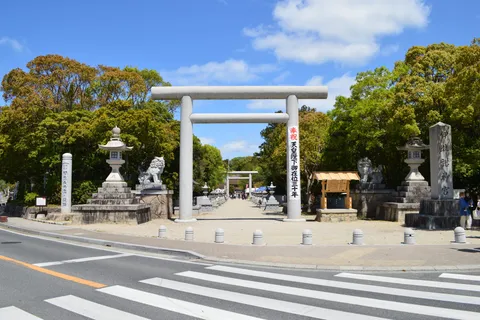
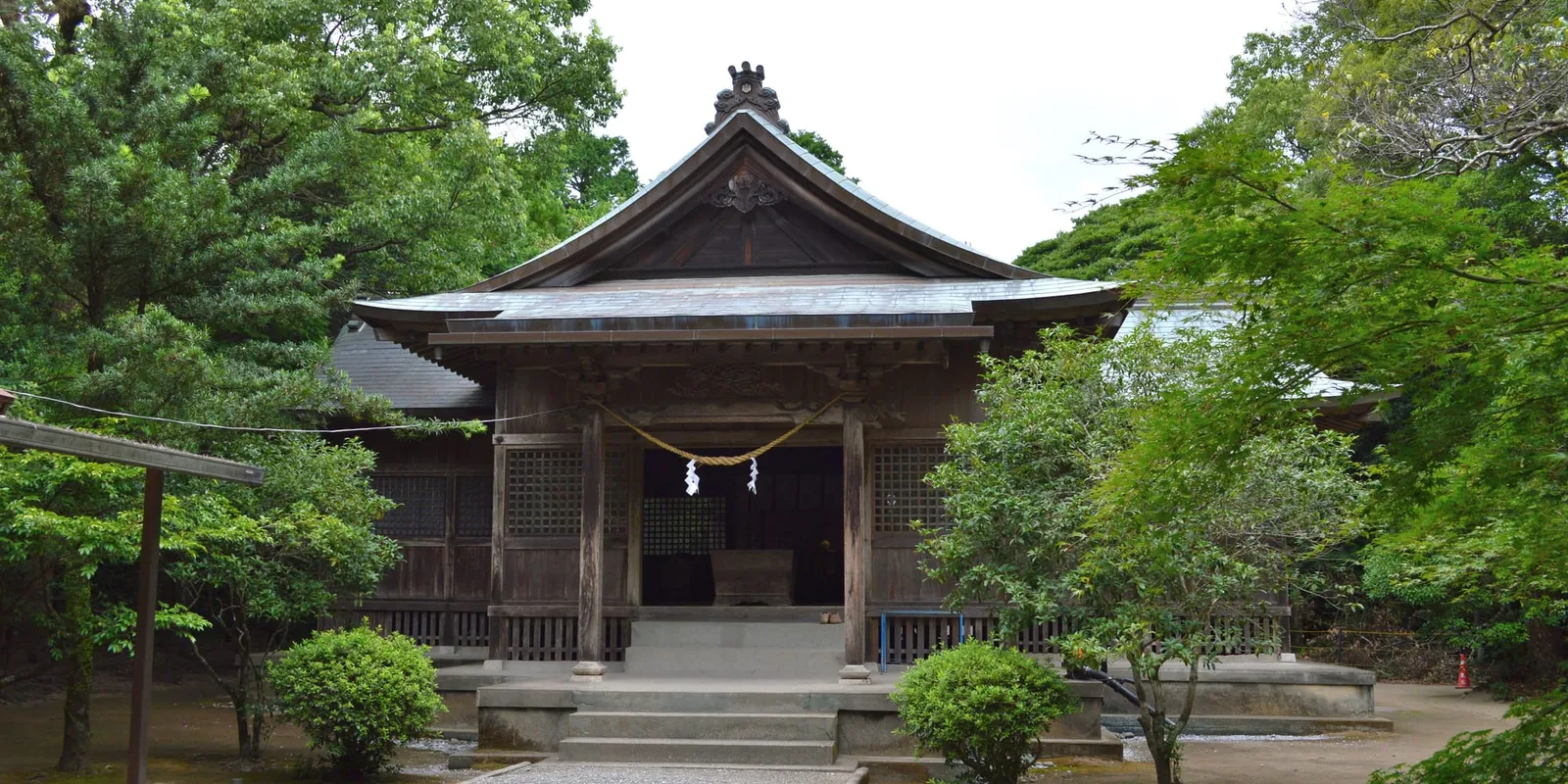
Eda Jinja stands in Awagihara-cho, Miyazaki City, Miyazaki Prefecture, and enshrines as its principal deity Izanagi no Mikoto, the male half of the primordial married couple of Japanese mythology, with Izanami no Mikoto enshrined alongside him since 1183. The exact date of the shrine’s founding is unknown, but its first appearance in an official history comes in the year 837, recorded in the Shoku Nihon Koki as having been ranked an official shrine by the Imperial court. The 10th-century Engishiki shrine register, compiled in 927, lists the shrine under Miyazaki District, Hyuga Province, as “Eda Jinja.” Shrine tradition holds that it was granted the senior first court rank, the highest possible, around 970, reflecting the deep reverence it had earned by that time as one of Hyuga Province’s leading shrines.
The shrine’s fortunes changed after the tsunami that followed the 1662 Hyuganada earthquake damaged its buildings, leading to a period of decline. It was later restored and ranked a prefectural shrine in 1873. Today Eda Jinja is affiliated with the Association of Shinto Shrines and is widely known locally as the “birthplace of misogi,” drawing worshippers and visitors from across Japan.
Highlights: The Misogi Pond and the Legend of Izanagi’s Purification
Eda Jinja’s fame rests above all on its connection to one of the most pivotal episodes in the Kojiki and Nihon Shoki: Izanagi no Mikoto’s purification after his flight from Yomi, the land of the dead. The Kojiki records that Izanagi, having narrowly escaped Yomi, performed misogi to cleanse himself of its pollution at “Awagihara at Odo of Tachibana in Himuka of Tsukushi.” The Nihon Shoki preserves the same episode, using the place name “Aogihara.” Shrine tradition holds that the area around present-day Eda Jinja is this very mythological site, and the name of the surrounding district, Awagihara-cho, derives directly from it.
Just northeast of the shrine grounds, within the adjoining “Citizens’ Forest,” lies a pond known as Oike, more commonly called the Misogi Pond, said by long-standing local tradition to be the very spot where Izanagi performed his purification. It is thought that in the age of the gods this area was a coastal inlet; today the pond’s clear waters are still framed by a structure known as the Misogi Goten. It bears noting that scholars have proposed various locations for the place named in the Kojiki and Nihon Shoki, and Eda Jinja’s identification with the site reflects a treasured local tradition rather than a settled academic conclusion — but that tradition alone has given the shrine an outsized mythological weight, and it continues to draw visitors and researchers alike as the reputed “birthplace of misogi” and “birthplace of the norito prayer.”
Highlights: The Birth of the Three Noble Children
Central to the story of Izanagi’s purification is the birth of three especially revered deities, known together as the “three noble children.” Shrine tradition holds that as Izanagi performed his purification at Awagihara, Amaterasu Omikami was born from the washing of his left eye, Tsukuyomi no Mikoto from his right eye, and Susanoo no Mikoto from his nose. According to the Kojiki, Izanagi rejoiced at the birth of these three above all his other offspring, entrusting Amaterasu with the High Plain of Heaven, Tsukuyomi with the realm of night, and Susanoo with the sea.
In connection with this celebrated myth, the grounds of Eda Jinja also hold a Sumiyoshi shrine, honoring the three Sumiyoshi deities said to have likewise emerged from this same purification, and the shrine is spoken of locally as the birthplace of the three noble children. Because it is tied to one of the most consequential scenes in Japanese mythology, Eda Jinja is frequently described as one of the foremost “power spots” among shrines associated with misogi, offering visitors an unusually vivid connection to the world of the ancient myths.
Visiting Tips
The shrine grounds can be visited at any hour, but the shrine office, where goshuin and amulets are available, is open roughly 9:00–17:00 (with some seasonal variation), and the standard goshuin costs ¥300. Free parking is available along the approach to the shrine, and a volunteer guide is often present near the parking area, roughly 9:30–15:30, offering explanations of the shrine’s mythology and grounds — a welcome resource for first-time visitors. The precinct also includes a sacred camphor tree said to bestow vitality on those who touch it, along with a walking path overlooking the Misogi Pond, both well worth a visit alongside the main shrine.
Annual Festivals
- Kinensai (Prayer for a Good Harvest): Held every February 17, praying for a bountiful harvest and national peace.
- Oharae (Great Purification Rite): Held every June 30, a rite to cleanse the accumulated impurities of the preceding half-year. The shrine also holds a chinowa-kuguri (“passing through the sacred ring”) ceremony on this day, a fitting observance for a shrine known as the birthplace of misogi.
- Reitaisai (Grand Festival): Held every November 22, the shrine’s most important annual festival.
- Niinamesai (Harvest Thanksgiving Festival): Held every November 23, offering thanks for that year’s harvest.
Nearby Food & Sightseeing
Eda Jinja stands close to Seagaia, one of Miyazaki’s leading resort areas, and many visitors combine a visit to the shrine with time spent there. It is also common to visit Eda Jinja as part of a wider tour of shrines connected to Hyuga mythology, including Udo Jingu and Aoshima Jinja along the Nichinan Coast.
- Seagaia: One of Miyazaki’s premier resort areas, set among pine groves and home to hotels, hot spring facilities, and golf courses.
- Miyazaki Jingu: Miyazaki City’s leading shrine, dedicated to Emperor Jimmu, and conveniently close for combining with a visit to Eda Jinja.
- Around JR Miyazaki Station: Miyazaki’s central station area, with restaurants and shops that make a convenient stop before or after a visit to the shrine.
Frequently Asked Questions
- Q. What kind of shrine is Eda Jinja, and who are its deities?
- A. Eda Jinja stands in Awagihara-cho, Miyazaki City, Miyazaki Prefecture, and enshrines Izanagi no Mikoto and Izanami no Mikoto, the primordial married couple of Japanese mythology (Izanami was enshrined alongside Izanagi from 1183). The shrine appears in the official history Shoku Nihon Koki under the year 837, and is listed in the Engishiki shrine register as "Eda Jinja" of Miyazaki District, Hyuga Province — one of the leading ancient shrines of the region. Known as the "birthplace of misogi," it is worshipped for marital harmony, good relationships, and protection from misfortune.
- Q. What is Awagihara, and what is the Misogi Pond? What is the legend of Izanagi's purification?
- A. The Kojiki records that after Izanagi no Mikoto fled back from Yomi, the land of the dead, he performed misogi (ritual purification) at "Awagihara at Odo of Tachibana in Himuka of Tsukushi." The Nihon Shoki records the same episode using the place name "Aogihara." Shrine tradition holds that the area where Eda Jinja now stands is this very site, and that the Misogi Pond (locally called Oike, or Misogi-ike) just northeast of the shrine grounds is the actual pond where the purification took place. It should be noted that there are various scholarly views on the true location described in the Kojiki and Nihon Shoki, and Eda Jinja's identification with the site is a cherished local tradition passed down through the shrine's own history rather than an established academic fact.
- Q. Were Amaterasu, Tsukuyomi, and Susanoo born at this site?
- A. According to shrine tradition, when Izanagi no Mikoto performed his purification at Awagihara, three especially noble deities were born: Amaterasu Omikami from washing his left eye, Tsukuyomi no Mikoto from washing his right eye, and Susanoo no Mikoto from washing his nose. Eda Jinja's precinct includes a Sumiyoshi shrine honoring the three Sumiyoshi deities also said to have emerged from this same purification, and the shrine is described locally as the birthplace of these three noble children. This is a profound mythological tradition rooted in the Kojiki and Nihon Shoki, cherished as part of Eda Jinja's own heritage and that of the surrounding community.
- Q. Is Awagihara the same place as Eda Jinja? Is there a separate shrine called Aogi Jinja?
- A. "Aogihara" is the place name used in the Nihon Shoki, understood to refer to the same location as the Kojiki's "Awagihara." The name of the district where Eda Jinja stands today, Awagihara-cho, derives from this same mythological place name. There is no independently confirmed shrine currently called "Aogi Jinja"; rather, "Aogihara/Awagihara" is simply the ancient place name associated with Eda Jinja's own tradition. A number of other shrines in the Miyazaki area, such as Kaeda Jinja, are also connected to related purification legends.
- Q. What are the goshuin reception hours and fee, and how do I get to the shrine?
- A. The goshuin costs ¥300, and the shrine office is open roughly 9:00–17:00 (with some seasonal variation). The grounds themselves can be visited at any hour. The shrine is a short walk from the "Eda Jinja" bus stop on Miyazaki Kotsu buses, or about a 15–20 minute drive from JR Miyazaki Station. Free parking is available along the approach, and a volunteer guide is often on hand near the parking area, roughly 9:30–15:30, to explain the shrine's mythology and grounds.