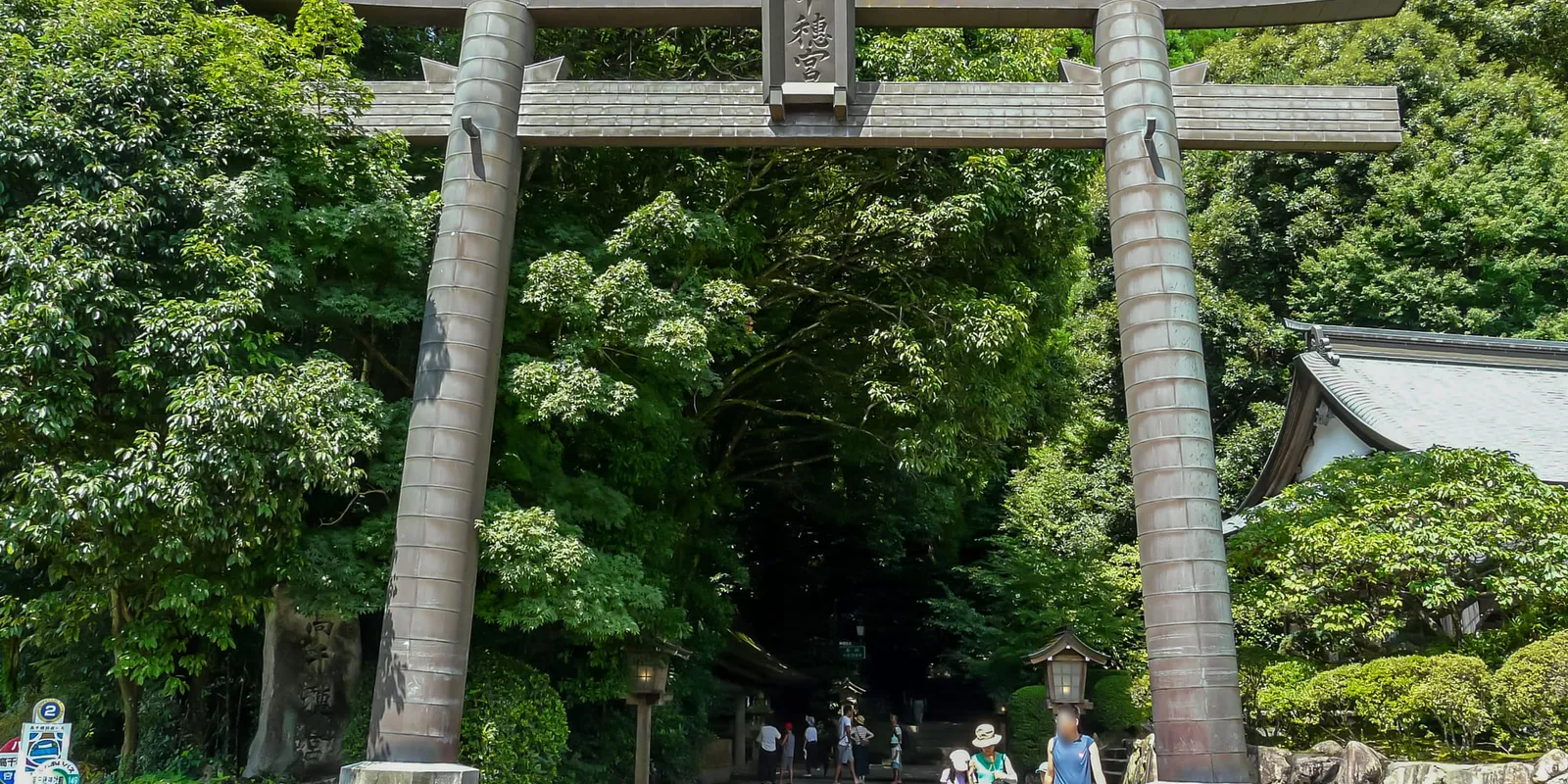
History
Takachiho Jinja traces its founding to the reign of Emperor Suinin, giving it a history of roughly 1,900 years according to shrine tradition. Its enshrined deities fall into two groups: the Takachiho-sumegami, worshipped in the first hall, and the Jissha Daimyojin, worshipped in the second. The Takachiho-sumegami is a collective name for the three generations of ancestral deities said to have descended from heaven at Takachiho and their consorts — Ninigi no Mikoto and Konohanasakuya-hime, Hikohohodemi no Mikoto and Toyotama-hime, and Ugayafukiaezu no Mikoto and Tamayori-hime — while the Jissha Daimyojin refers to Mikeirino no Mikoto, elder brother of Japan’s first emperor, Jinmu, along with nine deities representing his wife and children. Takachiho itself is said to be the very site of the “tenson korin,” the heavenly descent at the heart of Japanese creation mythology, and this shrine has long been venerated as the spiritual center of that mythological landscape.
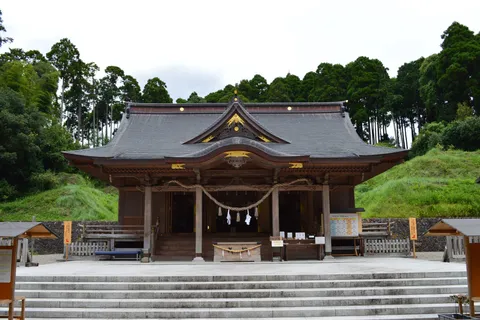
During the Tengyo era (938–947), Masatsugu, son of Ogano Koremoto who had come to the region from Bungo Province and founded the Takachio (Takachiho) clan, is said to have designated this shrine as the “soja,” or head shrine, of the 88 shrines scattered across the Takachiho region — known collectively as the “Takachiho 88 Shrines.” The current main hall dates to a late Edo-period reconstruction; it and a pair of iron guardian lion-dogs held by the shrine are designated National Important Cultural Properties. The grounds also preserve a “shizume-ishi” (settling stone), said to have been enshrined here by imperial command alongside a matching stone at Ise Jingu, testifying to the shrine’s deep ties to the imperial house.
Highlights
The single greatest highlight of Takachiho Jinja is the nightly performance of Takachiho Kagura at the shrine’s kagura hall. Across the wider Takachiho region, the “Yokagura” tradition sees entire communities stage an unbroken, all-night sequence of 33 sacred dances between mid-November and early February, giving thanks for the autumn harvest and praying for abundance in the year ahead — a tradition designated a National Important Intangible Folk Cultural Property in 1978. Because that full, all-night performance is tied to a specific season and rotates among the region’s hamlets, Takachiho Jinja’s own kagura hall instead distills four of its most representative dances — “Tajikarao no Mai,” “Uzume no Mai,” “Totori no Mai,” and “Goshintai no Mai” — into a one-hour program staged every night of the year at 20:00. Kagura nationwide, including this Takachiho tradition, has recently been selected as Japan’s nominee for future UNESCO Intangible Cultural Heritage inscription, and this nightly showcase has become one of the most accessible ways for visitors to experience the tradition firsthand.
The grounds are also home to the “Meoto-sugi,” a pair of towering cedars whose trunks have grown together into one — couples who walk around them hand in hand three times are said to be blessed with good relationships, making it especially popular with visitors praying for enmusubi. Elsewhere on the grounds, an 800-year-old cedar known as the “Chichibu-sugi” and a distinctively expressive pair of iron komainu add to the sense of quiet grandeur befitting a shrine at the heart of Japan’s mythological homeland.
Visiting Tips
The shrine grounds are open to visitors at all times, and goshuin stamps can be received at two reception points — near the parking lot and beside the kagura hall — roughly between 9:00 and 17:00. Free parking for about 80 cars sits right next to the grounds, convenient for both worship and the evening kagura performance. Admission to the nightly kagura is ¥1,000 (¥900 for groups of 20 or more; free for elementary-school age and under), with reception opening at 19:00 in front of the kagura hall; reserving a seat online in advance (bookings open 30 days ahead, through 17:00 on the day of the performance) secures a spot in the priority front section. Note that the regular nightly kagura is suspended during the “Shinwa no Takachiho Yokagura Matsuri” festival on November 22–23, and on December 31 and January 1.
Annual Festivals
- Spring Grand Festival (April 16): A ceremony begins at 9:30 AM, followed in the afternoon by a mikoshi procession through the streets of Takachiho. At Onokoro Pond in Takachiho Gorge, the mikoshi is carried three times through the water in a purification rite known as “Hamaori.”
- Takachiho Yokagura (mid-November – early February): Around 20 communities across the region each welcome their local guardian deity and perform the full, all-night sequence of 33 sacred dances, a tradition designated a National Important Intangible Folk Cultural Property.
- Shinwa no Takachiho Yokagura Matsuri (November 22–23): A festival centered on Takachiho Jinja that lets visitors experience yokagura performances from multiple communities in one place; the shrine’s regular nightly kagura show is suspended during this period.
- New Year’s Festival (January 1–3): The shrine draws visitors from across Miyazaki and beyond for the first prayers of the new year.
Nearby Food & Sightseeing
- Takachiho Gorge: About 5 minutes by car from the shrine. A scenic gorge lined with columnar-jointed cliffs and the Manai Falls, best explored up close by rental rowboat.
- Amaterasu no Kakure Cafe: A hideaway cafe tucked down an alley about 3 minutes’ walk from the shrine, known for its “Takachiho beef soba,” made with locally raised Takachiho beef.
- Takachiho Amaterasu Railway: A popular open-air “super cart” ride along the tracks of the discontinued former JR Takachiho Line, offering sweeping views from the old Takachiho Railway Bridge, one of Japan’s highest.
Frequently Asked Questions
- Q. What are the visiting hours?
- A. The grounds are open to visitors at all times. Nightly Takachiho Kagura performances at the kagura hall run 20:00–21:00, with reception from 19:00.
- Q. When is the goshuin office open?
- A. Roughly 9:00–17:00, available at two reception points near the parking lot and beside the kagura hall, for ¥500.
- Q. Is there parking?
- A. Yes, free parking is available adjacent to the grounds (space for about 80 cars).
- Q. Can you see Takachiho Kagura every night?
- A. The full all-night sequence of 33 sacred dances is tied to a specific season, but the kagura hall distills four representative dances into a one-hour program staged every night of the year at 20:00 (admission ¥1,000).
- Q. How do I get there?
- A. About 2.5 hours by car from Miyazaki city, or about 1 hour by highway bus ('Takachiho-go') from JR Nobeoka Station to Takachiho Bus Center, then about a 15-minute walk.