History
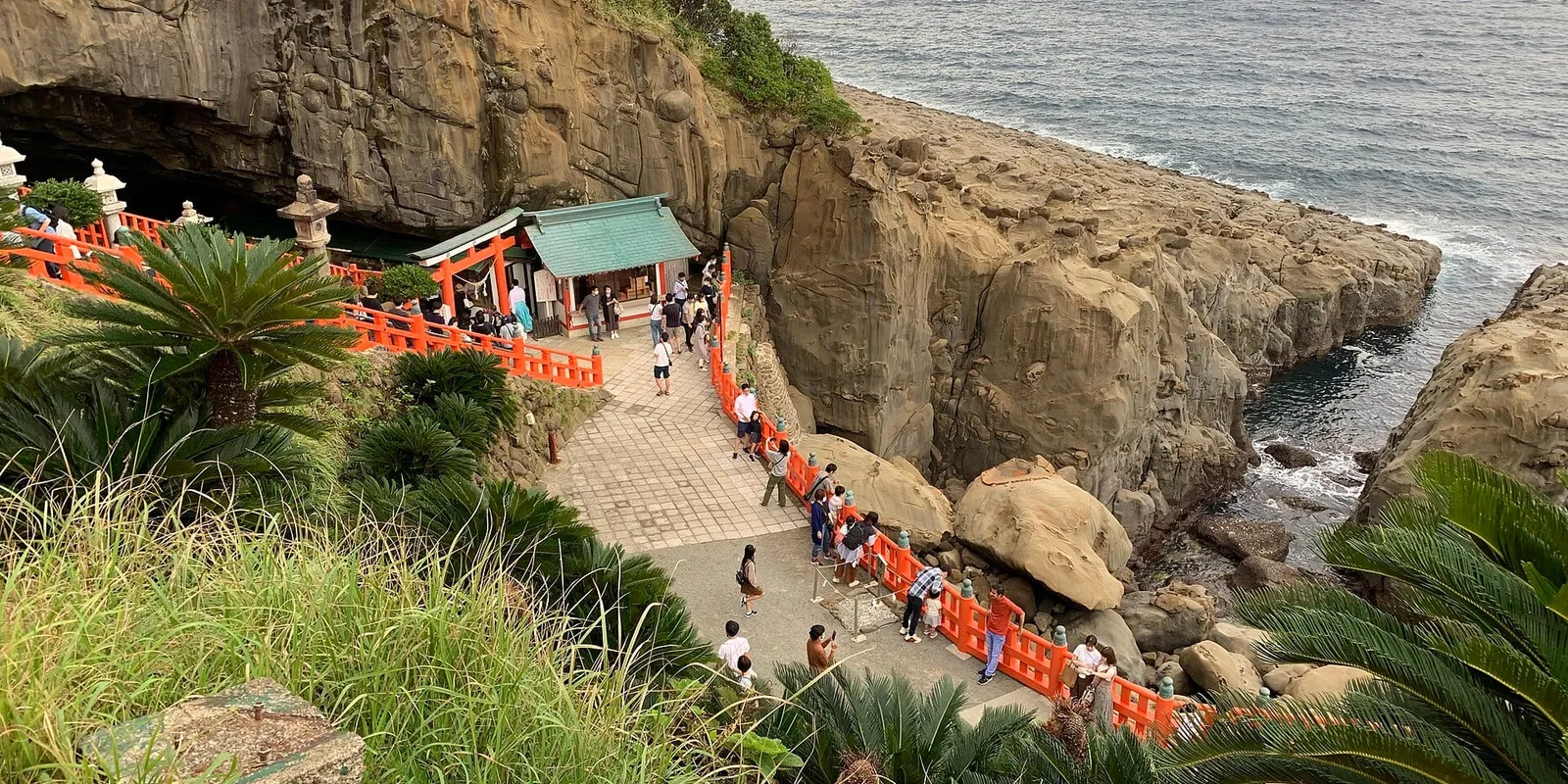
Udo Jingu is unlike almost any other shrine in Japan: its vermillion main hall is built directly inside a vast sea cave carved into the cliffs of the Nichinan coast. Shrine tradition dates its founding to the reign of the legendary Emperor Sujin, though the exact year is unknown. The enshrined deity, Hikonagisatakeugayafukiaezu no Mikoto, is the child of Hikohohodemi (Yamasachihiko) and Toyotama-hime, the daughter of the sea god, and figures directly in the “Umisachi-Yamasachi” (Luck of the Sea, Luck of the Mountains) myth cycle at the heart of Japan’s founding legends.
According to the myth, Toyotama-hime built a birthing hut inside this very cave, thatching its roof with cormorant feathers so she could give birth in secrecy. Before the roof could be finished, the child was born — hence the name Ugayafukiaezu, meaning “not yet thatched.” This child would grow up to become the father of Emperor Jimmu, Japan’s first emperor, making Udo Jingu a site tied directly to the origins of the imperial line. Until the Meiji-era separation of Buddhism and Shinto, the site was also a Shingon Buddhist temple, and traces of that syncretic history remain woven into its story.
Highlights
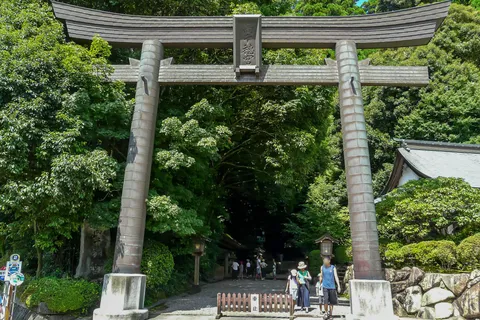
The undisputed highlight of Udo Jingu is its main hall, tucked beneath the low ceiling of a dramatic sea cave with waves crashing against the rocks just beyond its vermillion fence. Walking down the approach and watching the ocean view open up through a tunnel of red torii gates, with the roar of the surf growing louder, is unlike the approach to any ordinary shrine. In front of the main hall sits Kame-Iwa, a turtle-shaped rock formation; visitors throw small clay balls called “undama” (fortune balls) — men with their left hand, women with their right — aiming for a rope-marked circle on the turtle’s back, said to grant good fortune to those who succeed.
The grounds also hold “Ochichi-iwa,” a rock said to be where Toyotama-hime left behind two breast-shaped stones after giving birth, drawing visitors who pray for safe childbirth, healthy children, and good relationships. The Chidori Bridge along the approach and the long descent through consecutive red torii gates toward the cave are also well worth taking in slowly.
Visiting Tips
The round trip from the parking area to the main hall and back takes about 30–45 minutes over a gently sloping path and some stone steps. The cave floor near the main hall can be damp and slippery, so comfortable, non-slip shoes are recommended. Undama fortune balls can be purchased at the stand just before the cave, typically five balls for about ¥100. Goshuin can be received at the shrine office near the approach entrance or at the counter inside the cave. On clear days, the contrast between the deep blue Hyuga Sea and the vermillion shrine buildings is especially striking, and low tide makes the area around Kame-Iwa easier to approach.
Annual Festivals
- New Year’s Festival (January 1): The first festival of the year, praying for safety and prosperity in the year ahead.
- Regular Grand Festival (February 1): One of the most solemn and important festivals held at Udo Jingu each year.
- Spring Grand Festival & Shanshan-uma Procession (late March): Reenacts the Edo-period custom in which newlywed couples rode a bell-adorned horse to the shrine, accompanied by a folk song competition.
- Niiname-sai Thanksgiving Festival (November 23): A major autumn rite offering thanks for the year’s harvest.
Nearby Food & Sightseeing
- Shanshan Chaya: A seaside restaurant along the Nichinan coast serving generous portions of Miyazaki specialties like chicken nanban and ise-ebi (spiny lobster), with ocean views from its tatami seating.
- Michi-no-Eki Nango: A roadside station known for the fully ripened mangoes grown in Nichinan’s Nango district, along with fresh local produce and mango-based sweets.
- Aoshima (Devil’s Washboard): About 20 minutes by car from Udo Jingu, this small island is ringed by the “Devil’s Washboard” rock formations, a National Natural Monument, and is home to Aoshima Shrine, popular for matchmaking blessings.
Frequently Asked Questions
- Q. What are the visiting hours?
- A. Gates open at 6:00 AM and close at 6:00 PM.
- Q. When is the goshuin office open?
- A. 9:00 AM–5:00 PM, for ¥500.
- Q. Is there parking?
- A. Yes, three free parking lots are available on the grounds.
- Q. What is "undama"?
- A. Small unglazed clay balls thrown at a hollow in the turtle-shaped rock in front of the main hall — men throw with their left hand, women with their right — said to grant a wish if it lands inside. Sets of five cost around ¥100 at the amulet office.
- Q. How do I get there?
- A. About 1 hour by car from central Miyazaki via Route 220, or about 45 minutes from Miyazaki Airport.
Related Shrines
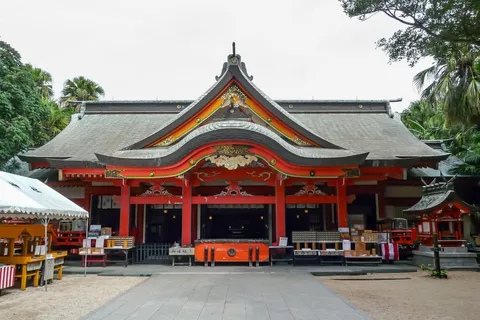
Miyazaki, Miyazaki City
Aoshima Jinja
Aoshima-jinja
- Good Relationships
- Safe Childbirth
- Healing from Illness
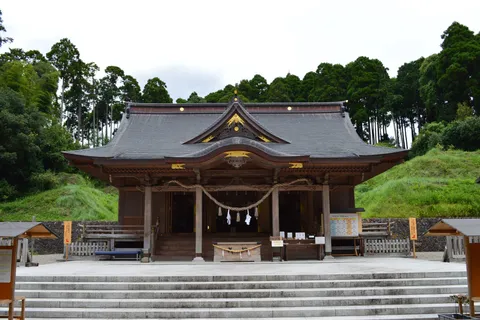
Miyazaki, Tsuno, Koyu District
Tsuno Jinja
Tsuno Jinja
- Good Relationships
- Maritime Safety
- Recovery from Illness
Miyazaki, Takachiho
Takachiho Jinja
Takachiho-jinja
- Good Relationships
- Protection from Misfortune
- Bountiful Harvest