History
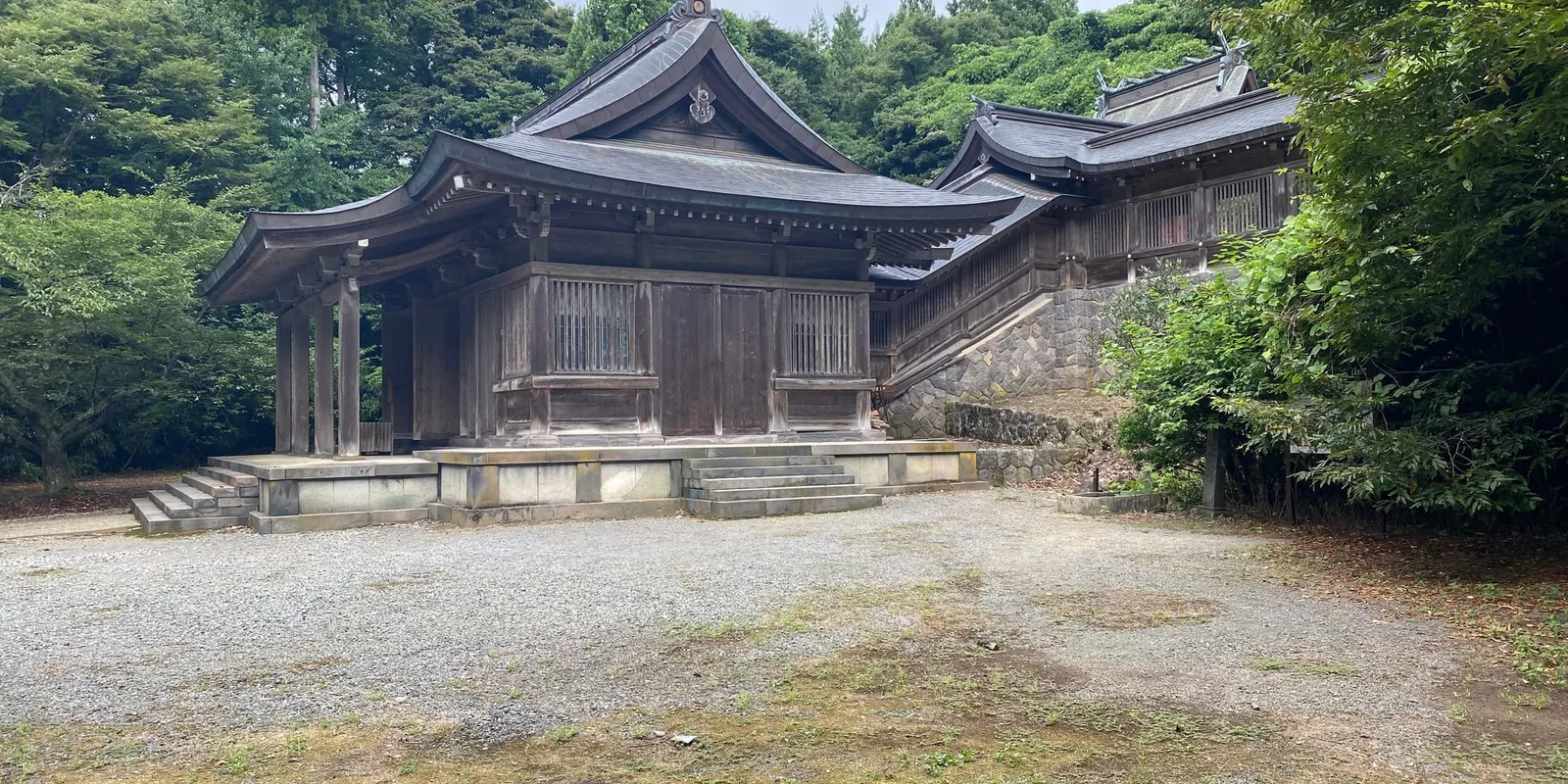
Chokaisan Omonoimi Jinja is one of the great ancient shrines of the Tohoku region, venerating Mount Chokai itself (2,236 meters) — an active volcano straddling the border of Yamagata and Akita prefectures — as its sacred object of worship. Its founding is traditionally dated to 564 (Kinmei 25) or the reign of Emperor Keiko, though accounts vary. The earliest solid documentary evidence appears in the Nihon Sandai Jitsuroku, which records in its entry for 871 (Jogan 13) that an Omonoimi shrine stood “atop the mountain in Akumi District.”
According to shrine tradition, because worship at the summit itself was so difficult, a lowland shrine was established at Fukura in 806, becoming the origin of today’s Fukura base shrine. On the opposite side of the mountain, the Warabioka base shrine traces its founding to a mountain-opening legend involving En no Gyoja, the semi-legendary founder of Shugendo, and it went on to flourish as a major center of Mount Chokai’s ascetic mountain-worship tradition. The shrine received early imperial recognition, being elevated to official shrine status in 862, and was listed as a Myojin Taisha (major shrine) in the Engishiki shrine register. It later became the ichinomiya (chief shrine) of Dewa Province, drawing devotion from nobility and commoners alike.
The Enshrined Deities
The principal deity is Omonoimi no Okami, a deity unique to Mount Chokai that appears in neither the Kojiki nor the Nihon Shoki, and who is regarded as identical to Toyouke-hime no Mikoto, goddess of grain and sustenance. The Fukura base shrine additionally enshrines Tsukuyomi no Mikoto, the moon deity — a detail that varies between the two base shrines and is one of the small but distinctive features of this shrine’s structure.
One Shrine, Three Sites: The Summit Shrine and Two Base Shrines
The single most important thing to understand about Chokaisan Omonoimi Jinja is that it isn’t a single building, but the collective name for three places of worship built around Mount Chokai itself.
- The Summit Shrine (Sancho Go-Honsha): Located near the top of Mount Chokai, between the Gyoja-dake and Shichiko-san peaks, this is the literal heart of the shrine. Like Ise Jingu, it follows a tradition of rebuilding its sanctuary every 20 years (shikinen sengu), most recently in 1997. Reaching it requires a full mountain climb from a trailhead such as Hokodate, Yunodai, or Harakawa, and the mountain lodges near the summit and at the 7th station open only during the summer climbing season, roughly early July through September.
- Fukura Base Shrine (Fukura Kuchi-no-miya): Located in Fukura, Yuza Town, and easily reached on foot from JR Fukura Station in about 5 minutes — this is where most visitors actually go. It also serves as the goshuin office for both base shrines. Its annual festival on May 4 features rites including the Kanagayu (gruel-divination) and Ohamade ceremonies.
- Warabioka Base Shrine (Warabioka Kuchi-no-miya): Located in Kami-Warabioka, Yuza Town, this site developed as a center of Mount Chokai’s Shugendo ascetic tradition following En no Gyoja’s mountain-opening legend. Its annual festival on May 3 features the Otanemaki rice-planting rite and Warabioka Ennen, a nationally designated Important Intangible Folk Cultural Property. It has no resident priest, so its goshuin is issued from the Fukura base shrine’s office.
For an ordinary sightseeing visit or prayer, a trip to the well-connected Fukura base shrine is more than enough to experience this shrine’s full significance.
A Living Volcano’s Faith
Mount Chokai is not only Yamagata Prefecture’s highest peak but an active volcano that the Japan Meteorological Agency keeps under continuous monitoring. Its historical eruptions are well documented: the Konin era (810-823), a major eruption in 871 that produced a lava flow and — according to the Nihon Sandai Jitsuroku — caused significant damage downstream, the Manji era (1659-1663), the Genbun era (1740-1741), and 1821, with the most recent activity a small phreatic (steam) eruption in 1974.
These eruptions were traditionally understood as expressions of the mountain deity’s anger, which only deepened devotion to Omonoimi Jinja as the shrine responsible for pacifying the mountain and securing bountiful harvests and safety at sea. Counted among Japan’s 100 Famous Mountains and historically nicknamed “Dewa Fuji” or “Akita Fuji” for its graceful, Fuji-like silhouette, Mount Chokai’s beauty carries the memory of real volcanic power beneath it.
Annual Festivals
- Saitansai (January 1): A New Year’s rite praying for bountiful harvests and national peace.
- Warabioka Base Shrine Annual Festival (May 3): The Warabioka base shrine’s largest festival, featuring the Otanemaki rice-planting rite and the Warabioka Ennen performance, a nationally designated Important Intangible Folk Cultural Property.
- Fukura Base Shrine Annual Festival (May 4): The Fukura base shrine’s festival, including the Kanagayu gruel-divination rite (predicting the year’s harvest) and the Ohamade beach ceremony praying for safety at sea.
- Summer Mountain-Opening Festival (July 1): Marks the start of the summer climbing season and prays for climbers’ safety; the summit lodges open shortly after.
- Chokaisan Hiawase Rite (July 14): A traditional fire-signaling ceremony in which beacon fires are lit and matched between the summit and the foothills.
- Niiname-sai (November): An autumn rite of thanksgiving for the year’s harvest.
Goshuin
A goshuin is available at both the Fukura and Warabioka base shrines, each for a fee of ¥300. Since Warabioka has no resident priest, its goshuin is also handled through the Fukura base shrine’s office (0234-77-2301). If you’d like to collect both in one visit, going to Fukura is the surest option.
Access & Visiting Information
Fukura base shrine (1 Fukura Nunokura, Yuza, Akumi District, Yamagata) is about a 5-minute walk (3 minutes by car) from Fukura Station on the JR Uetsu Line, and about 25 minutes by car from the Sakata-Minato interchange on the Nihonkai-Tohoku Expressway. Free parking for about 30 vehicles is available on the grounds.
Warabioka base shrine (51 Matsugaoka, Kami-Warabioka, Yuza, Akumi District, Yamagata) is best reached by car — about 10 minutes from Yuza Station, and about 20 minutes from Sakata-Minato IC — since the nearer Minami-Chokai Station is some distance away. Free parking for about 20 vehicles is available.
Both base shrines are free to visit and open at all times. If you plan to reach the summit shrine, go only during the summer climbing season (roughly July through September) via one of the established trailheads — Hokodate, Yunodai, or Harakawa — and with proper mountaineering preparation.
Nearby Food & Sightseeing
- Chokai Blue Line: A scenic mountain road winding partway up Mount Chokai near the Fukura base shrine, connecting Yamagata and Akita, popular for its cherry blossoms, azaleas, and sweeping Sea of Japan views.
- Marukoike Pond: A striking, cobalt-blue spring-fed pond formed by Mount Chokai’s groundwater, in Yuza Town — a popular stop to pair with a visit to the Fukura base shrine.
- Sankyo Rice Warehouses, Sakata: A well-known sight in neighboring Sakata City, these Meiji-era rice warehouses reflect the deep historical link between Mount Chokai’s mountain faith and the agriculture of the Shonai Plain below.
Frequently Asked Questions
- Q. I heard Chokaisan Omonoimi Jinja has three separate shrines. Which one should I visit?
- A. Chokaisan Omonoimi Jinja is the collective name for a summit shrine atop Mount Chokai and two base shrines ('kuchi-no-miya') in the foothills of Yuza Town — Fukura and Warabioka. The summit shrine can only be reached by a full mountain climb during the summer season (roughly July through September), so nearly all visitors go to one of the two base shrines instead. Fukura is the more convenient choice: it's about a 5-minute walk from Fukura Station and also serves as the goshuin office for both base shrines, so it's the best place to start.
- Q. Can I get a goshuin here, and how much does it cost?
- A. Yes, both the Fukura and Warabioka base shrines offer a goshuin, each for ¥300. Because Warabioka has no resident priest, its goshuin is also issued from the Fukura base shrine's office (0234-77-2301) — calling ahead to confirm someone is present is a good idea before visiting either site.
- Q. How do I reach the summit shrine?
- A. The summit shrine sits near the top of Mount Chokai (2,236 meters), between the Gyoja-dake and Shichiko-san peaks, and can only be reached by climbing from a trailhead such as Hokodate, Yunodai, or Harakawa. The mountain-hut lodges near the summit and at the 7th station open only during the summer climbing season, roughly early July through September, and close once snow returns. For sightseeing or worship, a visit to the Fukura or Warabioka base shrine is more than sufficient.
- Q. Is Mount Chokai still an active volcano?
- A. Yes — Mount Chokai is a volcano under continuous monitoring by the Japan Meteorological Agency. Historical eruptions are recorded in the Konin era (810-823), in 871 (a major eruption that produced lava flow), during the Manji era (1659-1663), the Genbun era (1740-1741), and in 1821, with a smaller phreatic eruption as recently as 1974. Eruptions were traditionally understood as expressions of the mountain god's anger, which helped deepen devotion to Omonoimi Jinja as the shrine charged with pacifying the mountain itself.
- Q. How do I get there, and is parking available?
- A. The Fukura base shrine is about a 5-minute walk (3 minutes by car) from Fukura Station on the JR Uetsu Line, and about 25 minutes by car from the Sakata-Minato interchange on the Nihonkai-Tohoku Expressway. Free parking for about 30 vehicles is available on-site. The Warabioka base shrine is best reached by car, about 20 minutes from Sakata-Minato IC, with free parking for about 20 vehicles. Both sites are free to visit and open all day.
Related Shrines
Kagawa, Takamatsu
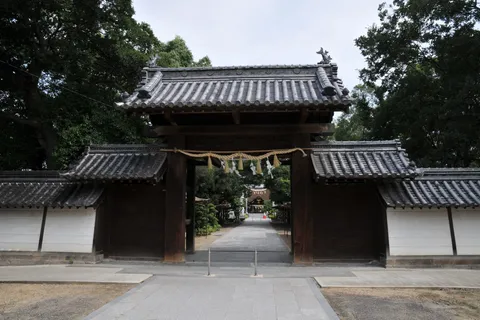
Tamura Jinja
Tamura-jinja
- Bountiful Harvest
- Business Prosperity
- Household Safety
Kyoto Prefecture, Fushimi-ku, Kyoto
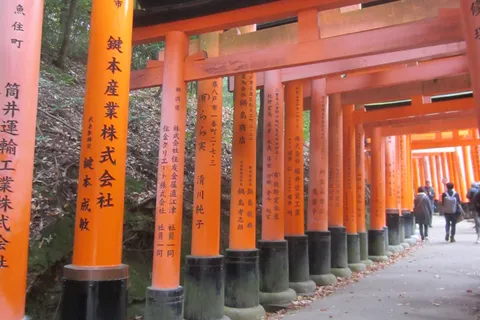
Fushimi Inari Taisha
Fushimi Inari Taisha
- Business Prosperity
- Bountiful Harvest
- Household Safety
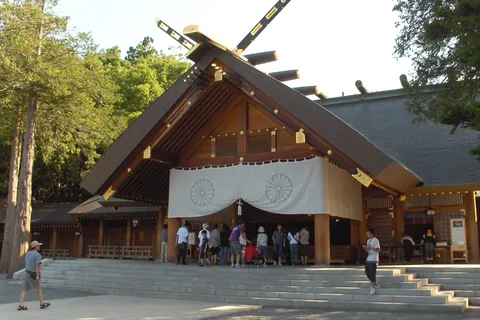
Hokkaido, Chuo-ku, Sapporo
Hokkaido Jingu
Hokkaidō-jingū
- Success in New Ventures
- Household Safety
- Business Prosperity