History
Gooh Jinja enshrines Wake no Kiyomaro, the courtier who advised Emperor Kanmu to relocate the capital to Heian-kyo (present-day Kyoto) and played a major role in its construction, along with his sister Wake no Hiromushi, who is remembered for taking in and raising orphaned children left parentless by war.
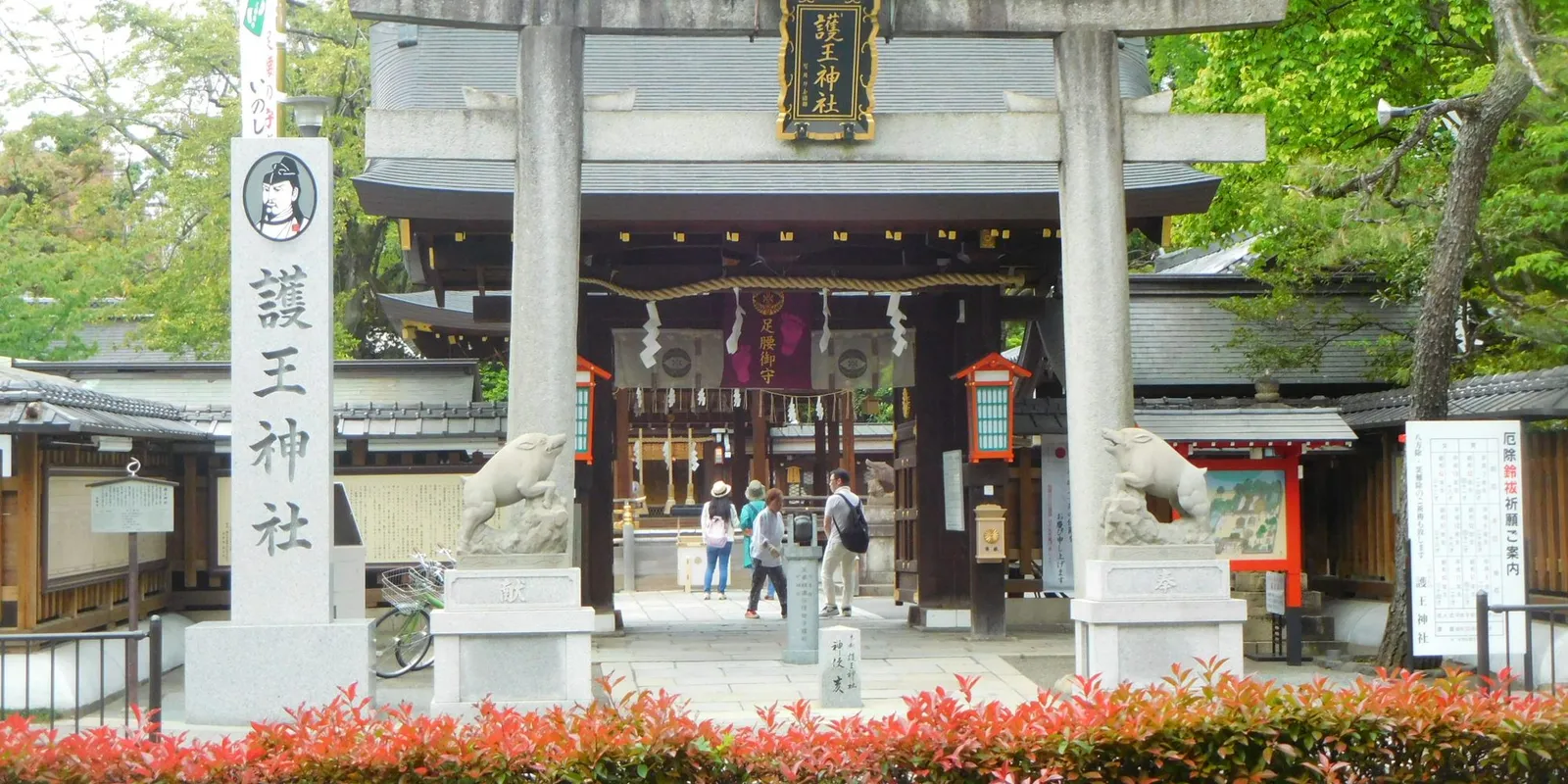
The exact founding date is unknown, but shrine tradition traces its origins to a shrine called Goo-zenjinja, once located within the grounds of Jingo-ji Temple on Mt. Takao in the western hills of Kyoto, an area closely associated with the Wake clan. As Kiyomaro’s reputation as a key figure in the founding of the Heian capital grew, the imperial court bestowed the shrine’s current name, Gooh Jinja (“Shrine of the Protector King”), in 1874. In 1886, by order of the Meiji Emperor, the shrine was relocated from Jingo-ji to its present site, directly across from the Hamaguri Gate on the west side of the Kyoto Imperial Palace, and was elevated to the prestigious rank of Bekkaku Kanpeisha, reflecting its role in guarding the imperial precincts.
Kiyomaro’s connection to wild boars stems from a dramatic episode late in the Nara period. When the Buddhist priest Dokyo attempted to seize the imperial throne, Kiyomaro delivered an oracle contradicting Dokyo’s ambitions, enraging him. As punishment, Kiyomaro was exiled to Osumi Province (in present-day Kagoshima) and his leg tendons were cut to prevent his return. As he was being transported into exile, badly wounded, some 300 wild boars are said to have suddenly appeared, surrounding his palanquin and safely guiding him along the road. Remarkably, Kiyomaro’s severe leg injury is said to have begun healing in the aftermath of this event.
Highlights
The single most distinctive feature of Gooh Jinja is its wild boar (inoshishi) imagery, found throughout the grounds. Rather than the pair of guardian lion-dogs (koma-inu) found at most Shinto shrines, Gooh Jinja has stationed a pair of guardian wild boar statues (koma-inoshishi) in front of its main hall since 1890, a rare and memorable sight that has earned it the popular nickname “Inoshishi Jinja,” the Wild Boar Shrine.
At the purification fountain, known as the Reicho Chozusha, stands a bronze wild boar statue called the “Miraculous Boar of Good Fortune,” from whose mouth clean water flows for ritual purification. Many visitors touch its snout in hopes of receiving blessings for leg and hip health. Elsewhere on the grounds, visitors can find the “Monument to Recovery from Leg Ailments,” commemorating the healing of Kiyomaro’s injury; a large collection of wild boar figurines and ornaments donated by worshippers from across the country; a sacred gingko tree honored as one of Kamigyo Ward’s notable trees; and a Chinese quince tree associated with relief from asthma. A bronze statue of Kiyomaro himself stands on raised ground within the grounds, a dignified tribute to his role in founding the Heian capital.
Visiting Tips
Gooh Jinja’s location directly across from the Hamaguri Gate, on the western edge of Kyoto Gyoen (the Kyoto Imperial Palace park), makes it an easy and worthwhile stop when exploring the park. The shrine grounds are relatively compact, so visitors can comfortably take in the koma-inoshishi statues, the Miraculous Boar fountain, and the Monument to Recovery from Leg Ailments in about 30 minutes.
Because the shrine is known nationwide for blessings related to leg and hip health and recovery from injury or surgery, many visitors come to pray on behalf of athletes or elderly family members. The goshuin office is open from 9:30 to 16:30, and a wide variety of wild-boar-themed amulets and charms are available, so it’s worth allowing extra time to browse. The shrine is especially busy during the Year of the Boar in the Chinese zodiac, so visiting earlier in the day is advisable if you’d prefer to avoid crowds.
Annual Festivals
- Inoko Festival (November 1): Reviving a Heian-era court custom, this festival involves preparing and offering rice cakes called inoko-mochi, followed by a procession in which participants carry a portable shrine chest to the Kyoto Imperial Palace.
- Gooh Grand Festival (April 4): Held on the anniversary of Kiyomaro’s death, this annual festival features a procession of parishioners and worshippers, including decorative umbrellas and wild-boar motifs, making its way to the Kyoto Imperial Palace.
- Nagoshi Purification and Chinowa Ring-Passing (June): A purification ritual marking the halfway point of the year, in which visitors pass through a large ring made of woven reeds set up on the grounds to pray for continued good health through the second half of the year.
Nearby Food & Sightseeing
- Kyoto Gyoen (Kyoto Imperial Palace Park): The expansive national garden immediately east of Gooh Jinja, free to explore, with the Kyoto Imperial Palace buildings and seasonal scenery, making it a natural pairing with a visit to the shrine.
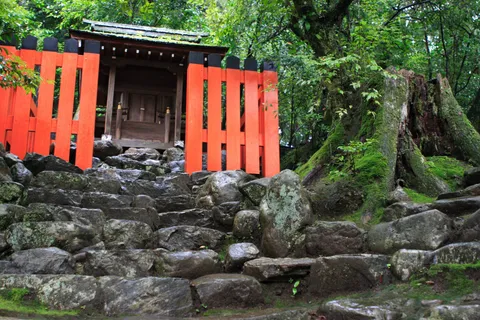
- Kamigamo Shrine: One of Kyoto’s most venerable shrines and a UNESCO World Heritage Site, about a 15-minute drive from Gooh Jinja; many visitors combine a visit to both.
- Cafes and eateries along Karasuma-dori: The streets near the west side of the Imperial Palace are home to cafes set in renovated traditional townhouses and long-established Japanese confectionery shops, ideal for a break before or after your visit.
Frequently Asked Questions
- Q. Why is Gooh Jinja known as the 'Wild Boar Shrine'?
- A. According to legend, when the shrine's deity Wake no Kiyomaro was exiled by his political rivals and severely injured his legs, 300 wild boars appeared to protect him and guide him to a place where he could recover. In honor of this story, the shrine has replaced the usual pair of guardian lion-dogs (koma-inu) with guardian wild boar statues (koma-inoshishi), earning it the nickname 'Inoshishi Jinja,' or Wild Boar Shrine.
- Q. What are the visiting hours at Gooh Jinja?
- A. The shrine grounds are open from 6:00 to 21:00. The prayer and amulet office is open from 9:00 to 17:00.
- Q. Can I receive a goshuin (shrine stamp) here?
- A. Yes, for ¥500, available between 9:30 and 16:30. An original goshuin book is also sold for ¥1,700, including the first stamp.
- Q. How do I get to Gooh Jinja?
- A. It's about a 7-minute walk from Marutamachi Station on the Kyoto Municipal Subway Karasuma Line, or a short walk from the Karasuma Shimochojamachi bus stop. The shrine sits just west of the Kyoto Imperial Palace grounds (Kyoto Gyoen).
- Q. Why is the shrine associated with leg and hip health?
- A. Wake no Kiyomaro suffered a severe leg injury when his tendons were cut during his exile, but is said to have miraculously recovered after being rescued by the wild boars. A stone monument marking this healing, called the 'Monument to Recovery from Leg Ailments,' stands on the grounds, and the shrine draws visitors from across Japan praying for leg and hip health, injury recovery, and successful surgery.
Related Shrines
Kyoto Prefecture, Kita Ward, Kyoto
Kamigamo Jinja
Kamigamo-jinja
- Protection from Misfortune
- Protection from Lightning
- Protection from Bad Directions
Kyoto Prefecture, Sakyo Ward, Kyoto
Shimogamo Jinja
Shimogamo-jinja
- Good Relationships
- Safe Childbirth
- Protection from Misfortune
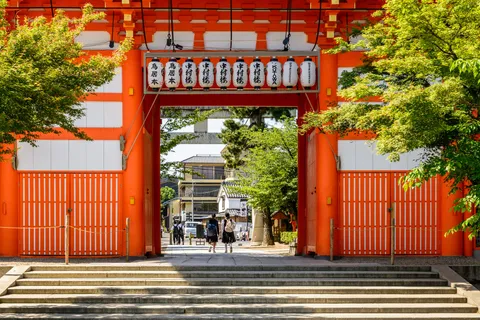
Kyoto Prefecture, Higashiyama Ward, Kyoto
Yasaka Jinja
Yasaka-jinja
- Protection from Epidemics
- Protection from Misfortune
- Business Prosperity