History
Hanazono Inari Shrine is an Inari shrine in Ueno Park in Taito, Tokyo, in the same precinct as Gojo Tenjinja. Its name is read “Hanazono Inari Jinja.” The official site names Ugano-mitama no Mikoto as the enshrined deity, also known as Toyouke-hime no Mikoto. According to the Tokyo Shrine Agency’s listing, Gojo Tenjinja is its principal shrine. It is a different shrine from Hanazono Shrine in Shinjuku. The official information on this page is based on an archived copy of the official site (captured around 2016), which can no longer be accessed directly.
According to the official history, the date of founding is unknown, and the shrine has stood here since long ago. The correct name is “Shinobugaoka Inari,” but because it stood on top of a rock cave it was also popularly called “Ana Inari.” In Jōō 3, the priest Kōkai, a disciple of the Great Priest Tenkai and resident of Hongaku-in, was moved by a vision in a dream (it is also said to have been ordered by Iemitsu) and rebuilt the shrine that had fallen into ruin, making it a guardian of the Ueno hill. The official site also carries the text of a “record of Kōkai’s rebuilding,” said to be inscribed in the rock cave, dated “Jōō kinoe-uma, mid-winter, auspicious day.”
In the Shogitai battle at the end of the Edo shogunate, it is known as the site of the last fierce fighting (the “Battle of the Ana Inari Gate”). Later, in Meiji 6, benefactors including Iwabori Kazuma and Itō Ihei restored it, and it was renamed “Hanazono Inari.” The official site says that when Gojo Tenjinja moved to its present site, the shrine building was also constructed facing south and the shrine garden was renewed. The grounds once covered about 2,000 tsubo (about 6,600 square meters), but after land was surrendered in the Meiji era, together with Gojo Tenjinja they now cover about 1,000 tsubo.
Highlights
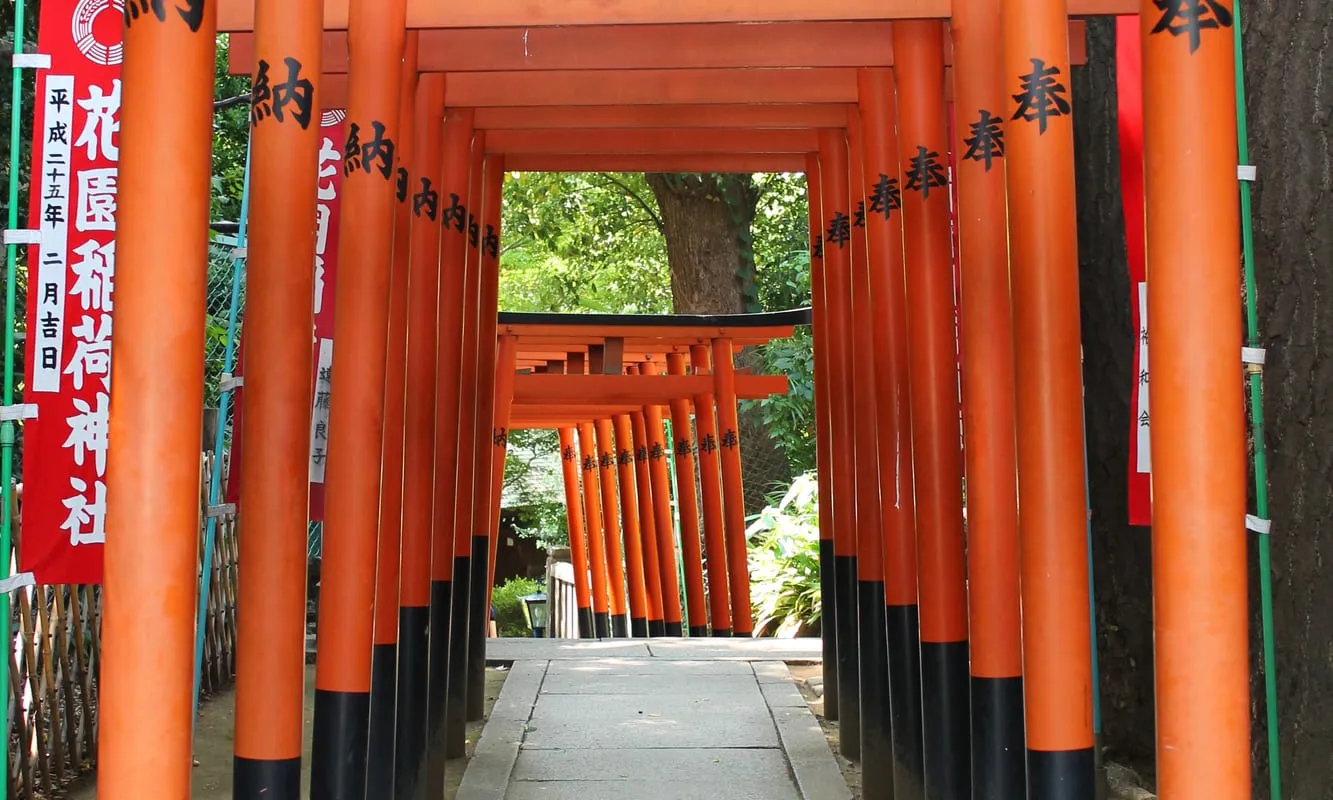
The shrine’s signature feature is the approach lined with red torii. The official site also describes the precinct as famous for its row of red torii. The photo caption on the official site says that when you descend the steps lined with red torii, the shrine building comes into view. The torii facing the main avenue of Ueno Park marks the entrance to the main approach.
The site of the old shrine building is the rock cave popularly known as “Oana-sama.” According to guide sites, the inside is dim and atmospheric, and one says photography is prohibited (to be confirmed). Of the small shrine to the left rear of Oana-sama, the official site says that it appears in old books as the “Yasaemon fox” and is said to have been built when Kan’ei-ji was founded, when a cave was dug and a shrine enshrined out of pity for the foxes of Shinobugaoka who would lose their dwelling.
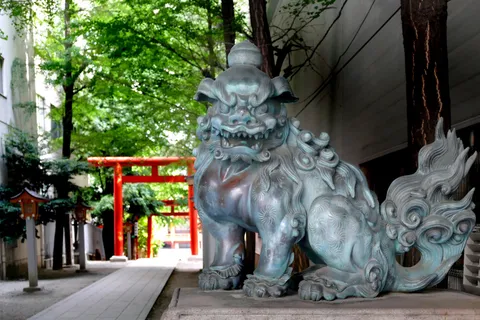
Fox statues, the messengers of Inari, can also be seen in the grounds. You can also visit Gojo Tenjinja (the god of medicine) in the same precinct.
Visiting Tips
The archived official site gives no visiting hours or hours for the shrine office. One guide blog (2020) gives the grounds as 6:00 AM–5:00 PM and goshuin hours as 9:00 AM–5:00 PM, but this is a single source, so treat it as a rough guide.
According to guide sites, the goshuin is given out at the office of the neighboring Gojo Tenjinja, and the fee is ¥300 (according to two guide sites; the official site does not state it). Guide sites say there is one type, sometimes in a pre-written format. The office is sometimes unattended, so confirm on the day.
As a long-standing rite, the official site introduces “Shiraha no Ya” (white-feathered arrow), an amulet taken when praying for a marriage match, business deal or job. It says there is a record that in former times teahouses lined the Ikenohata area selling the arrows and doing a brisk trade. Besides the arrow, there are also matchmaking charms.
According to the archived official site, it is about 3 minutes on foot from the Park Exit of JR Ueno Station and from Keisei Ueno Station. Parking is not stated, so visiting on foot through Ueno Park by public transport is the standard way.
Annual Festivals
- Annual festival (April 11): The archived official site gives the annual festival as April 11.
- Autumn festival (November 11): The archived official site also gives the autumn festival as November 11.
These dates are based on the archived official site, and we could not confirm the content of the events or whether the public can take part. Please contact the shrine office for details. The neighboring Gojo Tenjinja holds events such as the “Ukera no Shinji” at Setsubun in February (see our Gojo Tenjinja page).
Nearby Food & Sightseeing
- Gojo Tenjin Shrine: The shrine of the medicine-ancestor deities in the same precinct. According to guide sites, the goshuin for Hanazono Inari Shrine is also given out at its office.
- Ueno Toshogu: A shrine also inside Ueno Park. We have a page on it.
- Shinobazu Pond: The pond in Ueno Park. A good place for a stroll after your visit.
- Tokyo National Museum: A museum inside Ueno Park. Easy to combine with a visit for a cultural stroll.
Frequently Asked Questions
- Q. What are the visiting hours?
- A. The archived copy of the official site gives no visiting hours. One guide blog (2020) lists the grounds as open 6:00 AM–5:00 PM, but that is a single source and only a rough guide, so daytime is the safest time to go. The shrine is inside Ueno Park, and according to a guide site there is no admission fee.
- Q. Can I get a goshuin at Hanazono Inari Shrine?
- A. Yes. According to guide sites, it is given out at the office of the neighboring Gojo Tenjinja. Two guide sites give the fee as ¥300, but the official site does not state it. One guide blog gives the hours as 9:00 AM–5:00 PM. Hours and fees can change, so check at the office on the day.
- Q. How do I get there, and is there parking?
- A. The archived official site gives about 3 minutes on foot from Ueno Station (JR, Park Exit) and Keisei Ueno Station, about 5 minutes from Ueno Station on the Tokyo Metro (Hibiya and Ginza lines), and about 5 minutes from the Toei Bus stop "Ueno Koen Yamashita." Parking is not stated on the official site, and one guide site lists it as "none." Visiting on foot through Ueno Park is the standard way.
- Q. What do "Ana Inari" and "Oana-sama" mean?
- A. According to the official site, the correct name of the shrine is "Shinobugaoka Inari," and because it stood on top of a rock cave it was also popularly called "Ana Inari" ("hole Inari"). The site of the old shrine building is called "Oana-sama." The present name "Hanazono Inari" was adopted when the shrine was restored in Meiji 6.
- Q. Are there festivals or special rites?
- A. The archived official site lists the annual festival on April 11 and the autumn festival on November 11. It also introduces "Shiraha no Ya" (white-feathered arrow), an amulet taken when praying for a marriage match, business deal or job, as a long-standing rite. Besides the arrow, there are also matchmaking charms. Check with the shrine office for details.
Plan Your Visit
Before you go, you can book a stay and get your shrine-visit items ready.
Amazon links open Amazon.co.jp (Japan) in English; whether an item ships overseas depends on the product.
※ Contains ads (PR). Links open external sites such as Amazon, Rakuten, Trip.com and Booking.com.