History
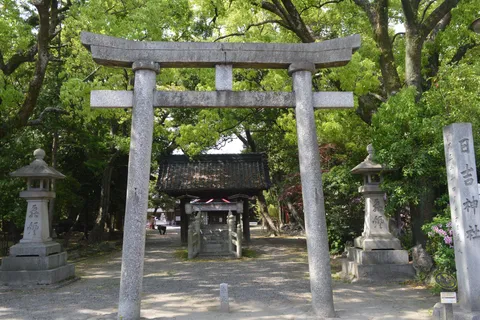
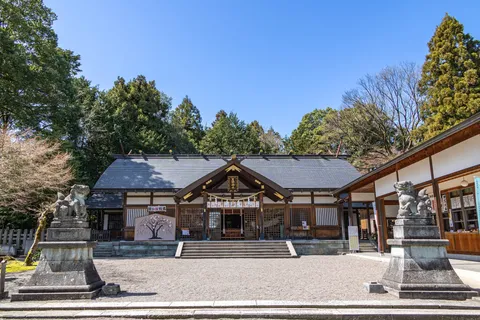
Haritsuna Shrine (Haritsuna Jinja) stands at the foot of Inuyama Castle in Inuyama, Aichi. According to the shrine’s official site, the chief deity is Owari-Harinane-no-Muraji-no-Mikoto (尾治針名根連命), and the shrine also enshrines Tamahime, Izanagi, Kukurihime and Onamuchi, along with 建筒草命, 建多乎利命, 建稲種命, 尻調根命 (尾綱根命) and 大荒田命 (the official page gives a reading only for the chief deity). The date of founding is unknown, but because it is listed in the Engishiki shrine register, the official site says it has stood here for more than 1,000 years, and describes it as the chief guardian shrine of the Nobi region (Mino and Owari).
The official site says the shrine originally stood on the ridge of Inuyama (around today’s castle keep). In 1537 (Tenbun 6), when Inuyama Castle was built, it moved east to Hakusanbira (Kojima-cho), in 1606 (Keicho 11) to Nagurimachi in the city, and in 1882 (Meiji 15) to its present site. At the Inuyama Festival, the mikoshi (portable shrine) still goes in procession to Hakusanbira and Nagurimachi, according to the site.
Its blessings are given as safe childbirth, fertility, protection from all directions, protection from misfortune and long life. The shrine explains that Oda Nobuyasu, said to be an uncle of Oda Nobunaga, offered a hand-carved dog while praying for safe childbirth and long life, and that this is the origin of the shrine’s association with childbirth, fertility and longevity.
Highlights
The shrine’s best-known feature is its annual festival, the Inuyama Festival. According to the official site, it is said to have begun in 1635 (Kan’ei 12), when the Shimohonmachi and Uoyamachi districts put out a procession, and its present form was largely settled by the mid-Edo period. Thirteen floats (yama) survive, about 8 meters tall with a three-tier structure of upper, middle and lower sections. The shrine notes that it is rare in Japan for all 13 floats to offer a mechanical puppet performance (karakuri).
These “Inuyama Festival float rites” are a national Important Intangible Folk Cultural Property (designated March 15, 2006, per the official site), and in 2016 they were inscribed on UNESCO’s Intangible Cultural Heritage list as one of the “Yama, Hoko, Yatai float festivals.” The official site describes the night procession (yoru-yama), lit by lanterns beneath full cherry blossoms, as a splendid sight together with Inuyama Castle against the night sky.
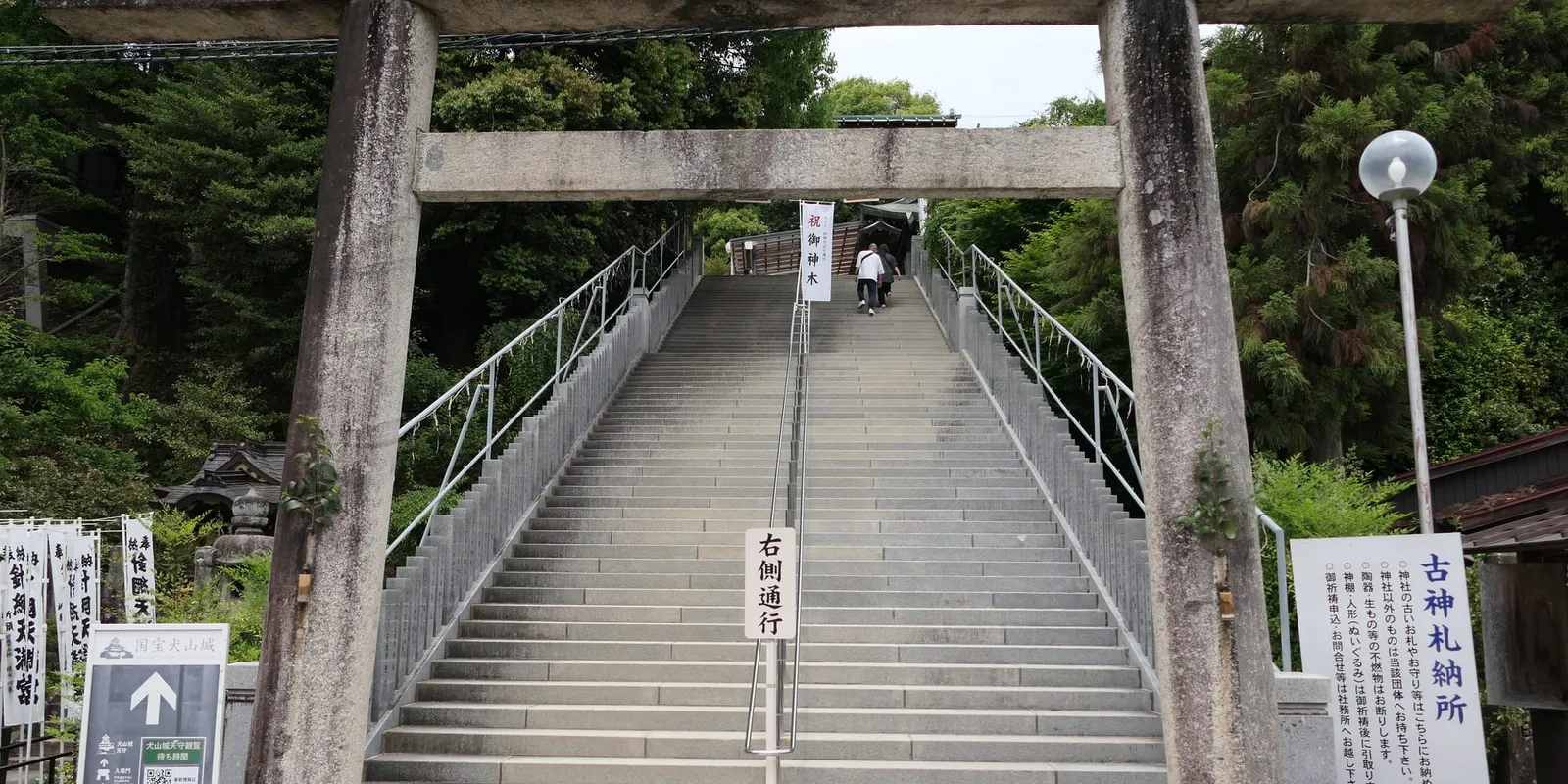
In the grounds, a sacred horse is enshrined on the west side of the main hall. Loved as a protector of children, it comes with the tradition that beans offered to it cure teeth-grinding and convulsions. The stone steps of the approach are long and have handrails (the shrine asks visitors to keep to the right). Note that the neighboring Sanko Inari Shrine is a separate shrine.
Visiting Tips
The main hall and subsidiary shrines can be visited 24 hours a day, all year, and prayer services are accepted 9:00 AM–3:00 PM year-round (official site; the Aichi tourism site gives 3:30 PM, so sources differ). No reservation is needed, and reception is at the shrine office, up the steps on the left. The shrine accepts safe-childbirth prayers, first shrine visits for babies, protection from misfortune, protection from all directions, Shichi-Go-San visits and more, and a safe-childbirth prayer comes with an amulet and a maternity belt. After a prayer service you can also have your car purified; you write your license plate number on the prayer slip, so it helps to have it noted beforehand.
The official site does not state the goshuin fee or hours. The Inuyama tourist association lists ¥500 (pre-written sheets available), so please confirm at the counter. The official site says it prefers to write the goshuin in your own goshuin book if possible.
It is about a 15-minute walk from Meitetsu Inuyama-Yuen Station or the west exit of Inuyama Station (official site). There is a dedicated lot for worshippers, but it is crowded on weekends and holidays, so public transport is recommended. The grounds have steps and no elevator (Aichi tourism site).
Annual Festivals
- Inuyama Festival (first Saturday of April and the following Sunday): The shrine’s annual festival. Thirteen floats take part, with karakuri offerings and a night procession (official site). The official site notes that in 1897 (Meiji 30) the date was moved from the 28th day of the 8th lunar month to April in the new calendar.
- Wa-kuguri Shinji (July 30, from 6:00 PM): A purification rite based on the “Somin Shorai” legend from the Bingo Province gazetteer. The chinowa (reed ring) stays in front of the main hall until August 2, and you can pass through it and pray even outside the rite itself (official site).
Festival dates may change, so check the “Shinji” and “Events” pages of the official site for the latest.
Nearby Food & Sightseeing
- Inuyama Castle: Right next to the shrine, which the official site describes as standing “below Inuyama Castle,” and a landmark for finding it. The keep is a designated National Treasure.
- Sanko Inari Shrine: A separate shrine next door to Haritsuna Shrine, described in tourist guides as known for its approach of vermilion torii gates.
- Donden-kan: A museum displaying a float from the Inuyama Festival (about 8 meters tall). According to the Aichi tourism site, it is open 9:00 AM–5:00 PM (last entry 4:30 PM), admission ¥100 for adults and free for junior high students and younger, and closed December 29–31. Fees and hours may change.
Frequently Asked Questions
- Q. What are the visiting hours?
- A. Per the official site, the main hall and subsidiary shrines can be visited 24 hours a day, all year. Prayer services are accepted 9:00 AM–3:00 PM year-round with no reservation needed (the shrine office is up the steps on the left); group prayers require a phone check in advance. The Aichi tourism site gives the prayer cutoff as 3:30 PM, so sources differ and it is safest to call (0568-61-0180) if you plan to arrive late.
- Q. Can I get a goshuin at Haritsuna Shrine?
- A. Yes. The official site says goshuin are available as usual and that the shrine prefers to write them in your own goshuin book if possible. The fee and hours are not stated on the official site. The Inuyama tourist association lists ¥500 (pre-written sheets available), but other guides give different figures, so check at the counter. Prayer reception is 9:00 AM–3:00 PM, so arriving by about 3:00 PM is a safe guide.
- Q. How do I get there, and is there parking?
- A. The official site gives about a 15-minute walk from Meitetsu Inuyama-Yuen Station or the west exit of Inuyama Station, heading toward the front of Inuyama Castle (the Aichi tourism site says about 20 minutes from Inuyama Station). There is a dedicated lot for worshippers, which the Aichi tourism site and the Inuyama tourist association list as 15 spaces. It is crowded on weekends and holidays, so public transport is recommended. The grounds have steps and no elevator.
- Q. Is the Inuyama Festival a cultural property?
- A. Yes. The float rites of the Inuyama Festival, the shrine's annual festival (listed in the Agency for Cultural Affairs database as "Inuyama Matsuri no Yama Gyoji"), are a national Important Intangible Folk Cultural Property. Per the shrine's official site, they were designated on March 15, 2006, and in 2016 they were inscribed on UNESCO's Intangible Cultural Heritage list as one of the 33 "Yama, Hoko, Yatai Festivals" of Japan. The festival is now held on the first Saturday of April and the following Sunday, with 13 floats (official site).
- Q. Can I have a safe-childbirth prayer or a baby's first visit here?
- A. Per the official site, the shrine accepts safe-childbirth prayers, first shrine visits for babies, protection from misfortune, protection from all directions, Shichi-Go-San visits and more, with no reservation needed. A safe-childbirth prayer comes with a safe-childbirth amulet and a maternity belt. A sacred horse is enshrined on the west side of the main hall and is loved as a protector of children, and tradition says that beans offered to it cure teeth-grinding and convulsions in children (official site).
Plan Your Visit
Before you go, you can book a stay and get your shrine-visit items ready.
Amazon links open Amazon.co.jp (Japan) in English; whether an item ships overseas depends on the product.
※ Contains ads (PR). Links open external sites such as Amazon, Rakuten, Trip.com and Booking.com.