History
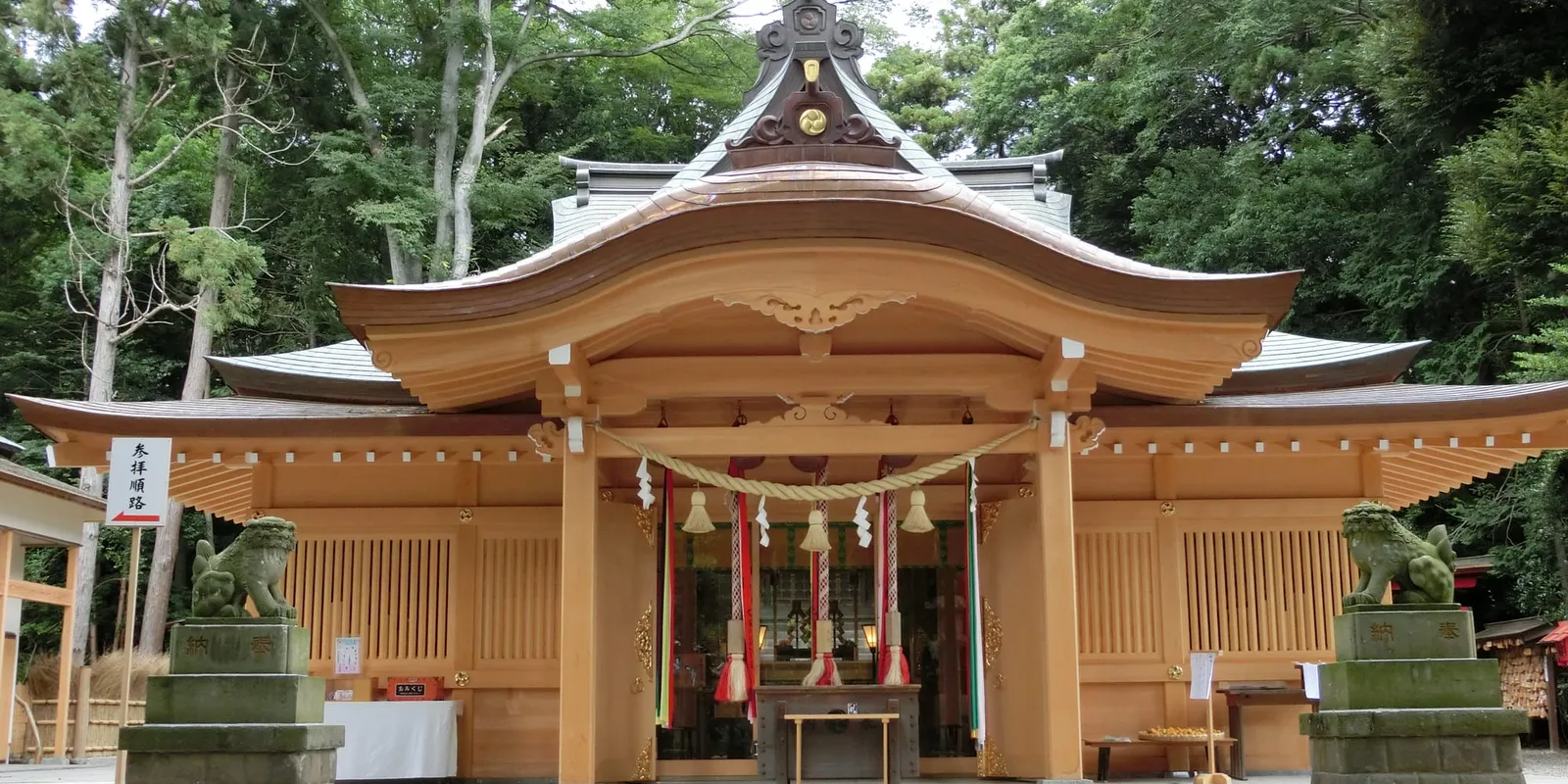
Hisaizu Shrine stands in Miyamachi, Iwatsuki Ward, Saitama City, and its name is read “Hisaizu Jinja.” The official site describes it as the guardian shrine of Iwatsuki Castle and a shrine renowned as a protector against the “demon gate” (northeast direction) of Edo. The enshrined deity is Okuninushi no Mikoto (Daikoku-sama), described on the official site as a deity of many virtues, including matchmaking and safe childbirth.
According to the official history, about 1,500 years ago, in the reign of Emperor Kinmei (539–571), the Hajibe clan, linked to Izumo, enshrined their ancestral deity Okuninushi here as they moved east. In the Heian period, some of the warrior bands known as the Musashi Shichito are said to have revered it, spreading faith through the Moto-Ara River basin. In the Sengoku period, when Ota Dokan built Iwatsuki Castle, the shrine was made the chief guardian shrine of the castle, and the official site says successive castle lords honored it until the Edo period, offering items such as swords and a portable shrine. In 2014 the shrine carried out its “Heisei Grand Renovation,” and its buildings were rebuilt.
The founding date is given variously: the official site says “about 1,500 years ago,” while some travel sites write “about 1,400 years of history.” This page follows the official site.
Highlights
The shrine’s best-known attraction is “Hisaizu-san’s peacocks.” Per the official site, it began on March 9, 1938, when Prince Asaka Yasuhiko presented three peacocks. At the suggestion of Saito Zenhachi, a member of the House of Peers, an Art Deco domed aviary was built so the whole town could enjoy them. Peacocks symbolize dignity and prosperity, and since they eat insects they are also seen as warding off misfortune, an idea the shrine links to the pun “kujaku” (救邪苦).
Among its treasures, the “raden saddle” (mother-of-pearl-inlaid saddle) is an early-Edo ceremonial saddle offered in 1632 by Abe Shigetsugu, lord of Iwatsuki Castle, decorated with a crane-in-circle crest. The official site lists it as a prefectural cultural property (designated 1962), and Saitama City’s list also shows it as a prefecturally designated tangible cultural property (craft). That list says it is currently on loan to the Saitama Prefectural Museum of History and Folklore, so it is wise to check with the shrine before expecting to see it on the grounds. The shrine also lists a portable shrine made in 1928 and a Shoichii (First Rank) document of 1707 among its treasures.
The grounds include a dry-landscape (karesansui) garden completed in 1932 with a donation from Saito Zenhachi, a plum grove of about 500 tsubo (white and red blossoms said to bloom from late January to early March), a pond with carp, and subsidiary shrines such as Fushimi Inari, Haruna and Kitano Tenmangu. There is also the “Yakuwari Stone,” carved with the character for misfortune (厄) backwards, where visitors throw a purification ball (¥200) to cast off bad luck, and a “Kanai Inu” dog stone for prayers for safe childbirth.
Visiting Tips
The grounds are open from 5:00 AM to 7:00 PM, and the shrine office is open 9:00 AM–4:00 PM (varies by season and festivals). Prayer requests are accepted daily from 9:00 AM to 4:00 PM, and individuals can also book ahead. According to the official site, prayer fees start at ¥7,000 for first shrine visits and Shichi-Go-San at the main hall, and at ¥5,000 for other prayers.
For the goshuin, the official site gives neither a fee nor separate hours. Its peacock page says that on the 9th of each month, “Peacock Day,” there is a goshuin with a stamp of an open peacock tail, and a white Kujaku amulet in a paulownia box (¥1,500, available only on the 9th) is also offered. If you plan to visit on a 9th, confirm the details with the shrine.
It is about a 15-minute walk from the west exit of Iwatsuki Station on the Tobu Urban Park Line. Since May 2025 the Iwatsuki Ward community bus stop “Hisaizu Jinja-mae” is also available (about 13 minutes from the east exit, ¥180, weekdays only). There are about 100 parking spaces, free from 5:00 AM to 6:00 PM.
Annual Festivals
Taken from the official annual-events page. The page’s copyright notice reads 2010–2018, so the content may be out of date.
- Saitan-sai and Hatsu-Tenjin (Uso-kae rite) (January 1 and January 25): New Year and the first Tenjin day events.
- Setsubun-sai bean-throwing (February 3): Listed as around 4:00 PM.
- Kigen-sai (February 11) and Baika-sai (February 25): Both start at 9:00 AM.
- Spring grand festival (April 19): Held at 10:00 AM.
- Nagoshi no Harae (June 30): Held at 4:00 PM.
- Autumn grand festival (October 19): At 10:00 AM, with the Iwatsuki Kuroyakko procession dance offering. In 2026 it falls on Monday, October 19, and prayers, amulets and goshuin are available from 1:00 PM.
- Shichi-Go-San (November) and Niiname-sai (November 23): Niiname-sai starts at 9:00 AM.
- Monthly service (1st of each month): Around 9:00–10:00 AM, listed as requiring no offering fee.
- Peacock Day (9th of each month): A goshuin with an open-tail peacock stamp and the white Kujaku amulet are offered (official site).
Dates and times can change, so check the official site’s notices for the latest.
Nearby Food & Sightseeing
- Iwatsuki Castle Ruins Park: The site of the castle for which Hisaizu Shrine was the guardian shrine. According to Saitama City materials, parts at the south end of the castle grounds, such as the Shin-kuruwa and Kaji-kuruwa, have been developed as a park and designated a historic site.
- Toki no Kane (Bell of Time): Shown on Saitama City’s walking map as one of the sights of the Iwatsuki castle town. A good stop on a stroll.
- Iwatsuki Doll Museum: On the city’s walking map it is placed inside the Nigiwai Koryukan Iwatsuki and drawn near the Toki no Kane. Check opening hours in advance.
Frequently Asked Questions
- Q. What are the visiting hours?
- A. The official site lists the grounds as open 5:00 AM–7:00 PM every day of the year, with the shrine office open 9:00 AM–4:00 PM (varies by season and festivals). Prayer requests are accepted daily from 9:00 AM to 4:00 PM, and individuals can also book ahead.
- Q. Can I get a goshuin at Hisaizu Shrine?
- A. Yes. The peacock page of the official site says that on the 9th of each month ("Peacock Day") a goshuin with a stamp of an open peacock tail is available. The fee and separate goshuin hours are not given on the official site, so it is safest to go early, using the shrine office hours (9:00 AM–4:00 PM) as a guide. On the autumn festival day, Monday, October 19, 2026, goshuin are available from 1:00 PM.
- Q. How do I get there, and is there parking?
- A. It is about a 15-minute walk from the west exit of Iwatsuki Station on the Tobu Urban Park Line (official site). Since May 2025 the Iwatsuki Ward community bus has a "Hisaizu Jinja-mae" stop, about 13 minutes from the station's east exit for ¥180, but it runs on weekdays only. By car it is about 10 minutes from Iwatsuki IC on the Tohoku Expressway; there are about 100 parking spaces, free from 5:00 AM to 6:00 PM (usable hours may change on some days).
- Q. Are there really peacocks on the grounds?
- A. Yes. According to the official site, the tradition began on March 9, 1938, when Prince Asaka Yasuhiko presented three peacocks, and the shrine has kept peacocks ever since. Because peacocks eat insects they are regarded as warding off misfortune, and the shrine links them to the pun "kujaku" (救邪苦, roughly "rescue from evil and suffering"). The 9th of each month is treated as "Peacock Day."
- Q. When is the autumn festival, and what is the "Iwatsuki Kuroyakko"?
- A. The official annual calendar gives October 19 for the autumn grand festival, which falls on Monday, October 19 in 2026. At 10:00 AM that day the Iwatsuki Kuroyakko (岩槻黒奴, "black servant") procession dance is offered at the shrine. Per the official site, the kokudo first appeared in a procession in 1885, the last procession was in 1954, and a preservation society was founded in 2008 to revive it.
Plan Your Visit
Before you go, you can book a stay and get your shrine-visit items ready.
Amazon links open Amazon.co.jp (Japan) in English; whether an item ships overseas depends on the product.
※ Contains ads (PR). Links open external sites such as Amazon, Rakuten, Trip.com and Booking.com.