History
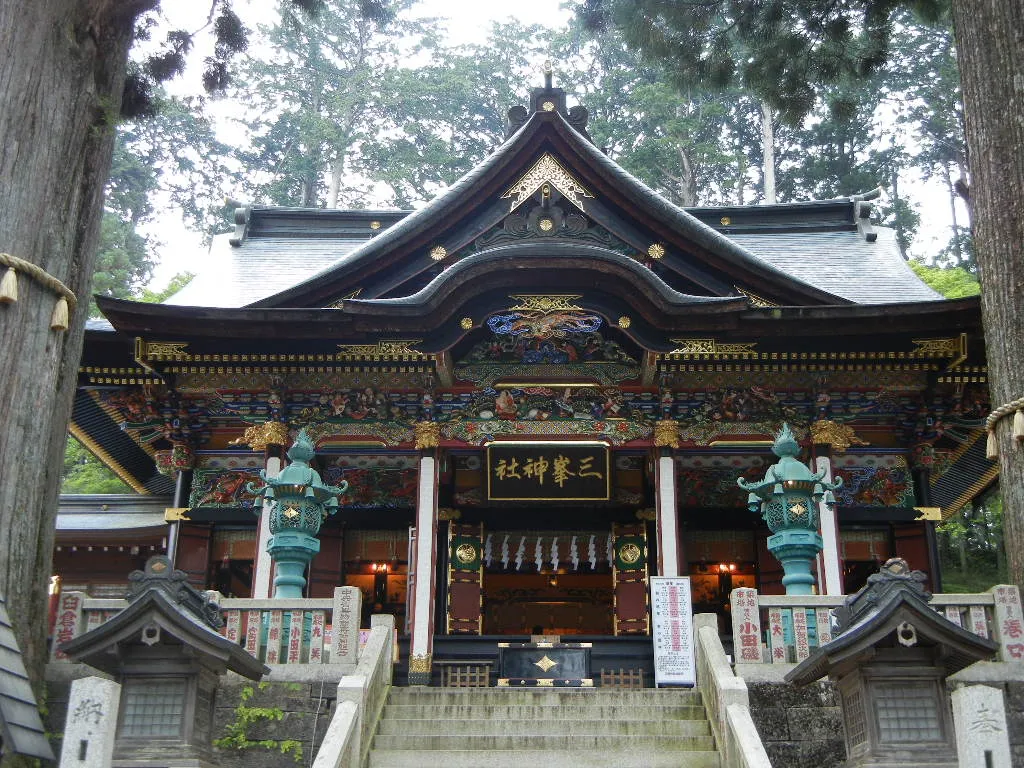
Mitsumine Jinja stands at an elevation of roughly 1,100 meters, cradled among the three peaks of Mount Kumotori, Mount Shiraiwa, and Mount Myohogatake that give the shrine its name (“Mitsumine” means “three peaks”). According to shrine tradition, the legendary prince Yamato Takeru passed through this area on his eastern military campaign under the order of Emperor Keiko, and was so moved by the mountains’ pristine beauty that he enshrined Izanagi no Mikoto and Izanami no Mikoto, the primordial creator deities of Japan. A wolf is said to have guided him through the mountains along the way, and that wolf was later venerated as “Oguchi no Magami” (the Large-Mouthed Pure God), the shrine’s divine messenger — the origin of Mitsumine’s distinctive wolf worship.
The shrine fell into roughly 140 years of decline after being implicated in the Nitta clan’s 14th-century rebellion, but was revived beginning in 1503 through the fundraising efforts of the monk Getsukan Doman, and received the title “Mitsumine Daigongen” in 1533. From around 1720, devotion to the wolf messenger spread across the Kanto region as protection against fire and theft, and numerous branch associations were formed in its honor. The Meiji-era separation of Buddhism and Shinto stripped away the shrine’s Buddhist elements, giving rise to the Mitsumine Jinja seen today.
Highlights
The single most distinctive feature of Mitsumine Jinja is the pairs of wolf statues found throughout the grounds, standing in the position usually reserved for komainu lion-dogs at other shrines. These are images of Oguchi no Magami, the guardian wolf deity, and they give the shrine a striking, one-of-a-kind atmosphere. The Zuishinmon Gate along the approach dates to 1691 and is covered in intricately carved, vividly painted decoration, earning it comparisons to the ornate architecture of Nikko Toshogu.
In recent years, Mitsumine has also become known as a premier spot for viewing a “sea of clouds” (unkai) that can blanket the valleys below at dawn under the right conditions, with the summit torii and worship hall seeming to float above the clouds. Sightings of cloud formations resembling a dragon rising from the stone pavement have also drawn attention. A ropeway once carried pilgrims up to the shrine, but it was discontinued in 2007, so today the mountain is reached only by the winding access road, whether by car or bus. Deep within the grounds, a hiking trail of two to three hours round trip leads to the Okumiya (inner shrine) atop Mount Myohogatake, a popular destination for visitors up to the climb.
Visiting Tips
Because Mitsumine Jinja sits deep in the mountains, reaching it by public transport takes about 75 minutes by bus from Seibu-Chichibu Station. The parking lots can fill up early in the morning on weekends and holidays, so visiting on a weekday or arriving early is recommended for a relaxed visit. A visit to the main hall alone takes 30–60 minutes, but the hike to the Okumiya requires proper footwear, stamina, and extra time, so plan around the weather and your schedule. The Koun-kaku lodge adjoining the shrine also offers day-use hot spring bathing, making it a popular stop to rest after paying your respects.
Annual Festivals
- New Year’s Festival (January 1): A rite welcoming the new year; on clear mornings, visitors can watch the first sunrise of the year rise above a sea of clouds from the shrine grounds.
- Setsubun Festival “Gomottomo-sama” (February 3): A distinctive bean-scattering ritual unique to Mitsumine, performed by men in formal ceremonial dress who call out “gomottomo, gomottomo” as they toss beans.
- Spring Grand Festival / Wisteria Festival (April 8): The most important festival of the year, featuring a sacred kagura dance performed by shrine maidens holding wisteria blossoms.
- Winter Grand Festival (December 2): An autumn-winter festival offering thanks for the year’s safety and blessings.
Nearby Food & Sightseeing
- Koun-kaku: A lodge adjoining the shrine serving soba and udon alongside its signature “shiitake-don,” a rice bowl piled with fried shiitake mushrooms from Chichibu. Day-use hot spring bathing is also available.
- Mitsumine Okumiya (Mount Myohogatake): The inner shrine, reached by a two- to three-hour round-trip hike from the main shrine. The summit view is a reward reserved for those who make the climb.
- Mitsumine Mountain Museum: A museum displaying shrine treasures, items connected to the imperial family, and materials on the history of mountain worship at Mitsumine.
Frequently Asked Questions
- Q. What are the visiting hours?
- A. The grounds are open roughly 6:00–19:30; the shrine office and goshuin desk are open roughly 8:00–17:00.
- Q. When is the goshuin office open?
- A. Roughly 8:00–17:00; ¥300–500 depending on the type.
- Q. Is there parking?
- A. Yes, Chichibu municipal parking is available (about 280 spaces, ¥520 for cars), though it can fill up early on weekends and during peak season.
- Q. Why are there wolf statues?
- A. A wolf is said to have guided Yamato Takeru through the mountains here; it was later enshrined as the deity's messenger, Okuchi-no-Magami, taking the place of the usual komainu guardian statues.
- Q. How do I get there?
- A. About a 75-minute bus ride from Seibu-Chichibu Station, getting off at the terminus.
Related Shrines
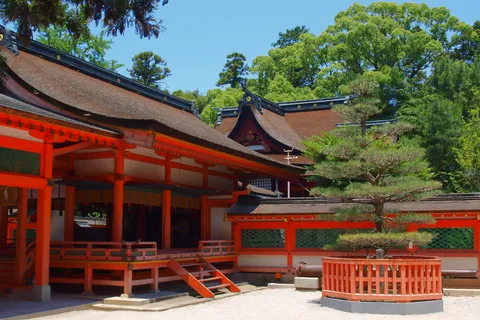
Fukuoka, Higashi Ward, Fukuoka
Kashii-gu
Kashii-gū
- Marital Harmony
- Good Relationships
- Safe Childbirth
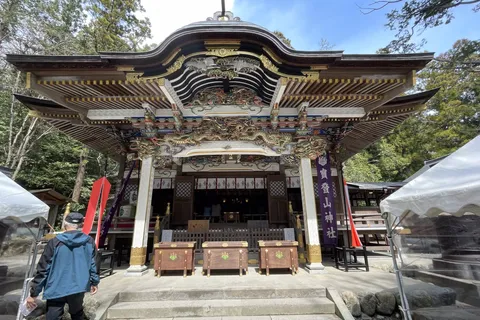
Saitama, Nagatoro
Hodosan Jinja
Hodosan-jinja
- Protection from Fire
- Protection from Theft
- Business Prosperity
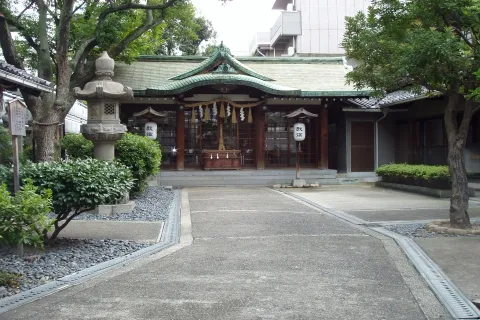
Osaka Prefecture, Nishi Ward, Osaka
Samuhara Shrine
Samuhara-jinja
- Protection from Misfortune
- Good Fortune
- Good Health