History
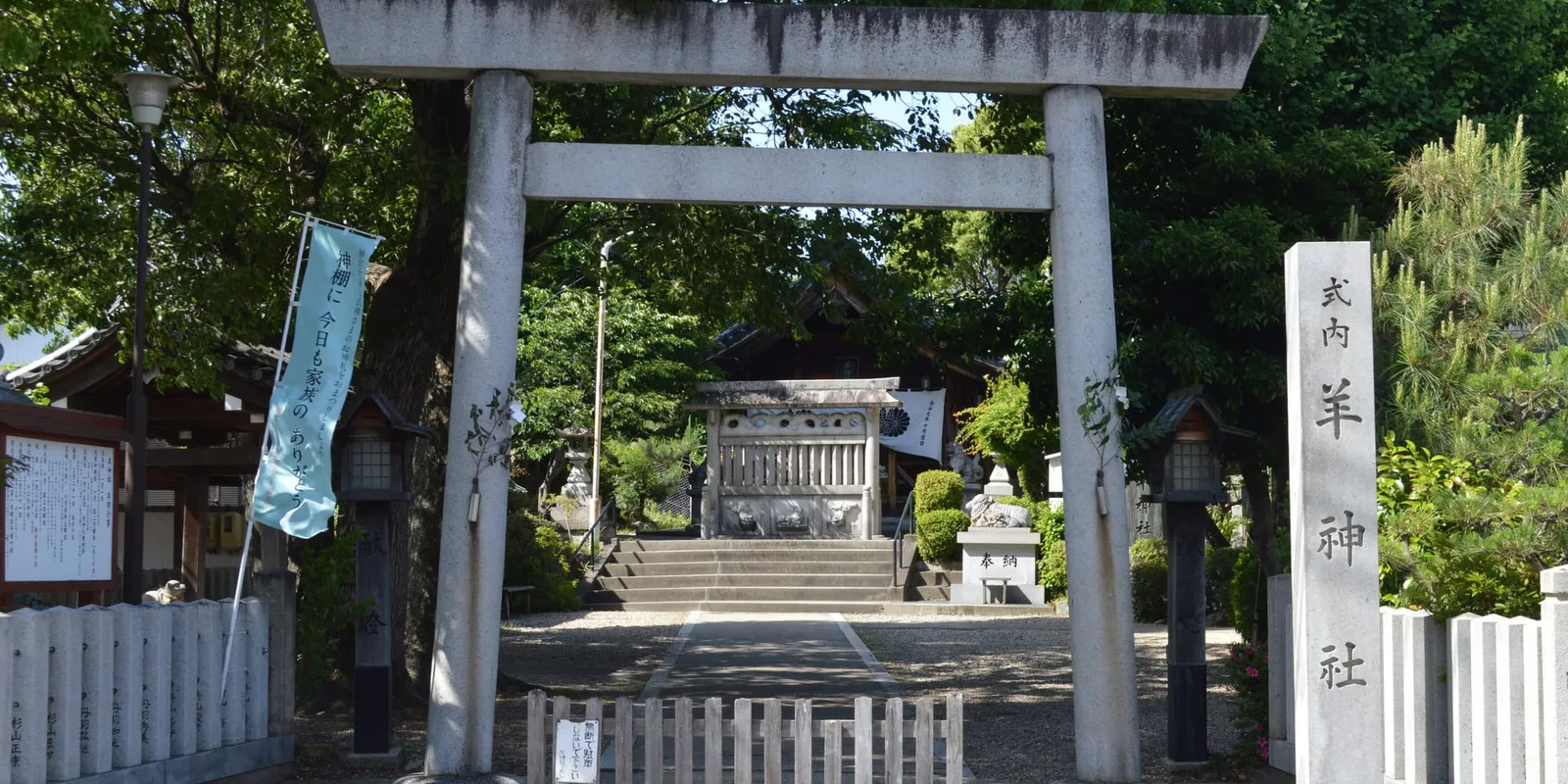
Hitsuji Shrine stands in Tsuji-machi, Kita Ward, Nagoya. According to Nagoya City’s tourism site, the date of founding is unknown, but because the Engishiki shrine register records “Hitsuji Jinja, Yamada District, Owari Province,” it is regarded as an old shrine more than 1,000 years old. In fact, the view that this shrine is the Hitsuji Jinja listed in the Engishiki was put forward by scholars such as Amano Nobukage in the mid-Edo period and has been widely accepted, which makes it a “candidate” (ronsha) for the Engishiki-listed shrine. On the other hand, the late-Edo local historian Tsuda Shosei held that the original Hitsuji Jinja was the present Takamu Shrine (Moriyama Ward), so there is a dissenting view.
As to the origin of the name, Nagoya City’s guide gives this tradition. Hitsuji-dayu, a lord of Tago District in Kozuke Province (now Gunma Prefecture), whose name is carved on the Tago Stele, had a residence on this site while traveling to the capital at Nara, and enshrined a fire deity here wishing for the peaceful lives of the people, so the shrine came to be called Hitsuji Jinja. This is a tradition and has not been confirmed as historical fact. The guide also notes a place-name record saying that the “Tsuji” of Tsuji-machi was originally called “Hi-tsuji Village”. A shrine of the same name (in Annaka) also exists in Gunma Prefecture.
The enshrined deities are said to be Hinokagutsuchi no Kami and Amaterasu Omikami. Until the Edo period the shrine was known as “Shinmei” or “Tsuji-mura Shinmei” and was the guardian shrine of Tsuji village. A ridge-beam plaque dated 1613 (Keicho 18) reads “respectfully rebuilt Hitsuji Jinja,” and a record says the shrine buildings were completed in 1838 (Tenpo 9). It became a village shrine in 1872 (Meiji 5). Because it enshrines a fire deity, it is revered as protection against fire, and locally it is said to have survived the Nagoya air raids of World War II.
Highlights
The grounds are small, but they are known for the many sheep-themed items. At the purification fountain on the left after the torii, water flows from the mouth of a sheep. In the grounds sits a parent-and-child pair of sheep statues (komahitsuji). The bansei (screen wall) in front of the worship hall has carvings of sheep and dragons, and there are sheep figurines on the offering box and around the shrine office, so looking for them as you walk is part of the fun (per visitor reports).
The grounds also hold seven subsidiary shrines: Hakusan, Akiba, Tsushima, Mitake, Yama (mountain), Suijin (water) and Inari. The main sanctuary is said to be in the nagare-zukuri style. In autumn the ginkgo trees in the grounds are said to turn yellow.
Visiting Tips
Visiting in the Year of the Sheep: 2027 is the Year of the Sheep. Meitetsu announces a hiking course, “New Year’s Sheep Shrine Pilgrimage Course,” running from Monday, Jan. 11 to Sunday, Jan. 31, 2027. It is about 8 km and about 2 hours 10 minutes, starting at Kamiiida Station and passing Hitsuji Shrine, Nex Plaza (Nagoya Expressway public relations center), the SAKUMACHI shopping street and Tokugawa-en before ending at Ozone Station. Meitetsu’s page describes the course as one that visits “one of the few shrines in Japan with ties to sheep” (this is Meitetsu’s wording). The same page gives the shrine’s charm-distribution hours as 9:00-15:30. Please check Meitetsu’s guide for how to take part. One visitor report from New Year 2015, the previous Year of the Sheep, describes queuing about 30-40 minutes to reach the torii.
Shrine office, goshuin and charms: Visitor reports give the shrine office hours as roughly 9:00-15:00 (or 9:30-15:30) on Mon, Thu, Sat and Sun, and Nagoya City says it is unstaffed on Tue, Wed and Fri in normal times. It may also be empty at other times, so if you are set on a goshuin or charm, calling (052-912-0063, Japanese only) is the surest way. A visitor blog gives the goshuin fee as 300 yen (no official notice could be confirmed, and it may change). Visitor reports mention small clay-bell charms in the zodiac animal motif, a children’s charm (“kodomo-mamori”) with a sheep illustration (mentioned at 500 yen), and sheep ema, but offerings and fees can change. We could not confirm any special goshuin or offerings for the 2027 Year of the Sheep.
Access: It is about a 10-minute walk northwest from Exit 3 of Kamiiida Station (Subway Kamiiida Line / Meitetsu Komaki Line). There is no parking for visitors, so please come by public transportation. The surrounding area is said to have many narrow one-way streets.
Annual Festivals
- Annual festival (Oct. 18): According to references based on the Aichi shrine register and similar sources, the annual festival is held on October 18. The date may change, so please check beforehand.
- Sagicho (Jan. 15): The New Year sagicho (bonfire) ritual is given as the main rite on January 15.
- Hatsumode (January): New Year visits are expected to be busier in the Year of the Sheep. Crowds and the availability of offerings vary from year to year.
Nearby Food & Sightseeing
- Tokugawa-en: One of the stops on Meitetsu’s Sheep Shrine Pilgrimage Course. Meitetsu’s page highlights its display of winter peonies surrounded by straw cover (closed Mondays, or the next day if Monday is a holiday; 9:30-17:30 on that page).
- Nex Plaza (Nagoya Expressway public relations center): Another stop on Meitetsu’s course, described by Meitetsu as a Nagoya Expressway facility where you can “see, touch and experience” (closed Mondays; 10:00-17:00 on that page).
- SAKUMACHI Shopping Street: A shopping street along Meitetsu’s pilgrimage course. Opening hours differ from shop to shop.
Frequently Asked Questions
- Q. Why is it called "Hitsuji" (sheep) Shrine?
- A. Nagoya City's tourism site says that Hitsuji-dayu, a lord of Tago District in Kozuke Province (now Gunma Prefecture), had a residence on this site while traveling to the capital at Nara, and enshrined a fire deity here wishing for the peaceful lives of the people, so the shrine came to be called Hitsuji Jinja. This is a tradition and has not been confirmed as historical fact. Today the grounds are full of sheep motifs, including a sheep-spout purification fountain and a parent-and-child pair of sheep statues.
- Q. Which deities are enshrined?
- A. Hinokagutsuchi no Kami and Amaterasu Omikami are said to be enshrined (according to references based on the Aichi shrine register and similar sources; spellings and order vary). Until the Edo period the shrine was also called "Shinmei" or "Tsuji-mura Shinmei" and served as the guardian shrine of Tsuji village. Because a fire deity is enshrined, it is revered as a shrine that protects against fire.
- Q. Can I get a goshuin?
- A. Yes, at the shrine office. A visitor blog gives the fee as 300 yen (no official notice could be confirmed, and it may change). Visitor reports give the office hours as roughly 9:00-15:00 (or 9:30-15:30) on Mon, Thu, Sat and Sun, and Nagoya City says it is unstaffed on Tue, Wed and Fri in normal times. We could not confirm any special goshuin or charms for the 2027 Year of the Sheep, so calling ahead (052-912-0063, Japanese only) is recommended.
- Q. Will it be crowded at New Year in 2027, the Year of the Sheep?
- A. Visitors are said to increase in the zodiac year that comes every 12 years, and one visitor report from New Year 2015, the previous Year of the Sheep, describes queuing about 30-40 minutes to reach the torii. Meitetsu says it will hold a hiking course, "New Year's Sheep Shrine Pilgrimage Course," from Kamiiida Station that visits this shrine from Monday, Jan. 11 to Sunday, Jan. 31, 2027 (per Meitetsu's hiking page).
- Q. How do I get there, and is there parking?
- A. It is about a 10-minute walk northwest from Exit 3 of Kamiiida Station (Subway Kamiiida Line / Meitetsu Komaki Line), per Nagoya City. There is no parking for visitors, and public transportation is recommended. The surrounding area is said to have many narrow one-way streets.
Plan Your Visit
Before you go, you can book a stay and get your shrine-visit items ready.
Amazon links open Amazon.co.jp (Japan) in English; whether an item ships overseas depends on the product.
※ Contains ads (PR). Links open external sites such as Amazon, Rakuten, Trip.com and Booking.com.