History
Sanage Shrine is an ancient shrine standing at the foot of Mt. Sanage (629 m), the peak rising at the northern edge of Toyota City in Aichi. According to shrine tradition, it was founded at its present site by imperial order in the first year of Emperor Chuai (192). It is an Engishiki-listed shrine (a small shrine in the Engishiki register), was regarded as the Sannomiya (third-ranked shrine) of Mikawa Province, and was raised to prefectural-shrine rank in 1872. The main shrine at the foot of the mountain, the Higashi-no-Miya on the east peak, and the Nishi-no-Miya on the west peak are together called the “Sanage Sansha Daimyojin,” and Mt. Sanage itself has long been worshipped as the sacred mountain.
The main deity, Ōusu no Mikoto, was the first son of Emperor Keiko and the elder twin brother of Prince Ousu (Yamato Takeru). The Nihon Shoki records that he was ordered to campaign in the east, fled in fear, and was instead granted the province of Mino. A shrine chronicle said to date from 779, however, says he died of snake venom on Mt. Sanage and was buried on the mountain, and his burial site is said to lie behind the Nishi-no-Miya. That said, Ōusu no Mikoto only came to be treated as the principal deity in the early modern period; before then there were various theories, such as Sarutahiko, and the shrine appears to have originally worshipped the mountain’s own deity.
In 1534 its halls were burned in an attack by Matsudaira Kiyoyasu, but they were later rebuilt.
Highlights
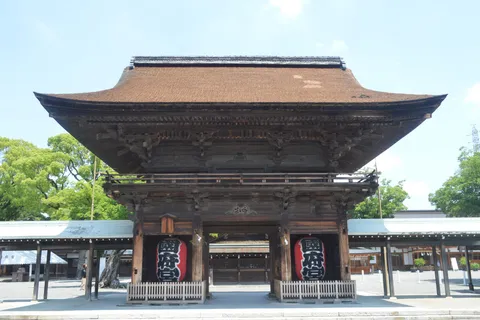
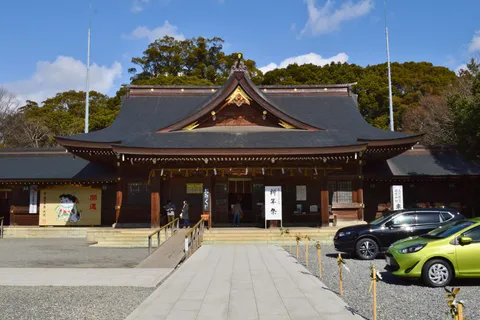
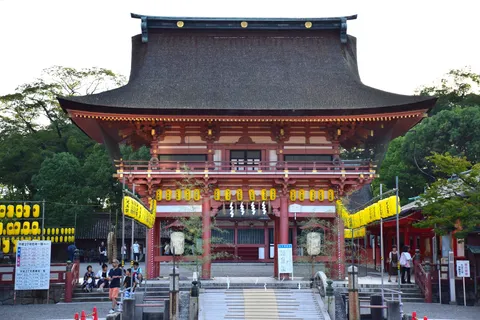
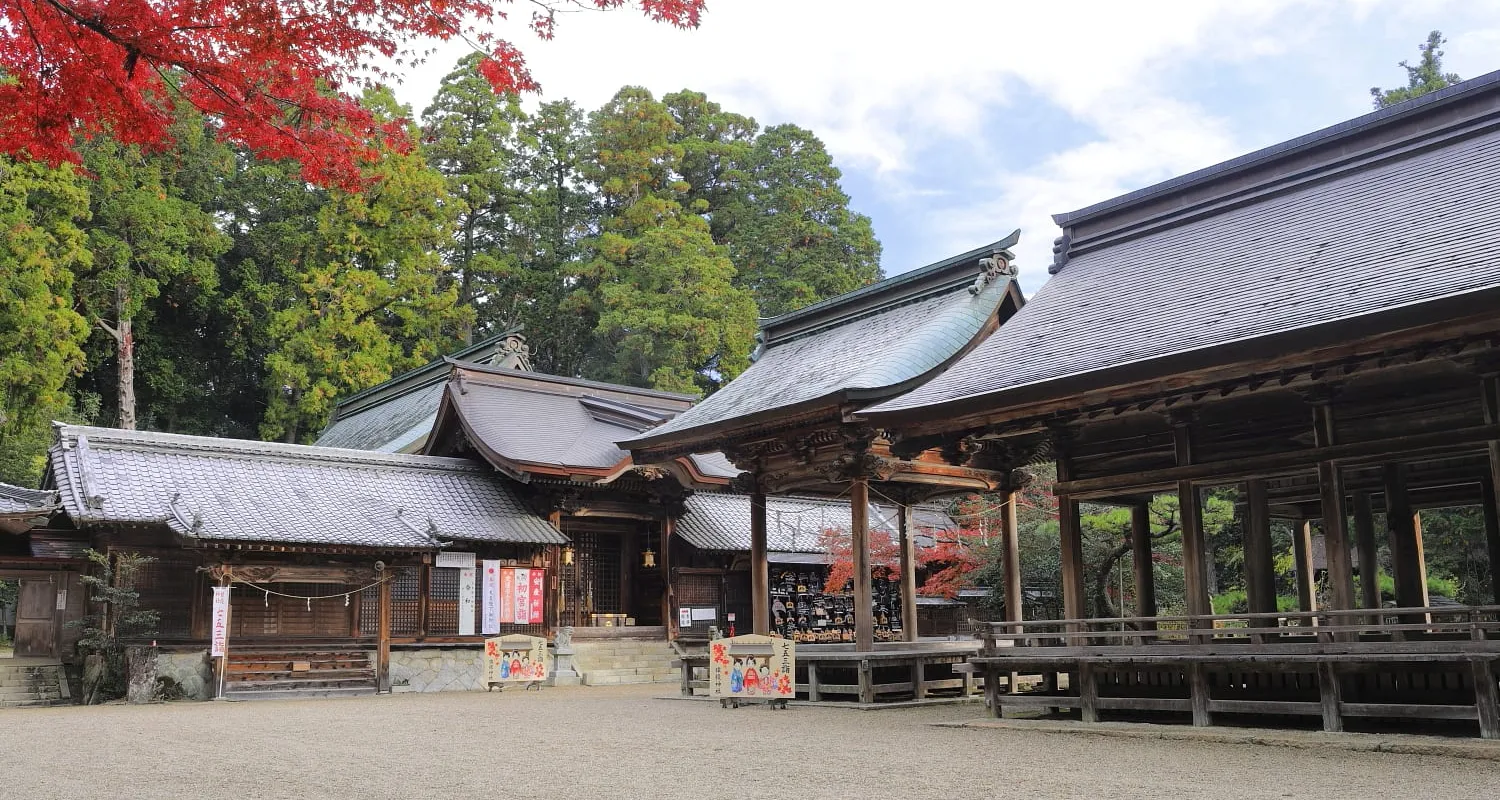
The grounds at the foot of the mountain contain a main hall in the shinmei-zukuri style, a worship hall, the Somon gate, and a drum tower (Taikoro). Surrounded by tall trees, the grounds are also known for autumn foliage. Other features include the Mitarashi-no-Ike pond, said to have been dug to store firefighting water after a great fire in the Sengoku period, and subsidiary shrines such as Itsukushima-sha and Saenokami Shrine.
The shrine’s treasures include many items designated Important Cultural Properties of Japan: the late-Heian-period sword signed “Yukiyasu” (with its hyogo-gusari mounting), a black-lacquered tachi from the Kamakura period, and a kashidori-ito-odoshi armor with large sleeves, as well as classical manuscripts such as the Ancient-Text Classic of Filial Piety (Kobun Kokyo), the Honcho Monzui, and the Sanage Shrine collection of Chinese classics. Other items, including a plaque inscribed “Shoichii Sanage Daimyojin” said to bear a date of 1304, are designated by Aichi Prefecture, and the Yamanaka Kannon-do and a standing wooden Thousand-Armed Kannon, among others, are designated by Toyota City.
There is also a long-standing custom of dedicating a “left sickle” (hidari-gama) when praying. Its origin is unknown, but it is said to come from the belief that one twin is left-handed, that Ōusu no Mikoto was left-handed, and that he used a left-handed sickle to open up this land. Today, boards in the shape of a left sickle are offered.
Visiting Tips
The grounds are open all day and are free to enter. The shrine office is open during the daytime only, and is just to the left after passing through the large red torii gate. Hours are roughly 9:00 AM to between 4:30 and 5:00 PM, but sources differ, so be careful if arriving in the evening. The standard goshuin costs ¥300 and features a left sickle stamp. An original goshuin book decorated with a parent and child monkey is also available (¥1,200, goshuin included).
To get there by public transport, take the Toyota Oiden Bus Fujioka-Toyota Line (via Kano) from the west exit of Meitetsu Toyotashi Station and get off at “Sanage Jinja-mae,” right at the shrine. By car, it is about 3 minutes from Sanage IC on the Sanage Green Road, with free parking for worshippers (about 15 spaces).
The shrine is also a trailhead for Mt. Sanage. The route via the Tokai Nature Trail and Higashi-no-Miya takes roughly 1.5 to 2 hours to the summit, or about 3 to 4 hours round trip, and is popular as a beginner-friendly hike. Trail conditions and wildlife sightings change, so check the latest information and prepare properly before you go.
Annual Festivals
- Sanage Festival (annual grand festival; second Saturday and Sunday of October, October 10–11 in 2026): This autumn festival was originally held on the 8th and 9th of the ninth lunar month. Today the second Saturday is the preliminary festival (shigaku-sai) and the second Sunday is the main festival (honraku-sai). On the night of the preliminary festival, the mikoshi of the Higashi-no-Miya, Nishi-no-Miya, and main shrine are carried in procession. The Aichi Prefecture Intangible Folk Cultural Property “Bo no Te” (martial arts performed with staffs, swords, spears, sickles, and more) is dedicated, and it is said that during the Edo and Meiji periods horses and Bo no Te performances were offered by 186 villages across Owari, Mikawa, and Mino.
- Kinensai (February 17)
- Hatsuuma-sai (first Horse day of the second lunar month)
- Niinamesai (November 23)
Nearby Food & Sightseeing
- Mt. Sanage: The 629 m sacred mountain of Sanage Shrine. Hiking trails, including the Tokai Nature Trail, lead to the Higashi-no-Miya and Nishi-no-Miya, with large rocks such as the natural monument Kikuishi along the way.
- Hirosawa Tenjinsha: A subsidiary shrine of Sanage Shrine, thought to correspond to the Engishiki-listed “Hirosawa Shrine,” and a waypoint on the western hiking route.
- Yamanaka Kannon-do: A Kannon hall designated a Tangible Cultural Property by Toyota City, a spot that evokes the history of the foot of Mt. Sanage.
Frequently Asked Questions
- Q. What are the visiting hours and is there an admission fee?
- A. The grounds are open all day and there is no admission fee. The shrine office (goshuin, amulets) is open during the daytime only, roughly 9:00 AM to between 4:30 and 5:00 PM, but sources differ, so it is wise to confirm with the shrine before you visit.
- Q. Can I get a goshuin at Sanage Shrine?
- A. Yes, at the shrine office. The standard goshuin costs ¥300 and features a "left sickle" (hidari-gama) stamp. An original goshuin book decorated with a parent and child monkey (¥1,200, goshuin included) is also available. Limited or seasonal goshuin may cost extra.
- Q. Is there parking?
- A. There is free parking for worshippers with about 15 spaces. Separate parking is provided for hikers climbing Mt. Sanage, so use that one if you plan to hike.
- Q. When is the Sanage Festival (annual grand festival)?
- A. It is held on the second Saturday (the preliminary festival) and the Sunday of October (the main festival). In 2026 that means October 10 and 11, when the Aichi Prefecture Intangible Folk Cultural Property "Bo no Te" martial arts are dedicated.
- Q. Who is enshrined at Sanage Shrine?
- A. The principal deity is Ōusu no Mikoto, a son of Emperor Keiko and the elder twin brother of Yamato Takeru. Emperor Keiko and Emperor Suinin are enshrined alongside him. Mt. Sanage is the sacred mountain, and the main shrine at its foot plus the Higashi-no-Miya and Nishi-no-Miya on the mountain are collectively revered as the "Sanage Sansha Daimyojin."
Plan Your Visit
Before you go, you can book a stay and get your shrine-visit items ready.
Amazon links open Amazon.co.jp (Japan) in English; whether an item ships overseas depends on the product.
※ Contains ads (PR). Links open external sites such as Amazon, Rakuten, Trip.com and Booking.com.