History
Sukunahikona Jinja stands in Doshomachi, a district in central Osaka affectionately known by the shrine’s nickname, “Shinno-san.” Merchants dealing in medicinal herbs had gathered in Doshomachi since around 1655, and by 1722 the shogunate had formally recognized 124 of them as the Doshomachi Yakushu Nakagai Nakama, a guild of licensed medicine wholesalers. Wishing for the safety of their products and the prosperity of their trade, the guild enshrined Shennong (Shinno Entei), revered in China since antiquity as the founding deity of medicine and agriculture, at their guild hall — the very site the shrine occupies today.
In October 1780, the guild’s Ise-ko association invited a divided spirit of Sukunahikona no Mikoto from Kyoto’s Gojo Tenjin Shrine and enshrined it alongside the already-worshipped Shennong. This marked the founding of Sukunahikona Jinja, making it one of the few shrines in Japan to enshrine both Sukunahikona no Mikoto, the founding deity of Japanese medicine, and Shennong, the founding deity of Chinese medicine, side by side.
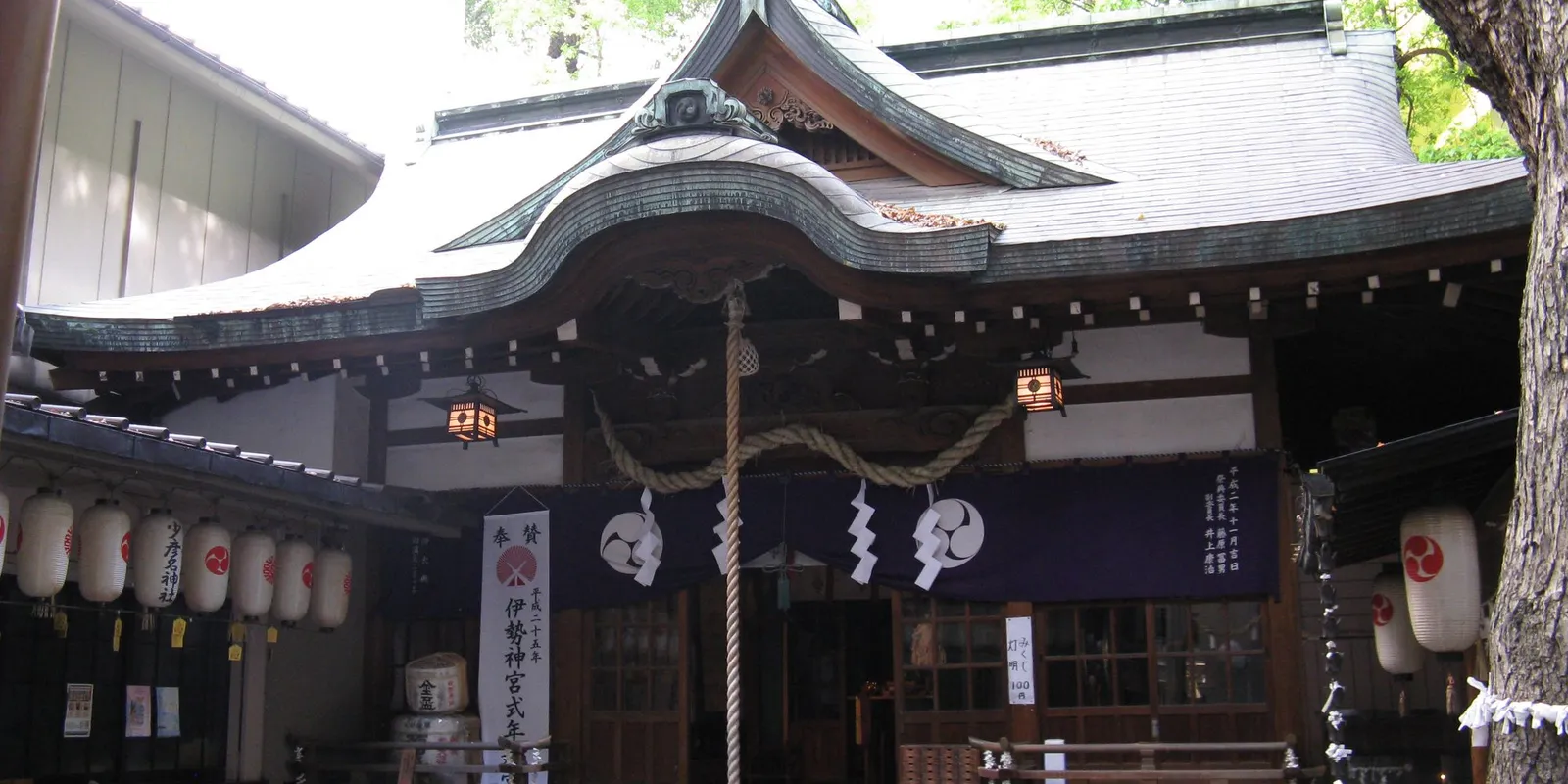
The guild hall burned down in 1837 during the Oshio Heihachiro Rebellion, but a new shrine hall was soon rebuilt and the deities safely preserved. In 1906, as Meiji-era reforms reorganized shrine rankings across the country, Osaka Prefecture asked the shrine to decide between merging with a neighboring shrine or continuing independently; the people of Doshomachi chose to preserve it as an independent shrine, expanding the grounds and rebuilding the current main hall, offering hall, and worship hall by 1910. These buildings are now registered as National Tangible Cultural Properties. The shrine miraculously survived the 1945 bombing of Osaka, and in 1980, to mark its 200th anniversary, the worship and main halls were restored and a new shrine office was built.
Today the shrine remains a focus of devotion for pharmaceutical companies, pharmacists, and worshippers praying for recovery from illness and good health, and in recent years it has also drawn increasing numbers of visitors seeking blessings for their pets. Because of its origins in an Ise pilgrimage association, it is also known as “Osaka’s Ise-san,” and it gets busy over the New Year with visitors seeking amulets from Ise Jingu.
Highlights
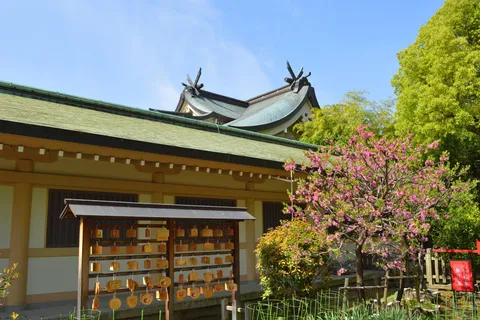
The shrine’s greatest highlight is its wooden main hall, offering hall, and worship hall, rebuilt in 1910. Standing quietly amid the office buildings of Doshomachi, these dignified structures are a visible reminder of the district’s long history as a center of the medicine trade. Now registered as National Tangible Cultural Properties, they are also rare survivors of the 1945 bombing that devastated much of Osaka.
The bronze tiger statue at the shrine’s entrance is not to be missed either. It represents the “shinko” tiger charm distributed at the Shinno Festival, which traces back to a medicinal pill called kotou-sakki-oogan handed out as a cholera remedy during the 1822 epidemic — the charm and the shrine have been closely associated ever since. The shrine office also houses the Kusuri no Doshomachi Museum, a small museum displaying historical records and artifacts from the district’s centuries as a hub of the medicine trade.
Visiting Tips
The grounds are open 8:00–17:00, with amulets and ofuda available 9:00–16:30 and goshuin available 9:30–16:00; goshuin may be pre-printed rather than hand-written when no one is available to write them on the spot. Many visitors come to pray for success in pharmaceutical qualification exams or for the health of a pet, and pet blessings require a reservation in advance. There is no parking for visitors on the grounds, so anyone arriving by car should use one of the nearby coin-operated lots. Doshomachi becomes especially crowded during the Shinno Festival on November 22–23, so it’s worth allowing extra time if visiting then.
Annual Festivals
- Shinno Festival (November 22–23): The shrine’s principal annual festival, known as the “closing festival” of Osaka’s year-round festival calendar, which begins with Imamiya Ebisu Jinja’s Toka Ebisu. Pharmacies and drug companies throughout Doshomachi hang festival lanterns, and charms made of a papier-mache tiger tied to a branch of five-needle bamboo grass are distributed. In 2007 the associated Yakuso-ko rites (the Shinno Festival and the winter solstice festival) were designated an Osaka City Intangible Folk Cultural Property.
- Setsubun Yakuyoke Festival (February 3): A fire ritual (gomagi) accompanied by servings of zenzai (sweet red bean soup), now drawing over 1,000 worshippers each year.
- Pet New Year Visit and Pet Health Prayer (January 11): Reflecting Doshomachi’s long history of companies dealing in veterinary medicine, this prayer service is held for the health of visitors’ pets (reservation required).
Nearby Food & Sightseeing
- Tekijuku: The former residence and private academy of the Dutch-studies scholar Ogata Koan, now a National Important Cultural Property. It’s a few minutes’ walk from Sukunahikona Jinja and produced many of the figures who shaped Japan’s modernization in the late Edo and Meiji periods.
- Osaka Exchange and the Godai Tomoatsu Statue: A landmark of the Kitahama financial district, this is the building of the Osaka Exchange, fronted by a statue of Godai Tomoatsu, who helped build Osaka’s modern economy. Within easy walking distance of the shrine.
- Kitahama Retro: A popular afternoon-tea cafe set in a Taisho-era Western-style building, a pleasant spot to rest after visiting the shrine.
Frequently Asked Questions
- Q. What are the goshuin hours and fee at Sukunahikona Jinja?
- A. Goshuin are available 9:30–16:00 for ¥500, either hand-written or pre-printed. Limited monthly and seasonal goshuin designs are also released, each priced separately.
- Q. How do I get to Sukunahikona Jinja?
- A. The closest route is a 5-minute walk from Exit 6 of Kitahama Station on the Osaka Metro Sakaisuji Line. It's also an 8-minute walk from Exit 27 of Kitahama Station on the Keihan Main Line, or 10 minutes from Exit 11 of Yodoyabashi Station on the Osaka Metro Midosuji Line.
- Q. Is there parking at Sukunahikona Jinja?
- A. No, there is no parking for visitors on the grounds. Several coin-operated lots, including Times parking locations, are available nearby in Doshomachi and Fushimimachi, each within a 2–3 minute walk.
- Q. What is the Shinno Festival at Sukunahikona Jinja?
- A. Held every year on November 22–23, this is the shrine's main annual festival. It's known as the "closing festival" of Osaka's year-round festival calendar, which opens with Imamiya Ebisu Jinja's Toka Ebisu in January. Pharmacies and drug companies throughout Doshomachi hang festival lanterns, and the shrine distributes charms made of a papier-mache tiger tied to a branch of five-needle bamboo grass.
- Q. What is the significance of the papier-mache tiger (shinko) amulet given out at the Shinno Festival?
- A. During a cholera outbreak in Osaka in 1822, the medicine merchants of Doshomachi compounded a pill called kotou-sakki-oogan, had it blessed at Sukunahikona Jinja, and distributed it to the afflicted along with a papier-mache tiger charm. The epidemic is said to have subsided afterward, and the tiger charm has been distributed at the Shinno Festival ever since as a talisman for household safety and good health.
Related Shrines
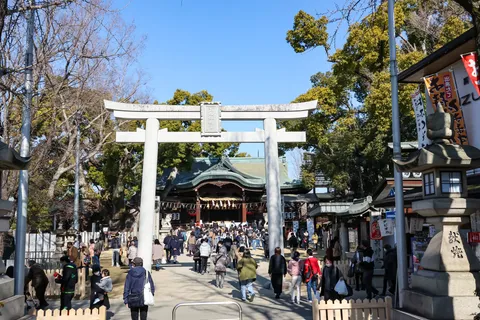
Osaka, Higashiosaka
Ishikiri Tsurugiya Jinja
Ishikiri Tsurugiya-jinja
- Good Health
- Protection from Misfortune
- Household Safety
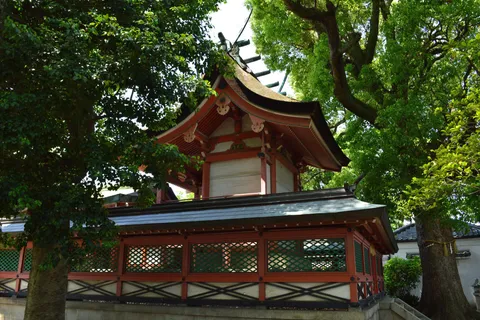
Osaka, Osaka (Sumiyoshi-ku)
Ikune Jinja
Ikune Jinja
- Financial Luck
- Business Prosperity
- Protection from Misfortune
Osaka, Osaka (Tennoji-ku)
Ikutama Jinja
Ikutama-jinja
- Good Fortune
- Good Relationships
- Household Safety