History
Yutoku Inari Jinja was founded in 1687 by Manko-hime of the Kasannoin family, wife of Nabeshima Naotomo, lord of the Hizen-Kashima domain, who invited a divided spirit of the Inari deity from a shrine that had served as an imperial place of prayer. Manko-hime came from the prestigious Kasannoin family of Kyoto court nobility; after enshrining the Inari deity at Kashima, she spent her later years in ascetic practice in a cave that now forms the shrine’s inner sanctuary, and her virtue was said to be great enough that the imperial court granted her the title “Yutoku-in.”
The shrine’s principal deity is Ukanomitama no Okami, worshipped alongside Omiyanome no Okami and Sarutahiko no Okami. Together with Fushimi Inari Taisha in Kyoto and Kasama Inari Jinja in Ibaraki, it is counted as one of Japan’s “Three Great Inari Shrines,” and draws roughly 3 million visitors a year, making it the most visited Inari shrine in Kyushu after Dazaifu Tenmangu overall.
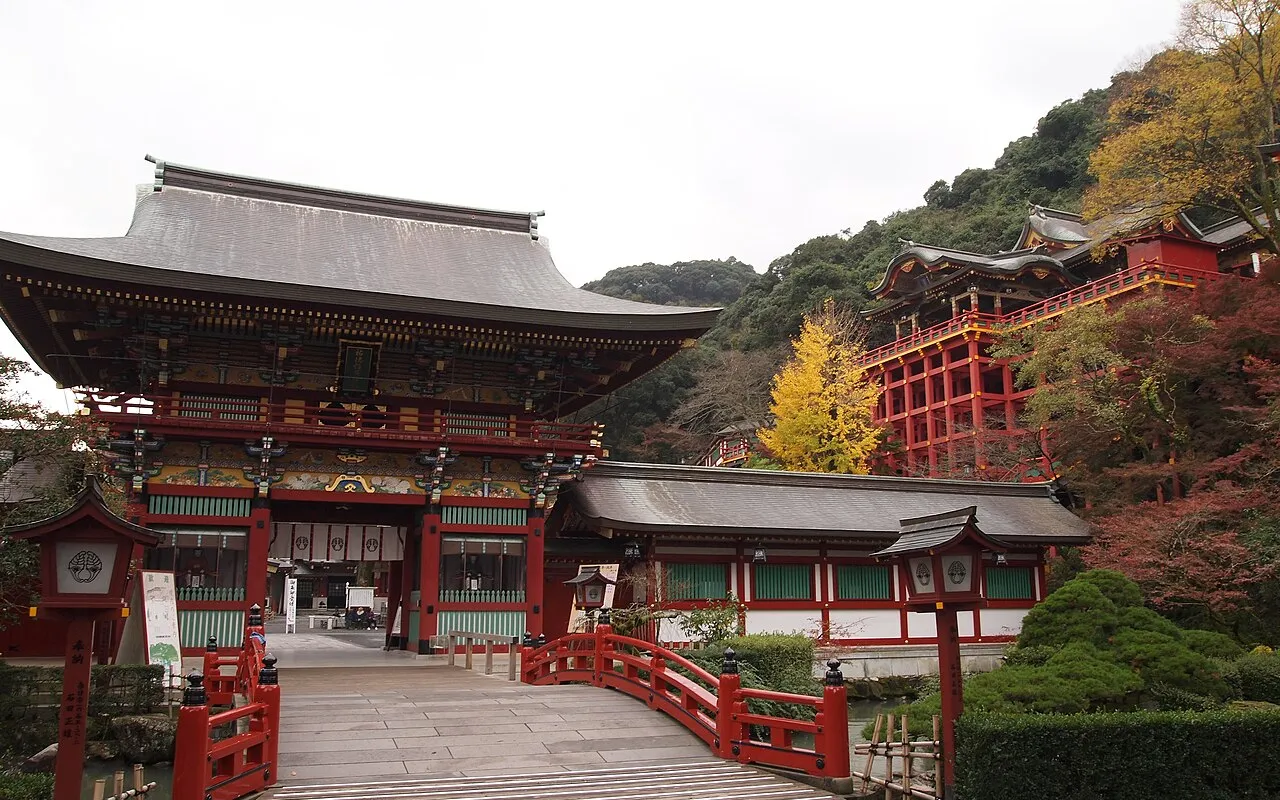
Successive lords of the Nabeshima Kashima domain provided patronage that shaped the shrine’s buildings over the centuries. The current main hall and gate, rebuilt in the Showa era with lacquer and vivid multicolor finishes, are said to echo the ornate Yomeimon Gate of Nikko Toshogu, earning the shrine the nickname “Nikko of the West” and captivating visitors to this day.
Highlights
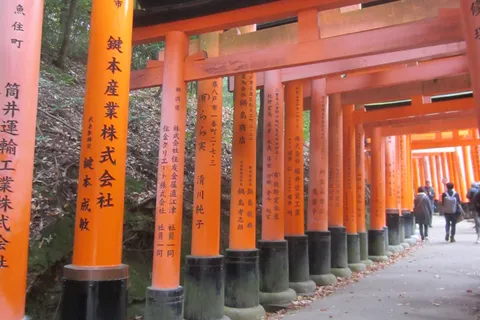
The single greatest highlight of Yutoku Inari Jinja is its main hall, built to jut dramatically out from a cliff face partway up the mountainside. Standing about 18 meters tall on its stilted platform — taller than the famous stage of Kiyomizu-dera in Kyoto — the vividly lacquered, multicolored hall stands out vividly against the mountainside. From the main hall, visitors are treated to sweeping views over the city of Kashima and the Ariake Sea, while the grounds are lined throughout with the rows of red torii gates typical of an Inari shrine.
Deep within the grounds lies the “Oku-no-in” (Inner Sanctuary), the site where Manko-hime is said to have practiced austerities in her later years. The path there climbs the mountainside through a tunnel of torii gates, and is popular with visitors who don’t mind a bit of a hike. The adjoining Japanese garden and the Yutoku Museum, which displays shrine treasures and local historical artifacts, are also well worth a visit.
Visiting Tips
Visiting just the main hall takes about 30–60 minutes, but the full course including the Oku-no-in inner sanctuary can take 1.5–2 hours, so it’s best to allow plenty of time. The path to the Oku-no-in involves a long series of stone steps, so comfortable walking shoes are recommended. Goshuin stamps can be received at the shrine office just past the gate on the left, and at night the main hall is illuminated, revealing a very different, almost dreamlike appearance from its daytime look.
Annual Festivals
- Hatsuuma Festival (first Day of the Horse in February): One of the most important festivals for any Inari shrine, drawing crowds who come to pray for a bountiful harvest and business prosperity.
- Spring Grand Festival (April 8): A major festival praying for a bountiful harvest, honoring the divine virtue of the Inari deity.
- Fire Ceremony (December 8): A closing rite for the autumn-to-winter season, held on the night of the Niiname-sai harvest festival, offering thanks for a safe year.
- New Year’s Festival (January 1–3): The shrine draws huge crowds for the first three days of the year, ranking among Kyushu’s most popular spots for hatsumode, the first shrine visit of the new year.
Nearby Food & Sightseeing
- Yutoku Monzen Shopping Street: Lined with more than 30 souvenir shops and eateries along a roughly 400-meter approach to the shrine, perfect for snacking your way before or after your visit.
- Shin-Aburaya: A long-established shop on the approach street known for “inari yokan,” a local specialty sweet bean jelly pushed out of a paper tube and cut with a length of thread.
- Yutoku Museum: A museum displaying treasures passed down through the shrine and materials on the local history of Kashima, a fitting complement to the adjoining Japanese garden.
Frequently Asked Questions
- Q. What are the visiting hours?
- A. The grounds are open to visitors at all times (the main hall is illuminated at night; the Japanese garden and museum charge admission).
- Q. When is the goshuin office open?
- A. 8:00–16:00, for ¥500.
- Q. Is there parking?
- A. Yes, outer garden parking is available (some paid car spaces, free for large buses).
- Q. How long does a full visit take, including the inner shrine?
- A. About 30–60 minutes for the main hall alone, or 1.5–2 hours to also reach the inner shrine (Oku-no-in).
- Q. How do I get there?
- A. About a 10-minute bus or taxi ride from JR Hizen-Kashima Station to the Yutoku-jinja-mae stop.
Related Shrines
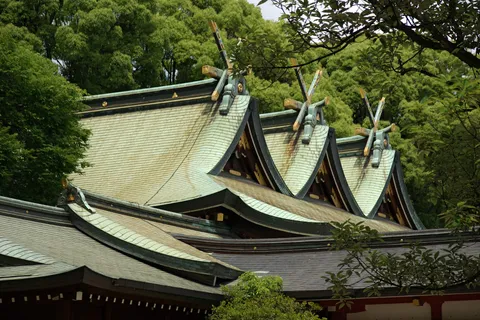
Hyogo, Nishinomiya
Nishinomiya Jinja
Nishinomiya-jinja
- Business Prosperity
- Household Safety
- Financial Luck
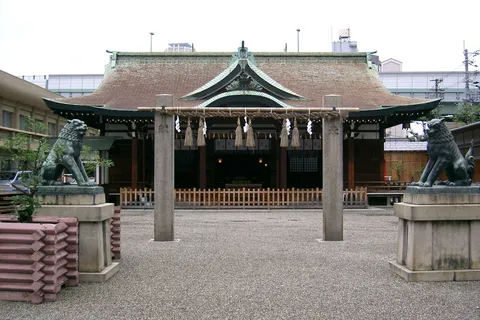
Osaka, Osaka (Naniwa-ku)
Imamiya Ebisu Jinja
Imamiya Ebisu-jinja
- Business Prosperity
- Household Safety
- Financial Luck
Kyoto Prefecture, Fushimi-ku, Kyoto
Fushimi Inari Taisha
Fushimi Inari Taisha
- Business Prosperity
- Bountiful Harvest
- Household Safety