History
Matsubara Shrine is in Honmachi, Odawara, Kanagawa, and is read “Matsubara-jinja” (per the Kanagawa Prefecture Shrine Association). It stands on a lane north of the Tokaido road, southeast of Odawara Castle, and has long been called the chief tutelary shrine (“Odawara Sochinju”) of the town. The official site names three enshrined deities: Yamato Takeru no Mikoto, Susanoo no Mikoto and Ukanomitama no Mikoto.
According to the official history, the shrine is said to have been enshrined here in the Kyuan era (1145–1150) under Emperor Konoe, but the date of its actual founding is unknown. It is said to have once been called “Tsuru no Mori Myojin” and later “Matsubara Daimyojin,” and for the origin of the latter name the history also records one account that, in the Tenbun era (1532–1554), a golden statue of the Eleven-Faced Kannon appeared from the sea off Sannoharamura and was enshrined by an oracle. All of this is told in the form of tradition (“it is said,” “some say”).
In the Sengoku period the Hojo clan donated shrine lands and revered the shrine for generations. Even after the Inaba clan took over the domain in 1632 and the Okubo clan in 1686, the reverence continued, and the shrine was regarded as the chief shrine of the nineteen districts of the Odawara post town. The Kanto Regional Development Bureau’s Tokaido guide page says that when the senior councilor Okubo Tadatomo moved to Odawara in 1686, grand festivals began to be held as the chief shrine of the post town’s combined districts. The shrine took its present name in 1869 and was raised to prefectural-shrine rank in January 1873. According to the official site, it now has 26 parishioner districts.
Highlights
The best-known story on the grounds is the “Kitcho no Ogame” (auspicious great turtle). The official history tells how a great turtle that appeared on the Odawara coast in 1545 was welcomed by Hojo Ujiyasu as a good omen. A personal visit account says there is a stone turtle statue inspired by this tale and that stroking its shell is said to bring blessings (another account notes that touching was not allowed during infection-control periods, so check on site whether it is allowed now).
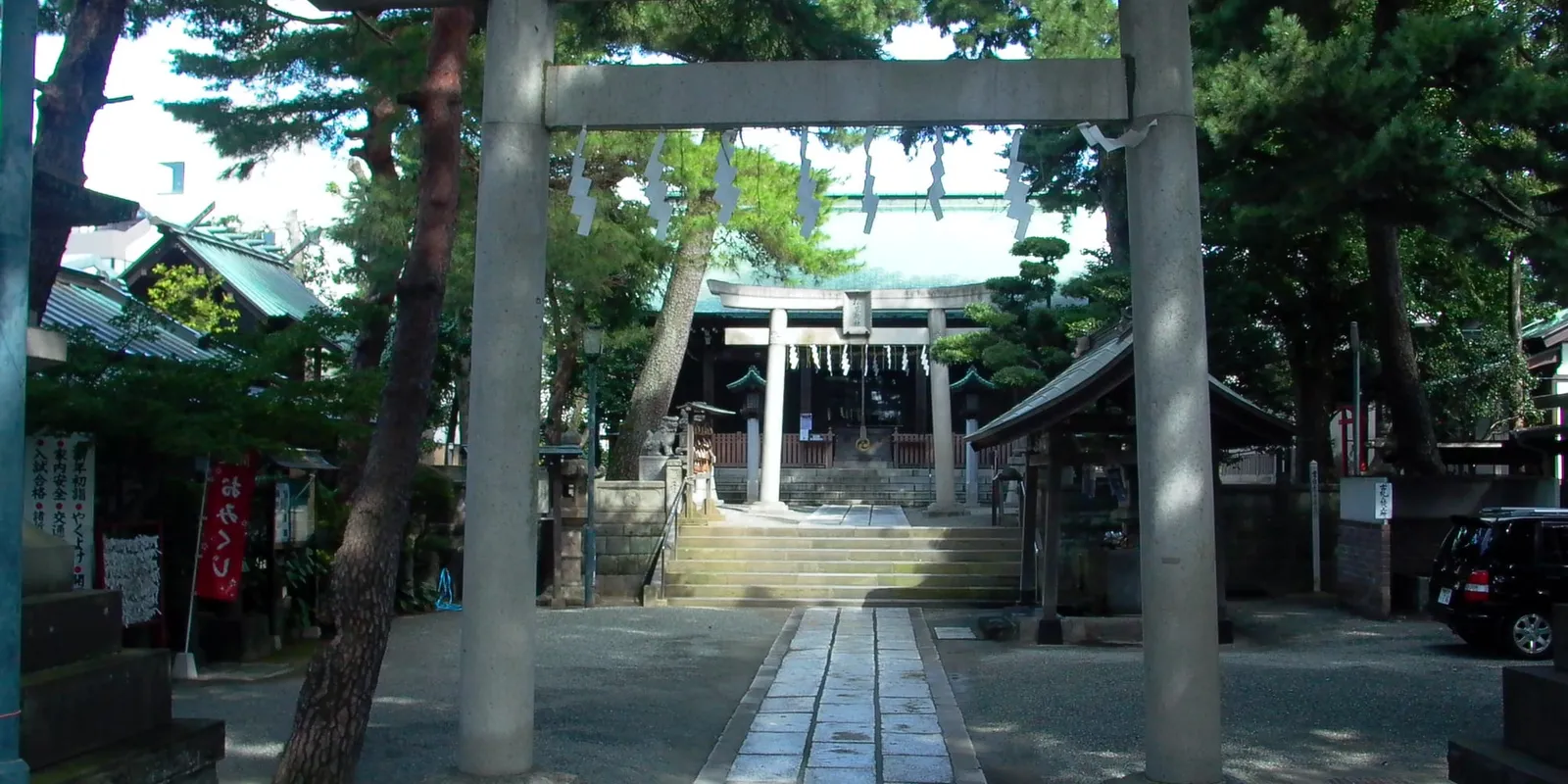
The grounds have many pine trees, and photographs show a stone torii, the approach path, and a bridge over a pond. A personal blog also mentions photos of the Odawara-katsugi festival displayed in the mikoshi storehouse, along with a “maiwai,” the festive garment that fishermen wore when visiting the shrine. As for the sub-shrines, the Kanagawa Shrine Association’s record says there were once twelve on the grounds, and five are now enshrined: Sumiyoshi, Kashima, Teoki, Inari and Hachiman.
The official site and the Shrine Association record also note that the Odawara bayashi festival music played on the festival floats follows the Edo Kasai bayashi tradition, was born in the parishioner district of Koshinshuku, and is designated an intangible cultural property of Kanagawa Prefecture (Tako Preservation Society).
Visiting Tips
According to the official site, prayer services are held daily from 9:00 AM to 4:00 PM, with reservations preferred. Offerings start at ¥10,000, ¥7,000 or ¥5,000 at your discretion, and services include first shrine visits for babies, safe childbirth (with a belly band given on dog days), protection from misfortune, purification for new and used cars (traffic safety), and ritual burning of household shrines and dolls (¥20,000 for a set of household shrines, ¥10,000 for a set of dolls; confirm details by phone). Because travelers about to cross the Hakone pass in the Edo period always stopped here to pray for a safe journey, the shrine is said to protect traffic safety.
Visiting hours for the grounds are not stated on the official site. The official site also says nothing about goshuin, though personal visit accounts say kakioki goshuin are available at the shrine office. The hours and fee could not be confirmed, so a call to 0465-22-2672 is safest. The official site does not mention parking, and a personal guide article says there is no dedicated parking. It is about a 10–15 minute walk from Odawara Station.
Annual Festivals
According to the official site and the Kanagawa Prefecture Shrine Association’s record, the main ceremonies are as follows.
- Gantan-sai (January 1)
- Sho-sai (January 14): The official site says the main festival was once held in mid-January, with a smaller festival in September.
- Setsubun-sai (February 3)
- Kinen-sai (February, irregular)
- Reitaisai (May 3–5): May 3 is the Reitaisai, May 4 is the day of neighborhood mikoshi processions, and from the evening of May 5 the main mikoshi and the neighborhood mikoshi enter the shrine (official site). The Shrine Association record lists May 4 and 5 as the Shinko-sai (divine procession), and says that after a rite at the shore the procession tours the districts while each district also brings out floats, stalls and mikoshi.
- Sho-sai (September 14)
- Niiname-sai (November, irregular)
The Reitaisai is the festival the official site calls known as Odawara’s largest. According to the Japanese Wikipedia and other sources, the mikoshi are carried in a distinctive style called Odawara-katsugi, likened to a fishing boat, a remnant of the festival’s roots as a fishermen’s festival. Separately, on May 3 the Odawara Tourism Association holds the Odawara Hojo Godai Festival (a warrior parade) (per the city’s guide). Dates and the content of the procession may change by year, so check the official site or the shrine for the latest.
Nearby Food & Sightseeing
- Odawara Castle: The city’s best-known castle site; the shrine lies to its southeast (per the Ministry’s guide). The same page has a photo of the keep seen from the Akagane-mon gate, completed in April 1998.
- Site of the Former Kataoka Eizaemon Honjin: The site of an official inn of the Tokaido’s Odawara post town. According to the Ministry’s guide, it was the regular lodging of many feudal lords, and a marker now stands there.
- Uiro: A pharmacy on the highway in Honmachi 1-chome, in a castle-style building. The Ministry’s guide introduces it as the shop that appears in the kabuki play “Sukeroku,” one of the Kabuki Juhachiban.
Frequently Asked Questions
- Q. What are the visiting hours and prayer service hours?
- A. According to the official site, prayer services are held every day from 9:00 AM to 4:00 PM, with reservations preferred (call 0465-22-2672). Offerings start at ¥10,000, ¥7,000 or ¥5,000, given at your discretion. The hours for entering the grounds are not stated on the official site, so visiting within the prayer-service hours is the safe choice.
- Q. Can I get a goshuin at Matsubara Shrine?
- A. The official site says nothing about goshuin. Personal visit accounts say pre-written (kakioki) goshuin can be received at the shrine office. The fee and hours could not be confirmed, and the priests are sometimes away, so please call ahead.
- Q. How do I get there, and is there parking?
- A. It is about a 10–15 minute walk from Odawara Station on the JR and Odakyu lines (sources differ). The shrine stands on a lane just north of the old Tokaido road (Route 1). The official site does not mention parking, and personal guide articles say there is no parking for visitors, so drivers will need to look for paid lots around Odawara Castle.
- Q. What is the legend of the "Kitcho no Ogame" (auspicious great turtle)?
- A. The history on the official site says that in March 1545 (Tenbun 14) a great turtle washed up on the Odawara coast and was brought by local people to the shrine's pond. Hojo Ujiyasu heard of it, took it as a good omen, visited the shrine, and invited his clan to share a celebratory toast; the turtle was later released into the sea. Visit accounts mention a stone turtle statue on the grounds inspired by this legend.
- Q. When is the annual festival, and what is it like?
- A. The official site lists May 3 as the Reitaisai (annual grand festival), May 4 as the day neighborhood mikoshi processions are carried through their districts, and the evening of May 5 as the time when the shrine's main mikoshi and the neighborhood mikoshi enter the shrine. The site describes it as known as Odawara's largest festival. According to the Japanese Wikipedia, the mikoshi are carried in a distinctive style called Odawara-katsugi, likened to a fishing boat, a remnant of the festival's fishermen's roots. Times and routes change by year, so check just before you go.
Plan Your Visit
Before you go, you can book a stay and get your shrine-visit items ready.
Amazon links open Amazon.co.jp (Japan) in English; whether an item ships overseas depends on the product.
※ Contains ads (PR). Links open external sites such as Amazon, Rakuten, Trip.com and Booking.com.