History
Ishizuchi Jinja is an ancient shrine venerating Mount Ishizuchi (1,982 meters), the highest peak in western Japan and one of Japan’s Seven Sacred Mountains, as its sacred object of worship. According to shrine tradition, the mountain was first opened to religious practice in 650 (Hakuchi 1) by En no Gyoja, the semi-legendary founder of Shugendo, the path of Japanese mountain asceticism. From that point on, Mount Ishizuchi became one of the great centers of mountain worship and Shugendo practice, drawing devoted pilgrims from across Shikoku and western Japan.
The enshrined deity is Ishizuchi-hiko no Mikoto, also known as Ishitsuchi-hiko no Mikoto or Ishizuchi Okami, said to be a child of the primordial creator deities Izanagi no Mikoto and Izanami no Mikoto. In earlier centuries, the mountain itself was worshipped directly as a god, and under the syncretic fusion of Shinto and Buddhism the site became a major Buddhist mountain-training center as well, drawing ascetics and pilgrims from across the region. With the Meiji-era edict separating Shinto and Buddhism, the shrine was reorganized into its present Shinto form as Ishizuchi Jinja — though the older ascetic tradition survives vividly today in the mountain’s chain-climbing routes and in its summer Oyama-biraki festival.
The Four Shrines of Ishizuchi Jinja
The single most distinctive feature of Ishizuchi Jinja is that it isn’t one building but four linked sites, spaced out along the pilgrimage route from the mountain’s foot to its summit. Understanding this structure up front makes a visit far less confusing.
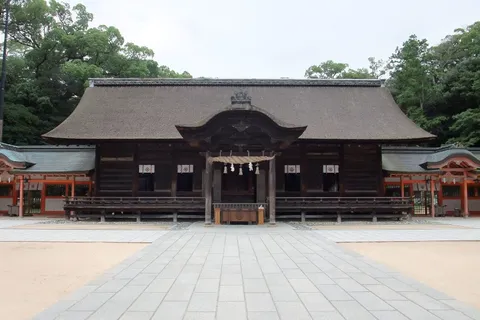
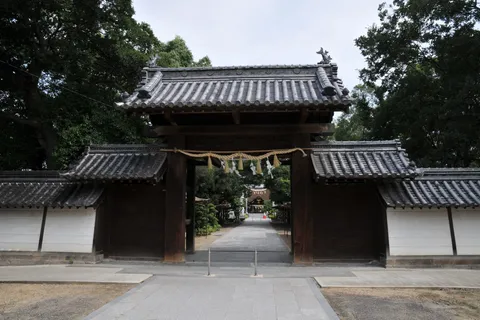
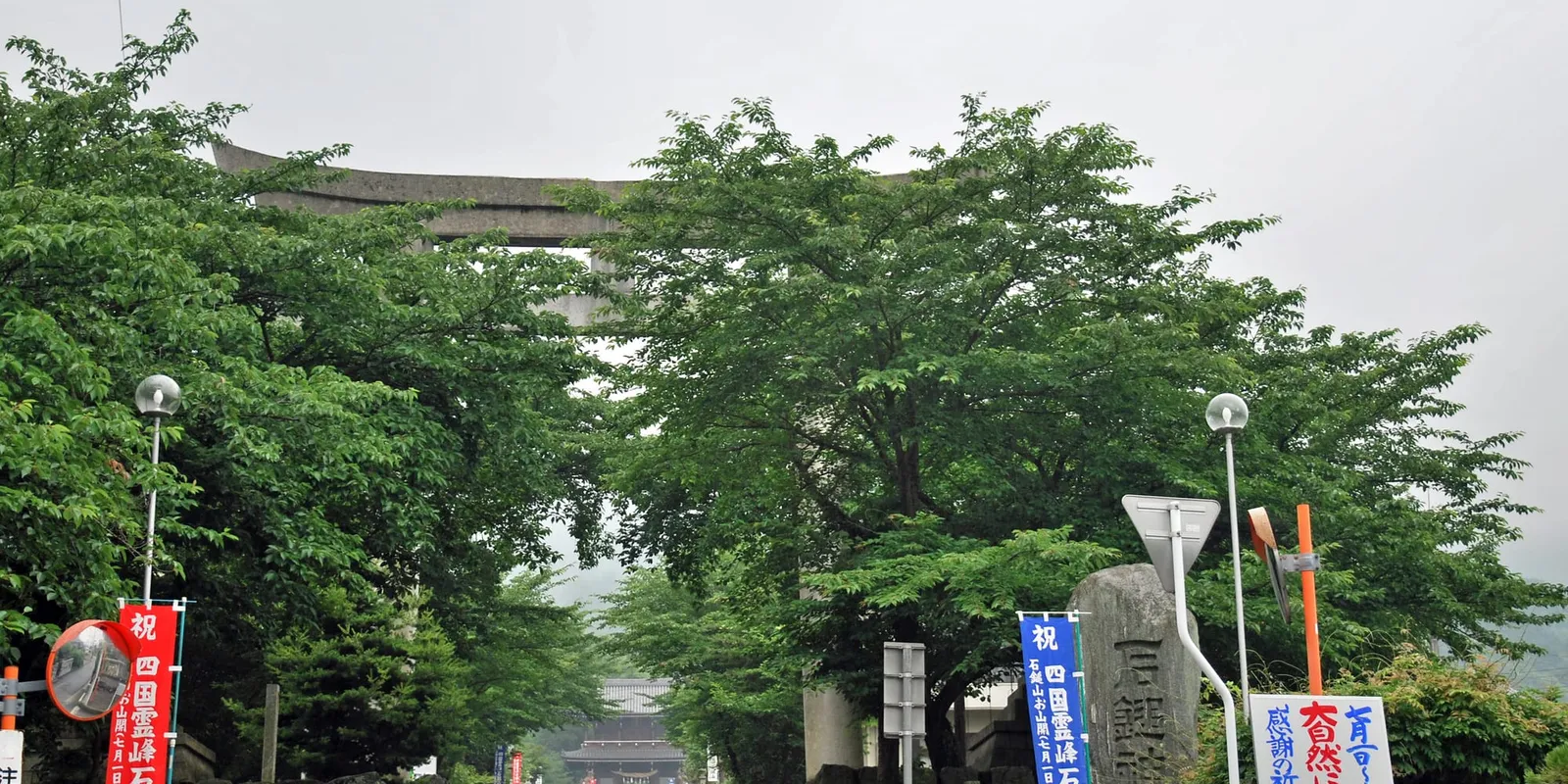
- Kuchinomiya Honsha (the main shrine): Located at the mountain’s base, a short walk from Ishizuchisan Station, this is the site nearly all visitors actually reach. Its grounds include the main hall, a shrine gate, an ancestral hall, and a spring of sacred water. It’s open year-round and, for a typical visit or sightseeing trip, this is the only site you need to see.
- Chugu Joju-sha (the mid-mountain shrine): Set at the 7th station partway up the mountain, about a 20-minute walk from the top of the Ishizuchi Ropeway. It takes its name — “the shrine of fulfillment” — from the legend of En no Gyoja finally succeeding in opening the mountain after being encouraged by an old man sharpening an axe. It serves as a key staging point for climbers heading toward the summit, and most visitors reach it by ropeway.
- Tsuchigoya Yohaiden (the distant-worship hall): Built in 1971 at Tsuchigoya, the end of the Ishizuchi Skyline (also known as the UFO Line) mountain road. It serves climbers approaching the summit from the ridge route opposite the Joju-sha side.
- Chojo-sha (the summit shrine): The innermost and highest of the four, standing atop Mount Ishizuchi’s Misen peak, within sight of the jagged Tengudake spire just beyond — the literal high point of the pilgrimage. Reaching it requires proper mountaineering preparation and stamina.
In short, “Ishizuchi Jinja” doesn’t mean a single building — it’s the collective name for four places of worship arranged around the sacred mountain itself, and keeping that structure straight is the key to understanding the shrine.
The Chain-Climbing Tradition
Mount Ishizuchi is one of the few sacred mountains in Japan where the old Shugendo chain-climbing routes, known as kusari-ba, remain in active use today. Four iron-chain ascents lace the upper mountain: the “trial chain” near Maeshagamori (about 48 meters), the first chain (about 33 meters), the second chain (about 65 meters), and the third chain (about 68 meters), each bolted into a near-vertical rock face.
These chains preserve a genuine ascetic-training tradition, but they are also open to ordinary hikers today, and each one has a bypass path (maki-michi) for those who’d rather skip the climb. That said, don’t underestimate them: the actual chain routes are a serious, near-vertical scramble on sparse footholds, relying entirely on the chain itself for support, and conditions become genuinely hazardous when the rock is wet or winds pick up. Proper hiking shoes, gloves, and both hands free are strongly recommended, and first-timers or anyone uncertain of their fitness and experience should take the bypass paths, or climb with an experienced partner or guide, rather than push through the chains. In winter (roughly December through April) snow and ice make the summit approach — chains or otherwise — effectively impassable without full winter mountaineering gear.
Oyama-biraki, the Mountain-Opening Festival
Ishizuchi Jinja’s largest annual event is Oyama-biraki, held over ten days starting July 1. In the pre-dawn hours of June 30, a departure rite is held at the Kuchinomiya Honsha, after which three sacred images — representing benevolence (jin), wisdom (chi), and courage (yu) — are carried up the mountain on believers’ backs, with the ascent toward the summit Chojo-sha beginning at 7:00 AM on July 1. Believers and climbers converge on Mount Ishizuchi from across Japan for what is by far the biggest event in the mountain’s ritual calendar, crossing the chain-climbing sections along the way. One point worth noting when planning a visit: by long-standing tradition, July 1 itself is closed to women climbers.
Goshuin
A goshuin can be received at all four sites — the Kuchinomiya Honsha, the Joju-sha, the Tsuchigoya Yohaiden, and the Chojo-sha — each with its own distinct design. Because coordinating hand-written seals across four separate, often remote locations isn’t practical, every site issues only a pre-printed (kakioki) goshuin rather than writing directly into a visitor’s book. At the Kuchinomiya Honsha the fee is ¥500, with reception hours running roughly 8:30 AM to 5:00 PM. Staffing at the other three sites is seasonal — the Joju-sha is staffed year-round, the Tsuchigoya Yohaiden from April 1 through late November, and the summit Chojo-sha only from May 1 through November 3 — so anyone planning to collect goshuin from multiple sites should check the season in advance.
Access & Visiting Information
The Kuchinomiya Honsha is about a 10-minute walk from Ishizuchisan Station on the JR Yosan Line, or about 10 minutes by bus from Iyo-Saijo Station. By car, it’s roughly 15 minutes from either the Iyo-Saijo or Iyo-Komatsu interchange on the Matsuyama Expressway. Free parking for about 350 vehicles is available on the grounds, and there is no admission fee to visit. The grounds themselves are open all day, though the shrine office handling goshuin and amulets keeps hours of roughly 8:30 AM to 5:00 PM.
Nearby Food & Sightseeing
- Ishizuchi Ropeway: The gateway to the Chugu Joju-sha, with sweeping views of the Seto Inland Sea and the mountains of Shikoku from the upper station. A natural complement to a visit to the Kuchinomiya Honsha if you want the fuller picture of Mount Ishizuchi worship.
- Saijo Zenji Onsen (Ekimae Yufuro): A local day-use hot spring in Saijo, a welcome way to rest tired legs after a shrine visit or a climb, drawing on the area’s natural spring water.
- Uchinuki Springs: Saijo is famous for its “uchinuki,” natural artesian springs fed by groundwater from the Mount Ishizuchi range that surface throughout the city — recognized among Japan’s 100 Best Water sources and well worth a taste between visits.
Frequently Asked Questions
- Q. I heard Ishizuchi Jinja has four separate shrines. Which one should I visit?
- A. Ishizuchi Jinja is the collective name for four linked sites: the Kuchinomiya Honsha at the mountain's base, the Chugu Joju-sha partway up (7th station), the Tsuchigoya Yohaiden at the end of the Ishizuchi Skyline, and the Chojo-sha at the summit. Most visitors go to the Kuchinomiya Honsha, about a 10-minute walk from Ishizuchisan Station on the JR Yosan Line. The Joju-sha is reached by ropeway, while the Chojo-sha can only be reached via a full mountain climb. Starting with the Kuchinomiya Honsha is the right choice for most travelers.
- Q. Can I get a goshuin here, and how much does it cost?
- A. Yes — the Kuchinomiya Honsha issues a goshuin for a fee of ¥500. Because coordinating hand-written seals across all four sites is impractical, every one of the four locations issues only a pre-printed (kakioki) goshuin rather than writing directly in your book. Reception hours run roughly 8:30 AM–5:00 PM. The Joju-sha, Tsuchigoya Yohaiden, and Chojo-sha each offer their own distinct goshuin design, but staff are only on-site seasonally — year-round at Joju-sha, April through late November at Tsuchigoya, and May 1 through November 3 at the summit Chojo-sha.
- Q. Can anyone climb the chain-climbing sections (kusari-ba)?
- A. Mount Ishizuchi has four iron-chain ascents — the 'trial chain' plus the first, second, and third chains — that preserve the mountain's Shugendo ascetic-training tradition. They remain open to ordinary hikers today, and bypass paths (maki-michi) exist around each one for those who prefer to skip them. That said, the chains themselves are a serious, near-vertical rock scramble with only the chain for support, and conditions turn genuinely dangerous when the rock is wet or winds are strong. Wear proper hiking shoes and gloves, and if you lack confidence or experience, take the bypass paths or climb with an experienced companion or guide rather than pushing through the chains. In winter (roughly December–April) snow and ice make the summit approach, chains included, impassable without full winter mountaineering gear.
- Q. What is the Oyama-biraki festival?
- A. Oyama-biraki (the mountain-opening festival) is Ishizuchi Jinja's largest annual event, held over ten days from July 1. After a pre-dawn rite at the Kuchinomiya Honsha on June 30, three sacred images representing benevolence, wisdom, and courage are carried on believers' backs, and the ascent to the summit Chojo-sha begins at 7:00 AM on July 1. Worshippers and climbers travel from across Japan to take part in what is the single biggest event in Mount Ishizuchi's mountain-worship calendar. Note that, by long tradition, July 1 itself is closed to women climbers.
- Q. How do I get to the shrine, and is there parking?
- A. The Kuchinomiya Honsha is about a 10-minute walk from Ishizuchisan Station on the JR Yosan Line, or about 10 minutes by bus from Iyo-Saijo Station. By car, it's roughly 15 minutes from the Iyo-Saijo or Iyo-Komatsu interchange on the Matsuyama Expressway. Free parking for about 350 vehicles is available on the grounds.