History
Katori Jingu is the head shrine of roughly 400 Katori shrines across Japan. Its enshrined deity, Futsunushi no Okami, is a god of martial valor who, in Japanese mythology’s “kuniyuzuri” story, was dispatched to Izumo together with Takemikazuchi no Okami of Kashima Jingu. Tradition dates its founding to the 18th year of Emperor Jinmu’s reign, and together with Kashima Jingu and Ikisu Jinja, it is counted among the “Three Shrines of the Eastern Provinces,” a foremost ancient shrine of the Kanto region.
Katori Jingu has long received deep reverence from the imperial court and warrior families. During the Heian period, it was granted the highest court rank, Shoichii, and it is one of the few ancient shrines, along with Ise Jingu and Kashima Jingu, permitted to bear the title “Jingu.” During the Edo period, the Tokugawa shogunate carried out construction and repairs to the shrine buildings, and the present Honden and Romon gate date from the era of the 5th shogun, Tsunayoshi.
Highlights
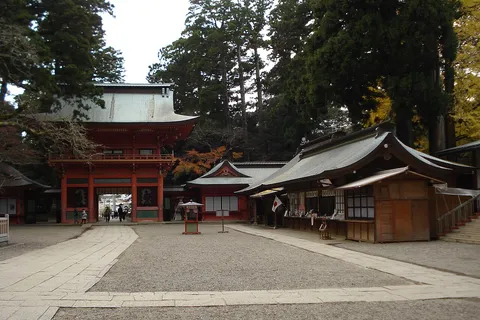
Beyond the vermilion-lacquered Romon gate stands the Honden, built under the fifth Tokugawa shogun, Tsunayoshi, and designated a National Important Cultural Property. The “Kaname-ishi” (keystone) is said to be paired with the keystone at Kashima Jingu, and is known as a mysterious stone with legends of quelling earthquakes.
Visiting Tips
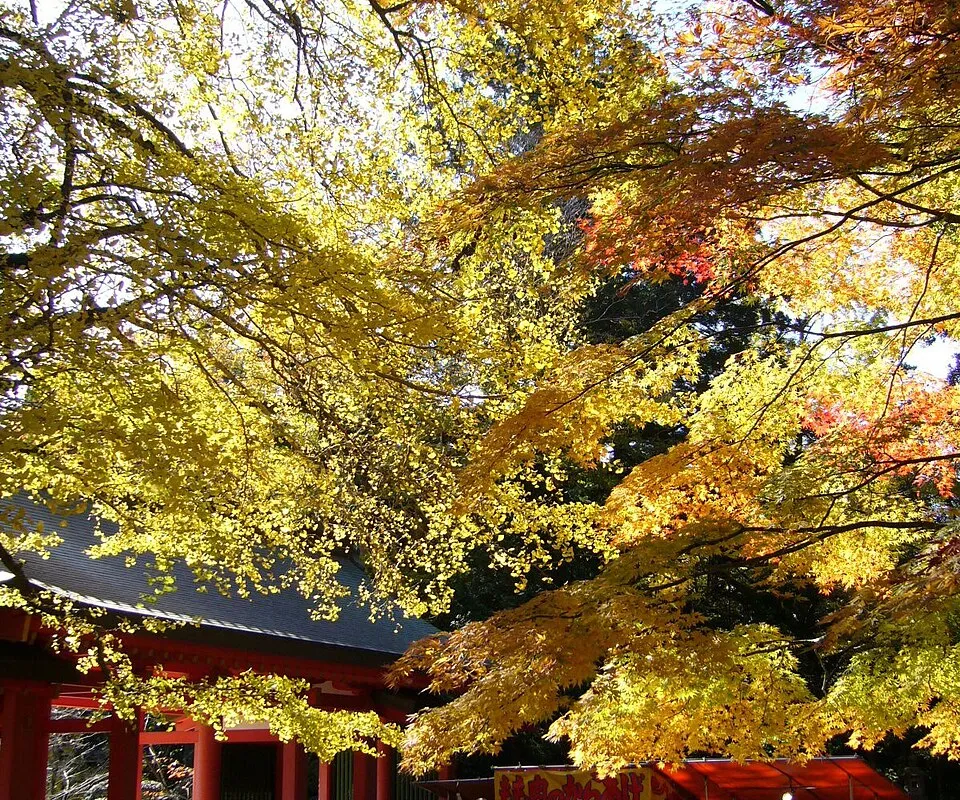
The grounds are enveloped in lush forest, offering a tranquil atmosphere for worship throughout the year. As a god of martial arts, the shrine also draws deep devotion from athletes and sports figures.
Annual Festivals
- Reisai (Annual Festival): Held every April 14, this is the most important of the roughly 90 festivals held each year.
- Shinko Festival: Held alongside the Reisai, this roughly 800-year-old rite features parishioners in Heian-era costume and armor parading around the shrine with a portable shrine (mikoshi).
- Shikinen Shinko Festival: A special procession held only once every 12 years, in the Year of the Horse, known for the striking sight of colorfully decorated boats sailing down the Tone River.
- Kinen Festival (February) and Niiname Festival (November): Year-round grand festivals praying for and giving thanks for a bountiful harvest.
Nearby Food & Sightseeing
The neighboring town of Suigo-Sawara, known as the “Little Edo,” is lined with traditional merchant houses and is a popular sightseeing destination often visited together with Katori Jingu.
- Kikkodo: A long-established shop facing the approach, famous for its yakuotoshi dango — dumplings with a lightly sweetened sauce, said to ward off misfortune.
- Warabimochi Iwatate Honten: A renowned shop known for its melt-in-the-mouth warabimochi, made using traditional methods.
- Umenoya Honten: An eatery along the main approach offering a kusa-dango (mugwort dumpling) set as well as light meals such as soba and simmered offal.
Frequently Asked Questions
- Q. What are the visiting hours?
- A. The grounds are open all day, but the amulet office is open around 8:30–17:00.
- Q. When is the goshuin office open?
- A. Around 8:30–17:00, for ¥500.
- Q. Is there parking?
- A. Yes, paid parking is available nearby.
- Q. How is this related to Kashima Jingu's kaname-ishi stone?
- A. Katori Jingu's kaname-ishi is said to form a pair with Kashima Jingu's, together holding down the catfish believed to cause earthquakes.
- Q. How do I get there?
- A. About a 15-minute bus ride from JR Sawara Station to "Katori Jingu," then about a 1-minute walk.